



A comprehensive analysis by the international organization Carbon Tracker indicates that an accelerated transition to electric vehicles (EVs) in Brazil could offer far-reaching economic, energy, health, and climate benefits for the country.
The report “Leapfrog to Electric: Brazil – The Economic Benefits of Pro-Electric Vehicle Policy” provides detailed estimates of the impact of transport electrification in Brazil through 2050.
You may also be interested in | Brazil: Chevrolet reinforces its electrification strategy with a wide range of hybrid and electric vehicles in 2026
Import Savings and Reduced Vulnerability
The report notes that, under a scenario of current policies, Brazil could face a significant increase in its imports of fossil fuels for transportation, raising annual imported fuel costs from about US$10 billion in 2024 to more than US$30 billion by 2050 if the adoption of EVs is not accelerated.
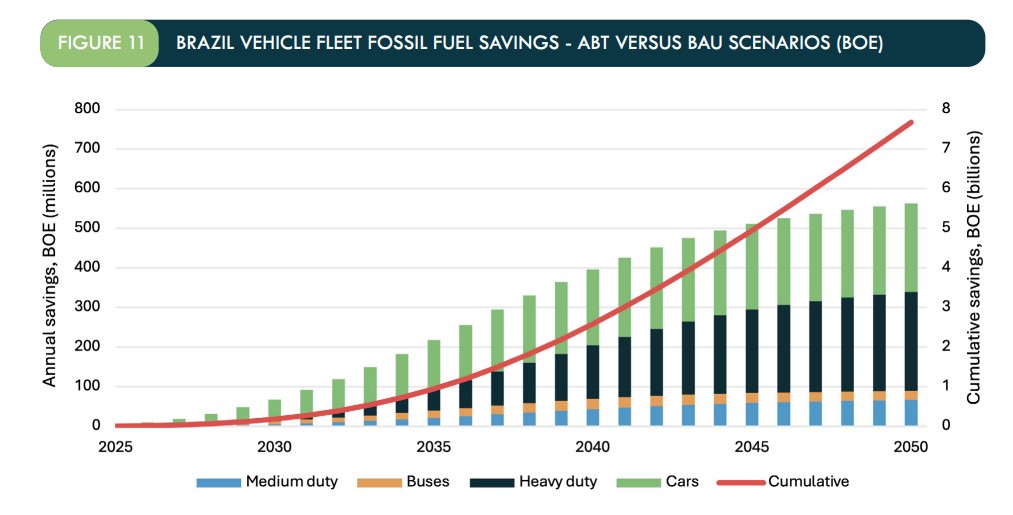
Given this outlook, the study concludes that an accelerated transition to electric vehicles, especially battery electric vehicles (BEVs), could avoid the consumption of around 7.7 billion barrels of oil equivalent (BOE) in transportation fuels accumulated by 2050, generating fuel import savings of up to a quarter of a trillion dollars (approximately R$1.39 trillion).
These estimated savings not only improve Brazil‘s trade balance, but also reduce the country’s vulnerability to international oil price volatility, which the report identifies as a growing risk to Brazil’s economic and energy security if current fossil fuel consumption trends persist.
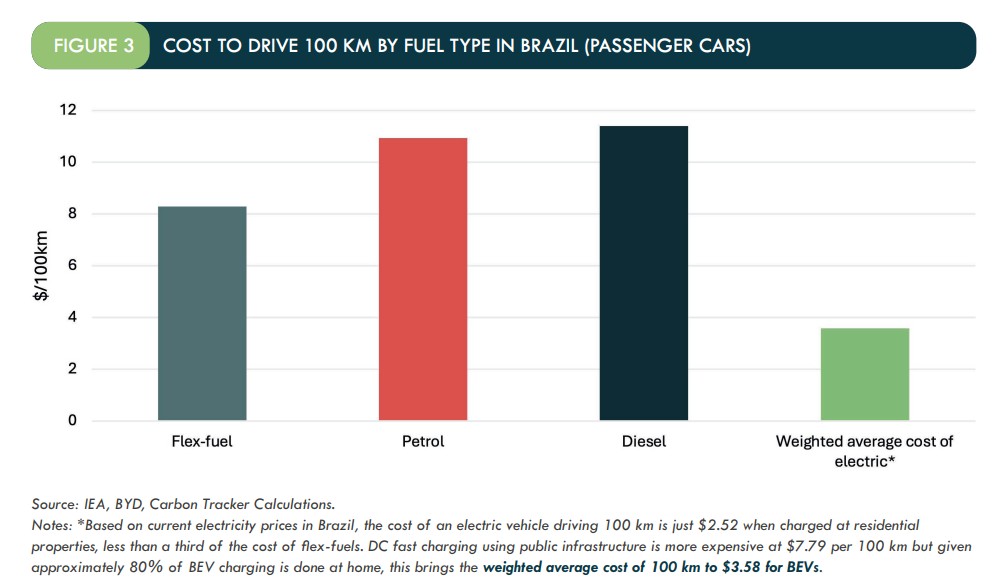
Carbon Tracker highlights that Brazil is better positioned than many emerging markets to benefit from the transition to electric mobility due to a highly low-emission electricity matrix, dominated by renewable sources such as hydro, wind, and solar, which makes electricity significantly cheaper than gasoline for consumers.
The report also mentions that the expansion of electric vehicle production and adoption is favored by factors such as abundant mineral resources for batteries and a local automotive industry with the potential to integrate more deeply into global EV value chains.
Multiple Benefits
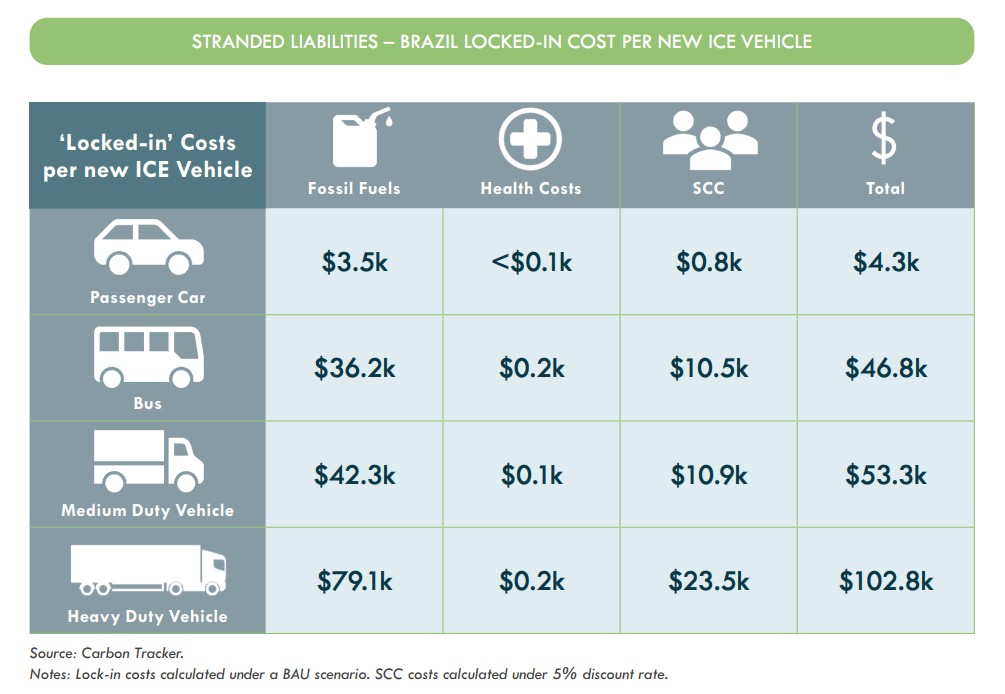
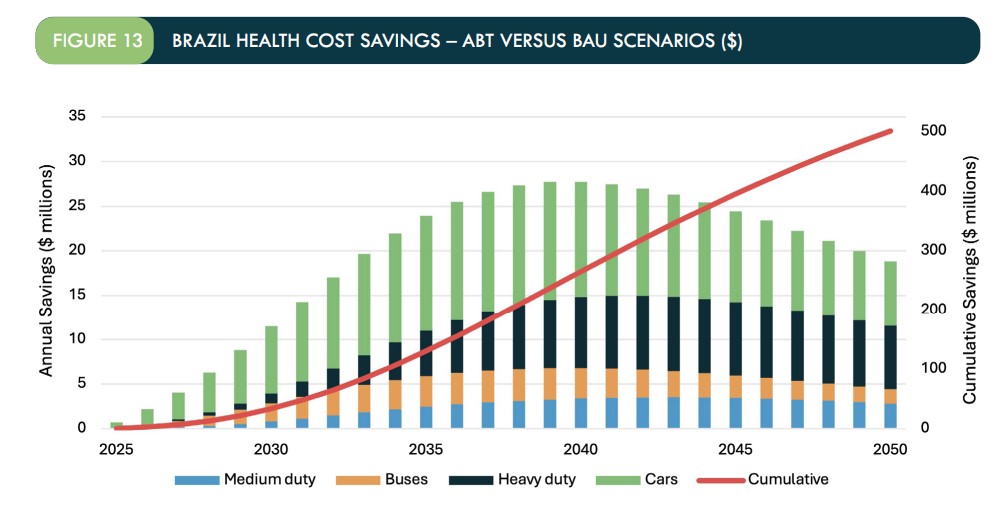
In addition to the economic impacts, the report assesses the benefits derived from improved urban air quality. By reducing fossil fuel use and associated emissions of nitrogen oxides (NOx) and fine particulate matter (PM2.5), Brazil could prevent around 1,400 cumulative premature deaths by 2050.
Carbon Tracker estimates that these public health benefits could translate into savings of around US$500 million for Brazilian healthcare systems over the same period, reducing pressure on hospitals and medical services in the most densely populated metropolitan areas.
The report also quantifies climate-related impacts beyond air quality. The transition to EVs is projected to avoid at least US$75 billion in climate change-related economic damage by 2050, including costs from extreme weather events, reduced productivity, and agricultural losses.
Call for Coordinated Policies
Carbon Tracker warns that achieving these benefits will require clear and sustained policy action. The report recommends that the Brazilian government implement coordinated policies to accelerate transport electrification, including incentives for EV adoption, investments in charging infrastructure, and long-term signals for consumers and investors.
The document highlights that current policies, such as the growth of incentives for automotive innovation and national green mobility programs, such as the MOVER Program, which has already mobilized significant private investment and strengthened environmental standards in the automotive market, could serve as the basis for a comprehensive electrification strategy.
Carbon Tracker emphasizes that Brazil has the opportunity to consolidate its position as a leader in electric mobility in Latin America, taking advantage of both its energy advantages and global trends in battery cost reduction, with a drop of more than 80% since 2013 driven by global manufacturing expansion, especially in China.
The report argues that if Brazil accelerates the transition to electric vehicles, it will not only improve the country’s economic competitiveness, but also strengthen its energy resilience and meet broader sustainability and public health goals for decades to come.
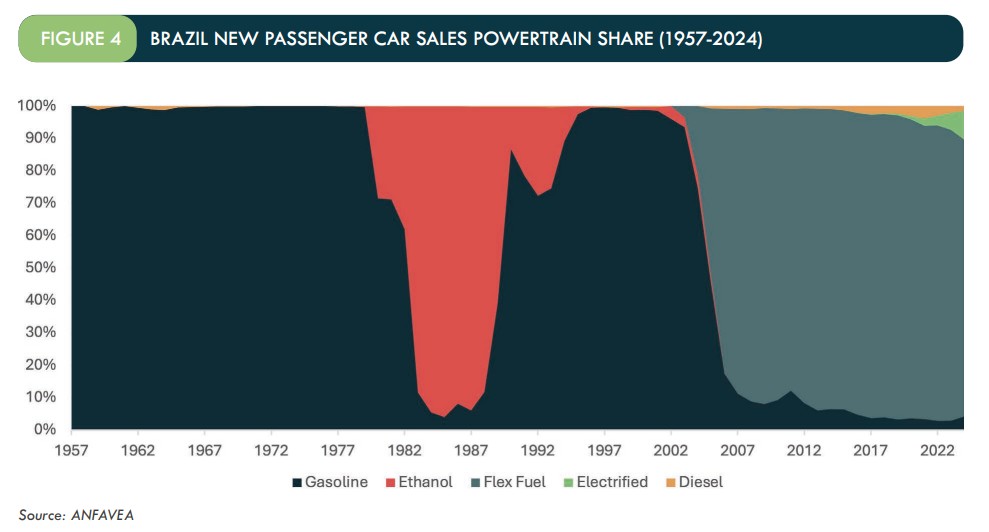
“Brazil has already successfully transformed its fuel system twice: first with ethanol in the 1970s and then with flex-fuel in the 2000s. A decisive leap towards electric vehicles today could ensure Brazil’s economic resilience, environmental sustainability, and global competitiveness for decades to come.”
Ben Scott, Director of Energy Demand at Carbon Tracker
Platform for the Mobility of the Future
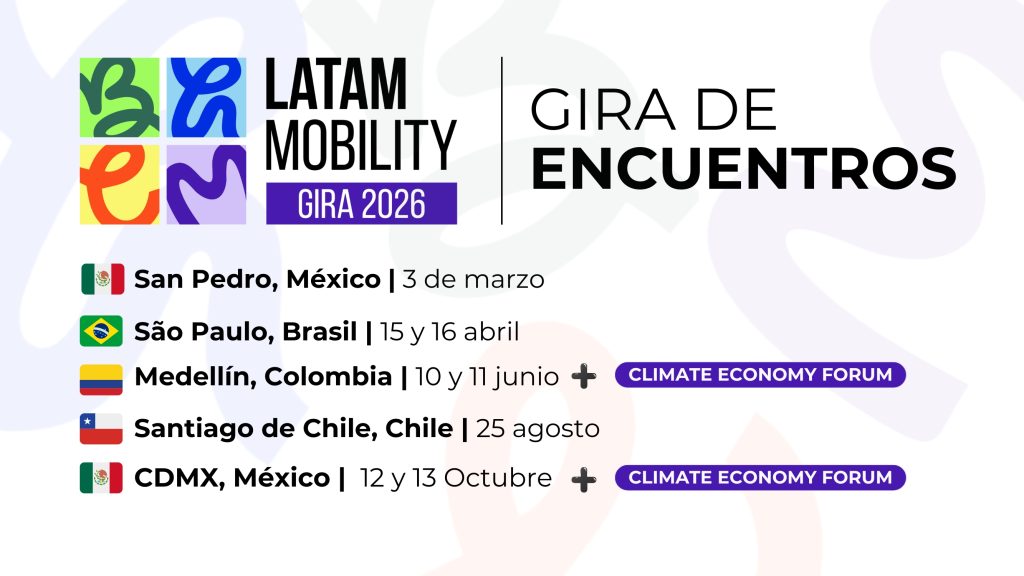
With the 2026 Tour, Latam Mobility reaffirms its commitment to building a regional agenda that connects vision, public policy, innovation, and the market.
Through its stops in Monterrey and Mexico City, Brazil, Colombia, and Chile, the platform will continue to promote a collaborative approach to accelerate the transition to cleaner, more efficient, and more inclusive transportation systems, positioning Latin America as a relevant player in sustainable mobility at the global level.
Be part of the movement that is accelerating Latin America’s energy and urban transformation. If you would like to learn more about how to participate and positioning options, click here.