



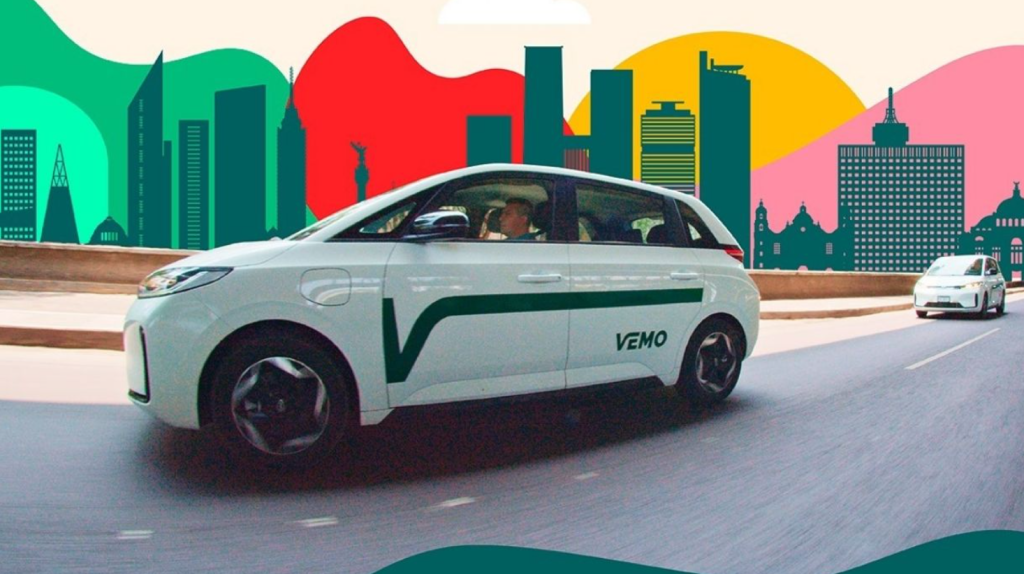
Mexican electric mobility company VEMO announced an investment plan exceeding US$1.5 billion over the next five years aimed at expanding its public and private charging network, strengthening its operations, and scaling its electric vehicle fleet.
The strategy comes as Mexico‘s electromobility market enters a new phase, transitioning from several years of accelerated growth toward a consolidation stage.
The plan contemplates deploying approximately 23,000 charging connectors by 2030 and incorporating nearly 55,000 additional electric vehicles into its operating ecosystem.
The company aligns this roadmap with recent market performance: in 2025, sales of electric and plug-in hybrid vehicles in Mexico grew 38.5% year-over-year, according to industry data published by Mexico Business News.
You might also be interested in | S2G Energy and AMPECO Alliance Accelerates Last-Mile Fleet Electrification in Latin America
Infrastructure and Financing as Strategic Pillars
The investment program prioritizes accelerating infrastructure deployment, expanding operations, and strengthening the electric mobility ecosystem in Mexico and Latin America. Execution of these targets will depend on coordination with strategic partners and financial institutions.
To date, VEMO has raised more than US$500 million in capital from investors including Vision Ridge Partners, Riverstone Holdings, Orion Infrastructure Capital, BEEL Infrastructure Partners, PROMECAP, Covalto, and Kapital.
In September 2025, the company announced a US$250 million investment commitment led by Vision Ridge Partners, reinforcing its financial capacity for the projected expansion.
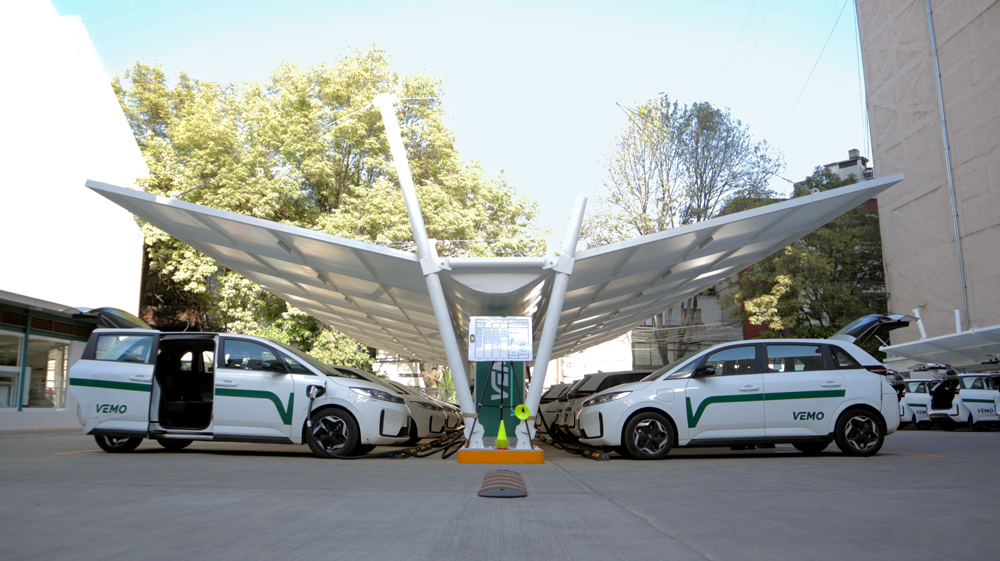
Last year, the company launched what it described as Mexico‘s largest public charging hub: the site features 102 connectors and an installed capacity of 6.2 megawatts (MW), establishing a new benchmark for high-capacity urban charging infrastructure in the country.
As of the latest reporting period, the VEMO Charging Network exceeded 1,400 connectors distributed across 18 Mexican states and processed more than 85,000 monthly charging sessions.
The company states that this operational scale positions it as the country’s largest public charging network in terms of active operations.
From Growth to Consolidation
Data from the Electro Mobility Association (EMA) shows the sector maintained its momentum throughout 2025. According to their figures, sales of electric and plug-in hybrid vehicles grew 38.5% year-over-year by year-end. During the same period, the national charging network reached 56,726 points, representing a 26% annual increase.
These figures demonstrate that infrastructure growth has kept pace with electrified vehicle adoption, although industry players agree that charging availability will remain a determining factor in sustaining electric vehicle fleet expansion.
As EV penetration increases, synchronizing vehicle deployment with charging capacity becomes critical to avoid bottlenecks and maintain user confidence.
From field operations, VEMO emphasizes that fleet growth must go hand-in-hand with stations designed to respond to growing and more diverse demand, both in urban environments and strategic corridors.
“Looking toward the end of the decade, the challenge is no longer only to expand the market, but to do so with a long-term vision. The objective is to consolidate steady, profitable and scalable development for the entire region, where planning, regulation and investment will play a decisive role,” said Constantino Rodríguez, Commercial Director of VEMO.
Operational and Environmental Impact
Accumulated operational data shows sustained growth in the use of the VEMO ecosystem. To date, vehicles operating within its platform have traveled more than 235 million electric kilometers and completed more than 25 million trips through mobility applications.
In environmental terms, the company estimates it has helped mitigate more than 40,000 metric tons of carbon dioxide equivalent (CO2e).
As a comparative reference, this reduction volume is equivalent to the carbon captured by approximately 1.9 million trees, according to the company’s internal calculations.
With this US$1.5 billion plan, VEMO seeks to consolidate its position in a market evolving toward greater operational maturity, where financial planning, infrastructure robustness, and technological integration will be determining factors for the next stage of electric mobility growth in Mexico and the region.
2026 as a Year of Consolidation
Rather than ambitious announcements, 2026 will be a year for measuring results. Electric and low-emission mobility will no longer be evaluated by the number of pilot projects but will be judged by its ability to operate at scale, reduce real emissions, and improve the quality of urban life.
For Latin America, the challenge will be to capitalize on its experience in electric public transportation, close infrastructure gaps, and build stable policies that allow the transition to be not only green but also inclusive and economically viable.
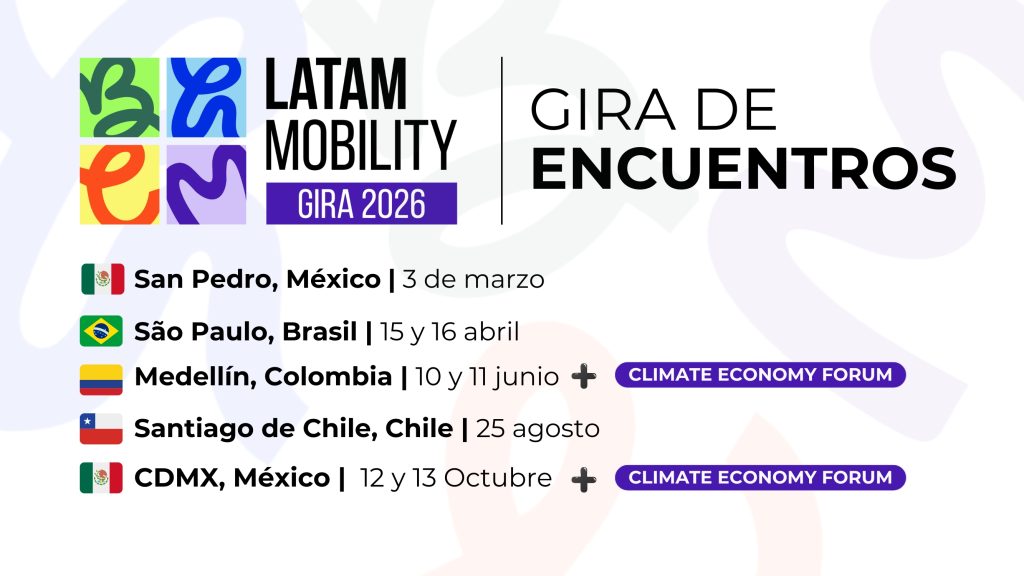
With the 2026 Tour, Latam Mobility reaffirms its commitment to building a regional agenda that connects vision, public policy, innovation, and the market.
Through its stops in Monterrey and Mexico City, Brazil, Colombia, and Chile, the platform will continue to promote a collaborative approach to accelerate the transition to cleaner, more efficient, and more inclusive transportation systems, positioning Latin America as a relevant player in sustainable mobility at the global level.
Be part of the movement that is accelerating Latin America’s energy and urban transformation. If you would like to learn more about how to participate and positioning options, click here.