



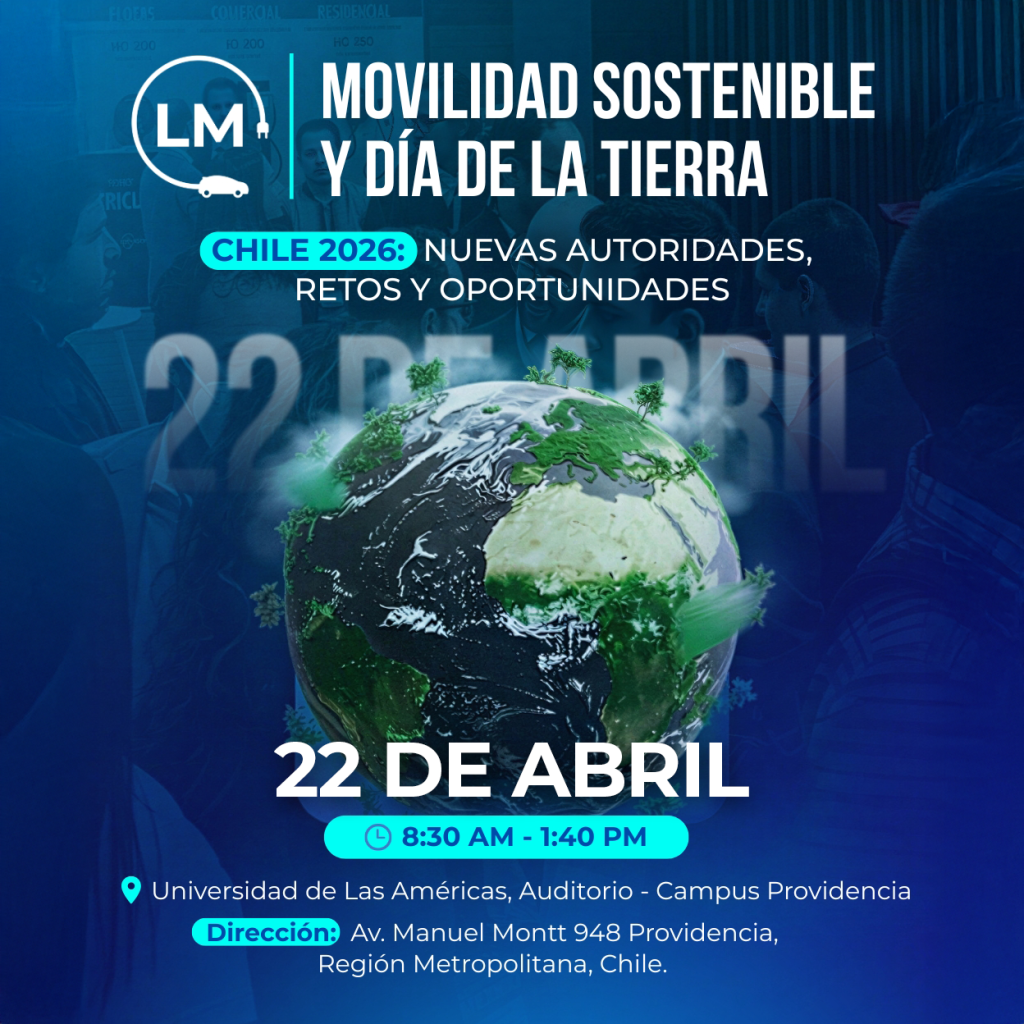
In the context of Earth Day, Latam Mobility will hold the event “Sustainable Mobility and Earth Day Chile 2026: New Authorities, Challenges, and Opportunities.”
The event is scheduled for April 22, from 8:30 AM to 1:30 PM, at the Providencia campus of the Universidad de Las Américas (UDLA), and is shaping up to be a key space for dialogue among key players in the sustainable mobility ecosystem.
The day is designed to generate high-level dialogue around the main challenges and opportunities that will shape the public agenda in the coming period. It will bring together new state authorities, representatives from the private sector, international organizations, and specialists who are leading the shift toward cleaner, more efficient, and inclusive transportation systems.
On a date as significant as Earth Day, this event stands out as a key platform to drive alliances, accelerate strategic decisions, and build a shared roadmap toward a more sustainable future for Chile and the region.
You may also be interested in | From Subsidy to Service: How “As-a-Service” Models Are Redefining Electromobility in the Region
Figures that Confirm Chile’s Regional Leadership
The event takes on special relevance given the exponential growth of electromobility in the country.
According to official figures from the Ministry of Transport and Telecommunications, Santiago has solidified its position as the city with the largest number of electric buses outside of China, with 4,088 units in operation as of the close of February 2026, representing 62% of the Red Movilidad system fleet. The projection for the first half of 2026 is to reach 4,400 electric buses, equivalent to 68% of the total.
This progress represents a 523% increase since March 2022, when only 779 units were in operation. The environmental impact of this transformation is already tangible: a reduction of up to 75% in fine particulate matter emissions and a decrease of up to 64% in environmental noise have been achieved, in addition to savings of over 60 million liters of diesel.
The sector’s momentum is also reflected in the automotive market. According to the latest report from the National Automotive Association of Chile (ANAC), sales of zero- and low-emission vehicles grew by 60% so far in 2026, reaching 6,017 units sold in just the first two months of the year.
Furthermore, a recent study by Arval Consulting positions Chile as the second country in Latin America in electromobility adoption, behind only Uruguay, and in 37th place globally, sharing a score with countries like Indonesia and Poland.
This position reflects both the country’s steady progress and the challenges ahead in terms of infrastructure, cost reduction, and the mass adoption of 100% electric vehicles.
Public Policies, Electromobility, and Transition
The event’s agenda will tackle the major topics that will shape the evolution of mobility in the country over the next four years. The first block will focus on new public policies, where incoming authorities are expected to share their vision and sectoral priorities in a scenario marked by the goal that all new light vehicles sold in Chile be 100% electric by 2035.
Subsequently, a panel dedicated to electromobility will analyze progress in the adoption of low- and zero-emission vehicles, as well as the role of the automotive industry, charging infrastructure, and road concessionaires in the expansion of this technology.
The final thematic block will focus on sustainability and renewable energy, exploring the synergy between clean energy generation and transportation decarbonization in a country that boasts one of the most renewable energy matrices in the region.
Each space will feature participation from representatives of public institutions, leading companies, and independent experts, ensuring a comprehensive and multisectoral perspective.
A Meeting Point
The day will include networking spaces designed to facilitate the exchange of experiences and the creation of strategic alliances.
With a format combining panel discussions, high-level presentations, and interaction moments, the event seeks to accelerate the strategic decisions needed to keep Chile at the forefront of sustainable mobility in the region.
The chosen venue, UDLA, reinforces the academic sector’s commitment to discussing national sustainability challenges, contributing a long-term perspective and a neutral space for collaborative solution-building.
Attendance at the event requires registration, ensuring a high level of technical quality and representation from all links in the ecosystem—from the public and private sectors to academia and civil society.
Click here to request your registration.
📍 Location: Universidad de Las Américas (UDLA) Providencia, Manuel Montt 948, 7500975 Providencia, Región Metropolitana, Chile.
The Agenda to Decarbonize Transport
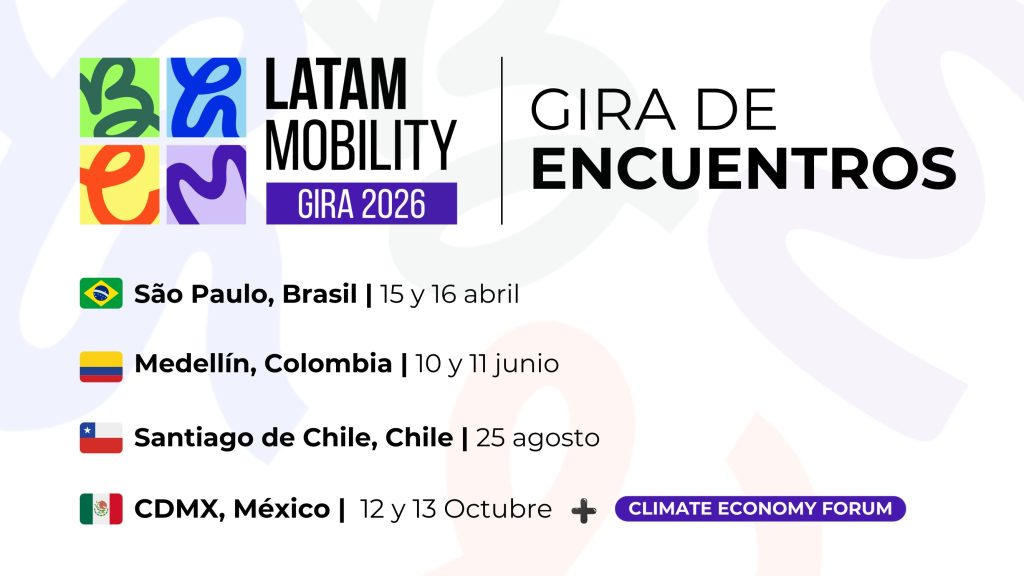
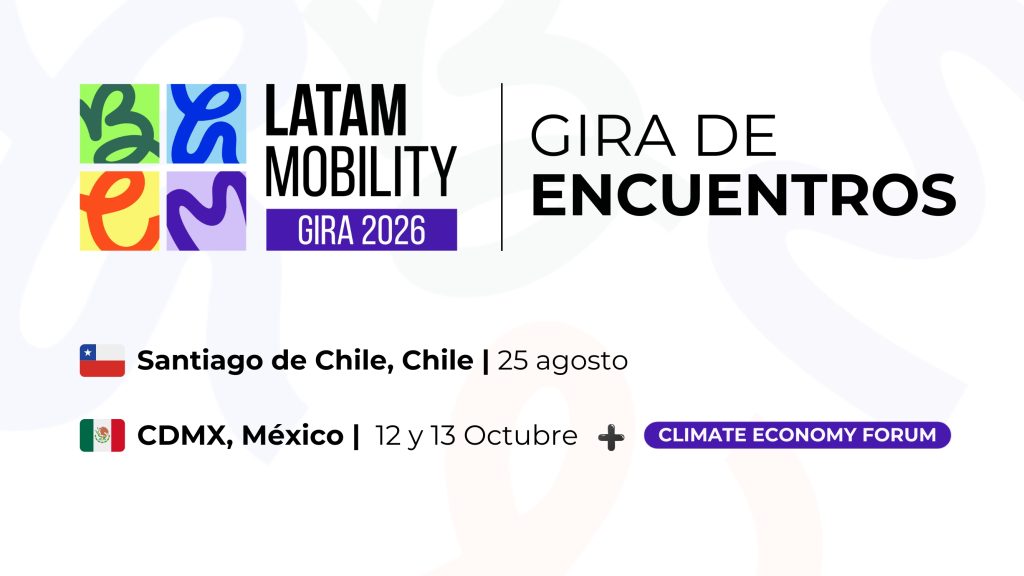
Latam Mobility promotes dialogue among the main players in the sector throughout its 2026 tour, which will visit the region’s key markets to delve deeper into these and other crucial issues for the transformation of mobility.
The Latam Mobility 2026 Tour will travel through some of the region’s most dynamic cities, Mexico City, Brazil, Colombia, and Chile, establishing itself as a unique space to connect the ideas, projects, and leaders who are transforming mobility and the climate economy in Latin America.
The transition is already underway. The 2026 Latam Mobility Tour will be the gathering point to accelerate decisions, connect key players, and collaboratively build sustainable mobility for Latin America.