



The market for electrified vehicles in Mexico started the year with serious momentum, cementing the country as a leader in clean tech adoption across Latin America.
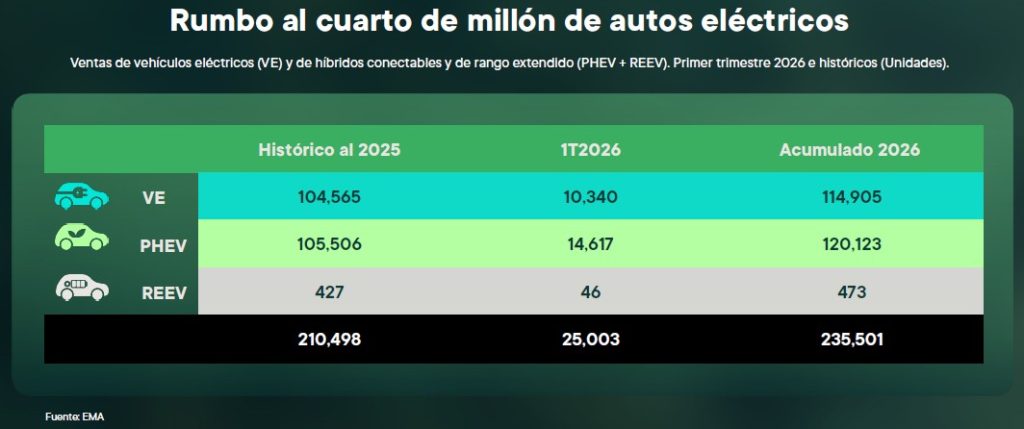
According to the latest report from the Electro Mobility Association (EMA), 25,003 electric vehicles were sold during the first quarter of 2026. That’s a 21.6% increase compared to the same period last year.
This strong performance adds to a record-breaking total of over 235,000 EVs now on the road in Mexico, showing that Mexican consumers are increasingly on board with sustainable driving.
You may also be interested in: “Latam Mobility Colombia 2026”: the key boost for electric mobility in the country and the region
More Options than Ever
The rise of electric mobility is fueled by a growing and more accessible lineup of vehicles. Right now, automakers that report to EMA offer more than 110 fully electric models and 60 plug-in hybrid and extended-range options.
A big part of this growth comes from Chinese manufacturers, who keep gaining ground in Mexico. Models like the BYD Dolphin Mini and the BYD Yuan Pro are among the top sellers in the entry-level segment.
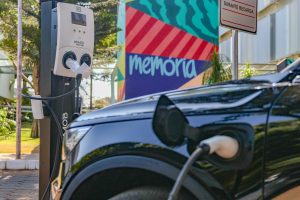
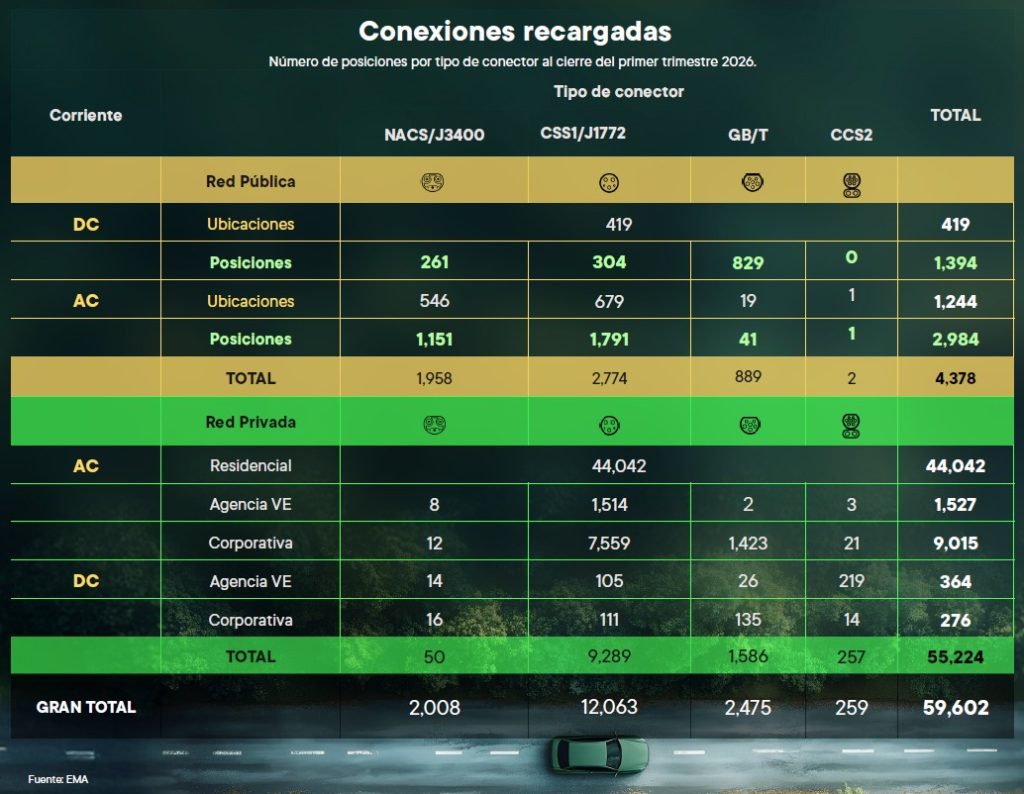
At the same time, Mexico’s EV charging network has gotten a major upgrade. The public charging network grew 24.6% year over year, reaching 4,378 connectors nationwide. The private network now has over 55,000 connectors—a 25.7% jump.
Fast-charging points have been one of the biggest stories this period, with about a 25% increase in fast chargers. That means shorter wait times and better service overall.
Public Transport: Where Cities Place the Biggest Bet
One of the fastest-changing areas in electric mobility is public transit. Major Mexican cities are rolling out ambitious plans to electrify their bus and trolley fleets, cut pollution, and improve air quality for millions of daily riders.
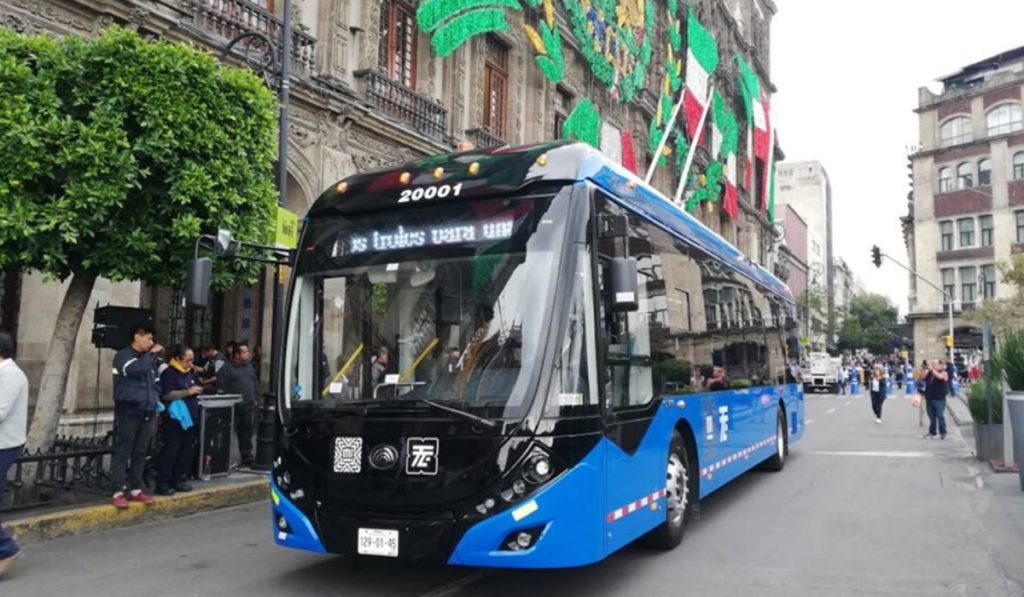
In Mexico City, the Electric Transport Service (STE) recently added 13 new trolleybuses as part of a larger modernization push ahead of the 2026 Soccer World Cup.
These new trolleybuses will run on Trolleybus Line 14, connecting the Universidad stop with the Huipulco Intermodal Transfer Center (CETRAM) . They may also be used on the new Line 0 along the Inner Circuit.
“These new units represent progress in our commitment to provide a more efficient, safe, and sustainable service for all users,” the agency said, adding that the goal is to move the capital “with clean energy and quality.”
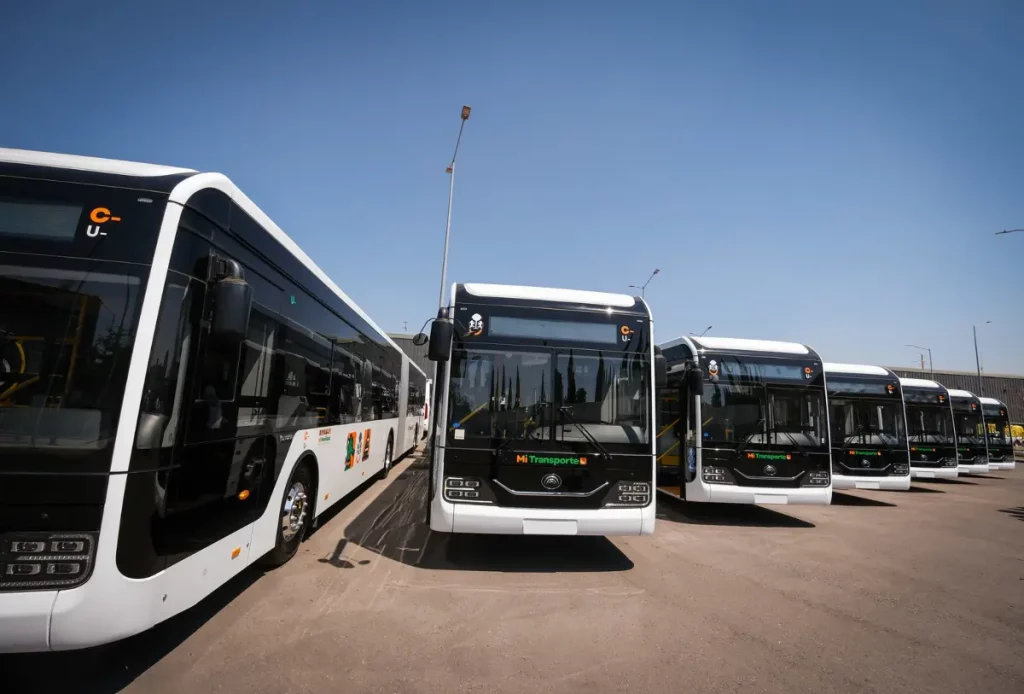
Also, the Mexico City government approved 12 electric buses from the brand Yutong for a new Centrobús route. The investment: 111 million pesos. These buses are 9.5 meters long, can go up to 300 kilometers (about 14 hours of service) on a single charge, and fully recharge in about 90 minutes.
They come with modern features like cameras instead of rearview mirrors, wheelchair ramps, and phone chargers. They’ll run on two routes through the Historic Center, connecting to the Metro, Trolleybus, and Metrobús. Fare: five pesos starting May 8.
Beyond the Capital
Other states aren’t waiting around. With federal help, they’re moving fast on electric public transit. Mexico’s president announced a 2 billion peso investment months ago for the three cities hosting the 2026 World Cup: Mexico City, Jalisco, and Nuevo León.
In Jalisco, that money will go to Line 5. In Nuevo León, it’s for Lines 4 and 6. Plus, the city of Puerto Vallarta will launch a new electric bus system in May with high-capacity buses for up to 130 passengers, featuring air conditioning and universal accessibility.
On the policy side, the Mexican government is backing this shift through the so-called “Plan México” —a broad strategy to promote electric mobility, attract foreign investment, and boost tech innovation in the sector.
Also still in effect: a decree allowing an immediate tax deduction of up to 86% on the value of electric, hybrid, and hydrogen vehicles. That’s a huge incentive for both companies and individuals.
And big manufacturers like General Motors, Ford, and Tesla have announced multi-billion-dollar investments and expanded EV production lines in Mexico, making the country a true manufacturing hub for electric mobility.
Ride-hailing Drives EV Adoption
Another big contributor to EV adoption: ride-hailing apps. In the first quarter of 2026, 2,218 loans were given specifically to buy electric vehicles for ride-hailing services. That brings the historic total to nearly 20,000 financed EVs.
Those EVs completed more than 5.8 million trips with zero local emissions—that’s the equivalent of 62.8 million kilometers driven. The impact on urban air quality and carbon footprint is real.
Given this steady growth, Eugenio Grandio, president of the Electro Mobility Association (EMA), said that despite the volatility and uncertainty from geopolitical and trade conflicts, more and more Mexicans are choosing new tech vehicles.
“There are challenges, volatility, and uncertainty caused by geopolitical and trade conflicts, but there is an incontrovertible reality: more and more Mexicans are joining the adoption of new technology vehicles,” Grandio said.
“The more brands that join this report, the more realistic the market picture will become. With more brands and models available to consumers, we gain as a market in access to better technology and greater emission reductions,” he added.
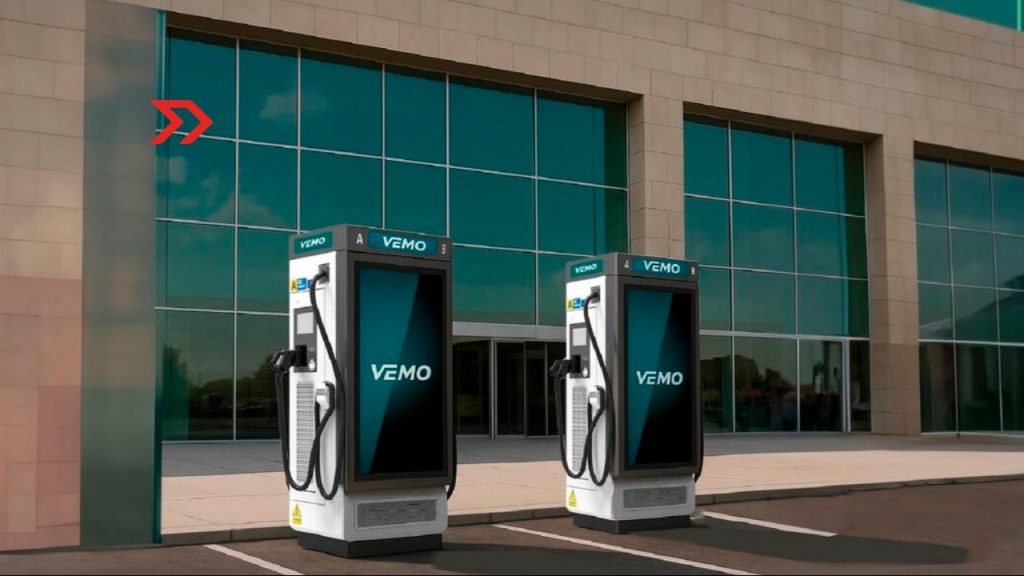
Looking ahead, companies like VEMO —the Mexican cleantech pioneer in clean mobility—are planning major investments. VEMO aims to deploy nearly 23,000 connectors across its public and private charging network and invest more than $1.5 billion dollars over the next five years to speed up infrastructure and expand in the region.
Latam Mobility Mexico 2026: The Grand Finale of the Tour
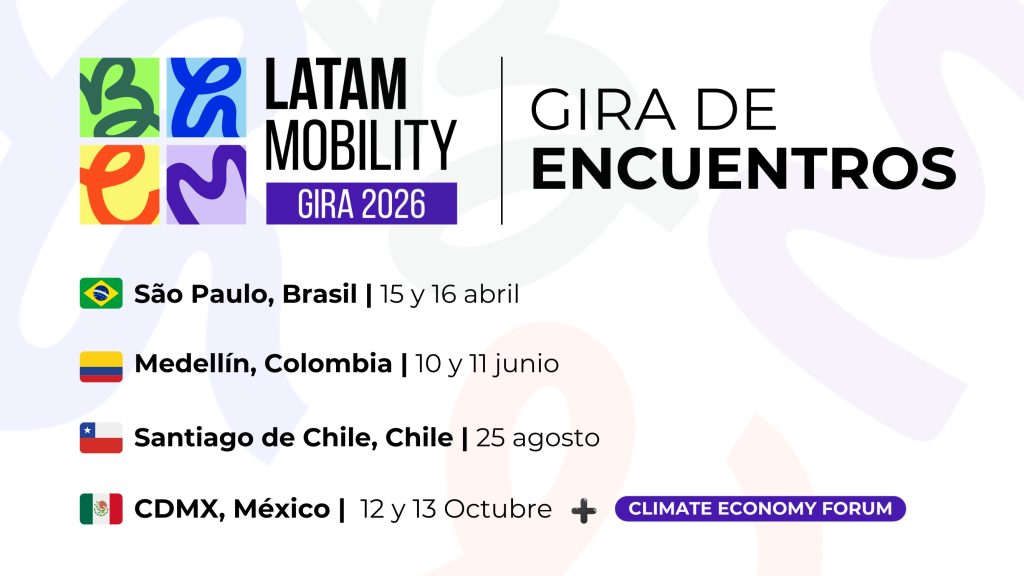
In the middle of all this growth and change, Latam Mobility —the most important sustainable mobility network in Latin America—is running its 2026 Tour through some of the continent’s most dynamic cities.
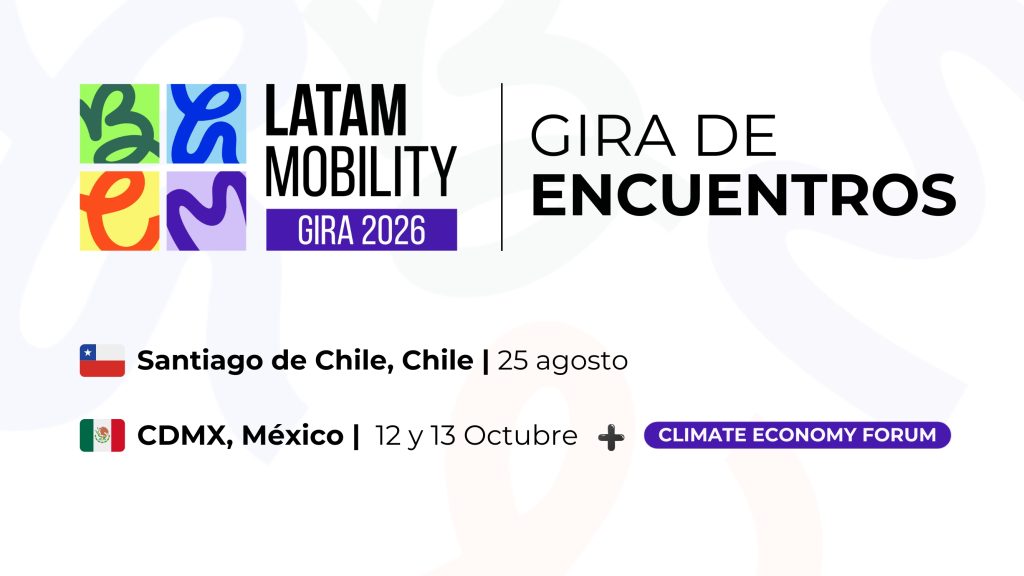
After successful stops in Monterrey and São Paulo , they’re getting ready for Medellín, Colombia (June 10–11) and Santiago de Chile (August 25) . Then comes the grand finale in Mexico City , which will be the must-attend event for every key player in the region.
Latam Mobility Mexico 2026 will take place on October 12–13 at the World Trade Center in Mexico City. This year’s edition is expected to beat all records, with over 1,200 professionals attending, including executives from major automakers, assemblers, charging providers, government officials, and investment funds focused on the sector.
The event program will tackle many of the most important topics for the present and future of electric mobility in Mexico and the region. Brazil will be the guest country. There will be panels, keynotes, workshops, product launches, and high-level networking opportunities designed to build strategic partnerships that speed up the shift to cleaner, more efficient transportation in Mexico.
This is an unmissable event. If you’re interested in joining as a partner, attendee, speaker, or exhibitor, click here for more information.