

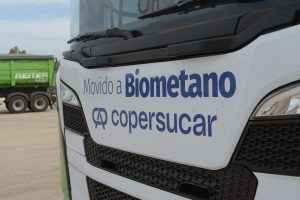

In a move that is redefining agribusiness logistics in Brazil, Copersucar – one of the world’s largest sugar and ethanol trading groups – is accelerating the energy transition of its overland transport fleet using biomethane.
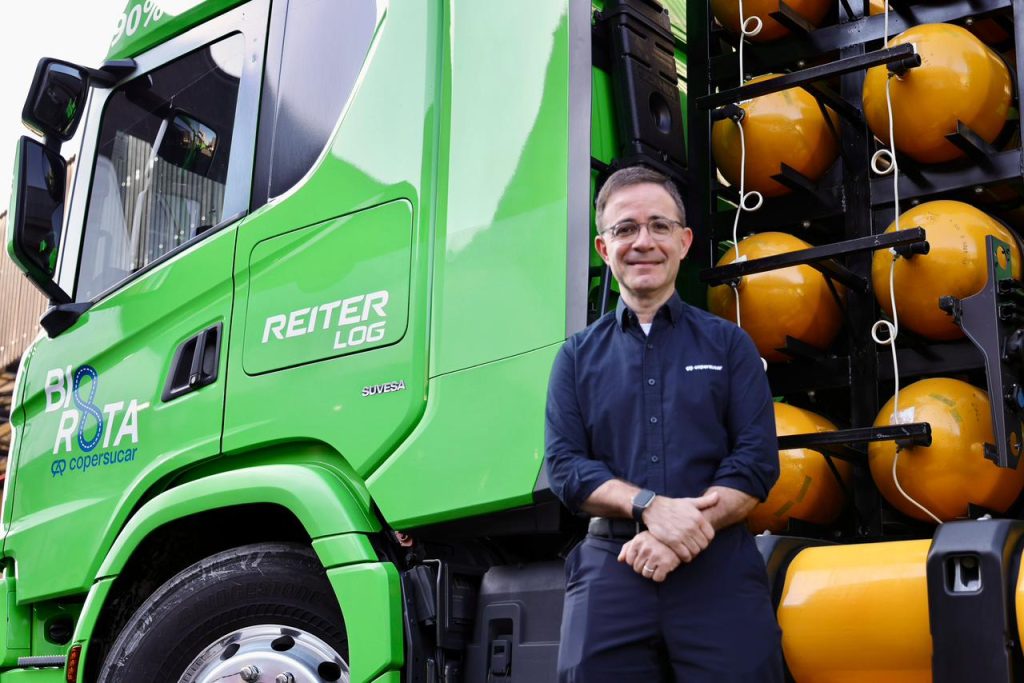
The company announced it is expanding the use of fuel made from sugarcane waste to power its trucks on routes connecting production plants to the Port of Santos.
Right now, more than 70 trucks already run on this renewable fuel, representing roughly 14% of an estimated fleet of 500 vehicles dedicated to moving sugar and ethanol.
This project, called BioRota, is laying the groundwork for 100% of the company’s overland transport to eventually run on biomethane – a fuel that is already proving to be 20% to 25% cheaper than diesel.
You may also be interested in | Changan Invests in Brazil, Launches Models in Mexico, and Begins Testing Batteries with Over 1,500 km of Range
BioRota Gains Scale on the Sugar Route
The BioRota project was officially presented by Copersucar on May 13 at an event held at its terminal in the Port of Santos – the world’s main sugar export hub, handling more than 50% of global shipments of the commodity.
The initiative involves using biomethane produced from sugarcane waste, such as vinasse (a liquid residue from fermentation) and filter cake (a solid residue from sugarcane juice filtration), to power heavy cargo trucks that traditionally relied on diesel.
Although the pilot began in April 2024, the project has gained significant scale with the inclusion of multiple partner carriers.
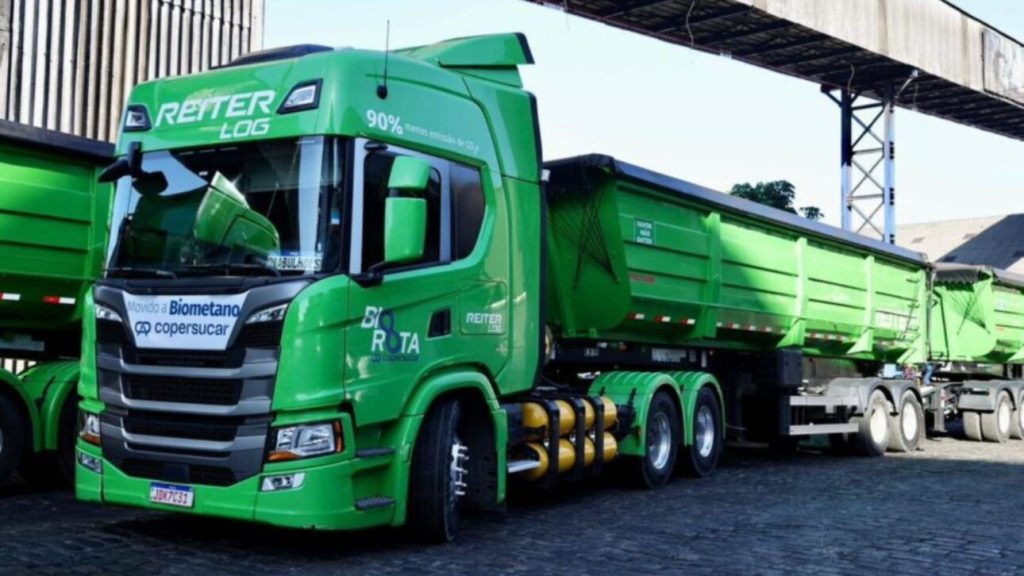
Currently, five logistics companies operate under the BioRota model: Reiter Log, Transvale, GetOne, RodoMacro, and JR. Together, they run a fleet of between 70 and 74 trucks, depending on scheduled maintenance.
Range, Power, and a Circular Business Model
The biomethane operation is not a small test – it’s a robust solution for heavy transport.
The trucks running on BioRota are nine‑axle units, capable of carrying up to 74 tons, with a range of up to 700 kilometers and a noticeably lower noise level than diesel models.
These 6×4 vehicles travel the highways of interior São Paulo state down to the coast, moving sugar and ethanol on a demanding route that requires power and reliability.
A central piece of the initiative is its circular business model. Copersucar did not buy the trucks. Instead, it offers its partner carriers two key things: a long‑term freight contract (two to five years) and a guaranteed supply of biomethane produced at its own mills.
With that security, carriers invest in natural gas trucks (which have a higher upfront cost) and recover their investment through fuel savings.
The fuel’s production cycle closes the loop of the circular economy: vinasse – a residue from sugarcane fermentation – undergoes biodigestion to release biogas, which is then purified into biomethane.
The remaining material from this process goes back to the sugarcane field as a potassium‑based fertilizer, maintaining its agricultural function and eliminating waste.
Up to 25% Cheaper than Diesel
Beyond the clear environmental benefit, the argument driving companies is economic.
Tomás Manzano, CEO of Copersucar, stated: “It’s about 20% to 25% cheaper to use biomethane. That fuel price difference is enough to pay for the more expensive asset and bring a return to the investor,” he said during the BioRota presentation.
Between April 2024 and March 2026, the biomethane operation has already replaced approximately 5 million liters of diesel. The savings are especially relevant in a time of high oil price volatility, worsened by international conflicts – which gives biomethane an extra competitive edge.
On the environmental side, replacing diesel with biomethane represents a huge step forward for heavy transport decarbonization. Copersucar estimates that biomethane cuts greenhouse gas emissions by up to 90% compared to fossil fuel.
Thanks to the BioRota initiative, more than 8,000 tons of CO₂ emissions have been avoided over the two years of the pilot project. That’s an achievement that lines up with Brazil’s plans to become a world leader in biofuels, leveraging its status as the world’s largest sugarcane producer.
100% of the Mills will Produce Biomethane
Copersucar‘s goal goes far beyond the current 70 trucks: the aim is for 100% of the company’s overland transport to be done with biomethane‑powered trucks, and for this transition to be backed by massive fuel production at all its partner plants.
Currently, biomethane production is concentrated in two mills of the Cocal group, located in Narandiba (capacity of 25,000 m³/day) and Paraguaçu Paulista (capacity of 60,000 m³/day).
But Tomás Manzano projects that within ten years, all 42 mills associated with Copersucar will be producing biomethane – at a pace of six to seven new projects per year.
The required investment for each biomethane plant ranges from R$200 million to R$300 million (roughly $40 to $60 million USD).
In addition to supplying its own fleet, Copersucar plans to sell surplus biomethane on the market, diversifying its revenue and helping create a solid market for this biofuel in Brazil.
The BioRota project – with more than 13,000 trips made and 600,000 tons of sugar transported in its first two years – is a success story that marks a before and after in agribusiness logistics.
The Conversation Continues
Through its stops in Mexico City, Colombia, and Chile,Latam Mobility will continue to promote a collaborative approach to accelerate the transition to cleaner, more efficient, and more inclusive transportation systems, positioning Latin America as a relevant player in sustainable mobility at the global level.
Be part of the movement that is accelerating Latin America’s energy and urban transformation. If you would like to learn more about how to participate and positioning options, click here.