



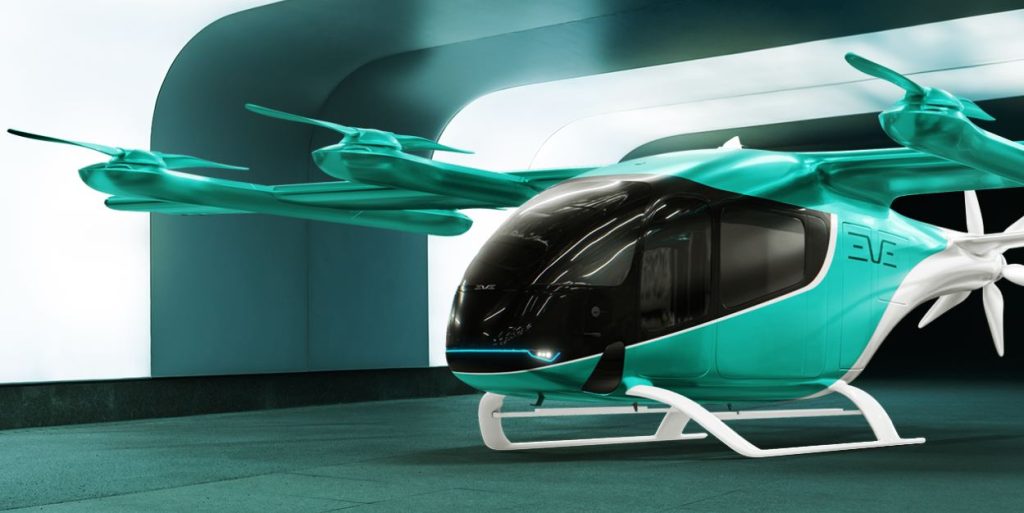
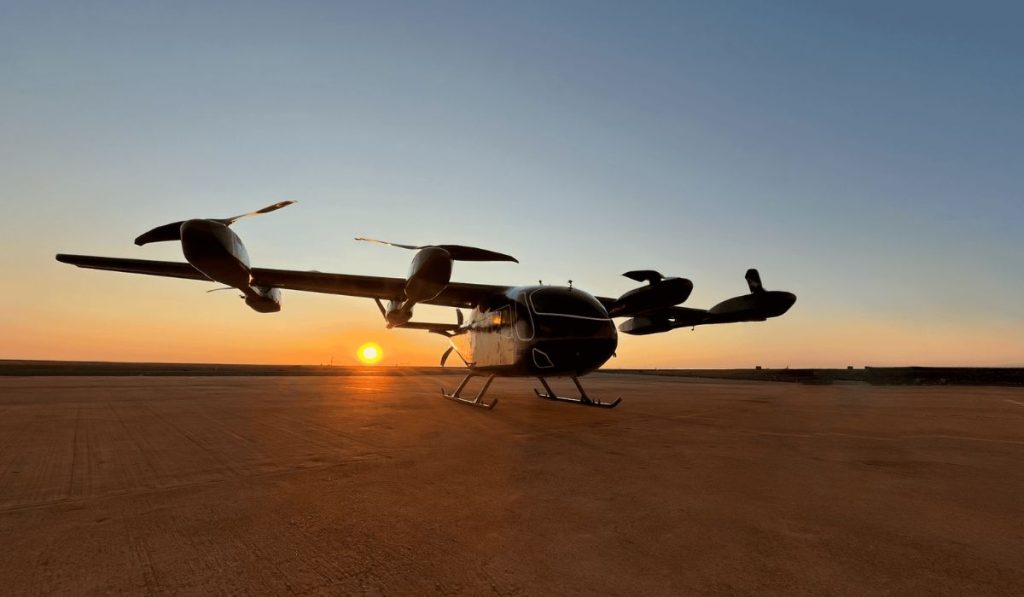
The National Civil Aviation Agency (ANAC), the regulatory and oversight authority for the aviation sector in Brazil, is analyzing the creation of a specific license category for pilots of the so-called “flying cars,” technically known as eVTOLs (Electric Vertical Takeoff and Landing).
With this goal in mind, the federal agency opened a public consultation to receive input from civil society on new qualification requirements for pilots of electric vertical takeoff and landing aircraft.
The process seeks to establish the regulatory groundwork for the safe integration of these new aircraft concepts within the Brazilian aviation system.
You might also be interested in | Brazil accelerates electric bus production and positions itself as regional leader by 2026
Consultation and Update
The consultation will serve as input for a proposed amendment to Brazilian Civil Aviation Regulation No. 61 (RBAC 61), the regulation that establishes requirements for licenses, qualifications, and certificates for civil aviation professionals in the country.
ANAC expects to receive contributions mainly from pilots, training organizations, manufacturers, operators, and industry specialists.
The consultation period is open until March 16th, and participation is carried out through the Brazil Participatory Portal, the federal government’s official platform for public consultations.
The objective is to build a regulatory framework that addresses the operational and technological particularities of eVTOLs, aircraft that feature configurations different from traditional airplanes and helicopters, both in propulsion systems and in control architecture and operation.
Transition Period
According to ANAC, the initiative seeks to gradually and safely prepare the Brazilian licensing system for what it terms “new aircraft concepts,” integrated within the so-called advanced air mobility sector.
The preliminary proposal contemplates a training model with specific instruction for eVTOL qualification. Initially, a transition period is foreseen aimed at already licensed airplane and helicopter pilots, who could adapt through supplementary theoretical and practical training.
According to ANAC, this period would allow for the accumulation of operational experience and regulatory evidence, generating a technical knowledge base to serve as a foundation for defining complete eVTOL pilot training requirements in the future, even without prior experience in other aircraft categories.
The proposed qualification would include supervised experience in typical operations and would conclude with a practical skill verification exam, in line with standards applied to other aviation licenses.
New Market and Future Automation
Consulted about the initiative, the Brazilian Association of Civil Aviation Pilots (Abrapac) noted that, in an initial stage, the arrival of eVTOLs represents the opening of a new job market.
Carlos Perin, director of the entity, stated that the sector will need to adapt to the terms of the regulations established by ANAC, both theoretically and practically. However, he also projected that in a more advanced phase, the progressive elimination of this type of professional could occur.
According to Perin, eVTOLs could evolve towards an unmanned transportation model. In an initial stage, the presence of a pilot on board would help overcome the public’s cultural barrier towards autonomous aircraft.
Over time, and once market acceptance is consolidated, operations could migrate towards schemes with remote control or fully autonomous systems, transporting passengers only.
Embraer and Eve Air Mobility Drive Development in Brazil
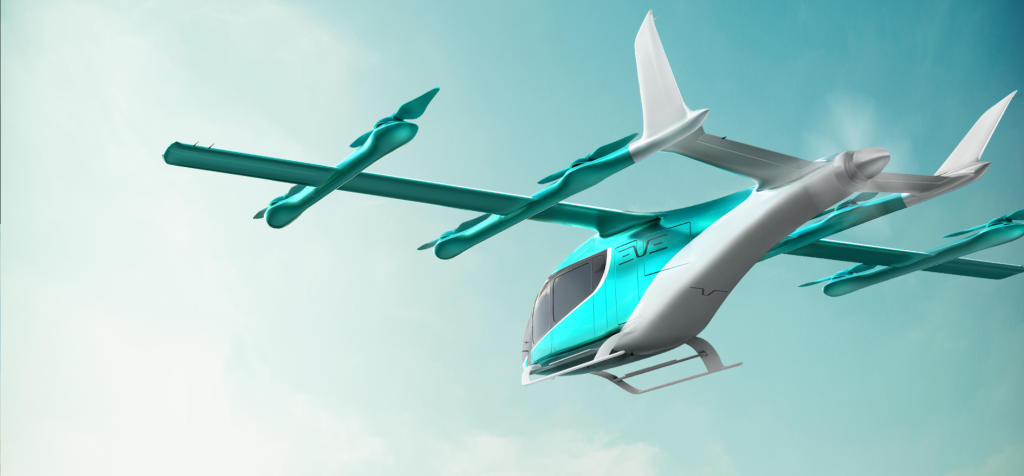
The Brazilian industry is also actively participating in the development of this technology. Manufacturer Embraer positions itself as one of the pioneering players internationally through its subsidiary Eve Air Mobility (Eve).
The company’s plant in Gavião Peixoto, in the state of São Paulo, is working on the development of commercially viable eVTOLs. At the end of last December, Eve conducted the first flight of its own prototype, marking a milestone in the development program.
Recently, the company announced the signing of a contract to sell two aircraft to the Japanese company AirX, an air transport operator that currently has a fleet of helicopters.
Delivery is scheduled for 2029, and the agreement includes an option to purchase up to 50 additional units.
Public Funding and Industrial Policy
Eve‘s development project has public backing. Embraer received financing from the National Bank for Economic and Social Development (BNDES), linked to the Ministry of Development, Industry, Commerce, and Services, as well as support from the Funding Authority for Studies and Projects (Finep), a federal agency fostering innovation under the Ministry of Science, Technology, and Innovation.
The combination of specific regulation, local industrial development, and state financial support positions Brazil as one of the countries seeking to get ahead of the integration of advanced air mobility into its airspace.
With the opening of the public consultation and progress in technical certifications, the country takes a significant step towards the eventual commercial operation of eVTOLs, in a scenario where pilot training, operational safety, and social acceptance will be key factors for the consolidation of the so-called “flying cars.”
2026 as a Year of Consolidation
Rather than ambitious announcements, 2026 will be a year for measuring results. Electric and low-emission mobility will no longer be evaluated by the number of pilot projects but will be judged by its ability to operate at scale, reduce real emissions, and improve the quality of urban life.
For Latin America, the challenge will be to capitalize on its experience in electric public transportation, close infrastructure gaps, and build stable policies that allow the transition to be not only green but also inclusive and economically viable.
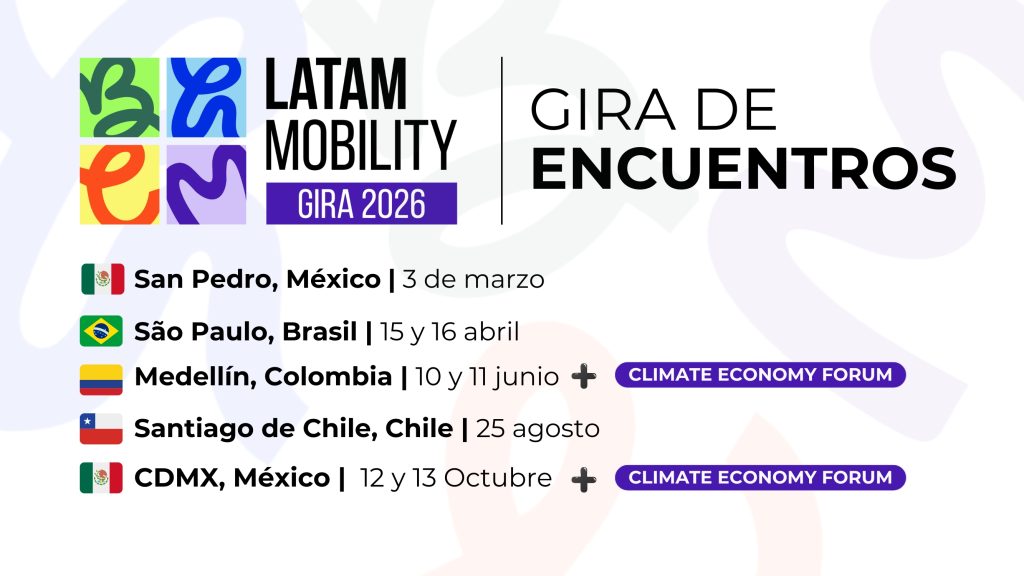
With the 2026 Tour, Latam Mobility reaffirms its commitment to building a regional agenda that connects vision, public policy, innovation, and the market.
Through its stops in Monterrey and Mexico City, Brazil, Colombia, and Chile, the platform will continue to promote a collaborative approach to accelerate the transition to cleaner, more efficient, and more inclusive transportation systems, positioning Latin America as a relevant player in sustainable mobility at the global level.
Be part of the movement that is accelerating Latin America’s energy and urban transformation. If you would like to learn more about how to participate and positioning options, click here.