

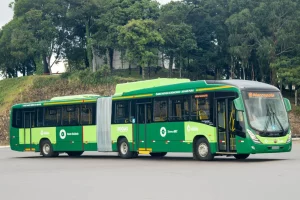

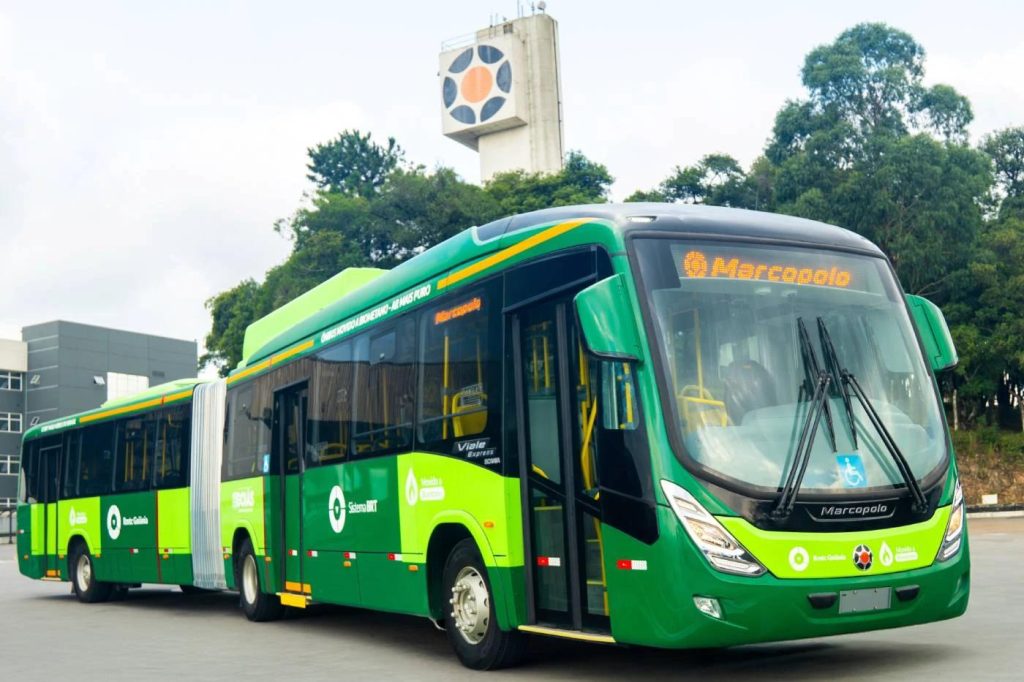
Goiânia has become the epicenter of a quiet revolution in public transportation in Brazil. The recent launch of the first articulated buses powered by biomethane in the city’s BRT Leste-Oeste system (also known as the Eixo Anhanguera) marks a turning point for sustainable mobility in the country.
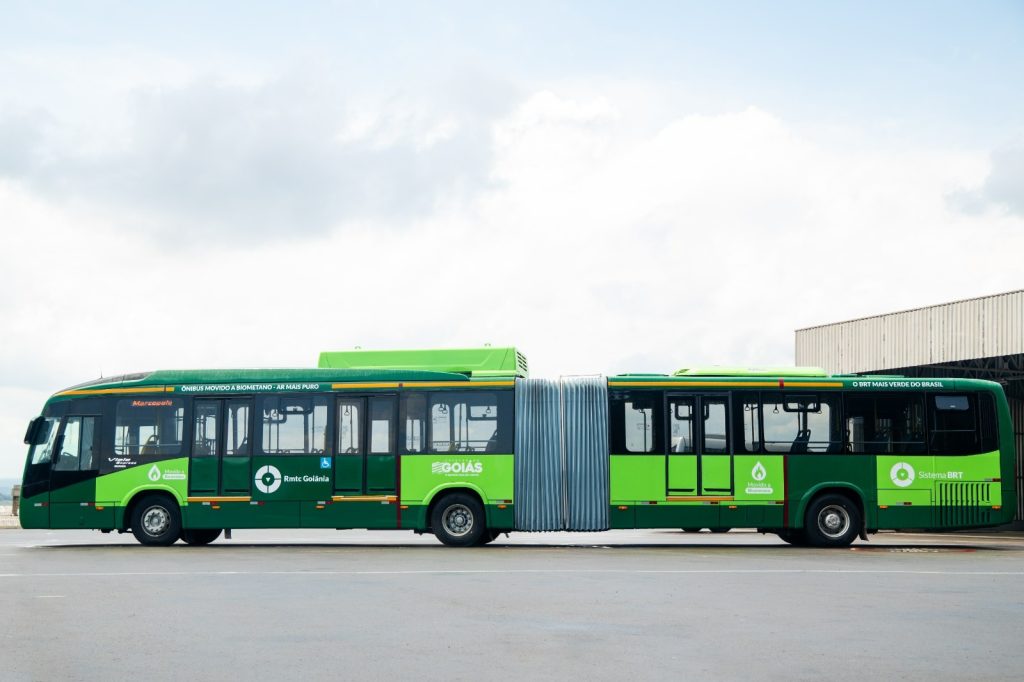
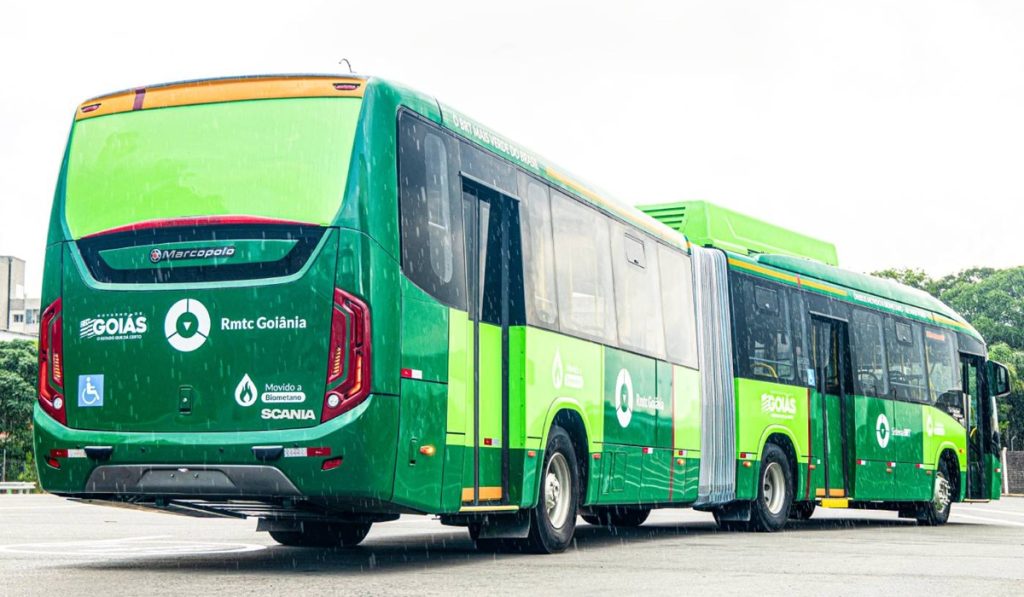
The eight initial units, manufactured by Marcopolo on Scania K 340C A6X2/2 NB Euro 6 chassis, are the first of a program that plans to incorporate 501 such vehicles by 2027, making Goiânia a national benchmark in the use of renewable fuels.
This historic milestone involves investments of over 2.5 billion reais and has not gone unnoticed. According to Alex Nucci, Scania‘s Sales Director in Brazil, the project has put other cities on the technology’s radar.
In addition to Goiânia, state capitals and regional hubs such as São Paulo, Curitiba, Ribeirão Preto, and Rio de Janeiro have already begun negotiations with the company to develop similar projects, according to a note published by AutoData.
You may also be interested in | Brazil Charts the Roadmap for Sustainable Mobility in LATAM: Interoperability and Reindustrialization Set the Pace
Biomethane: The Second Alternative to EVs
The rise of biomethane is no coincidence. It comes from a practical evaluation of costs and infrastructure.
While an electric bus can cost up to two and a half times more than a diesel one, a vehicle powered by biomethane has an additional cost of only 40% to 50% above diesel. That makes it a much more accessible intermediate option in terms of upfront investment.
But the competitive advantage of gas goes beyond CapEx. The refueling infrastructure is significantly simpler: installing an electric charging point requires grid upgrades and long recharging times, while a biomethane refueling point is much faster to set up, and refueling takes only a few minutes.
For this reason, Alex Nucci of Scania is clear: “Starting in 2027, we see gas emerging as a second relevant alternative to electric. Electric will continue to gain scale, but biomethane has more accelerated expansion potential.”
This move reflects a growing maturity in the market and the need to find viable, scalable solutions to reduce emissions in the sector — which still faces high costs and complex infrastructure that hinder mass electrification of fleets.
Goiânia Leads the Model Program
The project in Goiânia is a case study in itself. It not only involves fleet renewal but also the creation of an entire ecosystem around biomethane.
During the delivery ceremony for the first vehicles, officials also announced the implementation of the first biomethane generation plant in the state of Goiás, along with a pioneering pipeline. That’s a fundamental step to guarantee local fuel supply and close the sustainability loop.
The new buses, with Viale Express Articulado bodies, have a range of over 400 kilometers — far exceeding the daily demand of about 250 to 300 kilometers in a typical operation. This operational reliability is key for operators and authorities to see biomethane as a tangible solution for decarbonizing their fleets without jeopardizing service continuity.
The success of the Goiânia model has acted as a catalyst in other regions. In São Paulo, where the goal of electrifying half of the 12,000-bus fleet by 2028 seems unattainable, biomethane has gained enormous prominence. The city has not only relaxed its rules to allow the use of this fuel but is also moving forward in discussions to find economic viability for the project.
Other state capitals are closely following Goiânia‘s steps. Curitiba, a historically pioneering city in mobility solutions, has already requested information from Scania and has conducted demonstrations with gas-powered buses.
In Ribeirão Preto, its strong agribusiness vocation in the sugarcane region makes it a natural candidate for biomethane production and use. Rio de Janeiro, for its part, has a special interest thanks to the availability of this fuel in the Seropédica region, where a plant is already in operation — reducing logistical dependence and lowering costs.
The Pull of Biomethane in Brazil
Scania‘s optimism about biomethane is based on previous experience with gas-powered trucks. The company introduced gas trucks in Brazil in 2018 and, after a maturation period of three to four years, sales took off: 500 units were sold in the first four years and 1,500 in the following two.
Director Alex Nucci is convinced that the bus market will follow a similar path, albeit with an even faster curve. “In the next two years, we will gain experience and maturity. The scale will come later,” he stated.
To support this expansion, Scania maintains a firm investment commitment in Brazil. The company has allocated 2 billion reais for the 2025-2028 cycle, on top of the 1.4 billion reais invested between 2021 and 2024.
These investments are focused not only on electrification but also on the evolution of the sustainable portfolio, including gas engines. In fact, the Brazilian operation has become a nerve center for the company — today it is Scania’s global hub for gas engine production.
The determining factor for mass adoption of biomethane will be its total cost of operation (TCO). Nucci explains that for the equation to work, biomethane’s TCO must stay close to diesel’s, which is the sector’s benchmark.
Although gas maintenance costs can be 10% to 15% higher than diesel, savings in fuel costs and greater operational simplicity can offset that difference.
The executive highlights that the business model is as important as the technology. Structuring projects with long-term financing and creating green corridors (already tested with trucks) will be essential to reduce risk for financiers and make fleet renewal projects viable.
“It cannot all be left to the city council, nor to the manufacturer, nor to the energy provider. Each party needs to play a role,” Nucci said, summarizing the collaboration needed for biomethane to stop being a promise and become an everyday reality on the streets of Brazil’s major cities.
The Conversation Continues
The recently summit in San Pedro Garza García was just the beginning of a journey that will take this dialogue across the entire region. It will be an opportunity to continue building, through open dialogue and multi-sector collaboration, the path toward a cleaner, more efficient, and sustainable future for transportation and logistics throughout the region.
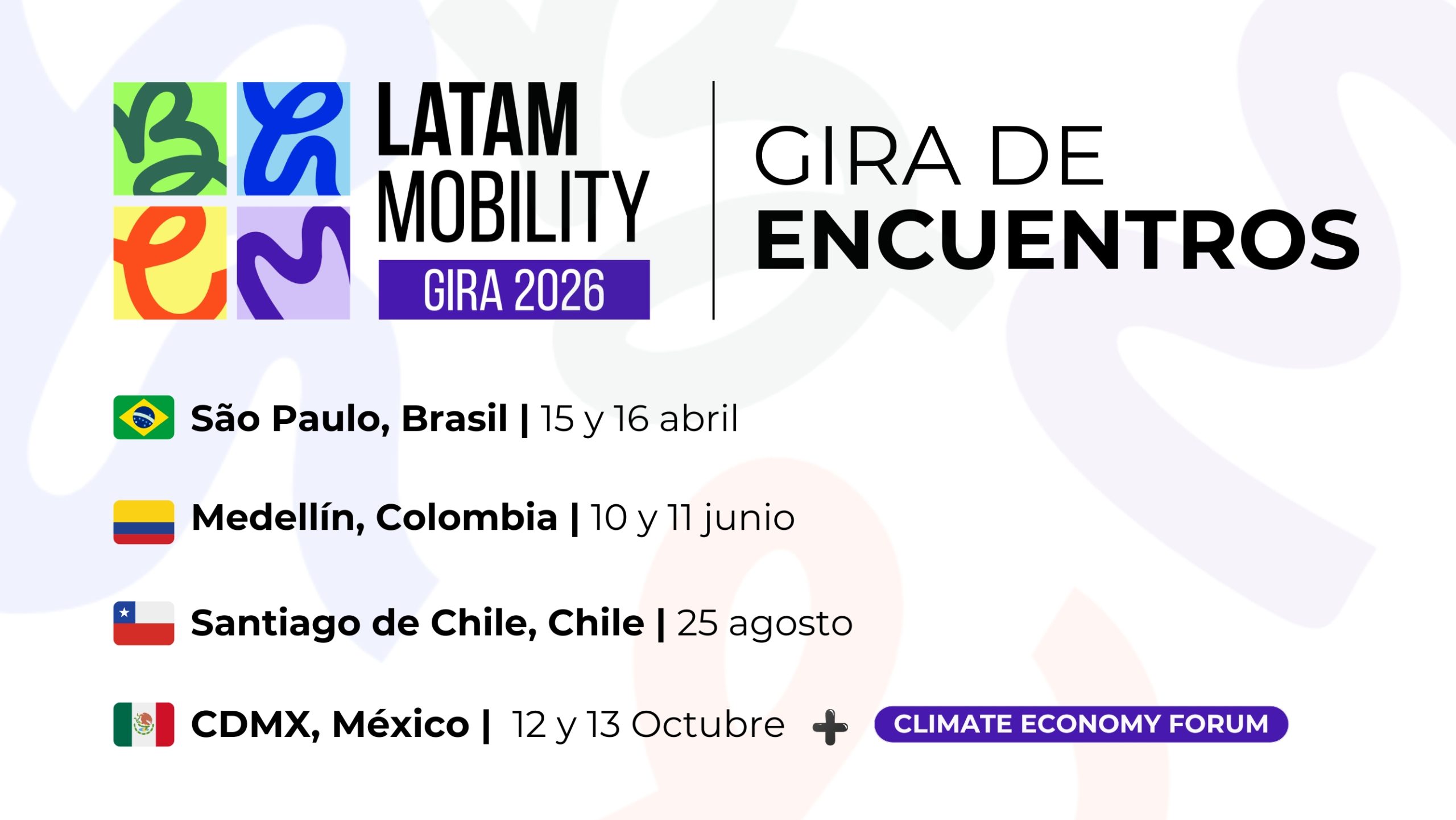
Through its stops in Mexico City, Brazil, Colombia, and Chile, the platform will continue to promote a collaborative approach to accelerate the transition to cleaner, more efficient, and more inclusive transportation systems, positioning Latin America as a relevant player in sustainable mobility at the global level.
Be part of the movement that is accelerating Latin America’s energy and urban transformation. If you would like to learn more about how to participate and positioning options, click here.