


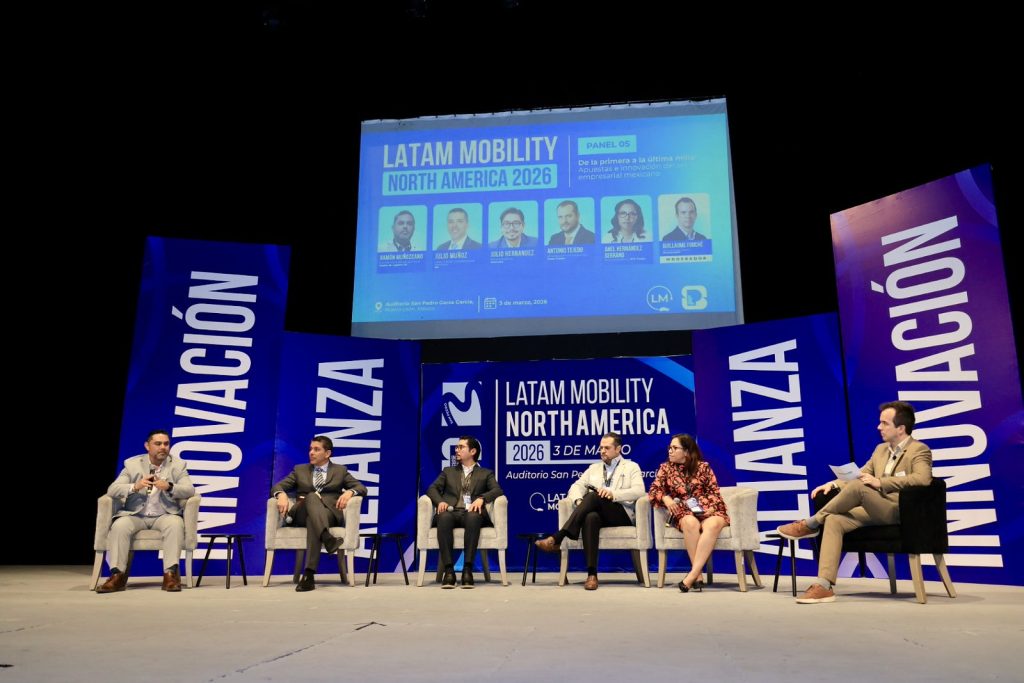
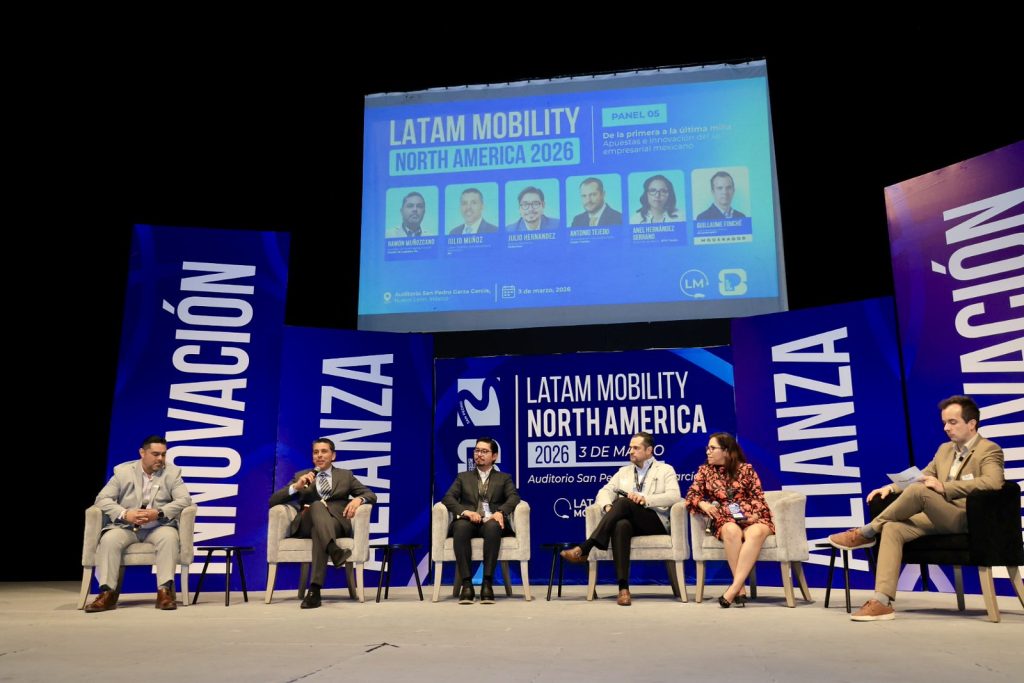
During the Latam Mobility North America 2026 summit, held in the San Pedro Garza García municipality of Monterrey, Mexico, a panel titled “From the First to the Last Mile: Bets and Innovation in the Mexican Business Sector” took place.
The gathering, which brought together some of the most authoritative voices in Mexico‘s logistics and mobility sector, served as a barometer to measure the progress, barriers, and opportunities the country faces on its path toward decarbonizing transportation.
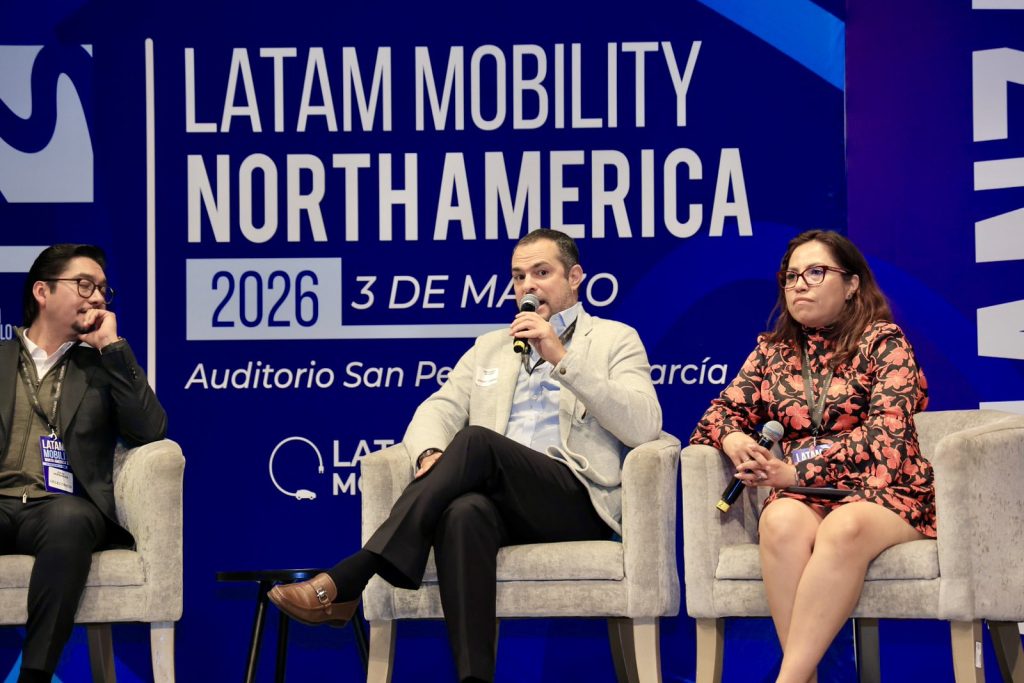
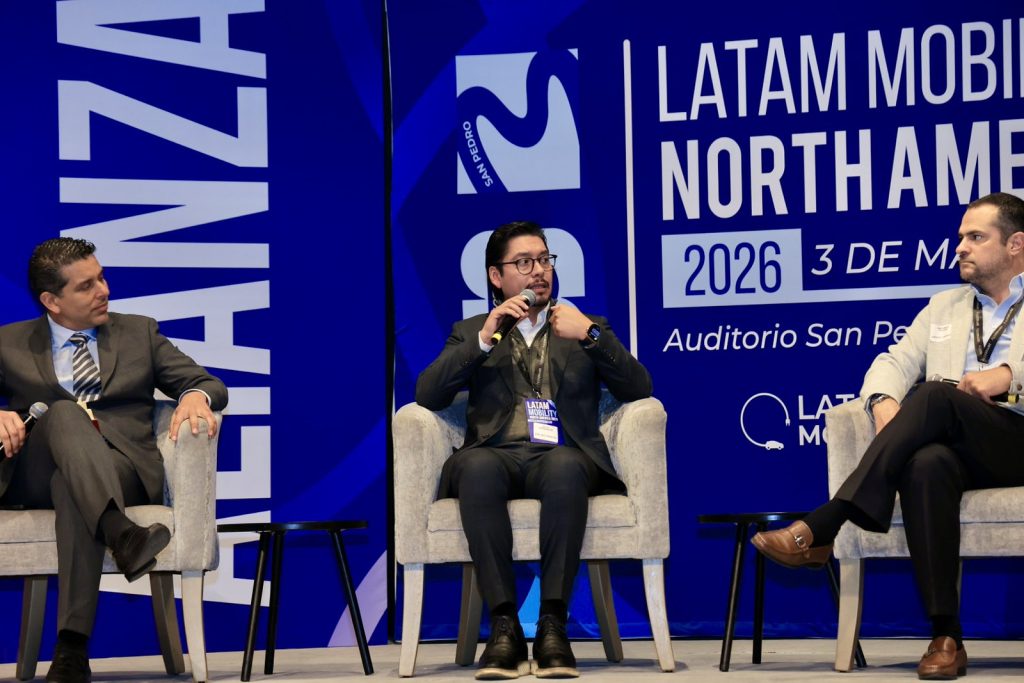
The session, moderated by Guillaume Fouché, Latam Business Director at BloombergNEF, featured participation from Ramón Muñozcano, Founder CEO & Managing Director of the Nuevo León Logistics Cluster; Julio Muñoz, Latam Director of Transportation & Electronics for 3M; Julio Hernández, Commercial Director of Delectrico; Antonio Tejedo, Vice President of Investor Relations at Grupo Traxión; and Anel Hernández Serrano, Brand Director for BYD Trucks.
For nearly an hour, the experts shared their perspectives on the complex challenge of transitioning fleets from internal combustion to cleaner technologies, in an environment marked by climate urgency, financial viability, and the nearshoring phenomenon.
You may also be interested in | 360° View of Transportation: AMTM, Grupo CISA, IMT, and ZEmobility Leaders Analyze the Future of Mobility in Monterrey
A Snapshot of the Present
Ramón Muñozcano opened the dialogue by painting a picture of the reality on the roads of northern Mexico. “Following the opening of the La Gloria-Colombia highway, crossings via the Solidaridad International Bridge have increased exponentially.”
“This has motivated several of our associates to make crossings with electric trucks, taking advantage of that route’s efficiency to reduce their carbon footprint,” explained the director of the Nuevo León Logistics Cluster.
But Muñozcano went beyond the diagnosis and detailed the concrete actions they are promoting through the triple helix model. “We are working with the state government to install electric charging stations near the Colombia port. We are also promoting safe stopping points and specific committees for mobility, infrastructure, sustainability, and human talent.”
“Because today, without trained human talent, we cannot move forward. If we want to be a world-class logistics hub, we need to have everything well-oiled, from the smallest gear—the micro-SMEs—to the largest,” he stated.
Environmental or Economic Decision?
Guillaume Fouché posed the question that sparked the debate: “Electrifying fleets in Mexico right now—is it an environmental decision, or is it truly an economic/financial one?”
Antonio Tejedo, from Grupo Traxión, responded with the experience of someone operating one of the country’s largest fleets. “I believe that what started as an environmental decision and genuine concern, today, after six years we’ve been in the market, companies have been able to verify that the reduction in operating costs is also very good. A while ago, I heard someone say that being ecological is synonymous with logical economics,” he stated.
However, Tejedo kept things realistic when discussing concrete barriers. “Beyond the economic and financial aspects, there’s the charging infrastructure. The first challenge is the price of the units: an electric truck or bus is around 50% more expensive. To that, you have to add the investment in infrastructure to charge the batteries. We believe that clients aren’t ready yet to absorb that price increase. We need to meet halfway: the operating companies, the clients, and the suppliers,” he pointed out.
Julio Hernández, from Delectrico, didn’t hesitate to raise the stakes. “Today, we have the opportunity as a generation to correct something that’s affecting us all: pollution. The level of CO2 emissions generated by a diesel tractor-trailer is significant, but it’s not as significant as the level of emissions from 2.5-micron particulate matter, which kills us.”
“In the cleanest areas of Mexico City, the emission level is equivalent to a person smoking two cigarettes a day. Their life expectancy just by living there is already reduced by one year. If we go to the most polluted parts, the equivalent is seven cigarettes a day,” he revealed bluntly.
Furthermore, Hernández explained how they have managed to overcome the economic barrier. “What we did was modify the financing schemes, because these are completely different assets. Their underlying warranty is different. We negotiated with China to increase volumes and lower prices. The van we have outside the summit costs 998,000 pesos: 13.2 cubic meters, 1.2 tons capacity. It’s a matter of scaling it up,” he stated.
The Human Factor and Resistance to Change
Anel Hernández Serrano, from BYD Trucks, hit the nail on the head regarding an aspect that is rarely discussed: fear. “The biggest fear is people’s resistance to change. If you don’t train them, if you don’t instruct them, they go back to saying, ‘Hey, why should I plug in my electric vehicle if I’m going to use electricity generated with fuel?’ Or ‘What’s going to happen to the batteries in 15 years?'”
“It’s about gradually working through that fear. New generations are growing up with this. We, the older generations, are the ones who are still reluctant to make that leap,” she reflected.
From BYD, the strategy is clear: total support. “The support is really important. We conduct surveys to see if they have the necessary energy capacity to have a certain number of units. At the same time, we look for strategic partners. And we train the operators; teaching them that you can’t drive an electric vehicle like a combustion one, because it’s totally different,” she indicated.
“The invitation from BYD Trucks is to get to know our models, run pilot tests with telemetry, and make the best decision based on TCO (Total Cost of Ownership),” she explained.
Science, Materials, and Range
Julio Muñoz, from 3M, brought the perspective of a technology supplier. “A combustion vehicle has 30,000 to 50,000 parts. An electric vehicle has between 50% and 70% of that number. Of those, roughly 70% are still common, but 30% are not. We’ve known the parts for combustion vehicles for 100 years; people know how to manage and handle them. With an electric vehicle, we still lack the training to manage it,” he diagnosed.
Muñoz detailed the technical challenges they face. “It’s much simpler to make an electric vehicle, but the materials are different. The battery is one thing: it gives you range, but it also presents challenges. How do you keep it from overheating and make it last 600 kilometers? How do you make the vehicle consume less by managing acoustics or heat effectively? That’s where we’re experts, and it allows us to get closer to the efficiency of these new technologies,” he assured.
Regarding the end-of-life for batteries, Muñoz was clear: “Materials tend to become recyclable over time. Today, a battery isn’t entirely recyclable; that’s a reality. But technologies are advancing to make it so; the trend is for it to be recyclable. There are already companies that recover batteries for energy storage, battery banks.”
Julio Hernández added an encouraging data point: “We thought that by the fifth year, the battery would degrade to 75%. With 128 tractors, we have 94% state of health, meaning only a 6% loss. How did we achieve that? By training the operator. That’s the key.”
Infrastructure, Insecurity, and the Price of Health
Ramón Muñozcano spoke again to address a thorny issue: security. “Today, in terms of transportation, you don’t have that range autonomy required to say, ‘yes, I’m going to buy an electric tractor-trailer that costs much more and also have to wait much longer for it to charge.’ And add to that the insecurity in Mexico. You can’t risk being stranded on a dangerous highway,” he stated.
Julio Muñoz added a reflection on opportunity cost. “The hydrogen issue also requires infrastructure, and that has balanced things towards electric. But the infrastructure for charging stations is important for basic reasons: you want to get in your vehicle and know you’re going to make it. We need to develop charging stations to build that confidence. There’s nothing worse for a transportation company than doubting whether they’ll arrive or wondering what happens if they get stranded,” he pointed out.
For his part, Guillaume Fouché provided data from BloombergNEF that framed the discussion. “Over the last decade, battery prices have dropped 85%. Last year, we saw a 15% drop in the cost of lithium batteries.”
“In 2019, Mexico didn’t reach 1% of passenger electric vehicle sales; last year it reached 6%. By 2040, we believe 1.3 million passenger electric vehicles could be sold. That implies preparing the country for a majority of electric vehicles, and that means focusing on renewable energies and anticipating electricity demand,” he explained.
Fouché revealed a striking projection: “By 2050, we foresee 600 terawatt-hours of electricity demand in Mexico, almost double today, driven by air conditioning, data centers, and electric vehicles. The question is: will we be capable of having all those trucks and electric vehicles in the country?”
The Future: AI, Autonomy, and the Urgency to Act
Julio Hernández shared Delectrico‘s experience with applied artificial intelligence. “The van we have, although it’s not level five autonomous, appears in the technical specs as level four because it integrates AI to measure the trajectories of surrounding units. It doesn’t leave the operator as much maneuverability. Today, we have 300 units operating, and the insurance policy is cheaper because it turns out there is a benefit. Applied AI is moving faster than we think,” he revealed.
Julio Muñoz added a critical factor for the takeoff of autonomous vehicles: road infrastructure. “For a vehicle to become autonomous, it needs to be able to read and interpret external signs. We have a very strong industry in vertical and horizontal road signage, which already incorporates technology for the vehicle to recognize it.”
“The investment in infrastructure to develop autonomous vehicles has to be significant, because today we still find highways that aren’t well-marked. No matter how intelligent the vehicle is, if the highway isn’t marked, it will get lost,” he stated.
Ramón Muñozcano closed his intervention with a concrete example of efficiency. “We conducted a study with analytical telemetry to anticipate deviations at border crossings. The results were idle time reduced by 12% to 15% and fewer unproductive kilometers.”
“The impact on diesel was fewer emissions, fewer penalties for delays. And sustainability was a consequence of eliminating inefficiencies. If we add the technology of electric or hybrid vehicles to that, we can generate even more savings and greater efficiency,” he stated.
Final Messages: Will, Alliances, and Action
Julio Hernández summarized the panel’s sentiment with a call to action. “I think the message I’d like to leave here is: let’s do everything in our power to do something. If we can migrate to electric mobility, let’s do it; natural gas, biodiesel, ethanol, whatever it takes, to stop this thing that affects us all. Let’s do it.”
Anel Hernández insisted on the need to lose the fear. “My comment would be: don’t be afraid of this paradigm shift. Be open to testing, learning, making a thoughtful decision, but also a tested one. They’ve done pilots, they’ve done tests, and that’s when you experience it, when you feel it and say: ‘They’re not just telling me, I’m experiencing it in real time.'”
For his part, Antonio Tejedo quoted Albert Einstein to close. “I want to end with a quote that says you need to stay away from negative people because they have a problem for every solution.”
Meanwhile, Ramón Muñozcano reminded everyone that they are open to all initiatives. “We invite you to reach out to the Cluster. We have an agreement with Texas A&M to create an R&D lab focused on logistics and mobility. Come talk with us to start new developments with schools like Tec de Monterrey, the Autonomous University of Nuevo León, which already have labs ready for industry.”
The Conversation Continues
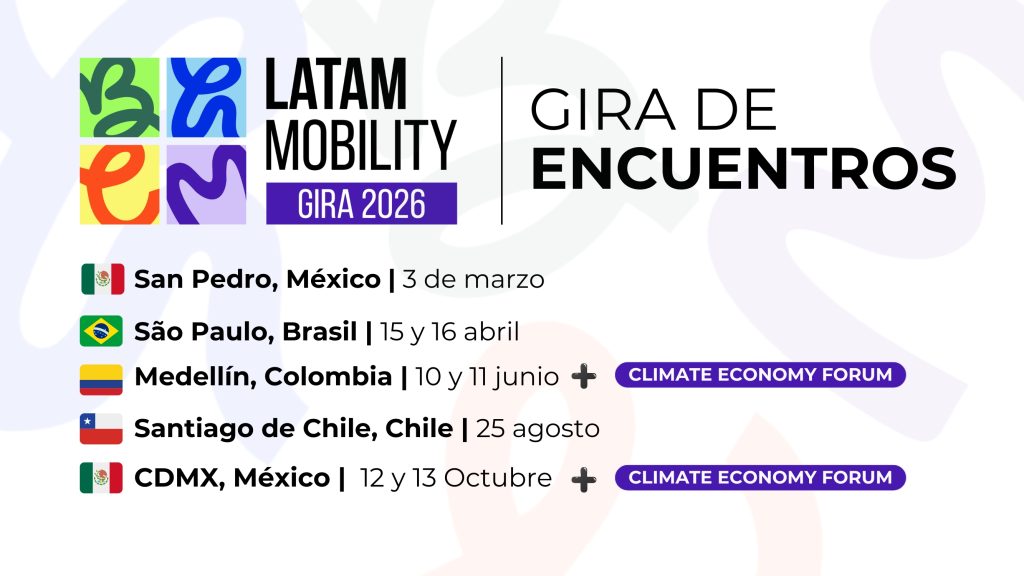
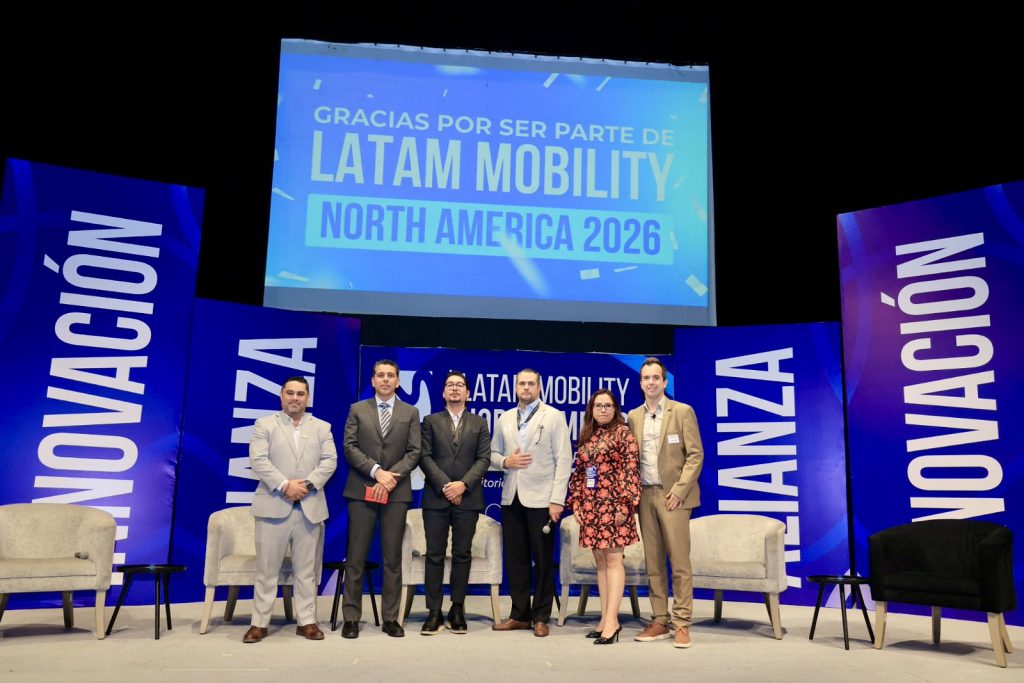
The summit in San Pedro Garza García was just the beginning of a journey that will take this dialogue across the entire region. It will be an opportunity to continue building, through open dialogue and multi-sector collaboration, the path toward a cleaner, more efficient, and sustainable future for transportation and logistics throughout the region.
Through its stops in Mexico City, Brazil, Colombia, and Chile, the platform will continue to promote a collaborative approach to accelerate the transition to cleaner, more efficient, and more inclusive transportation systems, positioning Latin America as a relevant player in sustainable mobility at the global level.
Be part of the movement that is accelerating Latin America’s energy and urban transformation. If you would like to learn more about how to participate and positioning options, click here.