


CATL (Contemporary Amperex Technology Co. Limited), the world’s largest battery manufacturer, hosted its Tianheng 2026 Global Launch Conference in Munich, Germany—an event focused on the company’s latest advances in energy storage.
During the presentation, the Chinese battery giant introduced TENER Sodium, a utility-scale energy storage system that marks a major industry milestone: it is the first sodium-battery storage solution validated under real-world conditions to reach full commercial viability.
The launch of TENER Sodium is the culmination of more than a decade of R&D. CATL began working on sodium batteries in 2016 and has since poured roughly USD 1.14 billion into research and development, engaging over 300 researchers and racking up more than 1,600 patent families.
The company has built comprehensive manufacturing capabilities that run the gamut from active materials to complete systems, with electrode material production plants already operating at scales of tens of thousands of tons per year.
You May Also Be Interested In | Chile Inaugurates the Largest Battery Storage Plant on the Continent
Fully Modular Architecture
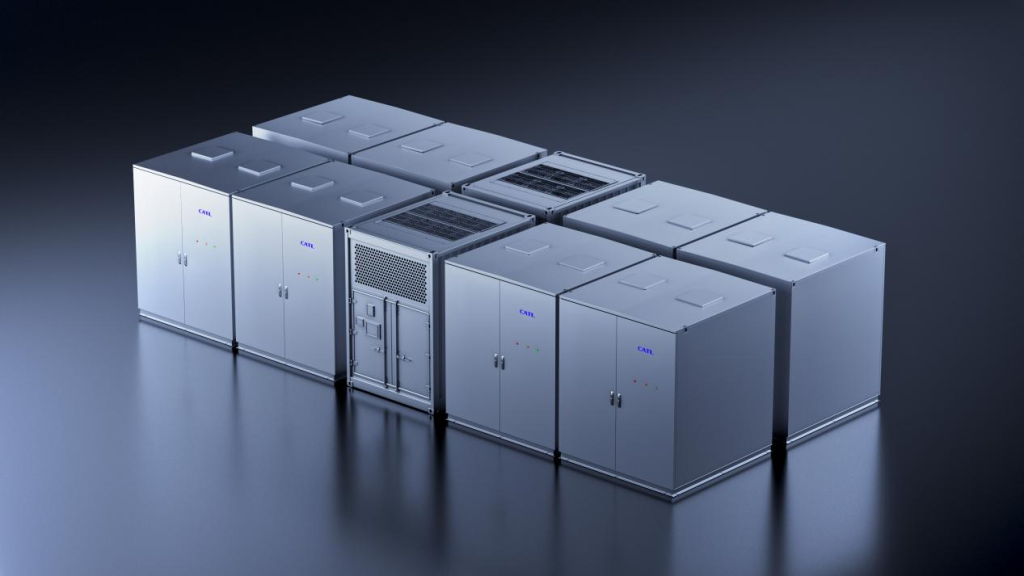
The TENER Sodium system stands out with its fully modular architecture, which separates the energy storage modules from the power conversion modules.
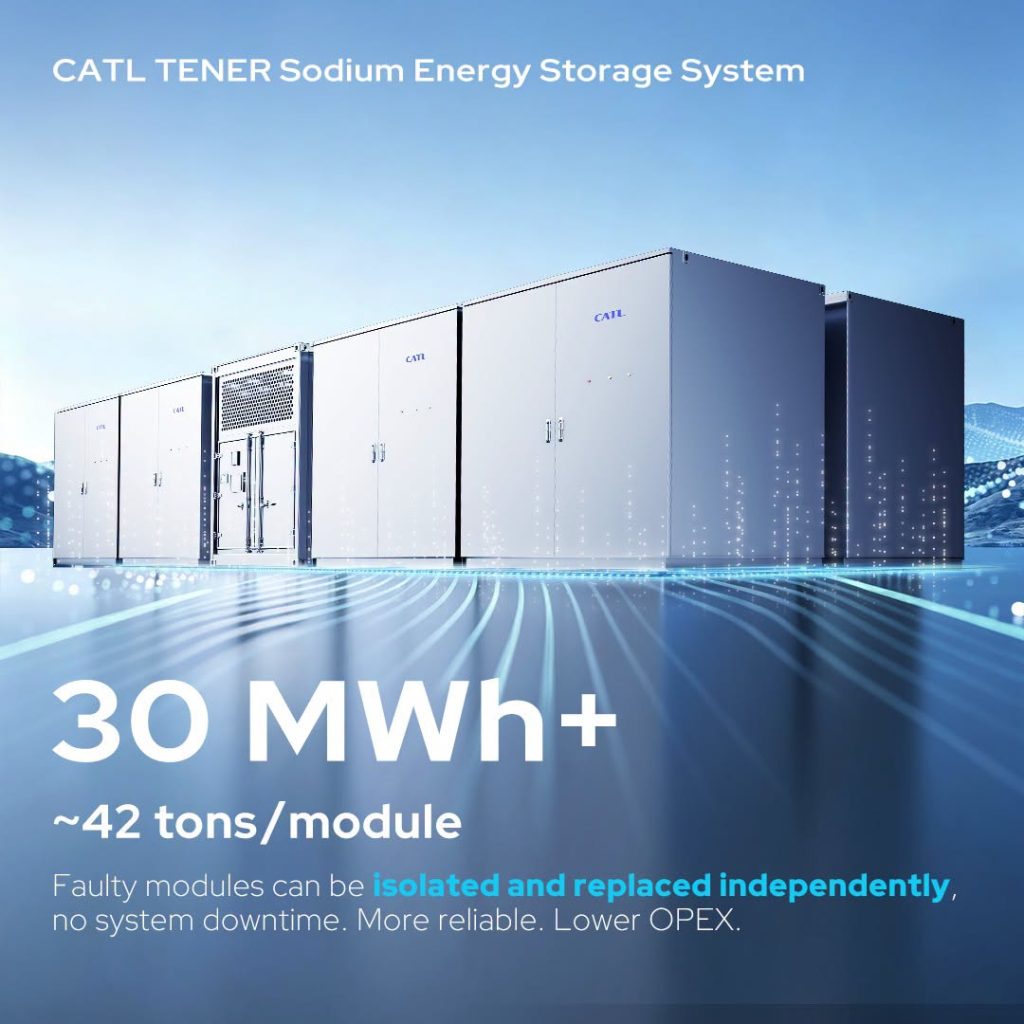
Each system unit offers a nominal capacity exceeding 30 MWh and weighs less than 42 tons per module. Thanks to this design, just 34 units are enough to build a 1 GWh storage plant, slashing deployment complexity.
The solution is exceptionally versatile when it comes to storage duration: it supports flexible configurations of 1, 2, 4, 6, and up to 8 hours, adapting to the specific needs of each project. That flexibility makes TENER Sodium an ideal fit for both industrial applications and large-scale renewable generation plants that require backup power across varying timeframes.
CATL designed the system to be dimensionally and format-compatible with existing lithium-iron-phosphate (LFP) battery installations, so developers can use the same platforms without changing enclosures, redesigning projects, or redoing certification processes. That approach greatly streamlines sodium technology adoption, lowers entry barriers, and speeds up implementation timelines.
Bidirectional Voltage Control and Improved Efficiency
To address the unique characteristics of sodium-ion batteries—which operate over a wider voltage range than their lithium counterparts—CATL developed a bidirectional voltage regulation system called Bi-DC.
This technology, compatible with the main power conversion systems (PCS) on the market, boosts overall charge/discharge cycle efficiency by about 2%. For a 1 GWh storage plant, that efficiency gain translates into millions of extra kilowatt-hours generated annually, significantly improving economic viability and return on investment.
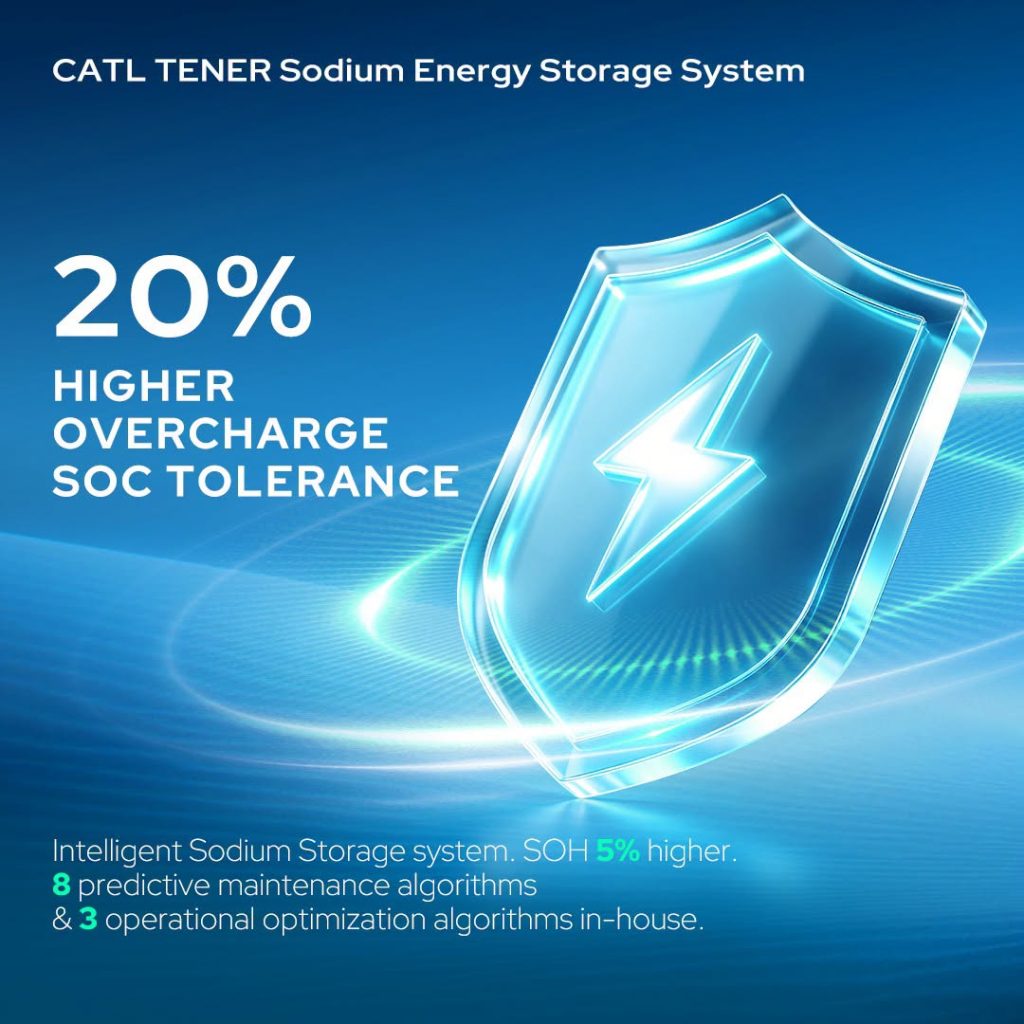
CATL estimates that this control system, combined with a battery management system (BMS) specifically tuned for sodium chemistry, enables much more precise state-of-charge (SOC) estimation.
On durability, TENER Sodium delivers standout performance: it achieves 15,000 charge/discharge cycles at 25 °C while retaining 70% of its state of health (SOH)—which equates to a service life of 25 to 30 years. The system is also built to handle extreme weather: it exceeds 10,000 cycles at 45 °C and retains more than 92% of its capacity at -20 °C. The company also noted that the system mitigates fire and explosion risks even under severe conditions.
The platform includes a millisecond-level self-healing solution that locates and isolates faults within 200 milliseconds and restores unaffected sections in just 150 milliseconds. The thermal design pairs upper-discharge airflow with liquid cooling, cutting system heat generation by nearly 30% and reducing auxiliary power consumption from roughly 2% down to 1%.
Commercialization Roadmap
CATL has laid out a clear and ambitious commercialization schedule for TENER Sodium: the first system deliveries will hit the Chinese market starting in September 2026. The company expects to reach 1 GWh in cumulative shipments before the end of 2026, with initial international deliveries slated for June 2027.
Mass production lines are already up and running. At its Fuding base in Fujian province, CATL has invested approximately USD 739 million to enable 40 GWh of annual sodium battery production capacity. An additional facility is planned in Jining, Shandong, which could support up to 160 GWh more.
The launch of TENER Sodium comes amid surging activity in the sodium battery space. On April 27 of this year, CATL signed a three-year strategic supply agreement with Chinese energy storage system provider HyperStrong for a total of 60 GWh—the largest sodium-battery order for energy storage on record. That contract underscores the market’s confidence in CATL’s technological maturity and production muscle.
Sodium and Lithium: Pillars of Future Storage
The arrival of TENER Sodium marks a decisive step toward GWh-scale commercialization of sodium batteries—an inflection point the industry has been waiting for.
William Wu, Director of CATL’s Energy Storage Technology Center, said at the launch event: “We believe that sodium and lithium together will form the twin foundations of the future energy storage system.”
Sodium is more than 1,000 times more abundant than lithium and widely distributed around the globe, making it a particularly compelling option for stationary storage.
Xu Jinmei, Technical Director of the energy storage division and President of CATL’s European storage business, noted that the company already has electrode material production capacity at scales of tens of thousands of tons per year, ensuring a rock-solid supply chain.
TENER Sodium’s ability to seamlessly integrate into existing lithium battery infrastructure—sharing the same platform and dimensions—accelerates adoption and cuts transition costs. That plug-and-play approach lets developers add sodium technology without overhauling their current setups.
A Year 2026 of Consolidation for Mobility
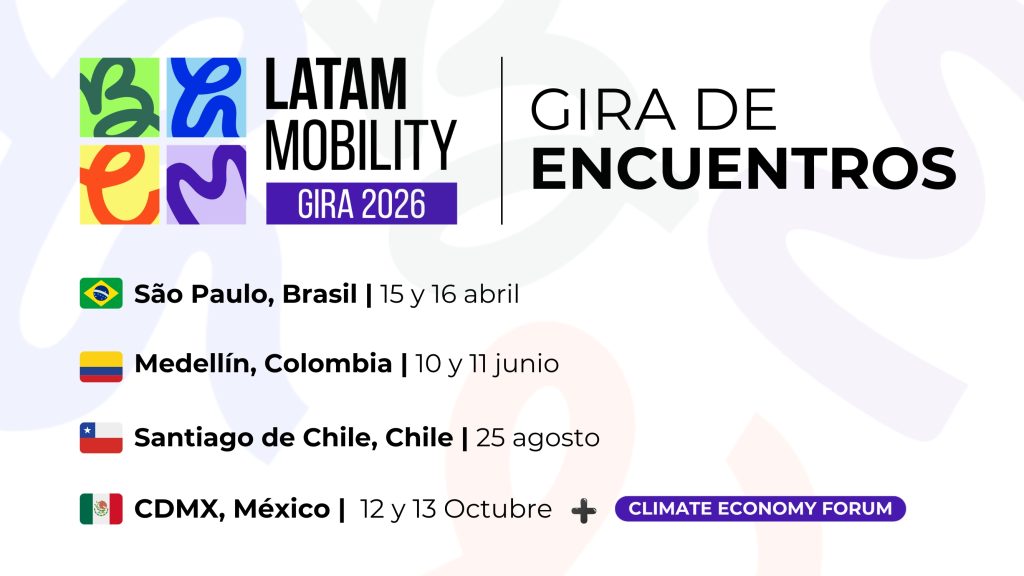
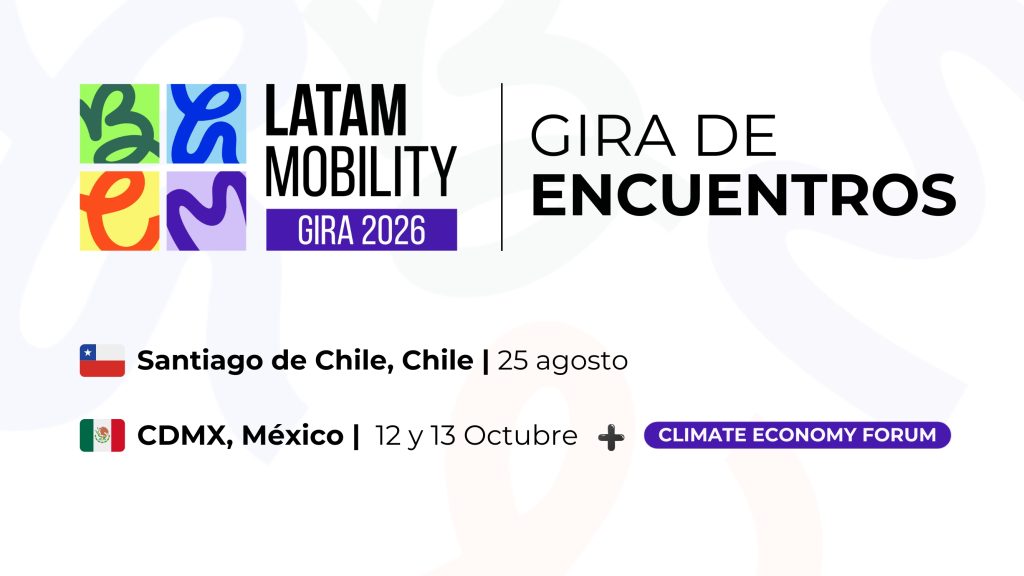
The Latam Mobility 2026 Tour will arrive in Santiago, Chile, on August 25, bringing together experts and strategic players to further strengthen the sustainable mobility ecosystem in the region.
The tour will end in Mexico City on October 12 and 13, alongside the Climate Economy Forum, in a meeting that will bring together sector leaders to continue driving the transition toward more efficient, sustainable, low‑emission transportation systems in Latin America.
The transition is already underway. The Latam Mobility 2026 Tour will be the meeting point to accelerate decisions, connect key players, and collaboratively build sustainable mobility in Latin America.