



The “Latam Mobility North America 2026” event brought together some of the most relevant players in Mexico‘s cargo transportation sector to address a crucial topic: Fleet management and value chains in transition, with a specific focus on North America.
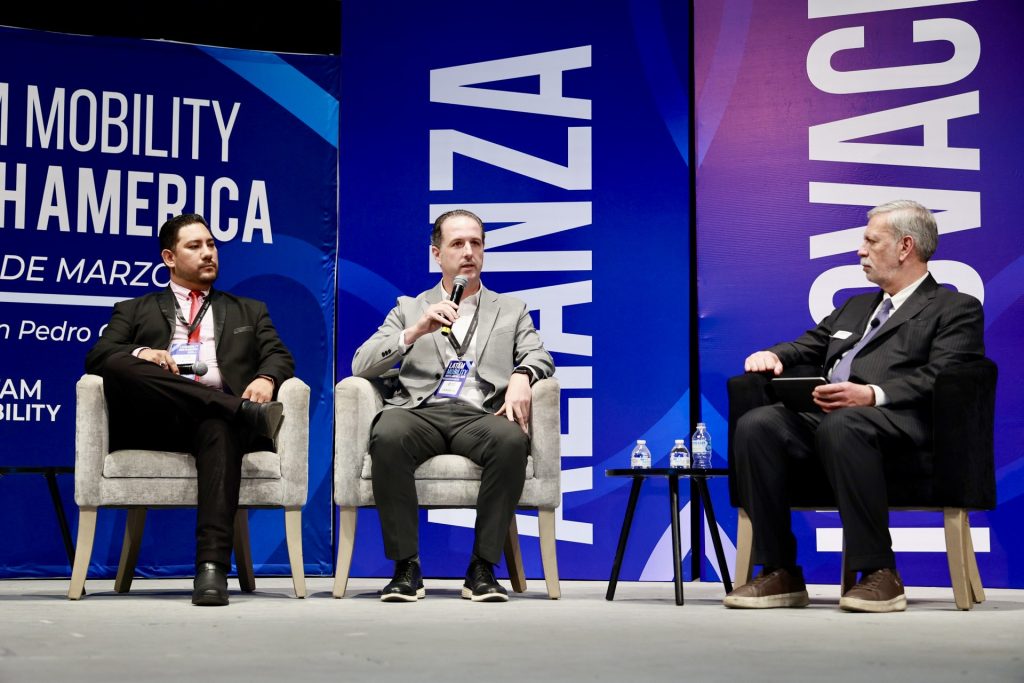
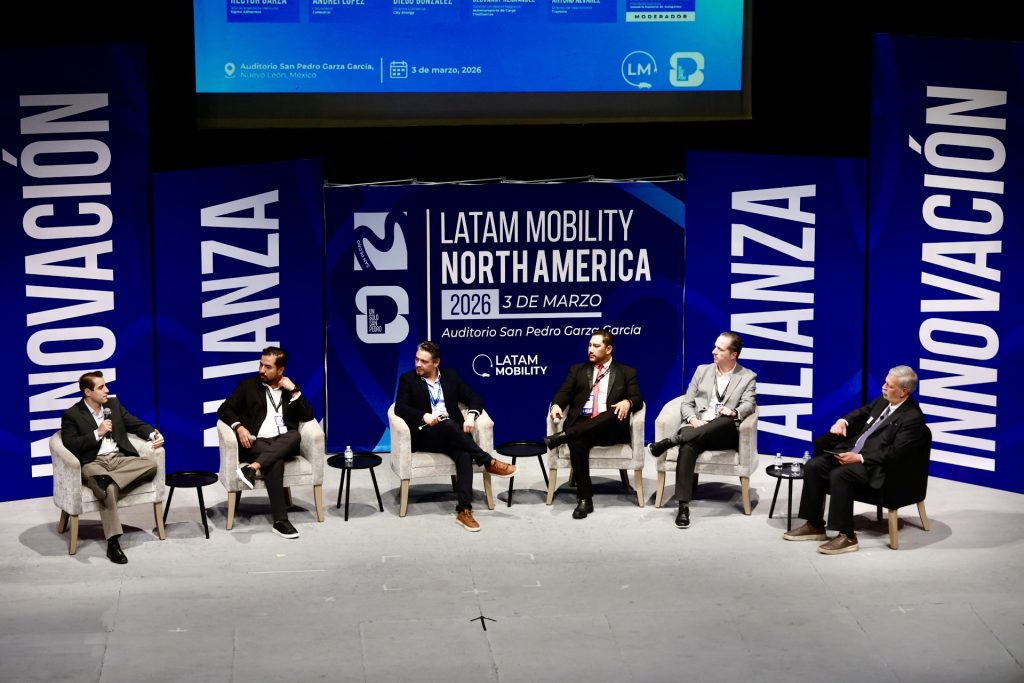
Moderated by Francisco González, Executive President of the National Auto Parts Industry (INA), the panelists agreed that the transition to new forms of mobility is not solely a technological challenge, but a profound operational, financial, and strategic debate that requires redesigning logistics, energy, and business models.
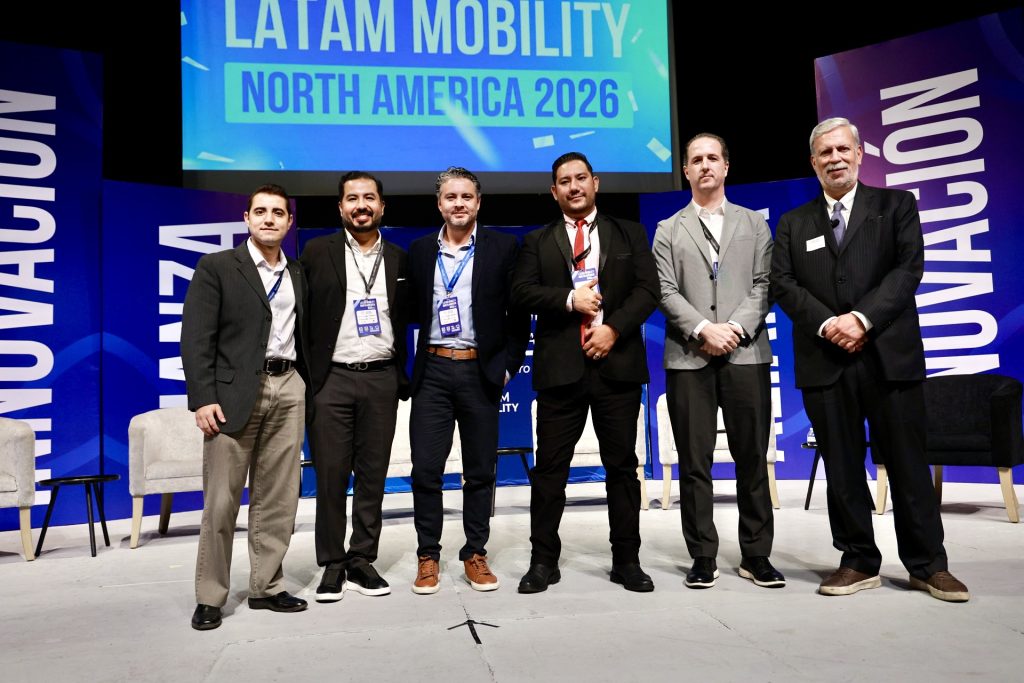
The panel, which featured Arturo Álvarez, Operations Director at Trayecto; Geovanny Hernández, Manager of the Cargo Transport Business Unit at Tres Guerras; Diego González, Commercial Director at City Energy; Andrei López, Co-founder of CeNeutral; and Héctor Garza, Head of Vehicular Engineering at Sigma Alimentos, offered a comprehensive view of the challenges and opportunities facing companies that have decided to take the step towards sustainability.
The Circulatory System of the Regional Economy
Francisco González opened the panel with data highlighting the importance of trucking in the region. He noted that last year, $450 billion in Mexican exports were moved by road, representing 69% of the total.
“Two out of every three Mexican exports cross the region on wheels,” he stated, adding that nearly 8 million cargo trucks crossed from Mexico into the United States, while around 5 million came from Canada.
This system, which has sustained regional trade for decades, is now beginning to transform, driven by three major forces: the energy transition, the complete redesign of operations (which goes far beyond just purchasing new vehicles), and data management through telemetry and analysis to optimize routes and anticipate maintenance.
Trayecto: A Decade of Learning
Arturo Álvarez from Trayecto shared his company’s experience, which in 2015 decided to embark on the journey of seeking clean energy for its heavy-duty fleet, focused on medium and long-haul routes.
Back then, the available technology was compressed natural gas. “It was an investment to start learning. We had to learn a lot, at all levels, and we faced many challenges: initial investment, training, spare parts, and a very important one: supply, the gas infrastructure,” he recalled.
Despite initial doubts from a financial standpoint, the company maintained its conviction in the project and today has 600 gas-powered tractors, more than 11% of its total fleet. “One of the major challenges was productivity to reduce the initial entry cost. They have to be highly productive equipment,” he explained.
Now, Trayecto is making the leap to electromobility with two electric tractors for the past two years, and the learning continues. “The main challenge today is vehicle range. We factor those limitations into our operational plans; we know which business we can serve and where we still don’t see it as feasible in the medium term,” he noted.
Tres Guerras: Sustainability Philosophy
Geovanny Hernández from Tres Guerras explained that his company began adopting sustainability philosophies years ago, convinced it’s crucial that from top management down to employees share this vision centered on the company’s values.
“We developed a competency framework centered on our values so that every employee understands where we’re heading,” he stated.
Tests began in key branches in El Bajío, the center, Nuevo León, and the west, not only with the fleet but also with business units that are developing green energy through solar panels. Currently, they have a small fleet in the last-mile sector that is already in conversion.
Hernández identified the most important challenge: transferring this development to highway units, the heart of the company. “We see many challenges in where to develop, where to connect, and where we will be able to guarantee that the routes connect,” he pointed out.
City Energy: Electrolineras as a Solution
Diego González from City Energy shared a different perspective from the side of charging infrastructure developers. He explained that their business model arose from identifying a recurring problem: companies interested in installing chargers at their facilities faced very high costs due to the complexity of electrical upgrades.
“You had the transformer in basement one and the panels in basement two, and then you had to go down to basement eight where the vehicles are. Nobody wanted to invest in that,” he recounted.
Faced with this reality, City Energy positioned itself as a charging hub option, developing EV charging stations with 20 or 25 fast chargers, with adequate heights and rest centers.
“Today we are migrating to the wholesale electricity market and choosing to buy clean and renewable energy. That’s how we close the loop so the electric vehicle isn’t running on fossil fuels,” González stated.
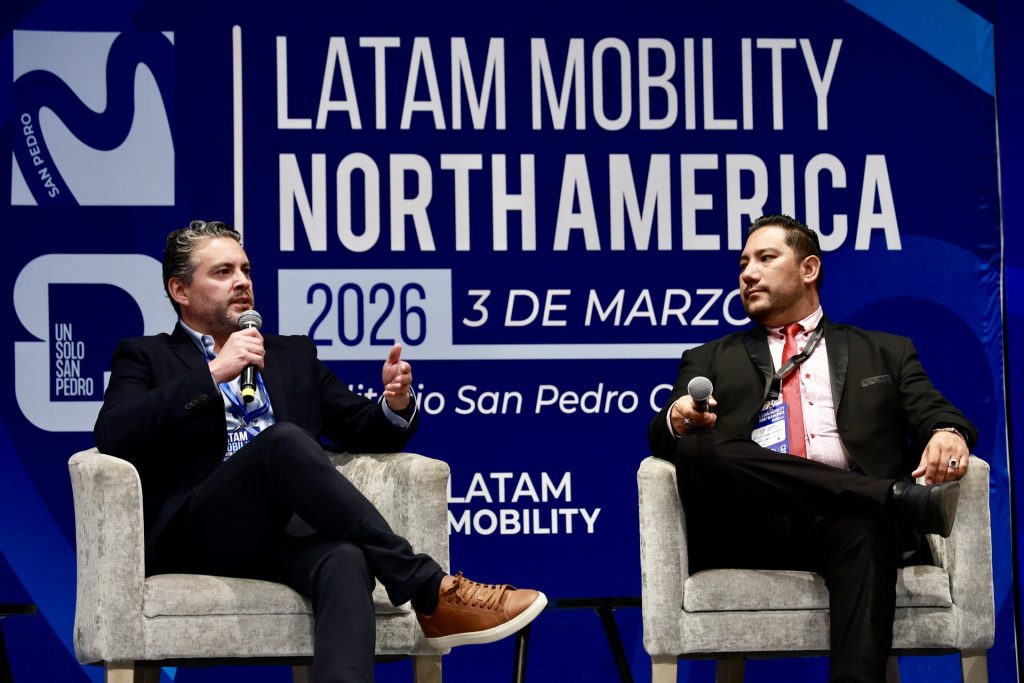
CeNeutral: Making the Transition Financeable
Andrei López from CeNeutral focused his remarks on what he called “the uncomfortable point in the chain”: where operations, energy, and Capex meet. “For several years now, we have structured this into something that seeks to make the ESG intention financeable,” he explained.
López noted that the market no longer needs more conceptual presentations. “We’ve had 10 years of electric mobility. Today, companies that are going to migrate already have a lot of ground covered by many other companies that are here today.”
His message was clear: success stories and testimonials need to be shared, and fleets must understand that the transition to electric vehicles brings a cash flow dynamic they need to target.
Sigma Alimentos: Last Mile and Refrigeration
Héctor Garza from Sigma Alimentos shared the experience of a company with 6,500 units nationwide, of which 4,500 are for last-mile delivery. The first electrification models, carried out around 2020 with brands like Foton and BYD, initially didn’t yield favorable economic results. “We had to take a bit of a risk to learn,” he admitted.
Over time, the numbers have improved, and today they see a clear path towards electrifying the last-mile fleet, where they identify the biggest area of opportunity.
However, one of the major challenges has been refrigeration, which adds complexity to the TCO (Total Cost of Ownership) calculation and requires connectivity between the refrigeration unit and the electric vehicle.
Garza also highlighted an intangible benefit: the improvement in driver well-being. “Previously, the driver would leave to refuel; now they arrive and their unit is ready. That represents a significant part of their well-being,” he noted.
Risk as Part of the Journey
Moderator Francisco González posed a key question: what led these companies to take the risk of venturing into new technologies, and what is currently holding them back?
Arturo Álvarez responded that the conviction in sustainability is the origin of everything. “A diesel tractor compared to gas is twice as expensive, and an electric one is three times as expensive. If someone isn’t convinced about sustainability, they won’t run the numbers; they’ll buy diesel. We need to avoid pollution; that’s the origin,” he stated.
Geovanny Hernández agreed: “Our partners are committed to society. We want our employees and the community to grow hand in hand with us.” However, he acknowledged there are many brakes: maintenance, spare parts, facility upgrades. “Our infrastructure isn’t adapted; we need a complete overhaul. But we are moving forward with collaborations and tests.”
Diego González added a nuance: decarbonization must go hand in hand with savings. “If you have a maquiladora with solar panels, batteries, and fast chargers, you can save up to 90% on energy and reduce your carbon tax. There are huge benefits if you combine all these technologies.”
Andrei López emphasized the importance of planning: “The first thing is not to start with the vehicle, but to understand the fleet’s operating philosophy, the routes, the mileage. That’s where you start building the business case. When you have intensive energy use, you already have a business case.“
Infrastructure: The Shared Challenge
The second round of questions focused on infrastructure, beyond just electric charging. Arturo Álvarez outlined the two primary ones: infrastructure and range. “We experienced this with natural gas, where we invested in self-consumption stations with 1,000 km of range. The challenge is logistical: it’s not easy telling a driver they’re going to stop for two hours when with diesel they could do two rounds.”
Geovanny Hernández acknowledged that Tres Guerras‘ warehouses and yards are not adapted, but they are moving cautiously, researching suppliers and starting with last-mile operations. “In new locations, we are already preparing the infrastructure from the start.”
Diego González insisted on the importance of design based on the fleet type. “A last-mile operation can be solved with 7 kW chargers at each store. But if it’s something heavier, you have to design with batteries, solar panels, and migrate to the wholesale market. Every kilowatt must be efficient.”
Andrei López added that “the business isn’t buying an asset, but understanding the operating philosophy. Having idle infrastructure costs more money than any diesel vehicle running.” He pointed out that energy storage is an important lever for managing demand and that the cost of financing is critical: “If it’s high, it kills the business. What’s ecological also has to be financially logical.”
Héctor Garza presented Sigma‘s challenge with 80 locations nationwide. “In some, we have installed capacity due to refrigerated products, but once that gap is closed, the necessary investment can break the business case. We’re focusing on the 80/20 in metropolitan areas, but the big challenge is in remote locations.”
The Future: Technological Risk, Planning, and Collaboration
The final round addressed the environment, the financial vision, and the technological outlook. Francisco González raised the complexity of Latin America: mountainous terrain, diverse climates, lack of subsidies, and the risk of technological change. “How do you make decisions knowing that in six months there might be a better technology?”
Arturo Álvarez was pragmatic: “It’s one of the risks we have to take. Let’s not lose sight that we’re seeking decarbonization. There will be better technologies in a year, but we have to go for them. Standardization of connections is key so fleet renewal doesn’t become more complex.”
Geovanny Hernández explained that at Tres Guerras, the annual strategic planning includes these topics in the SWOT analysis. “We derive strategic objectives that gradually add up, guiding us all towards where we want to go. We are moving forward with our partners, investing in the most important development points.”
Diego González stated that for heavy-duty transport, hydrogen will likely arrive, but electromobility for last-mile “is here to stay for about 10 or 15 years.” And he launched a key reflection: “Any technology is going to need energy. If today you’re making a 5 or 10-year plan, you must first think about how to enable that energy part.”
Andrei López insisted on the need to make assumptions and constantly update. “The strategy remains firm: electrification and good business cases. That’s the most important asset organizations can build with a long-term vision.”
Héctor Garza proposed a modular approach: “Technology has to evolve as we go. We’ll test new technologies, build business cases, and keep implementing the ones that already work. There’s risk in testing, but that’s the challenge.”
Final Thoughts
To close, each panelist offered a brief reflection on the future. Arturo Álvarez reaffirmed Trayecto‘s commitment to sustainability, with caution but without fear, learning along the way. “The learning stage will give us the data to be more effective when we want to scale up. The conviction for decarbonization is what drives all of this.”
Geovanny Hernández called for collaboration: “Tres Guerras invites you to synergy. Let’s drive this change; it’s important for all stakeholders. Mexico needs leaders who prepare and contribute to society.”
Diego González advised not to be afraid and to think first about energy efficiency. “If you manage fleets, think about efficiency first. We talk a lot about renewables, but without efficiency, it’s all lost.”
Andrei López closed with a warning: “Energy and financial planning are important. Order does matter. The companies that did pilots and learned are the ones that will scale and be the winners of the energy transition.”
Finally, Héctor Garza summarized the spirit of the panel: “We have a responsibility to be a little better than yesterday, and tomorrow be better than today. Lose the fear, keep exploring, keep improving. Sustainability is one of the fundamental pillars in all processes.”
The panel made it clear that the transition to sustainable fleets in Mexico is not a linear path nor free of obstacles, but the companies that have taken the step agree that conviction, planning, and collaboration are the key tools to conquer the new horizons of mobility.
The Agenda to Decarbonize Transportation
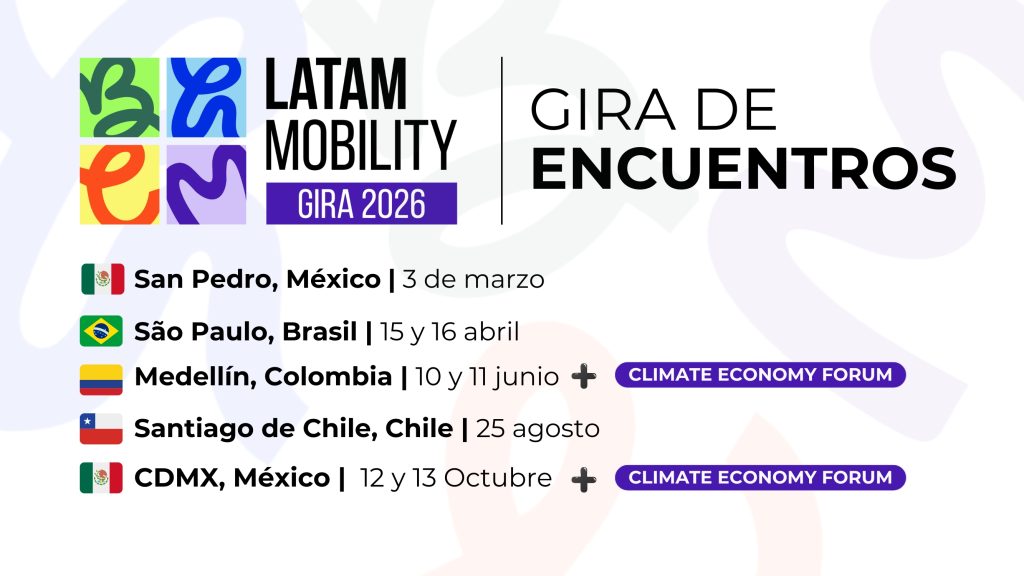
This dialogue is part of the efforts that Latam Mobility is promoting throughout its 2026 tour, which will visit the region’s main markets to delve deeper into these and other crucial issues for the transformation of mobility.
Through its stops in Mexico City, Brazil, Colombia, and Chile, the platform will continue to promote a collaborative approach to accelerate the transition to cleaner, more efficient, and more inclusive transportation systems, positioning Latin America as a relevant player in sustainable mobility at the global level.
Be part of the movement that is accelerating Latin America’s energy and urban transformation. If you would like to learn more about how to participate and positioning options, click here.