



In a significant step toward consolidating electromobility in Mexico, the state of Tlaxcala has unveiled the prototype of a 100% electric vehicle designed and manufactured locally, called the “Totalmente Tlaxcalteca” (TT).
This project, developed over the last two years by local entrepreneurs with institutional support, seeks to become an accessible alternative for urban mobility and strengthen the national automotive industry with a low-cost, high-efficiency proposal.
The TT was unveiled at the Tlaxcala 2025 Automotive Forum, where authorities and representatives from the automotive sector highlighted its design and technological advances.
The vehicle stands out for integrating more than 80% of components of national origin, most of which come from suppliers established within the state itself and other regions of Mexico.
This model emerges as a private initiative led by an entrepreneur whose identity has been kept confidential to avoid the possible relocation of manufacturing and consolidate the local supply chain.
The Tlaxcala Ministry of Economic Development (SEDECO) facilitated links with suppliers and provided logistical support for the manufacture and presentation of the prototype.
You may also be interested in | Mexico: Auto Industry to Close 2025 with Production of 3.95 Million Vehicles and Exports of 3.38 Million
Technical Features and Market Focus
The TT is a compact vehicle designed primarily for urban mobility. Its design and features are intended for everyday travel within metropolitan areas and small cities, with characteristics that include:
- An estimated market launch price of approximately 100,000 Mexican pesos, positioning it as one of the most affordable electric cars in the country.
- Capacity to carry up to five passengers, with a functional interior design adapted to everyday use.
- Approximate range of 50 kilometers per charge, ideal for short trips within the urban environment.
- Electric motor and battery that allow for zero-emission operation and recharging from standard household outlets.
Initial production is scheduled to begin with a capacity of around 20 units per week, with the aim of scaling up as demand increases and manufacturing operations are consolidated.

Although the prototype has already been unveiled and the project has moved into the production stage, the TT is not yet being marketed on a large scale.
Authorities and developers have indicated that the distribution and sales strategy will be defined as production is adjusted and partnerships are established with local distributors or direct-to-consumer sales channels.
The commitment to use a high percentage of domestic parts and assemble the vehicle in Tlaxcala responds both to a vision of technological independence and to the creation of opportunities for small and medium-sized local companies that are part of the supply chain.

Comparison with Olinia
The presentation of the Totalmente Tlaxcalteca comes amid growing interest in affordable electric vehicles in Mexico.
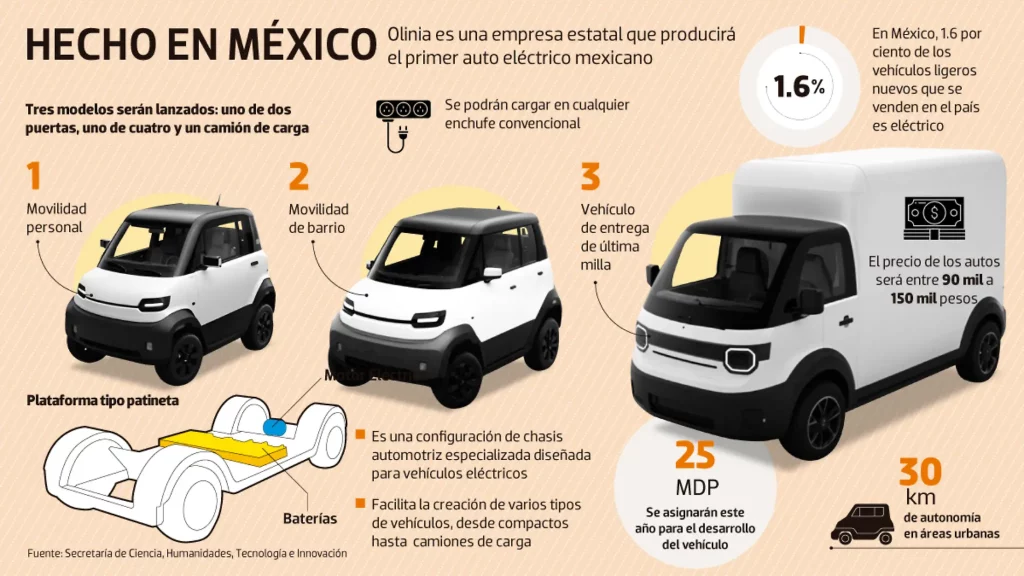
One of the most notable projects in this area is Olinia, a model promoted by the federal government, with the participation of institutions such as the National Polytechnic Institute (IPN), the National Technological Institute of Mexico (TecNM), and the National Autonomous University of Mexico (UNAM).
Although both projects share the goal of democratizing electric mobility, there are notable differences between them:
- Olinia: promoted from a national perspective with various models planned (including personal, neighborhood, and delivery versions) and launch projections for 2026, with an estimated price range between 90,000 and 150,000 pesos.
- TT (Totalmente Tlaxcalteca): with an earlier presentation and an initial focus on an accessible urban model, with a base price of around 100,000 pesos and production located in Tlaxcala.
This apparent “competition” between public and private initiatives has attracted attention, as both efforts could accelerate the adoption of clean technologies in the country and offer more affordable options for Mexican consumers interested in sustainable mobility.
Local Impact and Vision for the Future
The emergence of the Totalmente Tlaxcalteca (TT) comes at a key moment for industrial and mobility policy in Mexico, where the transition to low- and zero-emission technologies is beginning to demand not only innovation, but also economic viability, local production, and scalability.
Beyond its status as a prototype, the TT has managed to bring a relevant discussion to the table: the real possibility of developing affordable electric vehicles at the regional level, without relying exclusively on imports or large international automakers.
Although the project faces significant challenges, such as regulatory approval, vehicle safety certification, access to financing to scale up production, and the definition of commercial channels, its progress demonstrates the potential of local ecosystems to actively participate in the transformation of the automotive sector.
In this sense, the TT becomes a case study on how innovation can emerge outside traditional industrial hubs and contribute to decentralizing technological development in the country.
It also represents a sign that electromobility in Mexico can be not only a technological import, but also an expression of productive capacity, local creativity, and long-term vision, with potential impact at both the regional and national levels.
Monterrey, Where Mobility Takes Shape
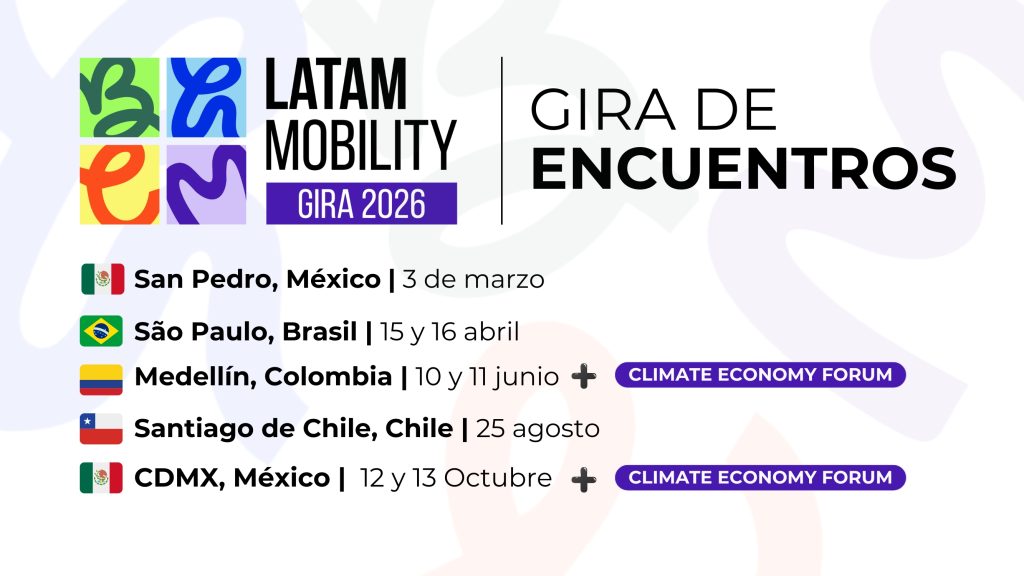
San Pedro Garza García, in Monterrey, is preparing to become the gathering point for mobility in Latin America with the hosting of “Latam Mobility North America 2026,” an international summit that will bring together sector leaders, specialists, and decision-makers next March 3rd at the San Pedro Auditorium.
This meeting will bring together more than 50 national and international experts to discuss the main challenges and opportunities in urban transport, smart cities, and sustainability. The agenda will address key topics such as electric vehicle charging infrastructure, decarbonization of last-mile logistics, project financing, and public policies for more efficient and safe mobility.
With an estimated attendance of 500 participants, “Latam Mobility North America 2026” will be a space for dialogue, learning, and collaboration, designed to generate alliances and turn ideas into concrete projects that drive the future of urban transport and establish the region as a leader in the transition towards cleaner, more sustainable mobility.
The Latam Mobility 2026 Tour will travel through some of the region’s most dynamic cities, Monterrey and Mexico City, Brazil, Colombia, and Chile, establishing itself as a unique space to connect the ideas, projects, and leaders who are transforming mobility and the climate economy in Latin America.
The transition is already underway. The 2026 Latam Mobility Tour will be the gathering point to accelerate decisions, connect key players, and collaboratively build sustainable mobility for Latin America.