

Within the framework of the webinar “LATAM: 2026 Roadmap for Mobility and Energy,” organized by Latam Mobility, the third panel—“Venezuela: Energy Transition, Risks, and Windows of Opportunity Toward 2026”—brought together prominent experts from Venezuela’s energy sector.
The conversation, moderated by Ronaldo Sandoval, Director of EvolvX, focused on the present and future of the energy transition in a country historically tied to fossil fuels, but one with enormous potential to diversify its energy matrix and join the region’s sustainable mobility movement.
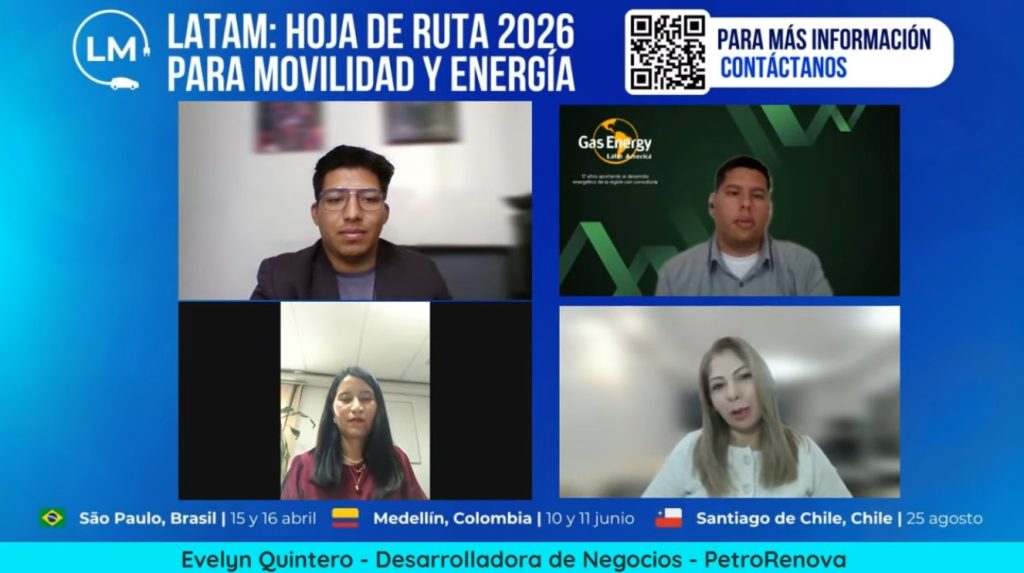
The panel featured Evelyn Quintero (Business Developer at PetroRenova), Geinny López (Academic Researcher at IESA), and Luis Marín (Consultant Specialist in Energy at Gas Energy Latin America).
The experts agreed that Venezuela is at an early but opportunity-rich moment, where energy integration, modernization of the electrical system, and investment in infrastructure will be decisive in scaling toward a more sustainable model.
You may also be interested in | São Paulo to Host “Latam Mobility & Net Zero Brasil 2026,” the Premier Regional Gathering for Sustainable Mobility
An Energy Matrix with Potential
The conversation opened with a snapshot of Venezuela’s energy mix. Geinny López pointed out that the country currently generates 70% of its electricity from hydroelectric plants (mainly the Guri complex) and 30% from thermoelectric plants.
“There we see a need and a demand to modernize the electrical system so it can handle the intermittency of renewables,” she explained, echoing ECLAC reports on regional energy integration.
Luis Marín added that the deepest needs aren’t so much in generation, but in transmission and distribution. “We can have generation at full capacity, but if the power doesn’t reach consumption centers, the problem remains,” he warned.
Marín also put a striking figure on the table: Venezuela’s oil sector will need around 20,000 additional MW to reach projected production levels—requiring parallel and robust growth of the electrical system.
Evelyn Quintero provided encouraging data: in 2023, 77% of Venezuela’s electricity came from renewable sources (mostly hydro). However, she noted that solar and wind are still marginal, though investments are beginning to arrive from companies looking to maintain oil production under ESG criteria.
“Venezuela is going to scale up in that matrix because the world needs it. Our oil has to be produced in the most environmentally friendly way possible,” she stated.

From Solar Communities to Electric Mobility
Despite the challenges, panelists highlighted concrete initiatives already underway.
Geinny López mentioned autonomous solar systems in neighboring communities, especially in indigenous and border regions like the Guajira Peninsula, where around 20,000 solar systems are expected to be installed. These projects not only address electricity supply but also ensure access to water through solar pumping.
On sustainable mobility, López highlighted the role of companies like Verdi and Swing Energy, which are developing EV charging infrastructure, though still concentrated in major cities like Caracas. “Investment in this sector comes mainly from the private sector,” she noted.
Luis Marín added that during the pandemic, Venezuela experienced a fuel availability crisis that boosted interest in electric alternatives.
“The most expensive fuel is the one you don’t have. Important electric mobility projects emerged anchored to the national system, but still without their own generation matrix,” he explained.
Natural Gas: The Transition Fuel
One of the most emphasized points was the role of natural gas as a bridge toward a cleaner energy matrix.
Luis Marín stressed that natural gas projects are between four and six times more economical than renewables, and that Venezuela has sufficient reserves to leverage this transition.
From Gas Energy Latin America, Marín noted they are promoting projects for diversification, massification, and substitution of liquid fossil fuels (like diesel) with natural gas—especially in sectors like agribusiness.
“We have the reserves, and there are sectors that need that energy to develop. Currently, they consume fuels that don’t guarantee energy security,” he stated.
Marín also highlighted successful regional experiences that could be replicated in Venezuela, such as the use of liquefied natural gas in transportation fleets in Chile (Nesté) or the development of small-scale LNG in Brazil.
Talent, Training, and Alliances
The panelists agreed that Venezuelan talent is a fundamental asset for driving the energy transition.
Evelyn Quintero emphasized that PetroRenova has promoted alliances with universities like the University of Zulia (LUZ) and has closely followed academic initiatives like the sustainability congress at the Central University of Venezuela (UCV).
“I feel that (the matrix) is moving. Everyone is looking in that direction, even the oil industry, and that is extremely relevant,” she stated. Quintero also noted that PetroRenova has more than 11,000 followers on LinkedIn, establishing itself as a channel for sustainability initiatives both inside and outside the country.
Geinny López contributed the perspective from IESA, where they design diplomas, programs, and master’s degrees in energy and environment, and are developing new programs to meet market needs as international companies arrive.
“It is very important to encourage investment in research and development. From academia we can provide advice and expert guidance for the integration of new players into the Venezuelan market,” she explained.
Investment and Regional Cooperation
One of the central themes was the need for investment and international cooperation to accelerate the transition.
Evelyn Quintero mentioned that an estimated investment of around $150 million is needed in renewable infrastructure—a figure that opens the door to participation by multilateral banks and international organizations.
Luis Marín invited participants to look at the region as a source of learning and collaboration. From Gas Energy, he highlighted that they have offices in Caracas, Lima, and presence in the Southern Cone, allowing them to transfer knowledge and best practices between countries.
“Peru has known how to develop its natural gas reserves to serve the domestic and export market. It’s an example we can study,” he noted.
A Small Ecosystem That Makes Noise
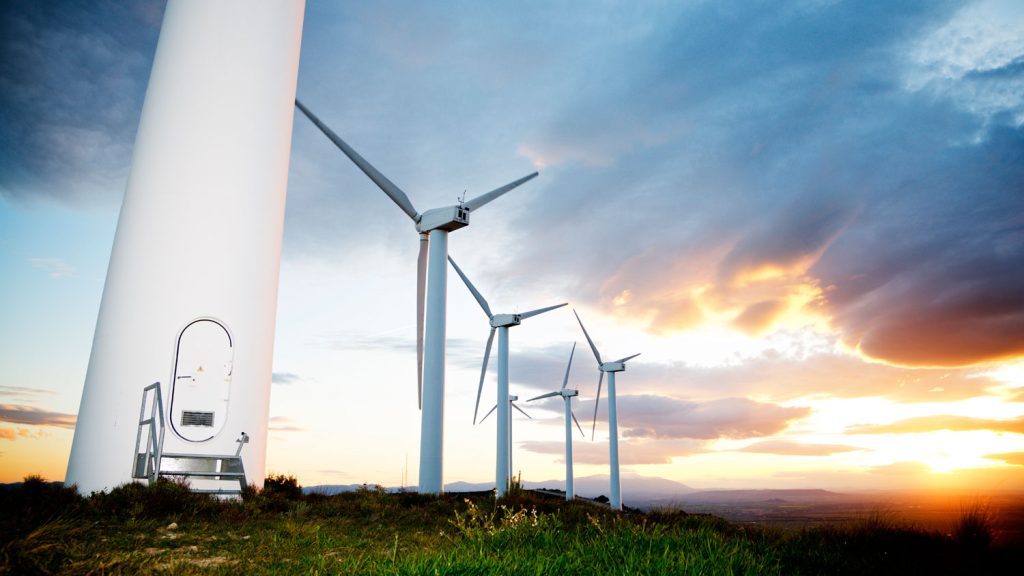
Ronaldo Sandoval closed the panel by highlighting that Venezuela has a geography “blessed” for renewable energy development—from the solar belt to the winds of Guajira that exceed 28 m/s.
“We have opportunities in our geography that we can replicate. There is Venezuelan talent scattered around the world, and it is well known that it has been trained abroad and that IESA continues to train,” reflected Evelyn Quintero.
The main takeaways from the panel:
- Venezuela has a predominantly renewable energy matrix (70% hydroelectric) , but faces critical challenges in transmission and distribution that require urgent investment.
- Natural gas is emerging as the most viable transition fuel, with projects that can be up to six times more economical than large-scale renewables.
- Sustainable mobility in Venezuela is incipient but has potential, led by the private sector with concrete examples in charging infrastructure.
- Talent and training are fundamental pillars. Universities, think tanks, and entrepreneurs are building the foundations for a solid transition.
- Regional cooperation is key. Successful experiences in Chile, Peru, and Brazil can be adapted (“tropicalized”) to the Venezuelan context.
An Invitation to Continue Building
The webinar closed with an invitation to upcoming Latam Mobility in-person events in 2026, where the conversation will move toward action and project execution:
- São Paulo, Brazil: April 15 and 16
- Medellín, Colombia: June 10 and 11
- Santiago, Chile: August 25
- Mexico City: October 12 and 13 (in partnership with the Climate Economy Forum)
Ronaldo Sandoval extended an open invitation to all ecosystem players to continue the conversation beyond virtual spaces. “The idea is that together we make much more noise and bring the conversation to in-person settings and real project execution,” he concluded.
With this panel, Latam Mobility reaffirms its commitment to highlighting the opportunities that exist in every corner of Latin America, demonstrating that even in complex contexts, the energy transition is possible when talent, investment, and a willingness to integrate converge.
The webinar served as a prelude to the upcoming in-person event “Latam Mobility & Net Zero Brasil,” taking place on April 15 and 16 in São Paulo, where these debates on the future of sustainable mobility in the region will continue.
If you wish to purchase tickets for the event, click here. For more information, visit our WhatsApp channel.