

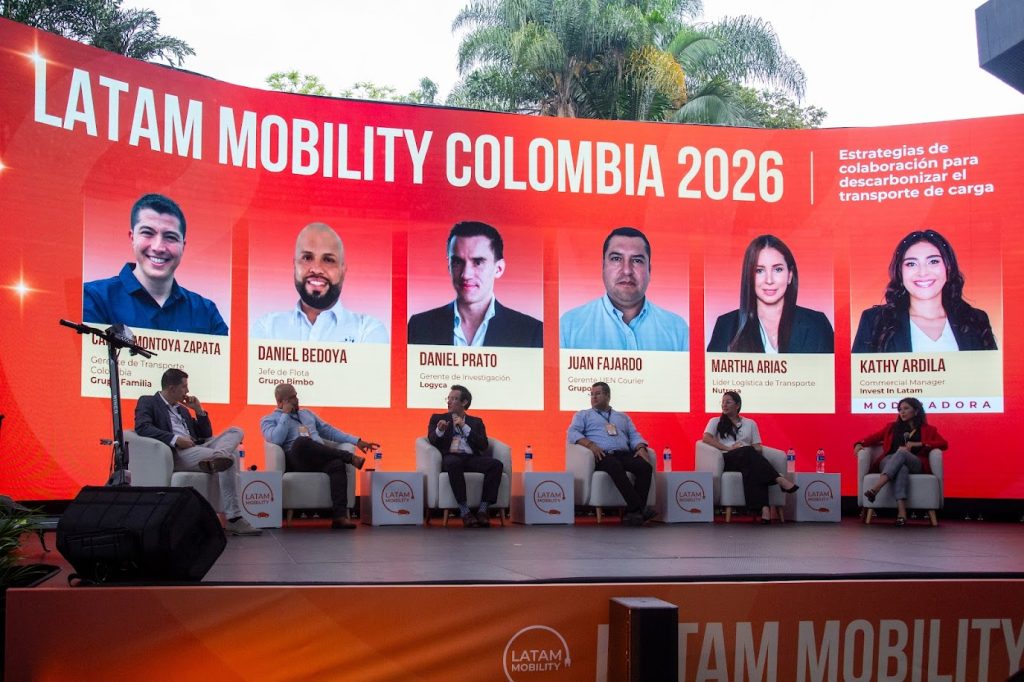
During the “Latam Mobility Colombia 2026” summit, the panel “Collaboration Strategies to Decarbonize Freight Transport” brought together leaders from the logistics and sustainable mobility sectors to analyze concrete paths to reduce the carbon footprint without sacrificing competitiveness.
The meeting, moderated by Kathy Ardila, Commercial Manager at Invest In Latam, took place at the iconic Orquideorama of the Medellín Botanical Garden — a space that invited reflection on the relationship between industry, nature, and innovation.
Ardila opened the conversation with precise data framing the urgency of the debate: the transport sector generates approximately 37 million tons of CO2, of which 4.6% comes specifically from freight transport.
Facing this scenario, the moderator reminded the audience that the main strategies companies have been implementing include fleet electrification, use of biofuels, natural gas for vehicles, and hydrogen pilots. She emphasized that the success of these initiatives depends on interoperability, traceability, and rigorous measurement of the reductions achieved.
You might also be interested in | Autel, CIEN, Huawei Digital Power, Livoltek, and SynergEV agree that interoperability and financial modularity are key to charging infrastructure in Colombia
The Magnitude Of The Challenge In Freight Transport
Martha Arias, Logistics Transport Leader at Nutresa, began the presentations by noting that Grupo Nutresa has an integrated logistics ecosystem under the “One Nutresa” concept. She explained that they have 12 electric vehicles with electrified thermoses for refrigerated and frozen products, and that in the dry goods area they face the challenge of optimizing vehicle capacity, monitoring fuel performance, and managing efficient driving for both their own crews and partners. “Today we focus on responsible sourcing and using dynamic routing to make better use of vehicle capacity,” she stated.
Juan Fajardo, Manager of the Courier Business Unit at Grupo TCC, highlighted that one of the flags of their business unit is being eco-friendly. He shared that a quarter of their fleet is already electrified, with 104 electric vehicles and 20 electric motorcycles operating in seven cities across the country, all dedicated to last-mile delivery. Fajardo noted that they already have vehicles that have traveled between 60,000 and 70,000 kilometers, and the data obtained confirms the decision to bet on this technological evolution.
Daniel Prato, Research Manager at Logyca, focused on inter-company collaboration and applied data-driven research. He explained that for 38 years they have been working to promote that, instead of one company making ten individual decisions, ten companies make one joint decision with sector-wide impact. “Transport decisions do not revolve exclusively around reducing emissions; they are a strategic business element that affects competitiveness, productivity, and costs,” he argued.
Daniel Bedoya, Fleet Manager at Grupo Bimbo Colombia, presented the reality of a fleet of approximately 800 vehicles including last-mile, primary transport, and executive vehicles. He detailed that about 10% of their vehicles are 100% electric, 70% of their last-mile fleet is hybrid (gas-gasoline), and diesel vehicles seek to have the most advanced Euro technology available. Bedoya mentioned they are working on occupancy improvements, dynamic routing, and carbon footprint exercises to get closer to consumers.
Camilo Montoya Zapata, Transport Manager for Colombia at Grupo Familia, explained that he has three roles: own fleet (100 vehicles and 120 drivers); a transport company with more than 500 truck owners; and the role of cargo generator that contracts third-party carriers. He listed three main decarbonization initiatives: corridor compensation to avoid empty trips, comprehensive management of fuel, tires, and lubricants, and the search for alternative energies, with an active hydrogen pilot.
Measurement And Data: The Pillar Of Decisions
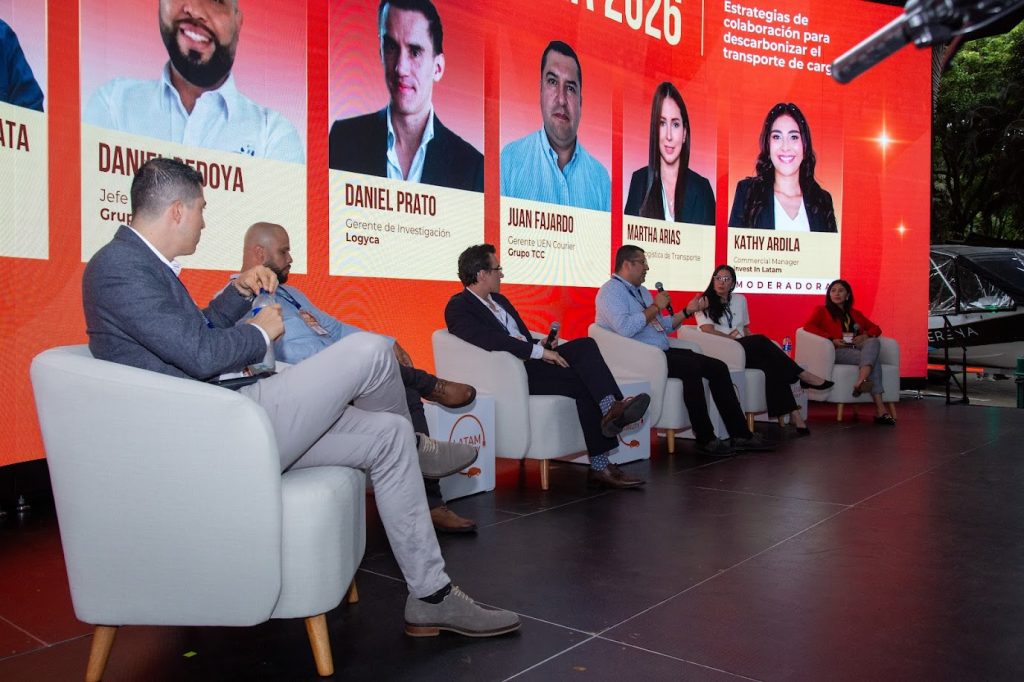
One of the central themes of the panel was the importance of reliable and standardized data. Daniel Bedoya (Bimbo) shared that they built their own emissions calculator, reaching the level of specification by vehicle type and sitting down with manufacturers to measure precisely.
“The pillar for decision-making is reliable data,” he stated, adding that this practice allows them to develop telemetry strategies, efficient driving, idle reduction, and selection of the most appropriate vehicle when adding new fleet.
Camilo Montoya (Grupo Familia) reinforced this idea with an engineering maxim: “What is not measured is not controlled, and what is not controlled is not improved.” He noted that the industry has lacked a standardized measurement method. However, he explained that as part of the Swedish group Essity, they have a methodology approved in 150 countries based on GLEC (Global Logistics Emissions Council) and the Tank-to-Wheel approach, measuring distance and fuel consumption. “We have ambitious goals: reduce emissions by 35% by 2030 and reach zero emissions by 2050,” he detailed.
Then Daniel Prato (Logyca) offered a more systemic view: not everyone measures the same way, nor does everyone know how to measure. He recounted that they started an initiative asking companies for one year of operational data. In the first year, six companies shared information; in the second, 20; and thanks to an alliance with Colfecar and Andi, this year they have 68 companies and expect to reach 100.
“This data helps us understand what to optimize at an individual level, but also to identify opportunities to share infrastructure, compensate, or consolidate cargo, and measure the impact on meeting national goals,” he explained. However, he warned about data governance: “The format may be standardized, but data quality is not always good, and the informality of part of the cargo hinders traceability.”
Common Challenges: Financial, Infrastructure, And Collaboration
During the panel at “Latam Mobility Colombia 2026,” the panelists identified several cross-cutting challenges that slow down accelerated decarbonization:
Martha Arias (Nutresa) pointed out three major obstacles: the financial barrier (the upfront cost of new technology vehicles), the lack of real data (theoretical data often used does not reflect actual operation), and the difficulty of involving aging partner fleets. “We need to break the belief that new technology is not profitable; in the medium and long term, you do reap the benefits of that change,” she stated.
Juan Fajardo (TCC) focused on charging infrastructure challenges, explaining that they currently use the chargers that come with the vehicles (dump chargers, not smart), which limits intelligent energy management. Additionally, the electrical capacity of their facilities, built 58 years ago, was not designed for an electrified fleet. “We are approaching the limit in some regions. We need intelligent charging management, not just replacing transformers,” he warned. He also highlighted an encouraging experience: after evaluating 10 electric vehicles with more than 7 years of use, the batteries retained between 95% and 98% of their useful life.
Daniel Bedoya (Bimbo) listed three major challenges: the shortage of natural gas for vehicles in cities like Villavicencio and Duitama, which puts the gas-gasoline hybrid fleet strategy at risk; charging infrastructure (insufficient transformers, generic chargers); and collaboration with transport suppliers to renew their fleets, which is only possible if long-term relationships with stable contracts are established to provide certainty for return on investment.
Daniel Prato (Logyca) delved into two less visible but critical challenges: trust in sharing information among competing companies and the culture of collaboration. “This morning in a workshop, the collaboration option appeared at the bottom. When I have resources, I tend to go it alone. It’s hard to understand that the collective vision generates more impact,” he reflected. He added that without adequate infrastructure, an enabling regulatory framework, and technology providers, individual efforts fall short.
Camilo Montoya (Grupo Familia) proposed dividing the challenges into two levels: the first challenge is to gain operational efficiency before jumping to new technologies. He recalled other speakers’ comments about low truck utilization (only 6 to 8 days per month). Then he shared three efficiency initiatives:
- Bonus for good driving (reduces fuel consumption by 6% to 10%, which in their fleet means savings of 3,000 gallons per month out of 35,000);
- Tire care (66% are retreaded; maintaining pressure avoids 6% extra consumption; using super single tires reduces 90 kg per axle);
- Extending lubricant life through tribology analysis (achieving oil changes at 40,000 km instead of 30,000, or from 8,000 to 25,000 km in other cases).
Finally, Montoya highlighted their hydrogen pilot: by replacing 7% of diesel fuel with hydrogen in a 2013 Freight Liner vehicle, they improved performance from 11 km/gallon to 12.5 km/gallon, with an 11% reduction in particulate matter and CO2 equivalent emissions.
Collaboration Is The Inevitable Path
Moderator Kathy Ardila called on Colombia’s new government to prioritize investment in electrical transmission infrastructure and public charging networks. “It’s not just private investment. State support is required for this transition to truly continue,” she emphasized.
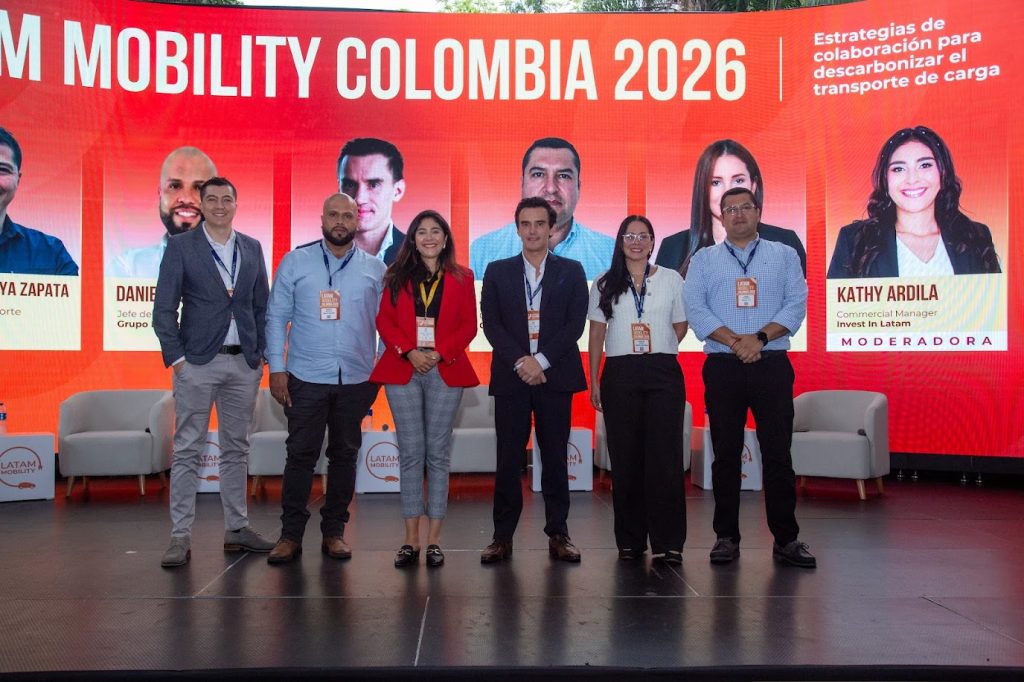
The panelists agreed that collaboration is the inevitable path. From sharing data and routes to establishing long-term contracts with suppliers and partners, to standardizing measurement methodologies. It was emphasized that decarbonization is not an isolated effort by each company, but a national and continental goal that requires public-private synergies.
The panel left several key lessons:
- Operational efficiency (driving, tires, lubricants, occupancy) remains the most immediate and cost-effective tool for reducing emissions;
- Reliable and standardized data is the pillar for measuring, controlling, and improving, but requires trust among actors to be shared;
- Charging infrastructure and regulatory framework must accompany private investment;
- Collaboration along the supply chain (long-term contracts, corridor compensation, cargo consolidation) is the only way to scale impact beyond pioneering cases.
“Undoubtedly, good driving practices, tire maintenance, fleet technification, and data interoperability will allow us to carry out a much more efficient and optimized operation,” concluded Ardila, closing one of the most important conversations at «Latam Mobility Colombia 2026».
A Year 2026 of Consolidation for Mobility
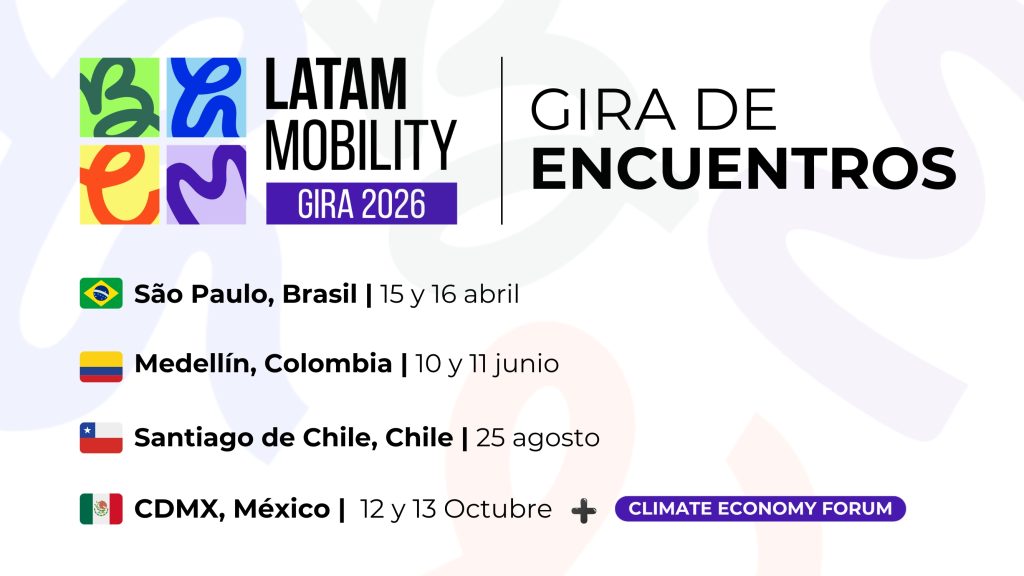
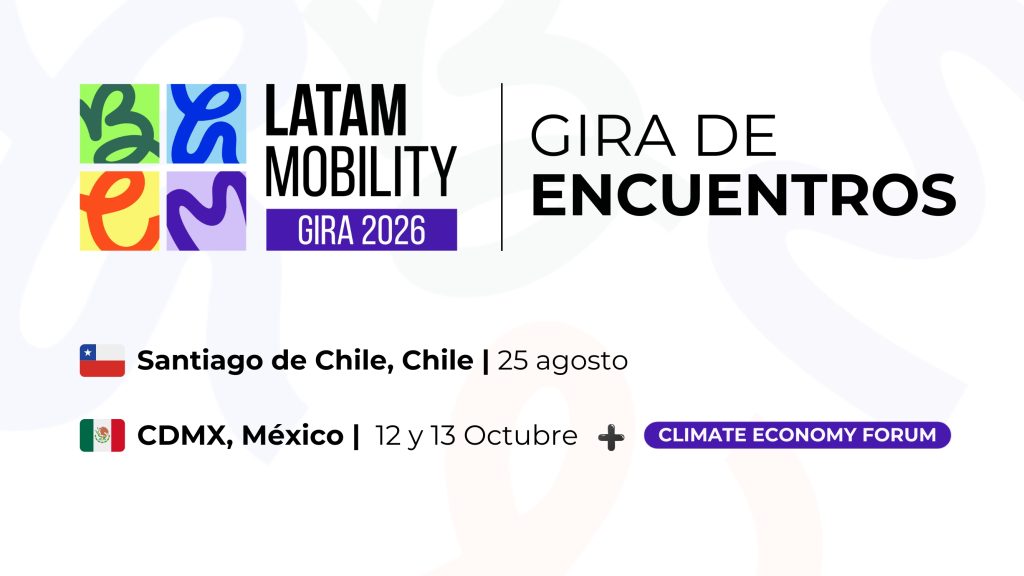
The Latam Mobility 2026 Tour will continue in Santiago, Chile, on August 25, bringing together experts and strategic players to further strengthen the sustainable mobility ecosystem in the region.
The tour will end in Mexico City on October 12 and 13, alongside the Climate Economy Forum, in a meeting that will bring together sector leaders to continue driving the transition toward more efficient, sustainable, low‑emission transportation systems in Latin America.
The transition is already underway. The Latam Mobility 2026 Tour will be the meeting point to accelerate decisions, connect key players, and collaboratively build sustainable mobility in Latin America.