



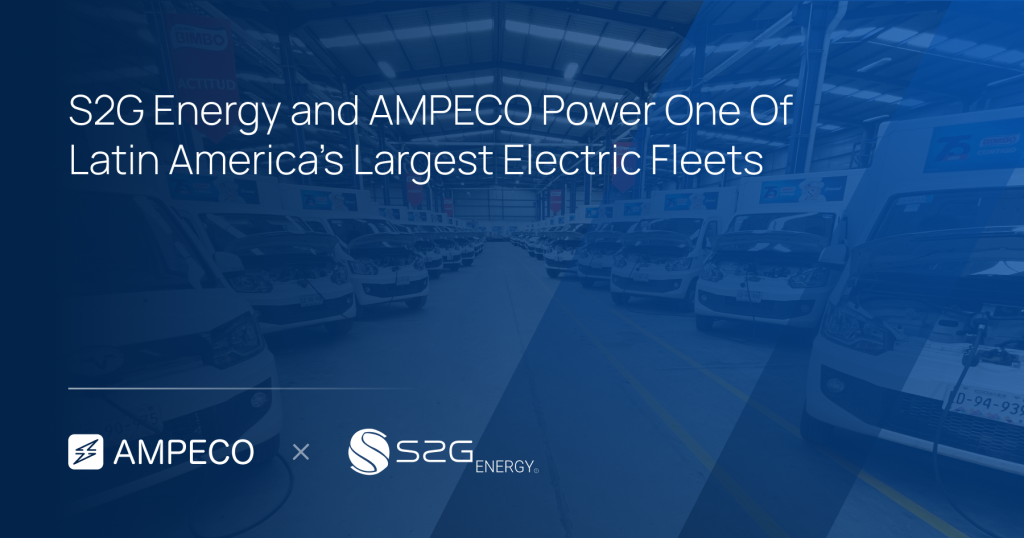
The company specialized in energy infrastructure and management for electromobility, S2G Energy, announced a strategic partnership with AMPECO to integrate charging management, telematic data, and route intelligence for one of the largest electric fleet operations in Latin America onto a single platform.
The collaboration strengthens both companies’ positioning in the mission-critical operations segment, particularly in last-mile fleets, where energy availability and operational efficiency are decisive factors for profitability.
With over ten years of experience in energy management, S2G Energy selected AMPECO‘s software as the technological backbone to manage its charging ecosystem.
Currently, the platform operates across 27 sites, managing 566 chargers that serve more than 2,600 electric vehicles.
According to information released by the companies, the infrastructure is projected to double over the next six months, which would consolidate its position among the most significant private fleet charging networks in the region.
You might also be interested in | Historic growth of electric vehicles in Colombia: the models preferred by consumers
Integration for Mission-Critical Operations
The partnership is based on a technological integration model that combines energy management, vehicle telemetry, and real-time data analysis.
The goal is to offer an operation with zero tolerance for failure, in a context where any interruption in charging can translate into logistical delays and significant economic losses.
Gerónimo Martínez, CEO and co-founder of S2G Energy, explained that the AMPECO platform allows them to transform operational data into business intelligence to optimize every aspect of their clients’ operations.
This capability is key for urban distribution and last-mile fleets, which depend on precise charging cycles and efficient energy planning to meet strict delivery windows.
The approach implemented by S2G Energy is structured on three pillars: charging at the lowest possible cost, operational resilience, and continuous improvement.
In practical terms, this translates into scheduling charges during periods with lower electricity rates, constant monitoring of charger performance, and continuous analysis of energy consumption per unit.
As a result, the company reports over 98% uptime for its infrastructure, a fundamental indicator for fleets that operate daily with no margin for interruptions.
Advanced Data Analysis
AMPECO, for its part, provides a hardware-agnostic software platform designed to integrate with multiple charger manufacturers and external systems via APIs.
This open architecture facilitates the collection and consolidation of real-time data on energy consumption, charger status, preventive and corrective maintenance, as well as vehicle telemetry metrics.
Orlin Radev, CEO and co-founder of AMPECO, highlighted that the partnership demonstrates the potential of combining regional knowledge with technologically proven capabilities on an international level.
The platform allows for generating dashboards with key performance indicators (KPIs), optimizing resource allocation, and anticipating potential incidents, thereby strengthening the reliability of the charging network.
The integration of telematic data with energy information also makes it possible to analyze variables such as topography or transported load’s effect on electricity consumption.
This level of detail contributes to reducing the total cost of ownership (TCO) of electric fleets, one of the decisive factors for the mass adoption of electromobility in the region.
Impact in Latin America
The collaboration between S2G Energy and AMPECO occurs within a context of sustained growth in electric mobility in Latin America, driven by corporate decarbonization commitments, regulatory incentives, and improvements in the competitiveness of electric vehicles compared to diesel alternatives.
According to data shared by the companies, the operations managed under this alliance achieve cost advantages of between 20% and 25% compared to equivalent diesel fleets, considering savings in fuel, maintenance, and energy optimization.
These efficiencies strengthen the economic viability of the electric transition, especially in high-turnover segments like urban logistics and last-mile distribution.
Beyond the financial impact, fleet electrification contributes to the reduction of local emissions of polluting gases and noise in urban environments, aligning with corporate sustainability goals and public policies aimed at improving air quality in major Latin American cities.
With its current infrastructure and the forecast to double its capacity in the short term, S2G Energy positions itself as one of the most relevant players in the comprehensive management of electric fleets in Latin America.
The partnership with AMPECO strengthens this strategy by providing the operation with a scalable, interoperable technological foundation, ready to grow in different markets.
The collaboration between the two companies not only consolidates one of the largest electric operations in the region but also establishes a replicable model to accelerate the electrification of commercial transportation in Latin America.
2026 as a Year of Consolidation
Rather than ambitious announcements, 2026 will be a year for measuring results. Electric and low-emission mobility will no longer be evaluated by the number of pilot projects but will be judged by its ability to operate at scale, reduce real emissions, and improve the quality of urban life.
For Latin America, the challenge will be to capitalize on its experience in electric public transportation, close infrastructure gaps, and build stable policies that allow the transition to be not only green but also inclusive and economically viable.
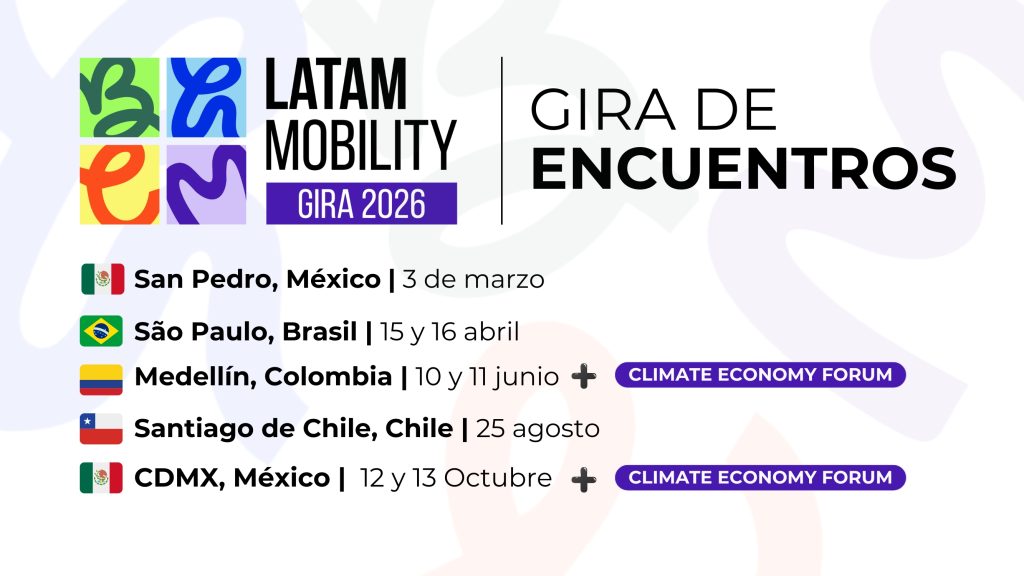
With the 2026 Tour, Latam Mobility reaffirms its commitment to building a regional agenda that connects vision, public policy, innovation, and the market.
Through its stops in Monterrey and Mexico City, Brazil, Colombia, and Chile, the platform will continue to promote a collaborative approach to accelerate the transition to cleaner, more efficient, and more inclusive transportation systems, positioning Latin America as a relevant player in sustainable mobility at the global level.
Be part of the movement that is accelerating Latin America’s energy and urban transformation. If you would like to learn more about how to participate and positioning options, click here.