



Recent political changes in Venezuela have reopened the debate about the country’s economic direction and the role played by structural sectors such as urban mobility.
In a context marked by institutional adjustments, signals of greater economic pragmatism, and moderate expectations of stabilization, transportation is once again positioning itself as a central axis for productive activity, access to services, and quality of life in major cities.
According to analyses that align in media outlets such as Bloomberg Línea, Reuters, EFE, BNamericas, Valora Analitik, and reports from multilateral organizations, urban mobility not only reflects the pulse of the economy but also conditions its capacity for recovery.
In this scenario, sustainable mobility and transportation electrification are beginning to gain space in public and private discussions, although they still face significant structural constraints.
You may also be interested in | Mexico: Driving Innovation with the New “Totalmente Tlaxcalteca” Electric Car
Impact on Urban Planning
Recent political changes have been accompanied by a greater centrality of economic discourse and the search for mechanisms to restore the functionality of basic services.
Regional analysts point out that while high levels of uncertainty persist, there is a greater willingness to introduce operational adjustments and allow the participation of private actors in sectors traditionally controlled by the state.
In the urban sphere, this reconfiguration opens opportunities to rethink transportation planning, although execution capacity remains limited by fiscal constraints, institutional weaknesses, and infrastructure deteriorated after years of low investment.
The functioning of urban transport in Venezuela is one of the most visible indicators of economic dynamics.
The partial rebound of commerce, services, and urban logistics in cities like Caracas, Valencia, Maracay, and Maracaibo has increased the demand for daily mobility, highlighting both the system’s resilience and its profound shortcomings.
Economic media outlets emphasize that the expansion of urban commerce and the service economy has driven the intensive use of private transport, informal solutions, and last-mile options, given the limited capacity of public transport to absorb the growing demand.
Public Transport: The Greatest Structural Challenge
Public transport continues to be the main bottleneck for sustainable mobility. Metro systems, buses, and surface transport operate with aging fleets, insufficient maintenance, and high operational costs.
This situation, widely documented by international agencies, limits service reliability and deepens inequality in access to mobility.
Experts cited by Reuters and BNamericas agree that modernizing public transport is an indispensable condition for any sustainable transition, but it requires innovative financing schemes, improvements in operational governance, and partnerships with the private sector and international cooperation.
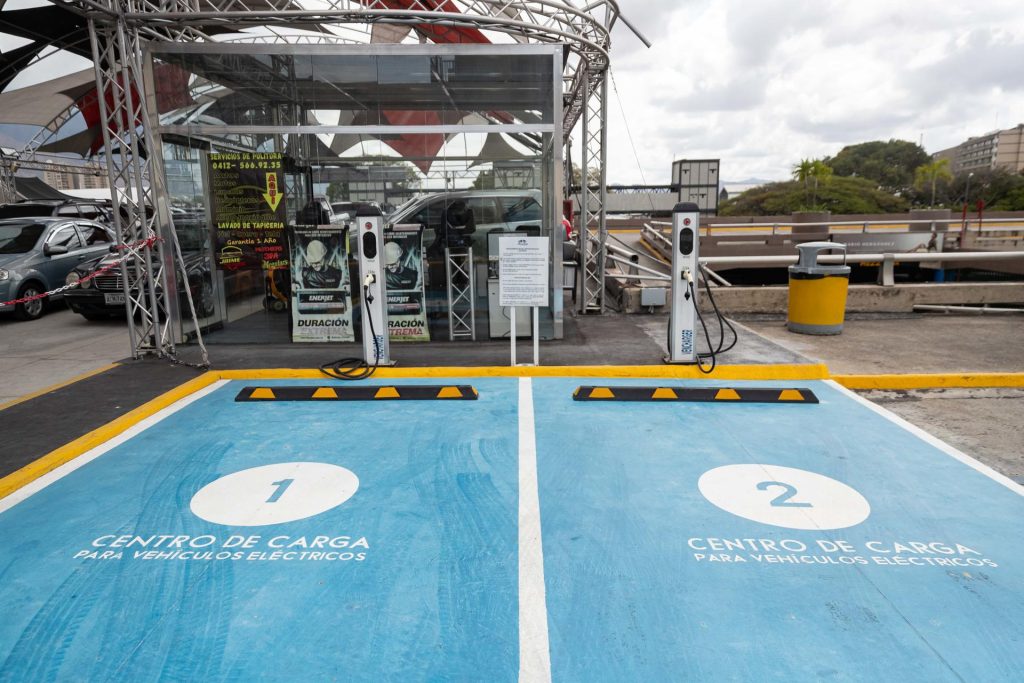
Urban electrification in Venezuela is in an early and fragmented phase. Unlike other countries in the region, there is no massive public policy driving the adoption of electric vehicles.
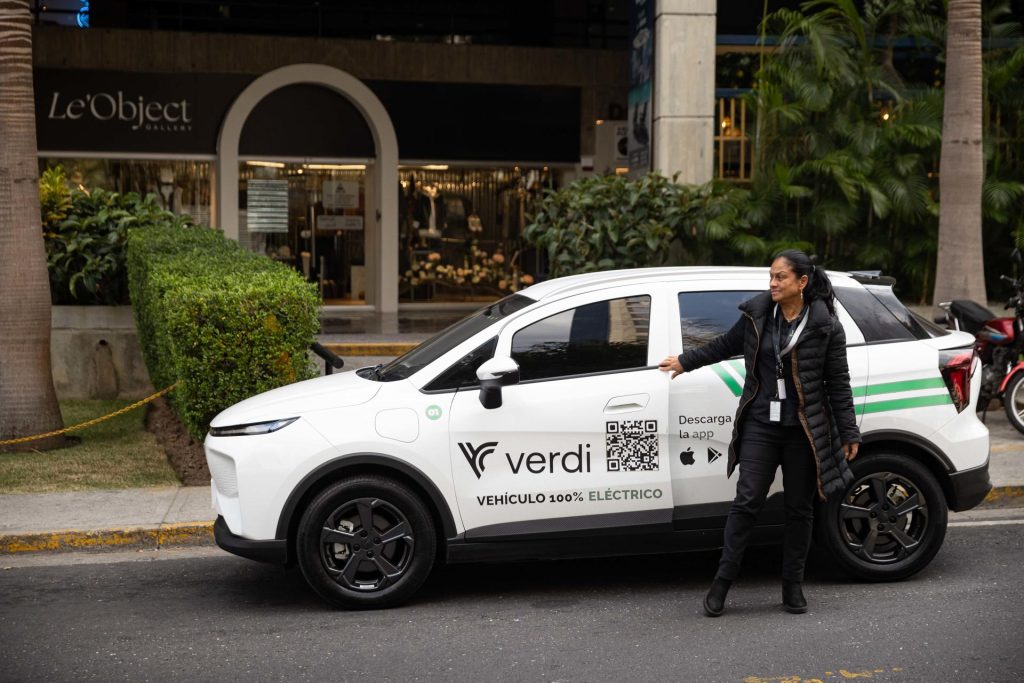
However, specific experiences are observed in corporate fleets, institutional transport, and urban logistics, where operational efficiency and lower maintenance are beginning to justify the initial investment.
Energy-specialized media point out that interest in electric and hybrid vehicles responds more to corporate decisions than to state incentives, which shapes a model of gradual and selective transition.
The Electrical System as a Key Conditioning Factor
One of the main limits for urban electrification is the capacity and reliability of the electrical system.
Technical reports from multilateral organizations warn that the massive adoption of electric vehicles without adequate planning could generate additional strain on already vulnerable grids.
For this reason, analysts agree that electrification must advance first in segments with predictable charging patterns and lower impact on the grid, such as closed fleets and specific urban services.
However, urban sustainability does not depend exclusively on electrification.
In the Venezuelan context, measures such as route optimization, digitalization of transport services, efficient fleet management, and reduction of commute times can generate immediate economic and environmental benefits with lower investment requirements.
These actions, highlighted by media specialized in urban development, allow for improving city productivity and reducing operational costs without the need for major technological transformations.
Social Impact and Equity
Urban mobility is also a matter of social equity. Transport deficiencies disproportionately affect lower-income households, which depend almost exclusively on public or informal transport to access employment, education, and health services.
Improving the efficiency and reliability of urban transport can have a direct impact on reducing inequalities, an aspect underscored by international organizations and regional analysts.
The transition towards more sustainable mobility opens economic opportunities in areas such as specialized maintenance, technical training, service digitalization, and fleet management.
These segments could become sources of employment and development of local capacities if integrated into a long-term strategy.
Likewise, sustainable mobility can contribute to reducing logistics costs and improving urban competitiveness, key factors for attracting investment and stimulating the local economy.
A Possible Transition, but Conditioned by Reality
The consensus among economic analysts and regional media is that sustainable mobility and urban electrification in Venezuela will advance slowly and unevenly.
Progress will depend on political stability, regulatory predictability, access to financing, and urban management capacity.
In the short term, the consolidation of specific projects and hybrid solutions is expected. In the medium term, the foundations could be laid for a more structured transition if macroeconomic conditions improve.
Sustainable mobility in Venezuela is not an immediate promise nor an automatic process. It is a transition conditioned by economic, institutional, and technical factors that require a pragmatic and gradual approach.
However, in a context of political changes and economic redefinition, urban transport is once again occupying a central place in the country’s agenda.
Its evolution will be key to determining whether Venezuela manages to transform the current adjustments into tangible improvements for urban life, productivity, and long-term sustainability.
2026: Moving Towards Electric Mobility
Rather than ambitious announcements, 2026 will be a year for measuring results. Electric and low-emission mobility will no longer be evaluated by the number of pilot projects but will be judged by its ability to operate at scale, reduce real emissions, and improve the quality of urban life.
For Latin America, the challenge will be to capitalize on its experience in electric public transportation, close infrastructure gaps, and build stable policies that allow the transition to be not only green but also inclusive and economically viable.
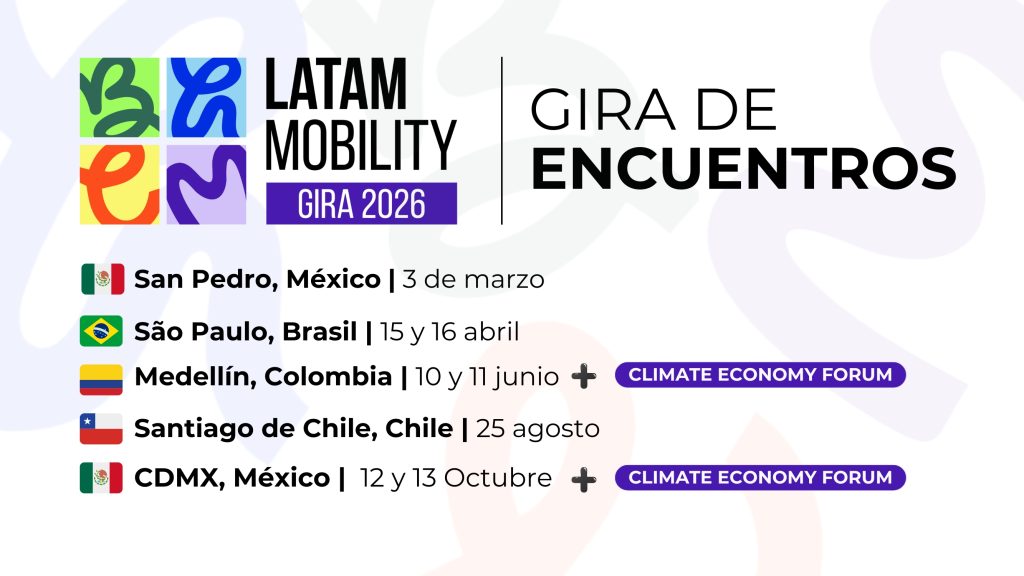
With the 2026 Tour, Latam Mobility reaffirms its commitment to building a regional agenda that connects vision, public policy, innovation, and the market.
Through its stops in Monterrey and Mexico City, Brazil, Colombia, and Chile, the platform will continue to promote a collaborative approach to accelerate the transition to cleaner, more efficient, and more inclusive transportation systems, positioning Latin America as a relevant player in sustainable mobility at the global level.
Be part of the movement that is accelerating Latin America’s energy and urban transformation. If you would like to learn more about how to participate and positioning options, click here.