

CATL and BYD, China’s two largest battery and electric vehicle makers, have escalated their rivalry in recent weeks over who will dominate all-solid-state batteries—a game-changing technology that promises higher energy density, lower weight, and improved safety by swapping liquid electrolytes for solid materials.
Both companies have set 2027 as the target for starting small-scale pilot production. That virtually identical timeline underscores just how fast this industrial race is accelerating, keeping the entire industry on high alert.
The announcements came just days apart: CATL shared its plans with investors on July 29, while BYD had six new patents published by the China National Intellectual Property Administration (CNIPA) on July 31, 2026.
Also of interest | General Motors Accelerates Electrification and Hybrid Strategy in South America with Historic Investment
CATL: Production in 2027 and Mass Deployment in 2030
CATL, the world’s largest EV battery manufacturer, officially confirmed its goal of beginning small-scale production of solid-state cells in 2027.
The company plans to launch pilot lines at its Yibin facility with roughly 2 GWh of capacity, where it will start manufacturing small batches of cells to validate industrial processes, evaluate real-world performance, and analyze production costs.
However, CATL has been careful to temper expectations about immediate commercialization. Robin Zeng Yuqun stated that solid-state technology is currently at Level 4 on a nine-point Technology Readiness Level (TRL) scale—meaning it is still in lab validation and prototype development.
Wu Kai set the target of reaching Levels 7 or 8 by 2027, which would allow for testing much closer to real-world driving conditions and justify launching the first pilot lines. The company also indicated that large-scale production—equivalent to roughly one million vehicles—won’t happen before 2030.

On the technical front, CATL has begun pilot production of solid-state cells with an energy density of 500 Wh/kg—roughly double what today’s best conventional lithium-ion batteries deliver. The company is developing sulfide-based solid electrolyte technology, and its patents reveal advancements in anode materials that include layers with a substrate material, a cobalt-rich material, and a coating containing an electrolyte salt.
BYD: Six New Patents and the 2027 Horizon
BYD, CATL’s main rival and one of the world’s largest EV manufacturers, stepped up by registering six new patents related to solid-state batteries. Four of those patents focus on materials chemistry and cell composition, while the remaining two address manufacturing processes and quality control systems.
BYD’s most innovative approach lies in using a cathode with a dual solid electrolyte, which combines halide- and sulfide-based materials as an alternative to conventional liquid electrolytes. This design aims to improve the stability of the solid-solid interface—one of the biggest technical hurdles in this space—and extend cell lifespan.
Another patent describes a double-layer cathode composite structure that blends monocrystalline and polycrystalline materials to balance structural stability with rate capability (the ability to maintain charge under high demand).
BYD has also marked 2027 as the target for its first experimental production. The manufacturer has been investing heavily in R&D for this technology and assembled a specialized team over the past few years to position itself competitively against CATL.

The tight alignment of their timelines makes it clear just how fiercely competition is accelerating inside China to dominate the next generation of batteries. The fact that CATL and BYD moved almost simultaneously underscores the competitive pressure in the Chinese market and the urgency not to fall behind in a technology considered strategic for the future of EVs.
Who will Win the Race?
One of the biggest hurdles to bringing solid-state batteries to the mass market is price. Both CATL and BYD believe the first solid-state cells will carry significantly higher production costs than conventional lithium-ion cells, so initial commercial applications will be reserved for high-end vehicles.
Robin Zeng noted that early integration will be limited to automotive platforms priced above 250,000 yuan (roughly $37,000 USD). BYD, while not offering concrete figures, indicated its first solid-state batteries will also debut in its premium models first.
Both companies agree that mass production—and the cost reductions needed to reach lower-priced vehicles—won’t materialize until after 2030. By then, the market should have enough volume to justify the investments required to scale the technology.
The big question on everyone’s mind is who will get there first. CATL starts with an edge in global scale and R&D firepower, but BYD has the advantage of being both a vehicle and battery manufacturer, allowing it to integrate advancements into its own models much faster.
What’s clear is that the competition between CATL and BYD is accelerating innovation in a sector that, for years, promised breakthroughs without committing to specific dates. Now, with concrete industrial timelines, published patents, and clear readiness targets, the race for the solid-state battery has entered its most decisive phase.
The Ideal Space for Assembly Plants in Latin America
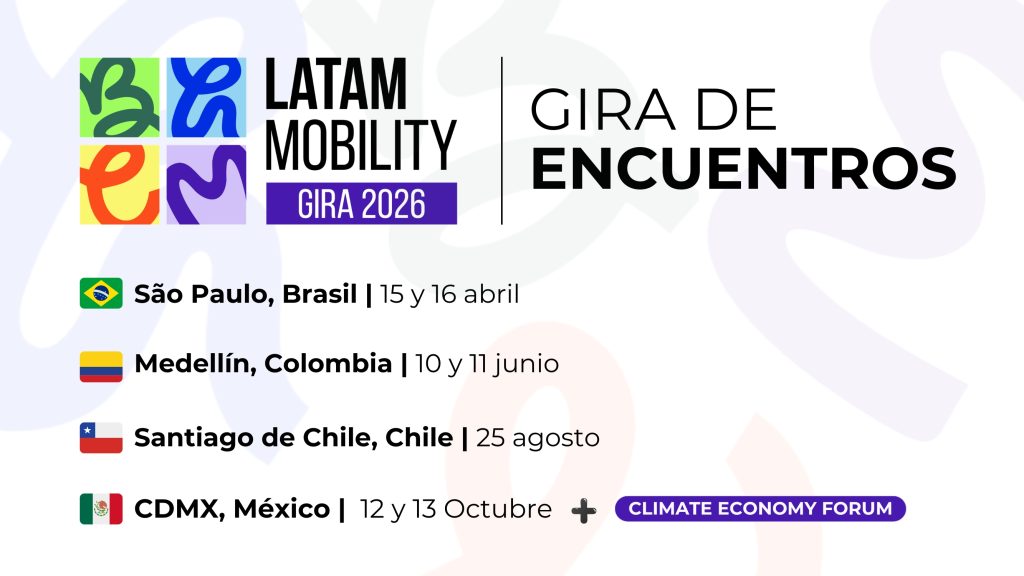
The Latam Mobility 2026 Tour will arrive in Santiago, Chile, on August 25, bringing together experts and strategic players to further strengthen the sustainable mobility ecosystem in the region.
The tour will end in Mexico City on October 12 and 13, alongside the Climate Economy Forum, in a meeting that will bring together sector leaders to continue driving the transition toward more efficient, sustainable, low‑emission transportation systems in Latin America.
The transition is already underway. The Latam Mobility 2026 Tour will be the meeting point to accelerate decisions, connect key players, and collaboratively build sustainable mobility in Latin America.