


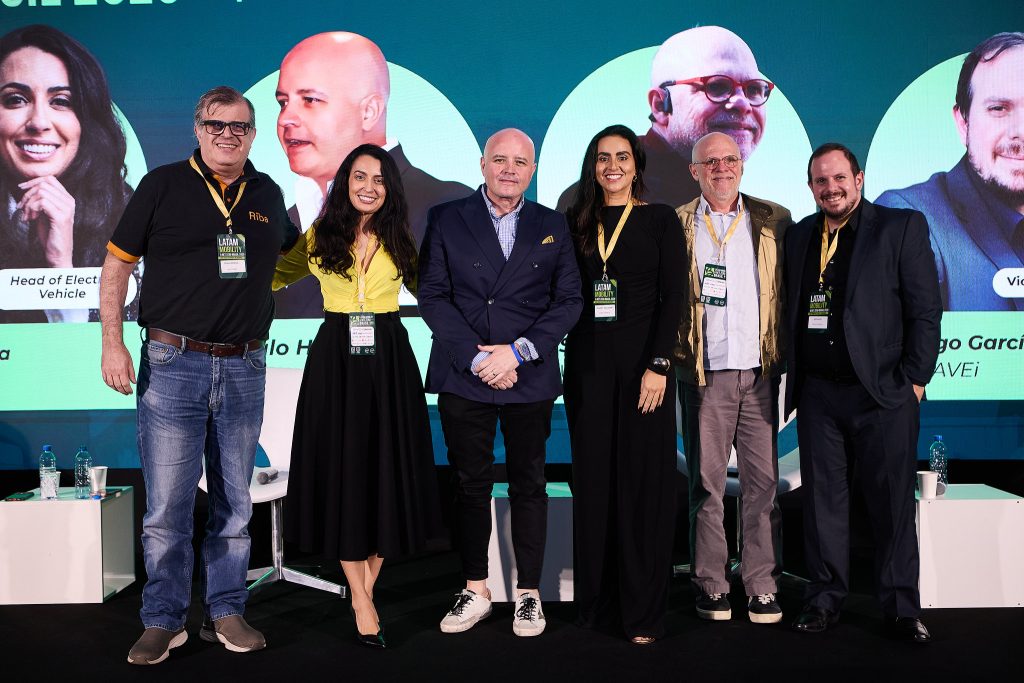
As part of “Latam Mobility & Met Zero Brasil 2026,” the panel “Micromobility, app-based transport, and delivery solutions: how is logistics changing in Brazil?” was moderated by Daniela García, Country Lead of Invest In Latam.
The discussion brought together industry leaders to analyze how digital platforms are reshaping logistics flows, service standards, and work models, as well as their role in adopting cleaner, more efficient solutions in Brazilian cities.
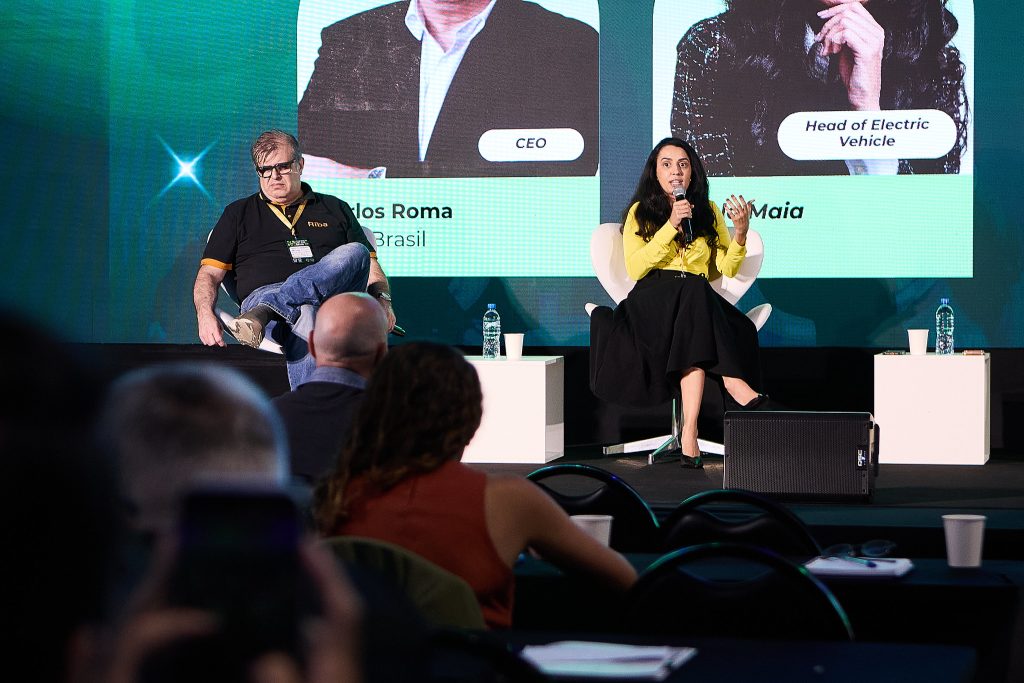
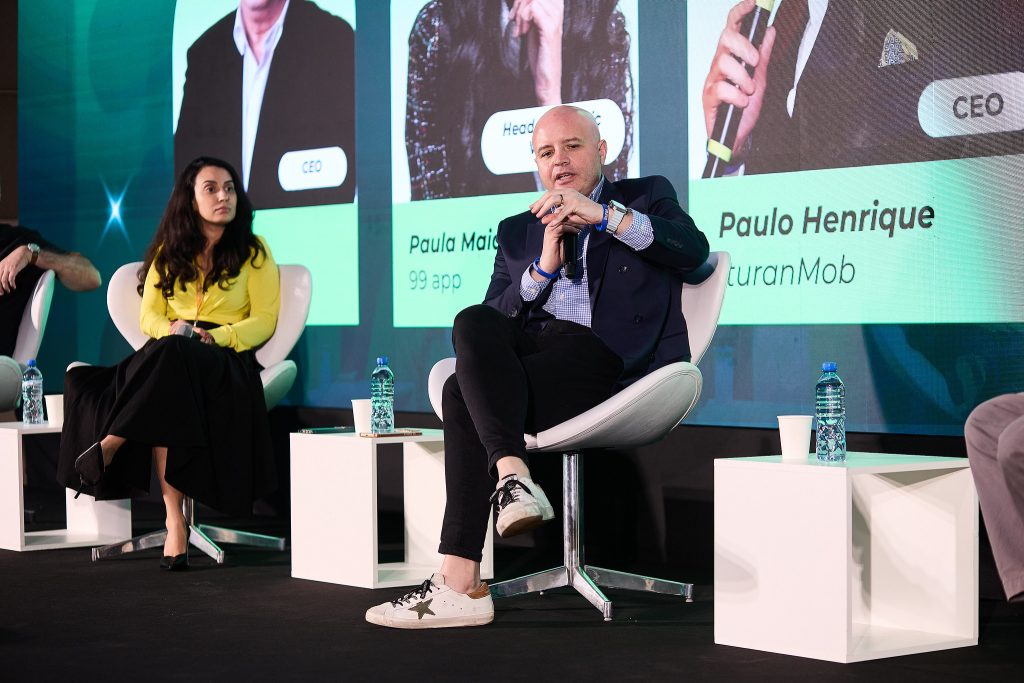
The panelists were: Carlos Roma (CEO of Riba Brasil), Paula Maia (Head of Electric Vehicle at 99), Paulo Henrique (CEO of IturanMob), Sérgio Avelleda (founding partner of Urucuia), and Thiago García (vice president of ABRAVEi).
Throughout the conversation, key concepts emerged such as decarbonization with social impact, real-time emissions measurement, road safety for motorcyclists, and the need to integrate micromobility with public transport.
You may also be interested in: Autocab – 30 years of experience in reservation and dispatch systems for transport fleets
Collaborative Ecosystem to Accelerate Mobility
Paula Maia highlighted the creation of the Alliance for Sustainable Mobility, a consortium that now brings together 31 companies and was born from the conviction that no single player can drive the energy transition alone.
“99 could provide the vehicle to the driver, but we need to develop charging mechanisms, financing systems for those cars, motorcycles, and bicycles. That’s why we created this alliance,” she explained. Thanks to this collaborative work, the platform reached 40,000 electrified vehicles in 2025 and has set a goal of reaching 300,000 by 2030.
Maia also mentioned concrete initiatives such as 99 Electric Charging, which offers discounts of up to 30% at public chargers, and the electric vehicle rental program, which allows drivers to test the technology without an initial purchase.
For his part, Carlos Roma (Riba Brasil) defined his company as “a decarbonization solution with social impact.” “The population grows in three dimensions (X, Y, Z) but road manners only in two. That equation doesn’t add up. We need motorcycles, but we must deeply understand the rider who is on top of the bike,” he stated.
Riba focuses on last-mile delivery with electric motorcycles, prioritizing safety and generating prosperity for delivery workers.
Road Safety: The Great Challenge of Two Wheels
One of the most notable moments of the panel was the intervention of Sérgio Avelleda (Urucuia), former Secretary of Mobility and Transport of São Paulo and former president of the Metro and CPTM.
Avelleda recalled that Brazil loses 120 people per day in traffic, and the majority of victims in cities are motorcyclists. “Imagine a plane with 120 passengers crashes today, another tomorrow, another the next day. What would happen to the aviation industry? It would come to a halt until the problem was solved. That’s exactly what we should do with road safety,” he declared.
In response, Carlos Roma announced that Riba has developed a safety algorithm with the goal of zero fatal accidents. “Using Ituran’s telemetry, we monitor accelerator, brakes, lateral acceleration, speed, and 30 golden points that predict an accident. When a risky situation is detected, we interrupt the ride and provide personalized remote training,” he explained.
Roma added that the company is pursuing the seal “Zero emissions, zero noise, zero accidents, and zero congestion.”
He also mentioned a pioneering program called Eye Care, developed together with 99, to detect vision problems (myopia, hyperopia, color blindness) in motorcyclists. “Many ride without knowing they need glasses. At a very low cost, we include eye exams and discounts on glasses. This is part of accident reduction,” he detailed.
Emissions Measurement and Carbon Credits: The Contribution of Telemetry
Paulo Henrique, CEO of IturanMob, revealed that his company, which has 2.6 million IoT devices deployed in 27 countries, has developed an algorithm capable of calculating in real time the emissions avoided when comparing an electric motorcycle to a combustion one.
“That calculation is tokenized, validated at the Institute of Technology of Portugal, and turned into an environmental asset that companies like Microsoft and Shell are already buying,” he explained.
Henrique emphasized that measurement is the basis of decarbonization. “It’s not just about putting in a new IoT device: we use the same device that already serves to open, close, and recover vehicles. With it, we can generate carbon cashback for the driver, improve their credit score, and offer better financing rates,” he detailed. This approach, he noted, democratizes access to electric vehicles even for those without a banking history.
Thiago García (ABRAVEi) agreed that the profile of electric vehicle users has changed radically. “What used to be a luxury item for technology enthusiasts is now a work tool for thousands of app-based motorcyclists. Most of the electric cars you see on the road in big cities are on platforms like 99. The beneficiary is not just the driver, but everyone who breathes the city’s air,” he stated.
Integration with Public Transport
Sérgio Avelleda was emphatic that no micromobility solution will succeed unless integrated with public transport. “A person traveling by car emits 45 times more CO2 than someone traveling by bus. A bus carries 80 people; the average vehicle occupancy in Brazil is 1.1 passengers. The backbone of urban mobility is public transport, and everything else must work to strengthen and integrate with it,” he argued.
Avelleda warned about the risk of draining public transport toward individual modes: “When we take passengers away from the bus, the city government loses revenue and reduces fleets. That can lead to collapse, as has already happened in Teresina, Salvador, and Rio de Janeiro. If public transport goes bankrupt, it won’t be scooters or motorcycles that transport the legion of excluded people.”
In terms of urban logistics, he proposed consolidating cargo into larger vehicles, installing distribution centers close to consumption points, using lockers at subway stations or gas stations, and promoting the use of cargo bikes (capable of carrying up to 350 kg) as a safer and more flexible alternative to motorcycles. He also cited the example of Barcelona, which allows authorized cargo vehicles to use bus corridors during low-demand hours.
Paulo Henrique supported this vision, though with a nuance: “I completely agree with public transport. I use the subway and bus when I travel outside Brazil. But in this country, I’m afraid of being robbed 20 meters from the station. Public inefficiency forces us to have four armored vehicles at home. The Alliance for Sustainable Mobility exists, in part, to compensate for those inefficiencies.”
Avelleda replied that the subway and buses in São Paulo are extremely safe places because cash is no longer handled, and that the solution to public safety is to occupy the streets, not avoid them.
Democratizing Access
Moderator Daniela García closed the panel by asking each participant to give a phrase summarizing their organization’s role in the sustainable mobility agenda.
- Thiago García (ABRAVEi): “To converse, listen, and speak. Dialogue between sender and receiver is fundamental. Sometimes you don’t need to go by car; you can go by bike or on foot.”
- Paula Maia (99): “To democratize. 99 is a channel that accelerates projects and brings together people with common ideals. We want more drivers to access the economic and environmental benefits of electric vehicles.”
- Carlos Roma (Riba): “An empty head is the devil’s workshop. We need to give purpose, prosperity, and perspective to those who today see violence or drugs as the only way out. Transforming last-mile logistics into a dignified profession is generating wealth for the country.”
- Paulo Henrique (IturanMob): “This project is too big to be in the hands of a single person. The alliance is the way.”
- Sérgio Avelleda (Urucuia): “The only solution for sustainable cities lies in consolidating freight transport and collectivizing travel. There is no solution for public safety if we don’t occupy the streets walking, biking, or using public transport.”
Daniela García concluded the panel by recalling that sustainable mobility must be addressed from environmental, financial, and social perspectives. “We cannot make decisions that solve one problem while creating others. Sometimes investment funds tell us: I will not give capital to create a green traffic jam. We need to reprogram urban logistics efficiently,” she stated.
With initiatives like those presented at this panel, Brazil is moving toward cleaner, safer, and more inclusive mobility, where technology, public-private partnerships, and a focus on people are the true engines of change.
The Agenda to Decarbonize Transport
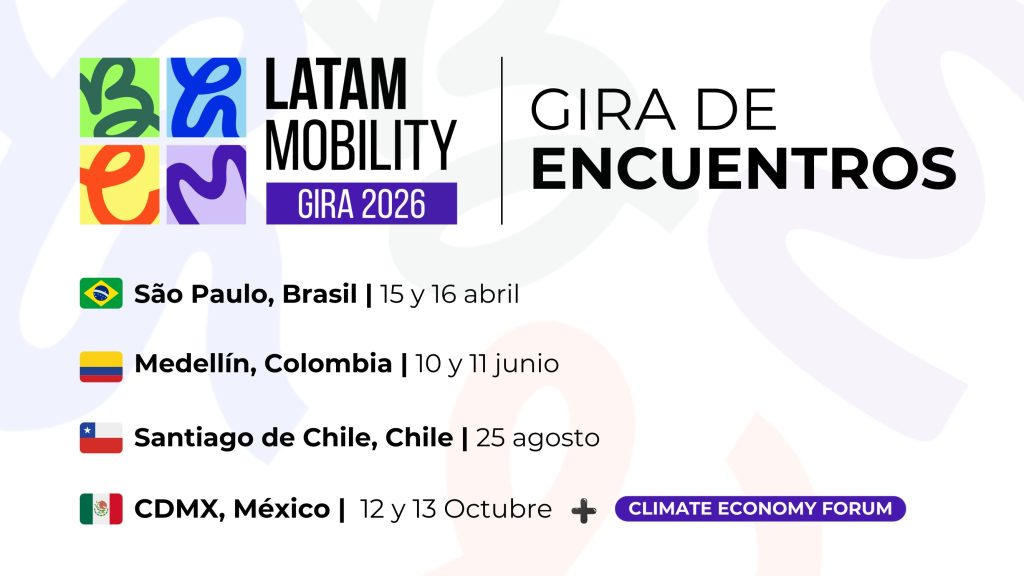
Latam Mobility promotes dialogue among the main players in the sector throughout its 2026 tour, which will visit the region’s key markets to delve deeper into these and other crucial issues for the transformation of mobility.
The Latam Mobility 2026 Tour will travel through some of the region’s most dynamic cities, Mexico City, Brazil, Colombia, and Chile, establishing itself as a unique space to connect the ideas, projects, and leaders who are transforming mobility and the climate economy in Latin America.
The transition is already underway. The 2026 Latam Mobility Tour will be the gathering point to accelerate decisions, connect key players, and collaboratively build sustainable mobility for Latin America.