


Kodiak AI, a company specializing in autonomous driving systems for heavy-duty transportation, announced a strategic alliance with Bosch to scale up production of critical hardware and sensors for autonomous trucks.
The agreement marks a significant step for the industry, focusing not only on the development of autonomous driving software, but also on the industrialization and large-scale manufacturing of the components necessary for reliable commercial operations.
The partnership seeks to bridge the gap between controlled testing and real-world deployment, one of the main challenges facing advanced autonomy in freight transport today.
From Pilot to Deployment on Commercial Routes
In recent years, Kodiak AI has operated autonomous trucks on long-haul routes in the United States, focusing on specific logistics corridors and under supervised safety schemes.
However, the transition to commercial fleets requires robust, repeatable, and certified manufacturing processes capable of meeting automotive and industrial safety standards.
In this context, Bosch contributes its global expertise in automotive engineering, systems integration, series production, and quality assurance.
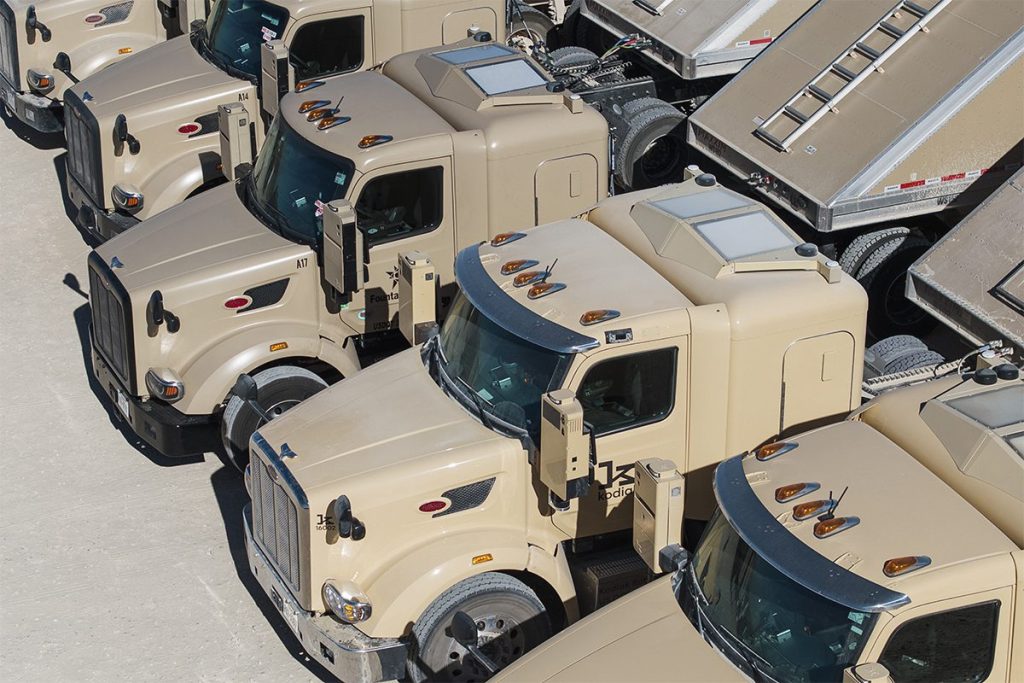
The collaboration includes the manufacture and scaling of sensors, computing units, and integrated hardware that are part of Kodiak‘s autonomous platform, designed specifically for heavy trucks.
Industrialization, Safety and Standards
One of the central pillars of the alliance is the creation of an autonomous platform ready for volume production, which involves moving from configurations adapted for testing to standardized architectures optimized for manufacturing, maintenance, and continuous operation.
Bosch, with decades of experience as a Tier 1 supplier to the global automotive industry, contributes design processes for manufacturing, component validation, and industrial scaling.
For Kodiak, this allows it to strengthen the reliability of the system and move toward business models based on commercial autonomous operations, especially in long-distance freight transport.
Safety remains a central factor in the adoption of autonomous trucks, so the collaboration includes the development and production of systems with redundancy at the sensor, power, and computing levels, aligned with automotive industry practices and standards.
Bosch has developed advanced driver assistance technologies (ADAS), braking systems, sensors, and certified automotive electronics, which reinforces the platform’s credibility in meeting regulatory requirements and the expectations of logistics customers and fleet operators.

Impact on Logistics and Freight Transport
The scaling of autonomous truck technology has direct implications for logistics efficiency, operating costs, and road safety.
In markets such as the United States, where road transport accounts for a significant portion of freight movement, long-distance autonomy is seen as a tool to mitigate driver shortages, reduce downtime, and improve the predictability of operations.
The Kodiak–Bosch alliance is part of a broader trend in the sector, where autonomous software companies are seeking established industrial partners to accelerate market entry and reduce technological and operational risks.
With this partnership, Kodiak AI reinforces its strategy of moving toward sustainable commercial deployments, while Bosch expands its participation in the autonomous mobility ecosystem applied to heavy transport.
Beyond the announcement, the agreement reflects a clear sign of the sector’s maturation: truck autonomy is entering a phase where industrial scale and operational reliability are as important as driving algorithms.
In a global scenario marked by the digitization of transportation, automation, and pressure for more efficient logistics chains, the alliance between Kodiak and Bosch positions both companies as relevant players in the next stage of autonomous truck development.
Platform for the Mobility of the Future
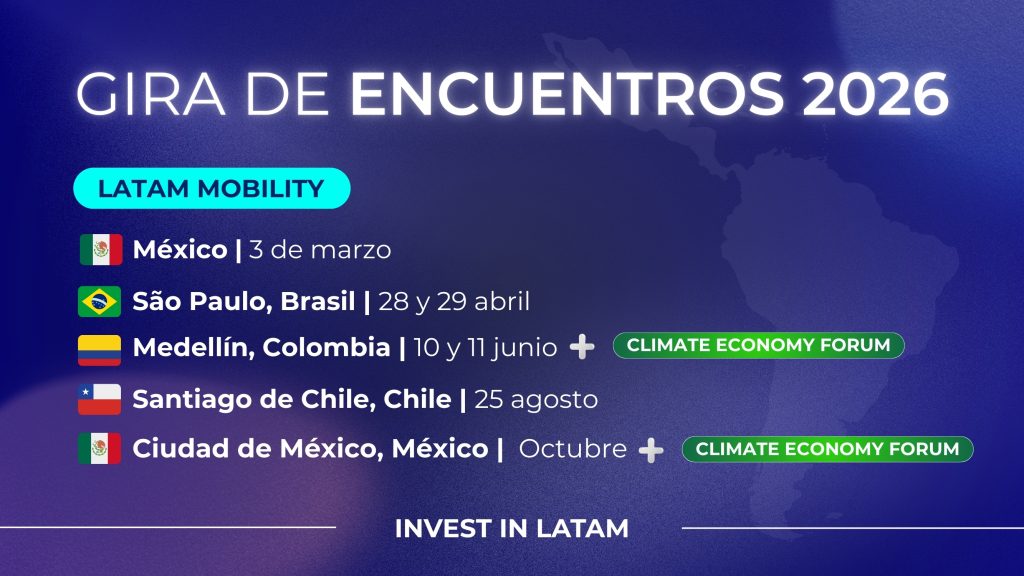
With the 2026 Tour, Latam Mobility reaffirms its commitment to building a regional agenda that connects vision, public policy, innovation, and the market.
Through its stops in Monterrey and Mexico City, Brazil, Colombia, and Chile, the platform will continue to promote a collaborative approach to accelerate the transition to cleaner, more efficient, and more inclusive transportation systems, positioning Latin America as a relevant player in sustainable mobility at the global level.
Be part of the movement that is accelerating Latin America’s energy and urban transformation. If you would like to learn more about how to participate and positioning options, click here.