


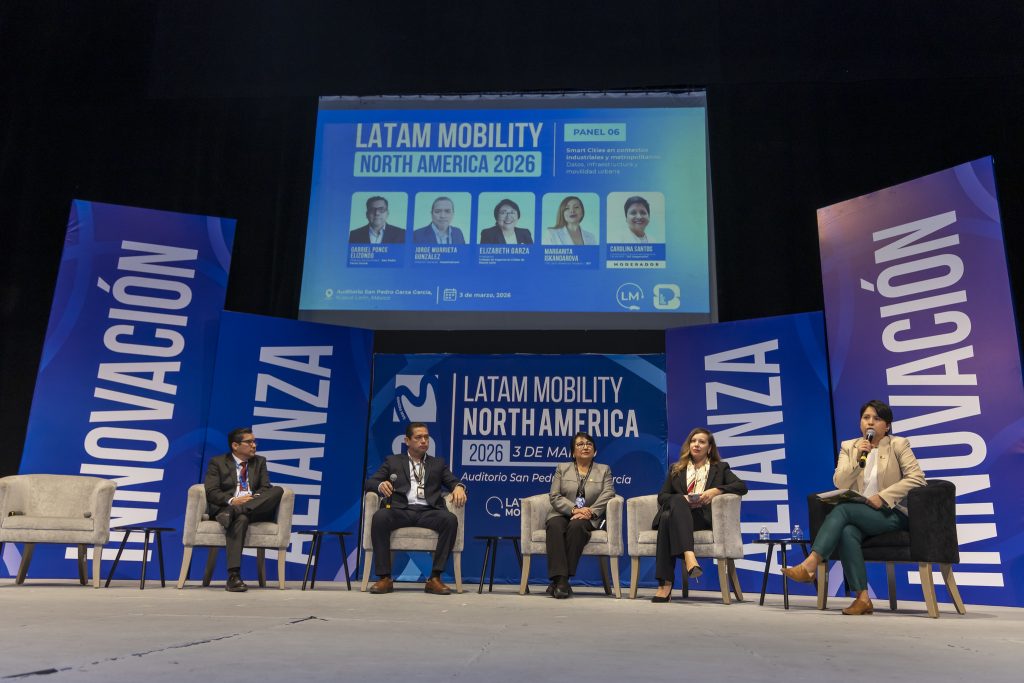
Within the framework of the “Latam Mobility North America 2026” summit, the municipality of San Pedro Garza García was the setting for a deep, multidisciplinary dialogue on the true meaning of smart cities in industrial and metropolitan contexts.
The panel, titled “Smart Cities in Industrial and Metropolitan Contexts: Data, Infrastructure, and Urban Mobility,” brought together voices from municipal government, academia, international cooperation, and the private sector to discuss how to build more livable cities in an environment of accelerated growth.
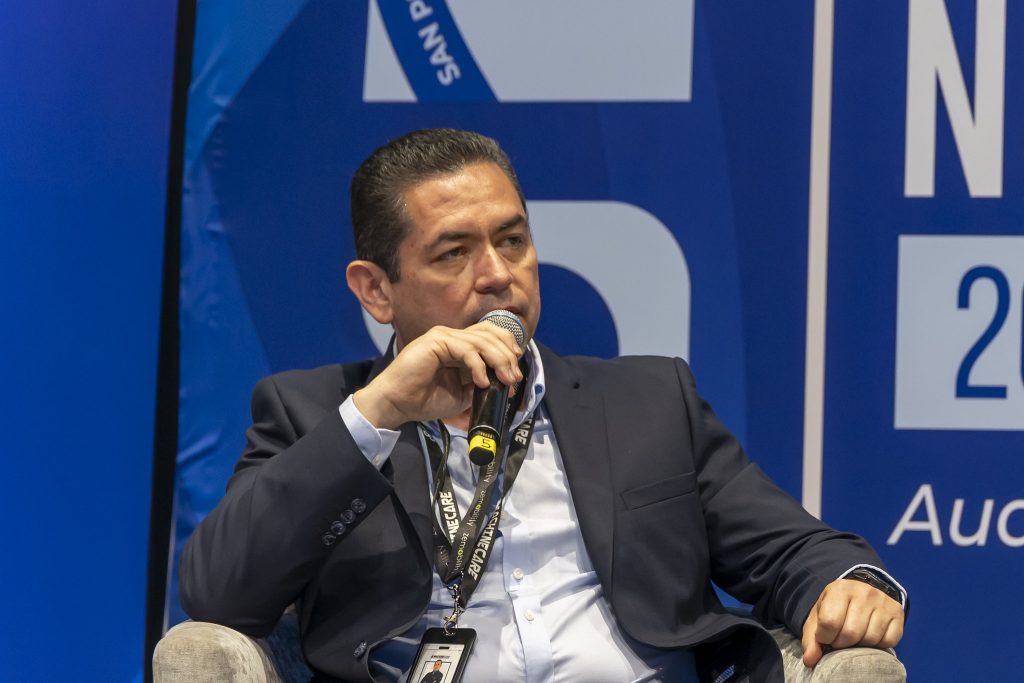
The moderation was led by Carolina Santos, Technical Coordinator of the DeveloPPP program at GIZ German Cooperation, who articulated the different perspectives of the panelists: Elizabeth Garza, President of the Nuevo León College of Civil Engineers; Gabriel Ponce Elizondo, Director of Mobility for San Pedro Garza García; Margarita Iskandarova, GR, Latin American Markets at JET; and Jorge Murrieta González, General Director of Machine Care.
What followed was a conversation that transcended the purely technological approach to delve into the human, cultural, and governance aspects that determine the success or failure of mobility policies in the region.
You might also be interested in | Flixbus Presents the Megatrends Redefining Passenger Transportation Globally
The Challenge of Getting Around
Gabriel Ponce Elizondo spoke to contextualize the moment the host municipality is experiencing. “For San Pedro, the issue of security will always be the most important, but it’s practically checked off. It’s the municipality with the best perception of security nationally. From there on, surveys show us that the next biggest problem, by far, is the issue of mobility,” he acknowledged.
The Mobility Director shared his administration’s achievements: “Today we can connect approximately 130,000 people monthly through our social circuits, plus those we move in school and university routes. We are growing more and more. It’s a system based on people’s needs; that’s where the success lies. The most important thing has been listening to the citizen, listening to the user to understand their needs.”
However, Ponce identified a fundamental problem that transcends infrastructure. “Without a doubt, the municipality of San Pedro has been characterized by very strong citizen participation. But there’s one point that is not only a need for the municipality, but perhaps for the entire country and a large part of Latin America: the issue of road culture. The culture and mentality we have for moving around and driving is what I would put in first place.”
And he shared a revealing statistic: “Today, more than 90% of the vehicles circulating in San Pedro carry only one person. That’s a major mobility problem. We’re betting on public transportation; those 130,000 trips are a good percentage, but it’s insufficient. The culture of how we move is what I would bet on. Road culture campaigns for drivers, and even for pedestrians.”
Ponce also defended a comprehensive approach: “Not everything is solved with public transportation or better sidewalks. It’s a combo: scooters, micromobility, public transport, better sidewalks, ramps, carpooling, technological applications. A definitive restructuring is also needed. As engineers, we know this; we have to push in that direction too.”
Micromobility and Data
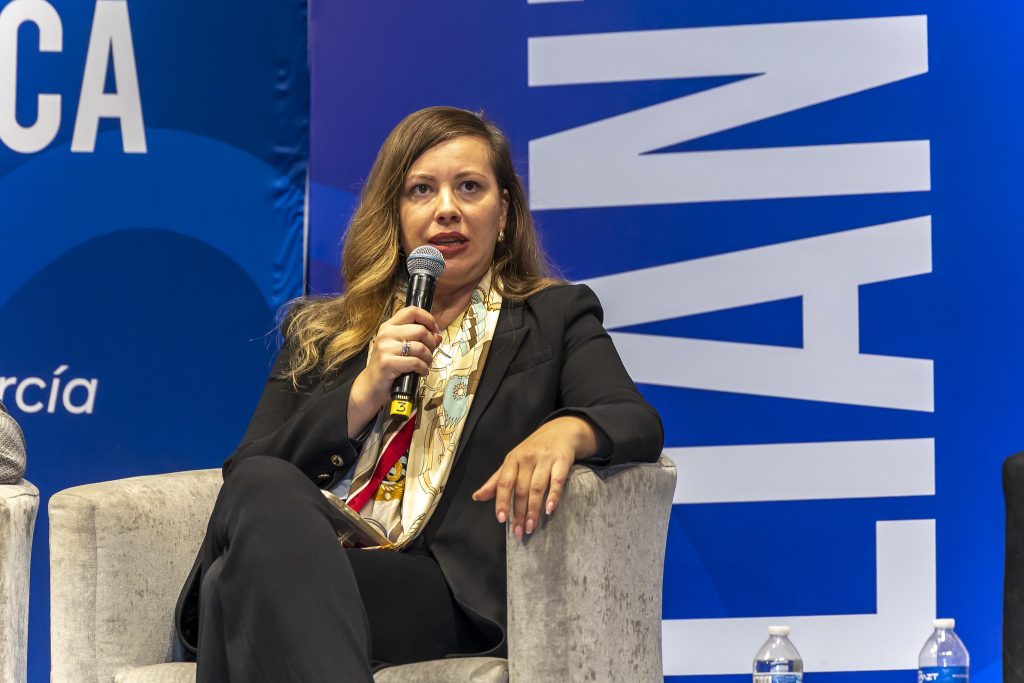
Margarita Iskandarova brought the global perspective of JET, an urban micromobility holding company present in eight countries, with over 100,000 electric scooters worldwide. “We are here in Mexico to share our experience and launch our project in several municipalities in our own version and through public-private collaboration,” she announced.
For Iskandarova, the value of micromobility goes beyond the service itself. “We have a lot of experience in collecting data and presenting it to governments to make data-driven decisions. Our scooters are new generation; they are like mobile sensors that can generate GPS data and then provide this data in specific reports to apply in governance and create mobility, transport, and new urban structure strategies,” she explained.
The executive emphasized the importance of public-private collaboration that respects privacy. “The data we collect is not personalized; we follow data protection laws. But we manage to collect a lot of specific information to create a more technological city. This combination of technology, strategic governance, and our micromobility potential, along with all the other players, can create something unique here in this municipality, in this state, in Mexico,” she stated.
And she conveyed a message of optimism: “The biggest leap in mobility occurs when new technologies are combined with data-driven strategic governance. We are very happy in Mexico because we see that governance accepts our proposals, we adapt protocols, localize practices, and create something uniquely national.”
Training Talent from Childhood
Jorge Murrieta González presented the vision of Machine Care, a Mexican company with 20 years of experience in automated test and diagnostic systems, which has taken a step forward towards training new generations. “We took on the task of developing a parallel educational system, with a differentiator: it’s focused on ages 6 to 18, with levels according to biological age and technical complexity,” he detailed.
Murrieta explained the philosophy behind this initiative: “Its characteristic is to discover talent and passion. We believe everything is very focused on hard skills, and we are very focused on soft skills. By enhancing these soft skills, hard skills take off.”
The executive shared concrete results: “Today we have around 500 children and young people taking on these challenges. Their final projects are focused on social impact. Several have prototypes that are registrable. Speaking of smart cities, several young people already have notable projects.”
In the field of electromobility, Machine Care has established a strategic collaboration. “We have an alliance with Legacy EV, an American company in Phoenix, that has solutions ranging from creating the electric concept of a vehicle to converting combustion to electric. Along this path, we’ve been able to grow in understanding how soft skills connect with hard skills: what profile we should have in our region, whether it’s more about implementation, design, analysis, or management,” he explained.
And he concluded with a reflection on the current moment: “Electromobility arrives with a certain delay in terms of technical specialization. It is up to us to bring that technology closer, introduce projects that incentivize government and private sector collaboration, and work with the companies that are the engine of this thriving region.”
A Big Decision to Transform Mobility?
Elizabeth Garza took the opportunity to delve deeper into a structural problem. “There are municipalities making great efforts, like San Pedro, but they are isolated efforts. We have to update the studies, not leave them in a drawer. In 2019, we struggled a lot to convince decision-makers that a Comprehensive Sustainable Urban Mobility Plan was required. We have it now, but we need to update it.”
The president of the College of Civil Engineers was emphatic about priorities: “As long as we don’t give exclusive lanes to public transportation, as long as there isn’t a route restructuring and information that generates trust, the user will continue to distrust. The serious problem comes from the disconnection between urban development and mobility. We continue to build isolated housing, without services, and then we have empty homes and everything we already know about.”
And she recalled the mobility pyramid: “There has to be a moment when someone says: ‘Enough, whoever gets angry gets angry, this is what we have to do.’ Let’s bet on the pyramid: infrastructure for pedestrians, public spaces, people with disabilities, public transportation. And yes, also build infrastructure for the private vehicle, but as a necessity, not as a status symbol.”
Garza concluded with a statement: “The public transport user is captive. It’s a lie that someone leaves their car by choice to take the bus. We need to think about those people. And also about freight transport, which we always demonize. If we don’t give it infrastructure, where is it going to circulate?”
Finally, Carolina Santos spoke to close the panel with a personal reflection. “For me, it’s also important to divide the budget fairly among all users of public space and the road. Leaving no one out.”

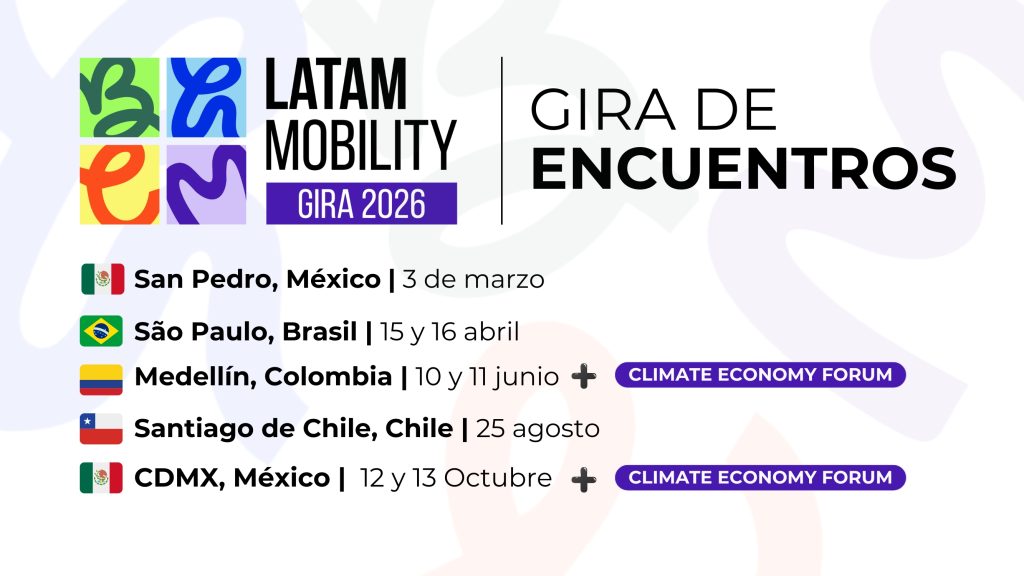
The Conversation Continues: Latam Mobility 2026 Tour
The debate on smart cities, data, and urban mobility will continue throughout the year in the region’s main markets.
It will be an opportunity to further deepen the synergies between government, industry, academia, and civil society that make urban transformations possible. Because, as was demonstrated in this panel, smart cities are built with dialogue, with data, and above all, with the conviction that another model of mobility is possible.
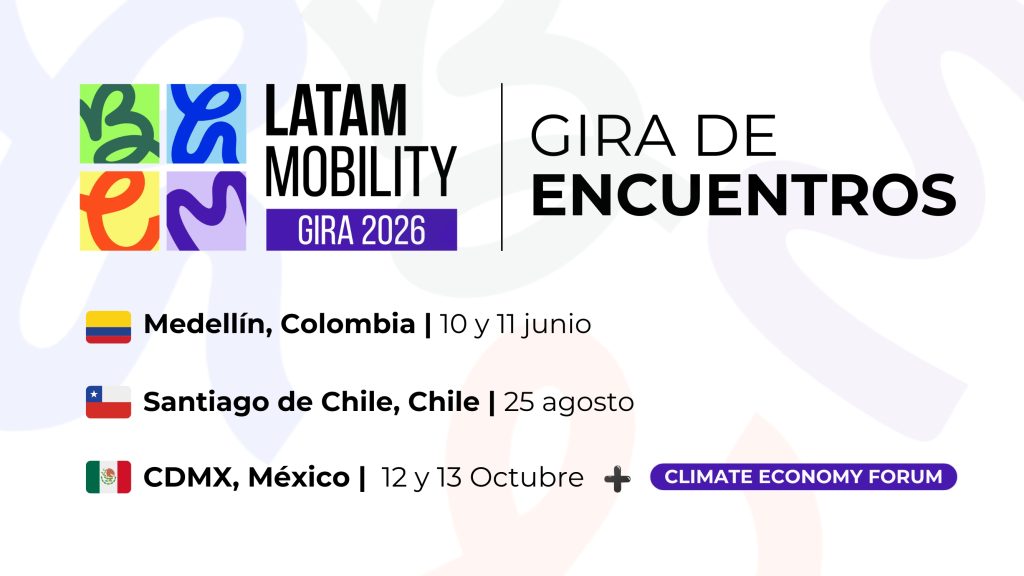
The Latam Mobility 2026 Tour will travel through some of the region’s most dynamic cities, Mexico City, Brazil, Colombia, and Chile, establishing itself as a unique space to connect the ideas, projects, and leaders who are transforming mobility and the climate economy in Latin America.
The transition is already underway. The 2026 Latam Mobility Tour will be the gathering point to accelerate decisions, connect key players, and collaboratively build sustainable mobility for Latin America.