



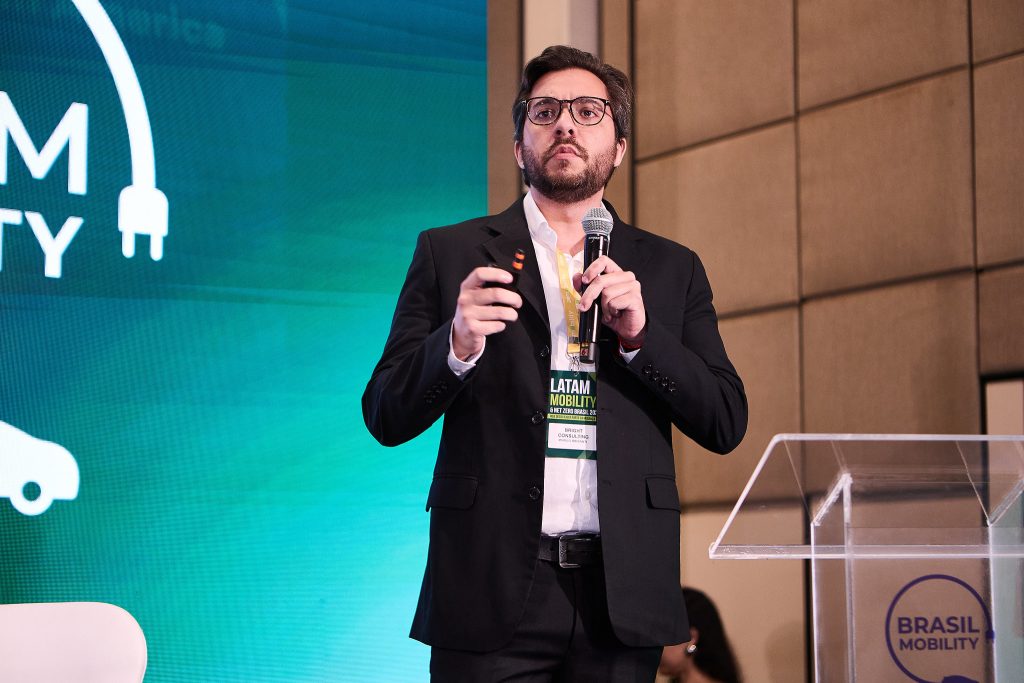
During “Latam Mobility & Net Zero Brasil 2026” held in São Paulo, Murilo Briganti, COO of Bright Consulting, delivered the keynote titled “The new mobility route: the rise of Chinese automakers and the future of the sector in Brazil.”
In his presentation, Briganti offered a structural look at the transformation currently underway in the global automotive industry — a transformation driven by a confluence of factors that go far beyond the rise of Chinese manufacturers or electrification.
To illustrate the current moment, he divided the sector’s evolution into four phases, placing special emphasis on the fourth: “the new era.” This phase, he explained, is not limited to the arrival of Chinese automakers or electric technology. It also encompasses onboard safety, connectivity, global value chain realignments, and geopolitical conflicts. “We are, in fact, living through a new era in the industry,” he stated.
You may also be interested in | Sustainability and renewable energies: Latam Mobility calls for a dialogue space to define the course of mobility in Chile
The Exponential Leap of Electric Vehicles
Briganti presented compelling data on the growth of electrified vehicles (including plug-in hybrids and pure battery electrics). Between 2020 and 2025, the global market jumped from 3 million to 21 million units — a sevenfold increase. The projection for 2030 ranges between 38 and 40 million vehicles, which would represent a 12 to 13 times increase in a single decade.
A key enabling factor is the reduction in battery costs. The price per kilowatt-hour fell from $165 to $95 in 2026, approaching the theoretical parity of $100 per kilowatt-hour — the threshold beyond which battery electric vehicles become more advantageous than internal combustion ones.
Furthermore, the executive underscored that China is not merely competing in the global market; it has completely redefined the rules of the automotive industry. Currently, the Asian country produces 72% of the world’s electric vehicles (up from 38% in 2020) and accounts for 40% of global automobile production.
Briganti identified four key factors explaining this dominance. The first is industrial scale, enabling production volumes unattainable for most countries. The second is total vertical integration: Chinese automakers develop everything from software to onboard electronics, including batteries and propulsion systems. This integration generates very significant cost optimization.
The third factor is launch speed. The development and launch cycle for new models in China is two to three times faster than that of traditional automakers. The fourth factor is hyper-competition at home, which, combined with the above, drives continuous technological improvement and constant price reduction.
Two Waves of Penetration in Brazil
The executive distinguished two moments in the arrival of Chinese manufacturers in Brazil. The first wave (2010–2020) was a relative failure: Chinese vehicles did not exceed 1% of the market due to low quality and failure to meet local consumer expectations.
The second wave (2020 onward) found a unique window of opportunity. Brazil had low penetration of electrified vehicles — a market that traditional automakers had not exploited.
At the same time, China had invested heavily in electric technology, while European and US markets were raising fiscal and regulatory barriers. Additionally, Brazil had eliminated the import tax on electric vehicles since 2015, effectively opening the door to Asian manufacturers.
This time, Chinese manufacturers arrived with a substantial quality leap: cutting-edge onboard technology and highly competitive prices. “The midsize or large SUVs that the Chinese launch sell at compact car prices,” Briganti exemplified, explaining their rapid growth in the Brazilian market.
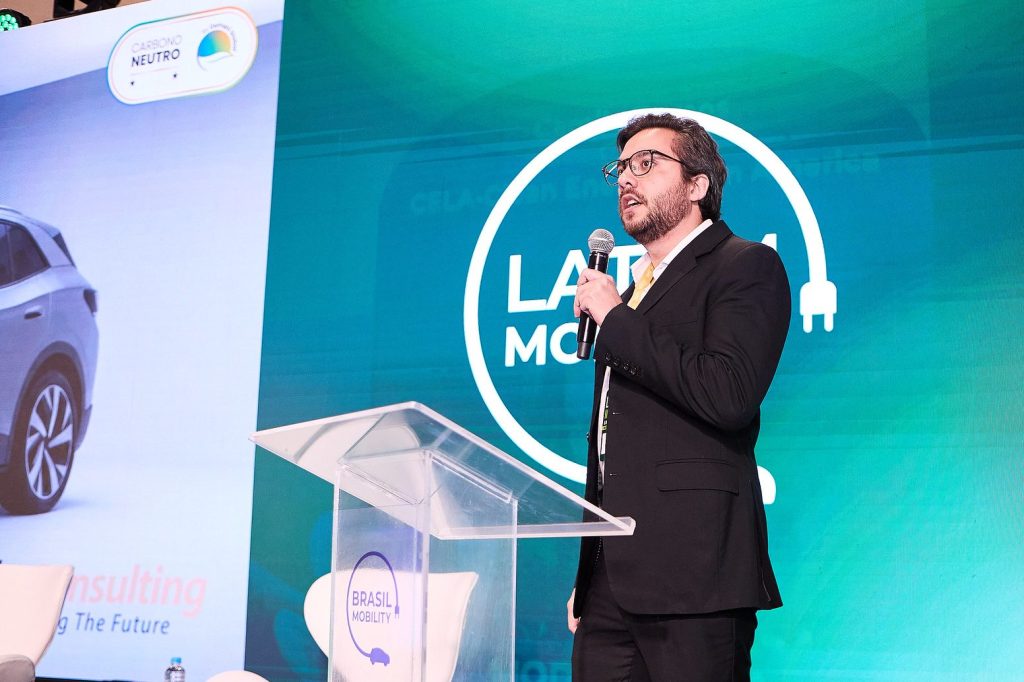
22% Market Share or Triple the Volume?
Bright Consulting‘s COO outlined two possible futures for the market share of Chinese automakers in Brazil. Both depend largely on regulatory decisions and the reaction of traditional automakers.
In the first scenario, if the government demands localization rates even for vehicles assembled under CKD and SKD regimes, and if traditional automakers manage to launch competitive products because their parent companies invest in Brazil as a development hub, then the Chinese share could double from 2025 levels, reaching approximately 22% of the market.
In the second scenario, if traditional automakers fail to position Brazil as a priority investment destination and if the Chinese achieve their maximum local production capacity, then their share could triple. This, Briganti warned, would affect the entire value chain and local production.
“Someone is going to lose,” the executive stated. “In this scenario, some automaker — or all of them — will tend to lose market share. That’s why it’s important to move, understand what’s happening, and reposition yourself.”
Given the volatility and extreme dynamism of the sector, Briganti presented the tools Bright Consulting has developed to help the industry navigate this transition:
- The Autodash platform, launched in 2020 and anchored in modeling and now artificial intelligence, which allows anticipating market movements.
- The immersive workshop called “The New Mobility Route,” which brings Chinese reality to Brazilian players without needing to travel to Asia, with the goal of understanding the real impact of Chinese automakers and defining reaction strategies.
Briganti concluded with an optimistic but realistic message: Brazil has enormous resilience in the automotive market and very large growth potential. “It’s important that we pay attention so we don’t lose all that potential,” he said, inviting attendees to contact Bright Consulting to access materials and detailed analysis.
A Call for the Entire Value Chain
Murilo Briganti‘s keynote at “Latam Mobility & Net Zero Brasil 2026” made it clear that the rise of Chinese automakers is not a passing phenomenon, but a structural change that redefines competition, investment, and employment in the Brazilian automotive sector.
The response cannot be inaction. Government, traditional automakers, suppliers, and academia must coordinate to define clear rules, foster smart localization, and leverage the resilience of the local market.
Brazil is at a crossroads: it can double or triple Chinese presence, but the outcome will depend on decisions made today. The “new era” of mobility is already here, and the speed at which local players adapt will make the difference between leading the change or falling behind.
The Agenda to Decarbonize Transport
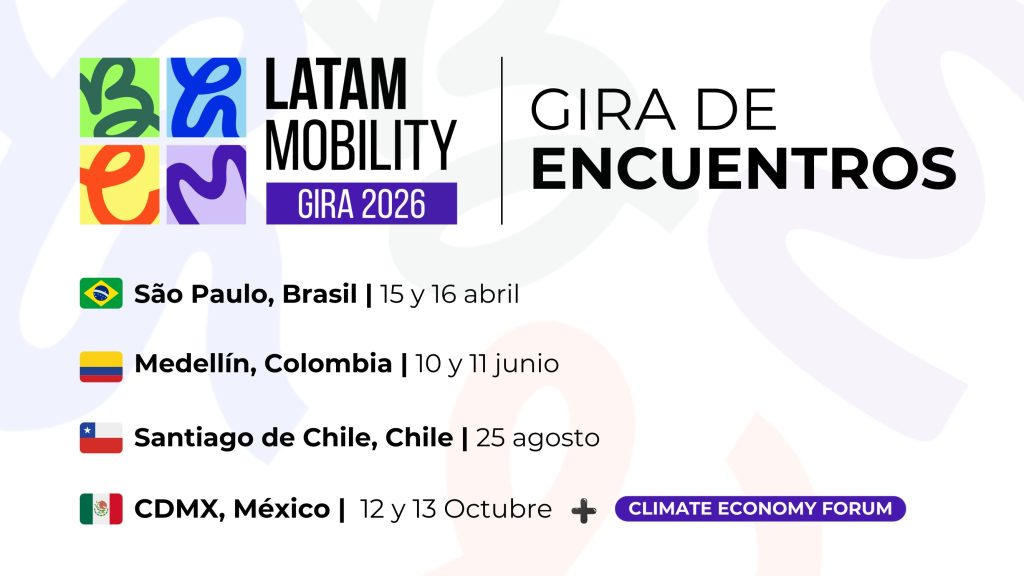
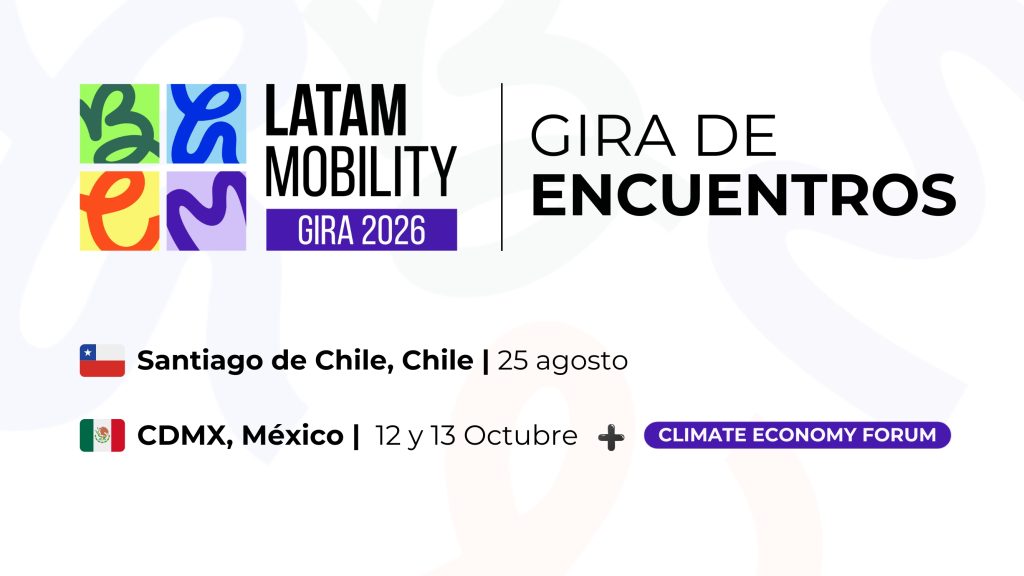
Latam Mobility promotes dialogue among the main players in the sector throughout its 2026 tour, which will visit the region’s key markets to delve deeper into these and other crucial issues for the transformation of mobility.
The Latam Mobility 2026 Tour will travel through some of the region’s most dynamic cities, Mexico City, Brazil, Colombia, and Chile, establishing itself as a unique space to connect the ideas, projects, and leaders who are transforming mobility and the climate economy in Latin America.
The transition is already underway. The 2026 Latam Mobility Tour will be the gathering point to accelerate decisions, connect key players, and collaboratively build sustainable mobility for Latin America.