



Brazil‘s Congress advanced the urban sustainability agenda after approving the base text of the Resilient Green Cities Program, a federal initiative aimed at strengthening sustainable urban planning, expanding cities’ climate resilience, and promoting cleaner mobility systems.
The proposal establishes guidelines for Brazilian municipalities to develop public policies focused on emission reduction, climate change adaptation, and improving quality of life in urban areas.
The program includes a series of goals aimed at transforming the mobility model in cities, with special emphasis on increasing pedestrian trips and boosting non-polluting bus fleets.
The initiative is integrated into the country’s climate commitments and seeks to contribute to emission reductions in the transportation sector, one of the main contributors to greenhouse gases in urban areas.
You may also like | CeNeutral, City Energy, Sigma, Trayecto, and Tres Guerras Reveal the Keys to a Successful Energy Transition in Cargo Fleets
Strengthening Urban Resilience
The Resilient Green Cities Program emerges as part of the Brazilian government’s strategy to support municipalities in adopting sustainable urban policies. The central objective is to promote projects that integrate territorial planning, green infrastructure, sustainable mobility, and climate change adaptation.
Through the program, the federal government aims to offer technical and financial support to cities that develop projects aligned with sustainability, climate resilience, and emission reduction criteria.
Among the planned actions include investments in clean urban mobility, recovery of public spaces, green infrastructure, and adaptation projects in the face of extreme weather events.
The program also seeks to strengthen urban governance and foster the integration of public policies that combine economic development, social inclusion, and environmental protection.

Pedestrian Mobility: Axis of Urban Transformation
One of the highlights of the approved text is the promotion of active mobility, especially increasing pedestrian trips within cities.
The initiative proposes that municipalities adopt policies to improve pedestrian infrastructure, expand sidewalks, and prioritize people-oriented urban design.
Promoting walking as a form of urban transportation responds to both environmental and public health objectives. By encouraging short trips on foot, cities can reduce car dependency, decrease congestion, and improve air quality.
Furthermore, the program promotes the integration of pedestrian mobility with public transportation systems, favoring more efficient and sustainable urban mobility models.
Another pillar of the program is the modernization of public transportation through the incorporation of non-polluting buses. The approved text establishes guidelines for urban transportation systems to advance towards cleaner technologies, including electric buses or those powered by other low-emission energy sources.
The measure seeks to accelerate the energy transition of public transportation in Brazil, a process that has already begun in several cities that have incorporated electric or hybrid buses into their fleets. The program proposes that federal investments prioritize projects that favor the electrification of public transportation and the adoption of more energy-efficient technologies.
Contribution to Climate Commitments
The approval of the base text of the Resilient Green Cities Program is part of the climate policies that Brazil promotes to fulfill its international emission reduction commitments.
Cities play a key role in this process, as they concentrate a large part of the country’s energy consumption, economic activity, and emissions.
By promoting more sustainable mobility and strengthening urban climate resilience, the program seeks to contribute to the transition towards a low-carbon urban development model.
It also aims to foster cities better prepared for extreme weather events, such as floods or heat waves, which have intensified in recent years.
With the approval of the base text in Congress, the program advances in its legislative process and positions itself as one of the main federal initiatives to promote more sustainable, resilient cities adapted to the climate challenges of the 21st century.
The Agenda to Decarbonize Transport
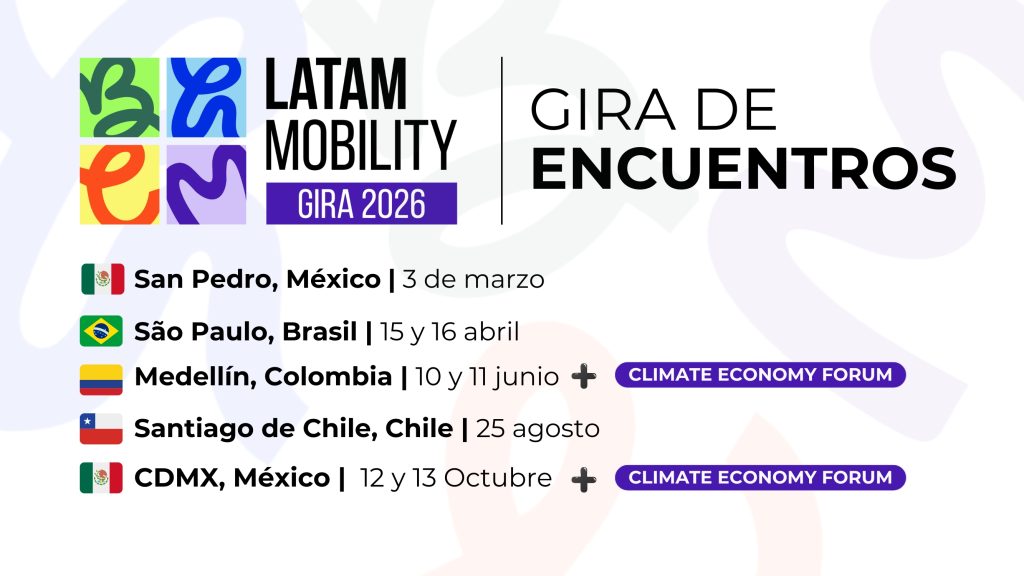
This dialogue is part of the efforts that Latam Mobility is promoting throughout its 2026 tour, which will visit the region’s key markets to delve deeper into these and other crucial issues for the transformation of mobility.
Through its stops in Mexico City, Brazil, Colombia, and Chile, the platform will continue to promote a collaborative approach to accelerate the transition to cleaner, more efficient, and more inclusive transportation systems, positioning Latin America as a relevant player in sustainable mobility at the global level.
Be part of the movement that is accelerating Latin America’s energy and urban transformation. If you would like to learn more about how to participate and positioning options, click here.