



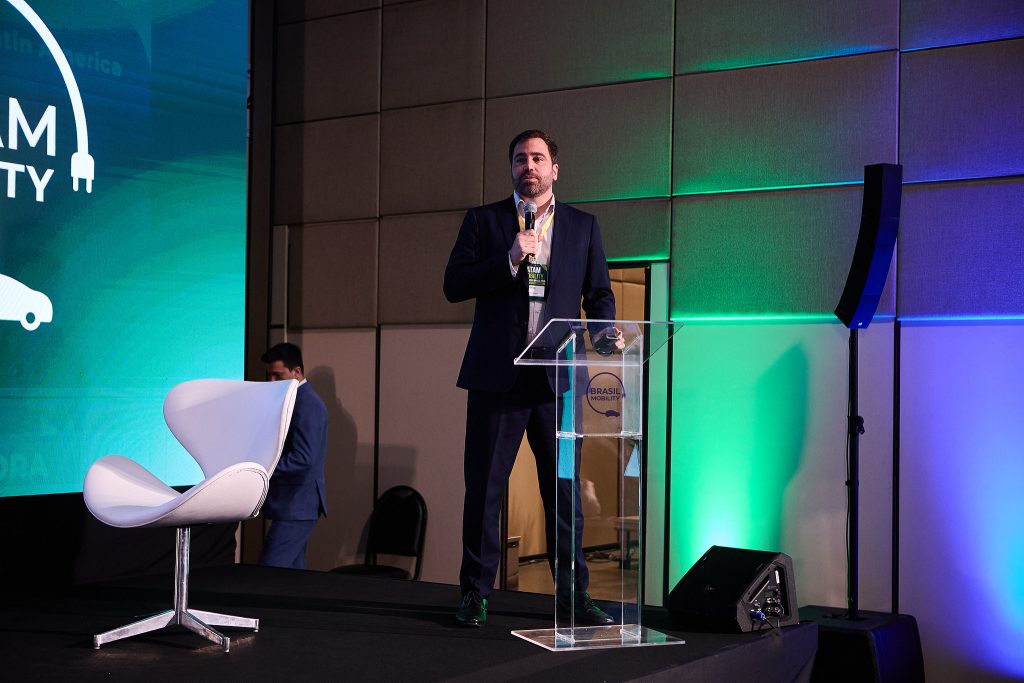
During Latam Mobility & Net Zero Brazil 2026, Felipe Salgado, Partner and Climate Change Leader at KPMG Brazil, delivered a keynote titled “The Importance of Companies Preparing for Carbon Footprint Metrics.”
He addressed the methodological and technical challenges that automotive and transportation companies face in measuring, reporting, and reducing their carbon intensity, in line with the requirements of the Mover program (Green Mobility and Innovation).
During his presentation, Salgado emphasized that the transport sector is responsible for 20% to 25% of global greenhouse gas emissions, and that more than 40% of those emissions come from road transport. Given this scenario, he highlighted that Brazil is preparing through Mover regulations, which establish incentives, criteria, and mandatory requirements for increasingly efficient vehicles with a lower carbon footprint.
Also of interest | C40 and GCoM drive multi-level coordination to structure electromobility projects in Brazil
Carbon Intensity vs. Traditional Inventory
Felipe Salgado explained a fundamental distinction: while the traditional greenhouse gas inventory is organized by corporate tax ID (CNPJ) and analyzes an entire organization through Scopes 1, 2, and 3, the carbon intensity concept introduced by Mover focuses on the product. In other words, you have to analyze the vehicle’s production line and its entire life cycle.
“Measuring the carbon footprint once is difficult, but the most complex part is keeping that measurement alive, recurring, with primary data,” the executive noted. According to Salgado, most of the carbon footprint lies outside the factory. In fact, he estimated that the intensity added in the production process (gate-to-gate) represents only 1% of the vehicle’s full life cycle.
In his presentation, Salgado showed a comparative diagram between internal combustion vehicles and electric vehicles. He pointed out that during the use phase, a combustion vehicle emits far more than an electric vehicle. However, he warned that to correctly calculate an electric vehicle’s carbon footprint, you need to know the origin of each part and component, as well as the source of the electricity used.
“It’s not because I say my carbon footprint is a certain value that I can directly compare it to another vehicle. I need to understand the boundaries,” he clarified.
He also explained that there are different methodological approaches: cradle-to-grave (the one promoted by the Mover program), cradle-to-gate, and well-to-wheel (which includes emissions from fuel or electricity production plus those from use and maintenance).
Salgado indicated that discussions with MDIC (Ministry of Development, Industry, Trade and Services) and other stakeholders point to a phased implementation: starting with cradle-to-gate measurement and progressively incorporating later phases until reaching the comprehensive cradle-to-grave metric.
The Big Challenge: Primary Data Acquisition
The KPMG Brazil specialist was emphatic: “The challenge lies in data acquisition.” Calculating a vehicle’s carbon footprint requires primary data from all suppliers and all components throughout the entire value chain — which demands a gigantic effort, as well as technology and automation.
The KPMG representative acknowledged that today, most calculated carbon footprints use averages, proxies, or references, and still lack precise primary data. Nevertheless, he believes that “we are on the right path by seeking decarbonization in a relevant sector with reduction opportunities.”
Felipe Salgado concluded his keynote with a call to action: “All of this will require technology, and technology applied well, so that we can transform all this complexity of primary data acquisition into management, trust, and a long-term vision , aiming for a low-carbon economy.”

A Year of Consolidation for Mobility
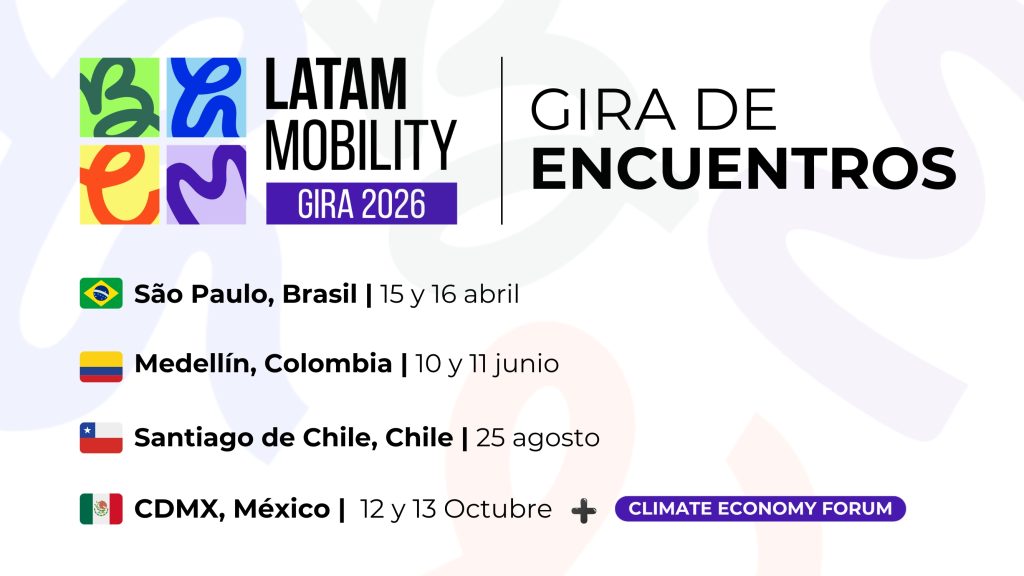
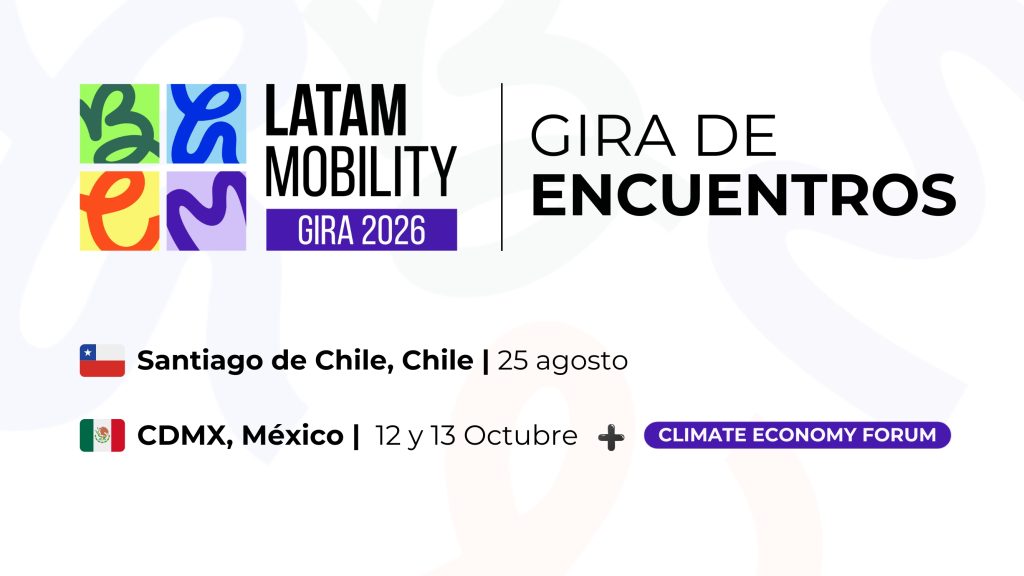
The Latam Mobility 2026 Tour continues its journey in Medellín, Colombia, on June 10–11, and will later arrive in Santiago, Chile, on August 25, bringing together experts and strategic players to further strengthen the sustainable mobility ecosystem in the region.
The tour will conclude in Mexico City on October 12–13, alongside the Climate Economy Forum, in an event that will bring together leading figures from the sector to continue driving the transition toward more efficient, sustainable, and low-emission transportation systems in Latin America.
The transition is already underway. The Latam Mobility 2026 Tour will be the meeting point to accelerate decisions, connect key players, and collaboratively build sustainable mobility for Latin America.