


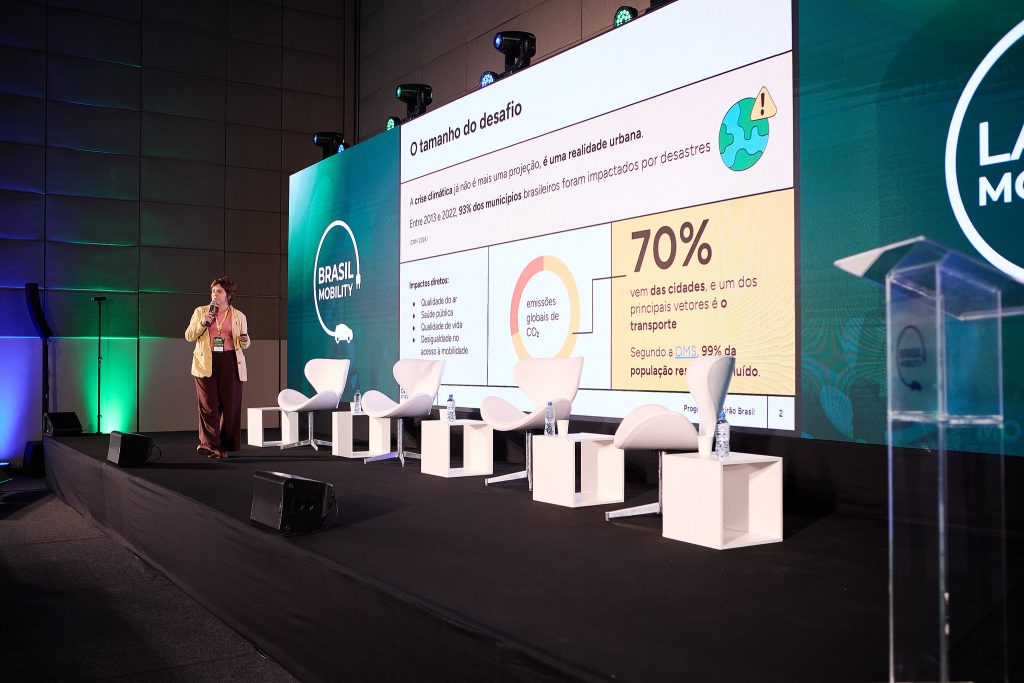
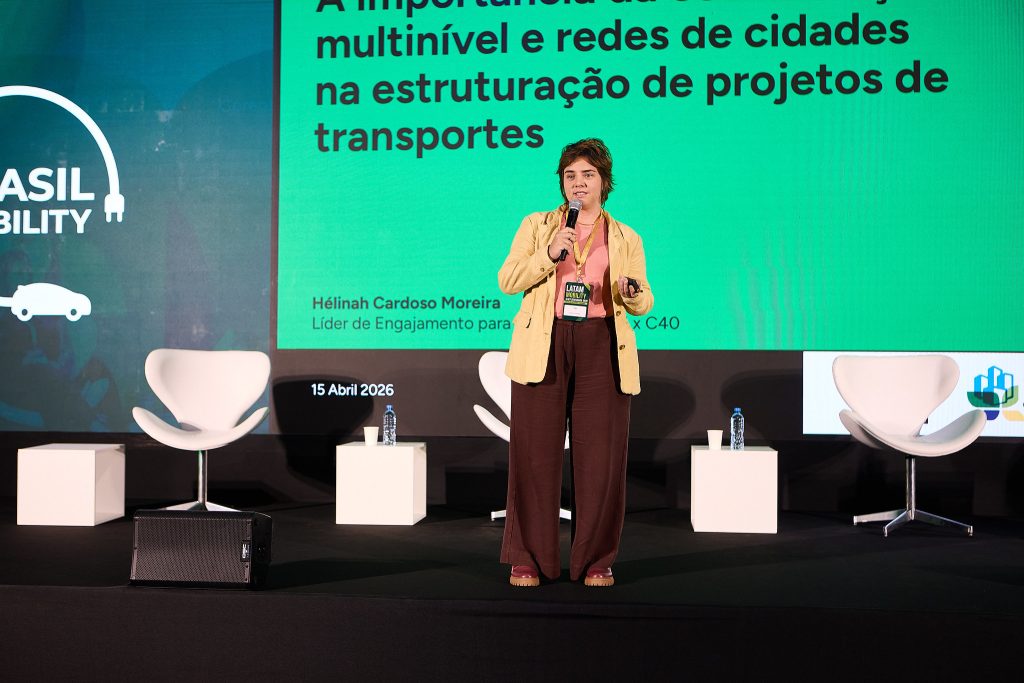
As part of “Latam Mobility & Net Zero Brasil 2026” held in São Paulo, Hélinah Cardoso (Engagement Lead for C40 and the Global Covenant of Mayors for Climate & Energy, GCoM) delivered the keynote “The importance of multi-level coordination and networks in structuring electromobility and transport projects.”
During her presentation, Cardoso emphasized that coordination among the federal government, states, municipalities, and the private sector is key to accelerating the transition toward efficient electric mobility that benefits the population.
The expert kicked off with an encouraging fact for the Brazilian market: in 2019, only one manufacturer produced electric buses in Brazil – today, there are ten. She noted that this increased competitiveness allows cities and prefectures to be more efficient in their contracts and tenders, ensuring better competition that benefits the people, who are the ultimate recipients of these policies.
You may also be interested in | IDB, UITP, and São Paulo authorities present financing models and public policies for transport electrification in Brazil
Public Policies that Encourage Electrification
Cardoso recalled that, as mentioned in the previous panel by Brazil’s Ministry of Environment and Climate Change, public policies are currently in place to foster the advancement of electrification.
“That’s really important because when what’s proposed at the national, subnational, and territorial levels aligns, it can massively strengthen the agenda. We call this multi-level governance,” she explained.
According to the specialist, practice accelerates when everyone works together for the common good – which speeds up implementation and results.
Today, Brazil is at a moment where public policies are financing electromobility initiatives, and at the same time, municipalities are ready to implement them – carrying out contracts and tenders, and moving from pilot projects to a medium- and long-term strategy to incorporate electric bus fleets in cities.
Multi-level Governance to Accelerate Results
Hélinah Cardoso was emphatic: the electromobility agenda cannot be efficient or accelerated if it’s not everyone’s agenda – and if we don’t know how to use the strengths that each institution and each person brings. So she proposed looking at each level of government:
- The federal government provides public policies.
- States participate especially in metropolitan region policies.
- Cities have a fundamental role in operation, contract design, and planning.
- The private sector fulfills specific functions so that electromobility grows, advances, and becomes increasingly beneficial for people.
“If we manage to speak more to everyone, we won’t just be benefiting populations and developing technologies – we’ll also be delivering better conditions for ourselves and for the territory where we live,” she stated.
C40, the Global Covenant and Mutirão Brasil
Cardoso spoke on behalf of two city networks: C40 and the Global Covenant of Mayors for Climate & Energy (GCoM) . She explained that these organizations work with cities around the world to promote increasingly qualified responses to climate change.
“Our big mission in recent years has been to understand what territories and the people living in them need, and to support turning that into projects – moving from a plan or an idea into concrete action on the ground,” she noted.
Among their lines of work, she mentioned technical structuring of electromobility and urban mobility projects, facilitating knowledge exchange among cities and municipalities, and accelerating learning and scalability of these actions.
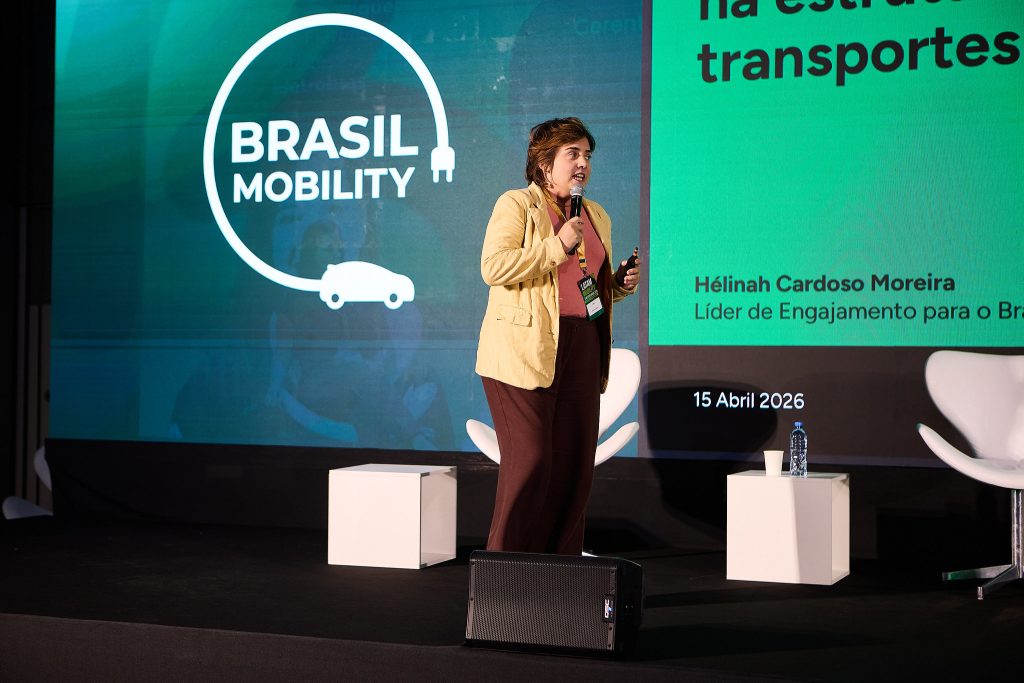
During her presentation, Hélinah Cardoso announced that the Mutirão Brasil program is currently being implemented – an initiative also mentioned in the previous session by WRI Brasil. “It’s an initiative to actually take the climate issue off the paper and turn it into action in cities,” she explained. The program seeks to mobilize and structure projects in transport, urban mobility, and also waste.
Cardoso thanked and highlighted the strategic partners in this effort: the National Front of Mayors (Frente Nacional de Prefeitas e Prefeitos) , which has been a great political ally; the ministries; WRI Brasil for all its expertise in urban mobility; and CCT, a partner in electrification. “So be it – may we electrify many fleets in Brazilian cities,” she wished.
Invitation to be part of the change
To conclude, the C40/GCoM Engagement Lead invited everyone in the room working on electromobility to photograph and get to know the participating cities, because “we will need you to make things happen.”
“With this connection, I’m certain we will go far,” she concluded, receiving warm applause from the audience.
Hélinah Cardoso‘s keynote left a clear message: sustainable electromobility is not built alone – it’s built through networks, alliances, and multi-level governance that integrates all actors.
Only then can projects leave the paper, scale up, and generate real impact on people’s quality of life and on climate change mitigation in Latin America.
A 2026 of Consolidation for Mobility
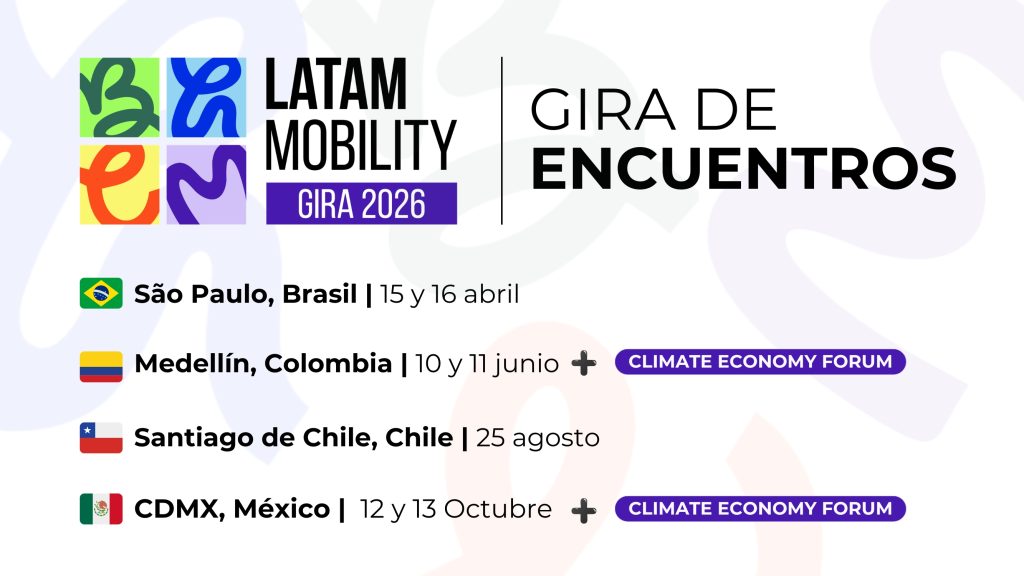
The Latam Mobility 2026 Tour continues its journey through the region, with the next meeting taking place in São Paulo, Brazil, on April 15 and 16. There, leaders from the public and private sectors will gather to analyze the progress and challenges of sustainable mobility, the electrification of transportation, and new opportunities for the energy transition in Latin America.
This event has established itself as a key platform for connecting companies, authorities, startups, and institutions that are driving innovative solutions in clean transportation, charging infrastructure, renewable energy, and new technologies for the mobility of the future.
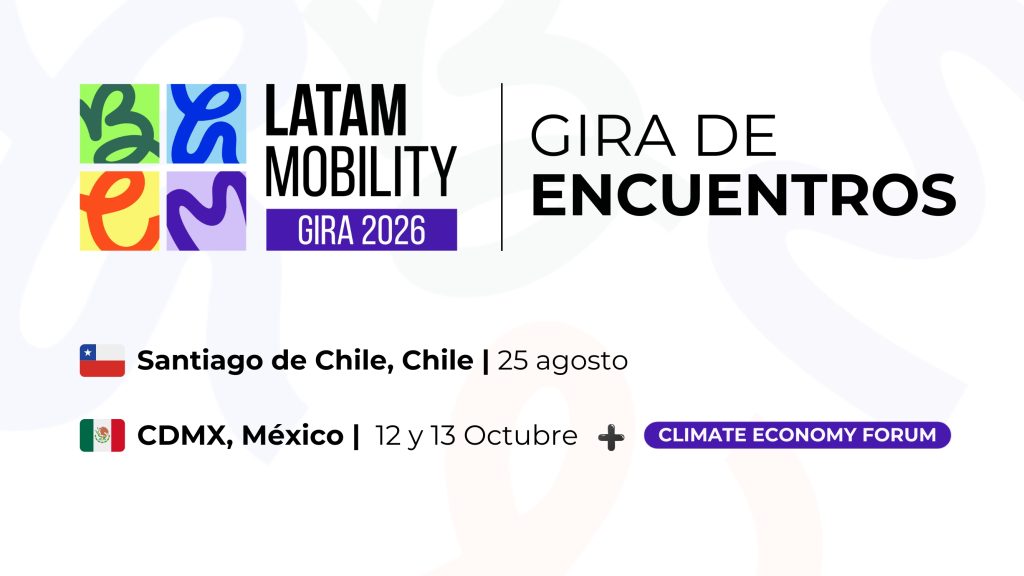
After Brazil, the tour will continue in Medellín, Colombia, on June 10 and 11, and then arrive in Santiago, Chile, on August 25, bringing together experts and strategic stakeholders to further strengthen the sustainable mobility ecosystem in the region.
The tour will conclude in Mexico City on October 12 and 13, alongside the Climate Economy Forum, at an event that will bring together industry leaders to further drive the transition to more efficient, sustainable, and low-emission transportation systems in Latin America.
The transition is already underway. The Latam Mobility Tour 2026 will be the meeting point to accelerate decisions, connect key stakeholders, and collaboratively build sustainable mobility in Latin America.