


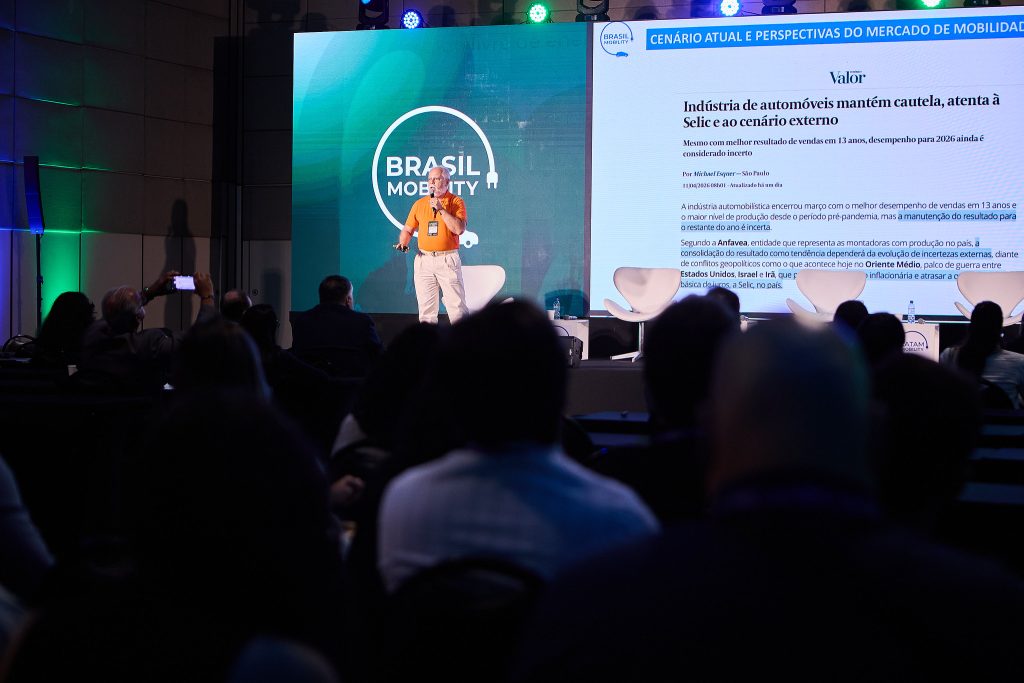
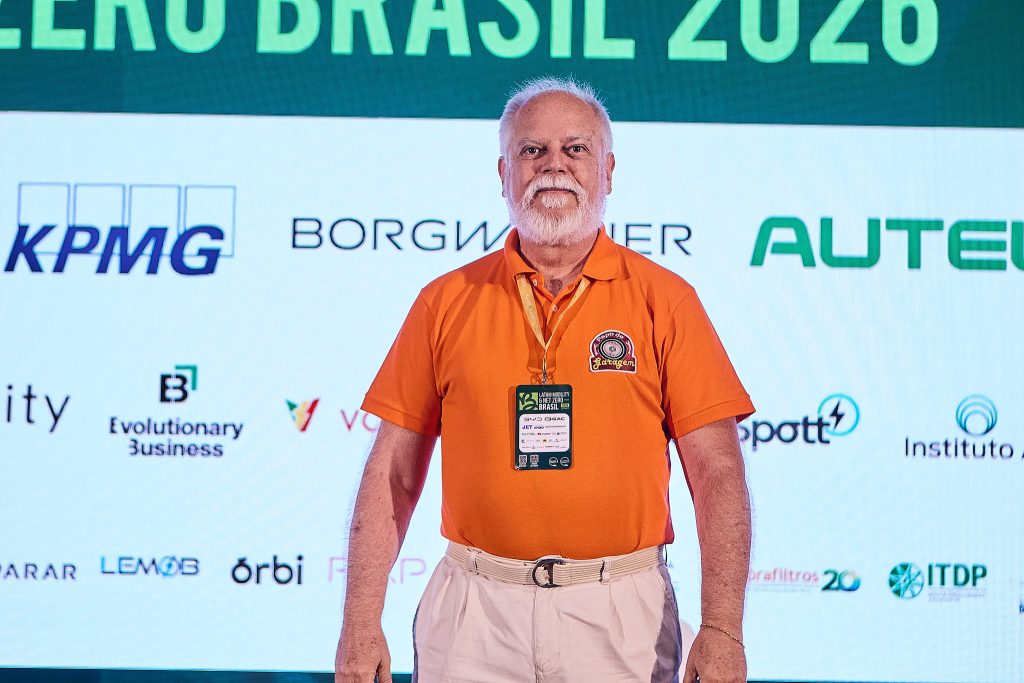
During the Latam Mobility & Net Zero Brazil 2026 conference, Ricardo Bacellar, host of the program Papo de Garagem, delivered a keynote titled “Current Scenario and Perspectives of the Electric Mobility Market.” Far from merely projecting numbers, his talk became a call to action for the entire Brazilian automotive chain.
With his direct and provocative style, Bacellar proposed a shift in focus: instead of asking “where can we reach,” the sector should ask itself “where do we want to reach.” The difference, he argued, is substantial and defines strategic priorities.
Also of interest | Brazil: Salvador and Belém lead active mobility projects with nature‑based solutions
Beware of Euphoria
Ricardo Bacellar opened his talk with a methodological warning. While acknowledging that the sales results for March 2026 were “spectacular,” he asked the audience to “beware of euphoria,” recalling a saying from his grandmother: “Be careful of the well, the drunk fell in by himself.”
He explained that the Brazilian automotive market is highly seasonal and that one of the gravest mistakes in strategic analysis is to base decisions on “photos” (isolated data points) rather than “movies” (historical series and trends). He recommended that the audience not make long‑term decisions based on a single month of high sales.
Bacellar also thanked Anfavea for striking a cautious tone in its communications, avoiding exaggerated projections. He also issued a side warning: “beware of haters,” referring to those who, out of ignorance or self‑interest, spread unfounded negative information about electromobility.
Potential versus reality
To gauge the potential of the Brazilian market, Bacellar drew on a recent Papo de Garagem interview with Paulo Manzano, an executive with more than 30 years of experience.
In that conversation, they compared the percentage of the population that purchases a brand‑new vehicle in different countries: in China it is 2.3% of its inhabitants; in the United States it reaches nearly 5% . Brazil has enormous room for growth, but what prevents that potential from being realized?
The presenter showed a January 2025 study (with 2024 data) comparing the tax burden on vehicles in Brazil with that of other South American countries. The conclusion was damning: Brazil is in a complex situation , even compared to its border neighbors.
And what’s worse: “we have been in this situation for a long time,” he said. In other words, it’s not a recent cyclical problem but a structural drag carried for years.
Revealing Exercise: Fewer Taxes, More Sales
Bacellar mentioned his interview with Ciro Pessoa, president of Volkswagen Brazil, who revealed an internal company study. According to that analysis, a reduction in the Selic interest rate by approximately 5 percentage points would have a direct and massive impact on production, sales, employment, and wealth generation.
Additionally, during the keynote, he presented an elasticity exercise: if a 20% reduction in the current tax burden were achieved and an elasticity coefficient of 3 (a standard industry metric) were applied, that reduction could translate into an approximately 60% increase in vehicle sales.
“There is the size of the problem,” he emphasized. The conclusion is inevitable: excessive taxes and high credit costs are artificially suppressing a market that could be much more dynamic.
Faced with this scenario, Bacellar questioned the recurring discussions about import tariffs (whether 5%, 10%, 30%, or 50%). “That discussion is not unimportant, but it is much less important than this one, which unites everyone. Combustion vehicles, electrified, hybrids: we are all under the same problem,” he stated.
Divide to Conquer or Unite to Conquer: the strategic dilemma
The most intense moment of the keynote came when Ricardo Bacellar showed a recent LinkedIn post in which he posed the underlying dilemma: “Divide to conquer or unite to conquer.”
He explained that, for various reasons (competition between technologies, short‑term interests, differences among industry associations), the automotive sector has not been able to articulate a common agenda to address the true structural obstacle.
“I don’t know who has an interest in dividing one group against another. But this agenda does not move forward. I take advantage of being here, in front of industry representatives, to reinforce the request: let us practice uniting to win this war. We need everyone together,” he concluded.
Bacellar‘s message transcended the current context of electromobility and landed at the heart of Brazilian industrial competitiveness. While the country celebrates the growth of electrified vehicle sales (with three‑digit rates), Papo de Garagem reminded that without a structural change in the tax burden and the cost of credit, Brazil’s market will continue to operate far below its real potential.
His call to unify the sector (combustion and electric, automakers and parts suppliers, dealerships and infrastructure providers) remained the central reflection of the keynote. The real war, he argued, is not between technologies, but against a system that holds back the development of all mobility.
A year of consolidation for mobility
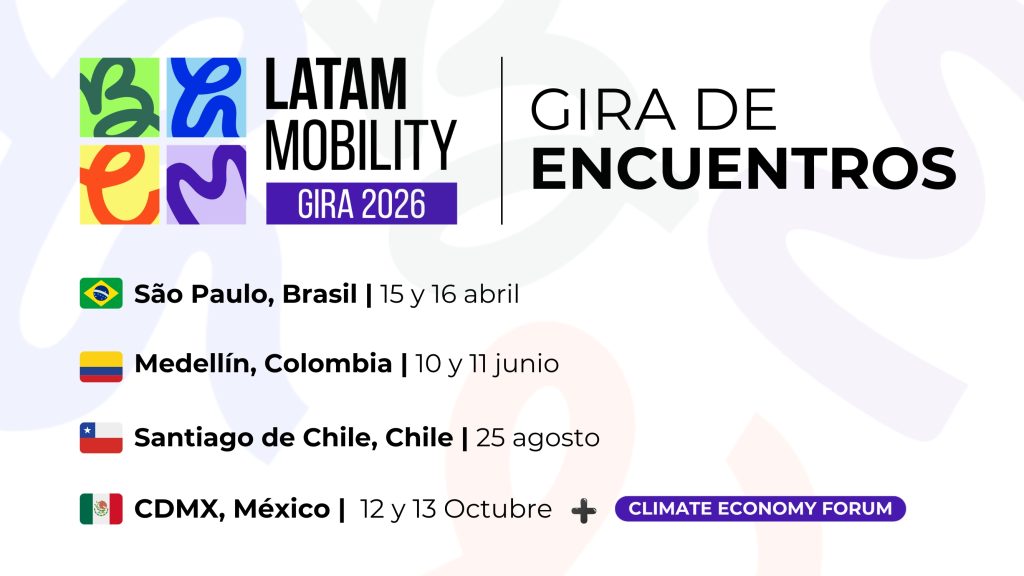
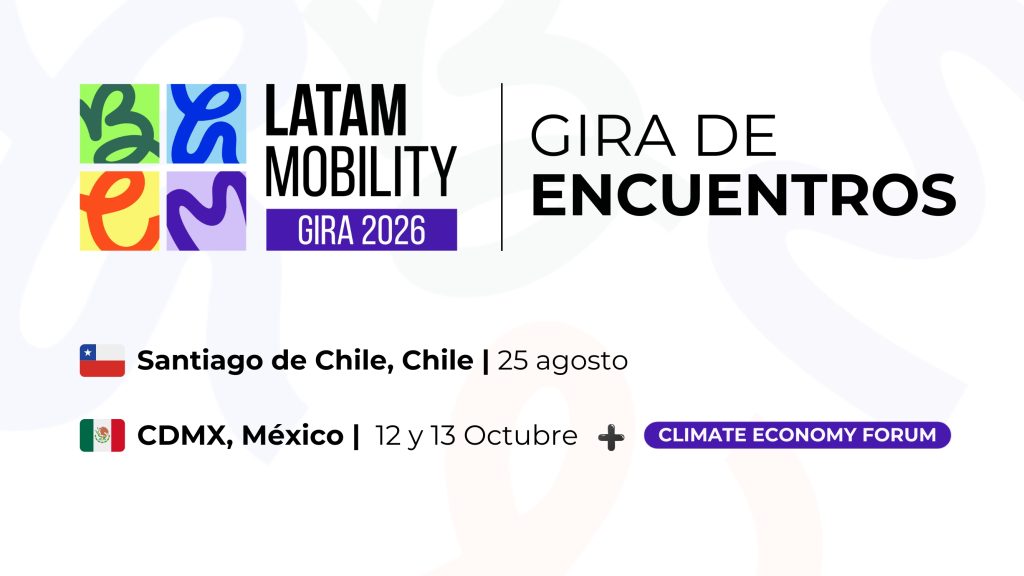
The Latam Mobility 2026 Tour will continue in Medellín, Colombia, on June 10–11, and will later arrive in Santiago, Chile, on August 25, bringing together experts and strategic players to further strengthen the sustainable mobility ecosystem in the region.
The tour will conclude in Mexico City on October 12–13, alongside the Climate Economy Forum, in an event that will bring together leading figures from the sector to continue driving the transition toward more efficient, sustainable, and low‑emission transportation systems in Latin America.
The transition is already underway. The Latam Mobility 2026 Tour will be the meeting point to accelerate decisions, connect key players, and collaboratively build sustainable mobility for Latin America.
colaborativa, la movilidad sostenible de América Latina.