



Electric mobility in Colombia continues to break records and consolidate as one of the main drivers of growth in the automotive sector.
According to the latest Vehicle Registration Report from ANDI and Fenalco, in April 2026 26,787 new vehicles were registered, representing 54% growth compared to April 2025 — making the first four months of the year the best start for the industry in over a decade.
Even more striking: between January and April 2026, Colombia surpassed the 100,000 new units sold barrier during this period for the first time in years, reaching 100,446 registrations with cumulative growth of 49.3% compared to 2025. This confirms a solid and structural market recovery.
You may also be interested in | ABNT, ABVE, BorgWarner, Energy Source and IQA agree: quality infrastructure is key to battery safety in electric mobility
Electric and Hybrid Vehicles: The Big Stars of the Boom
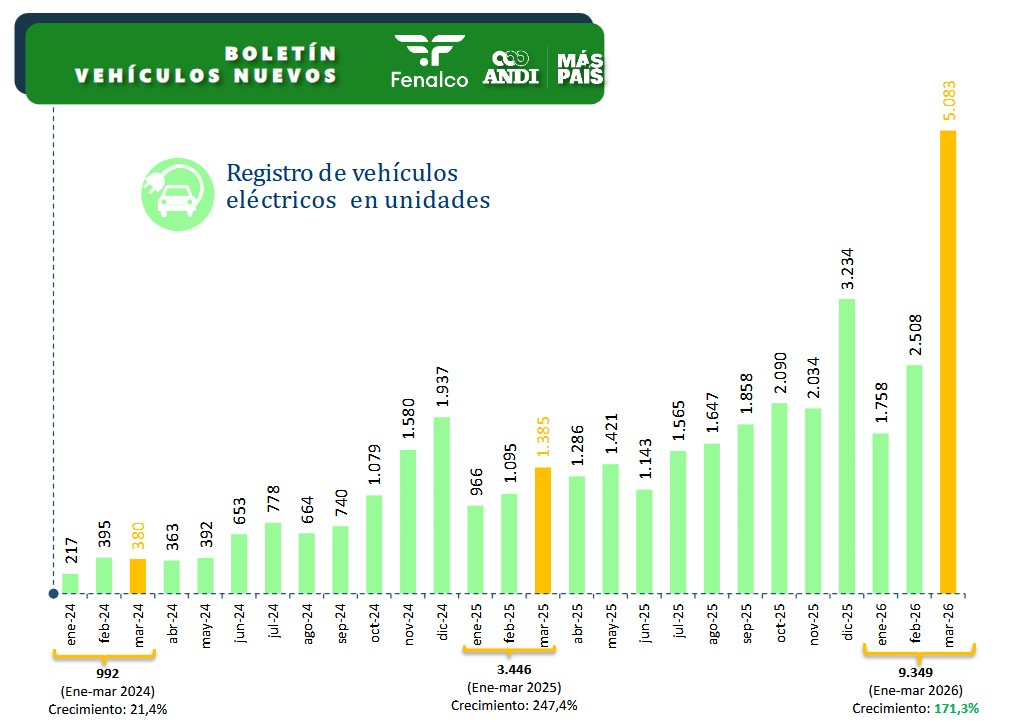
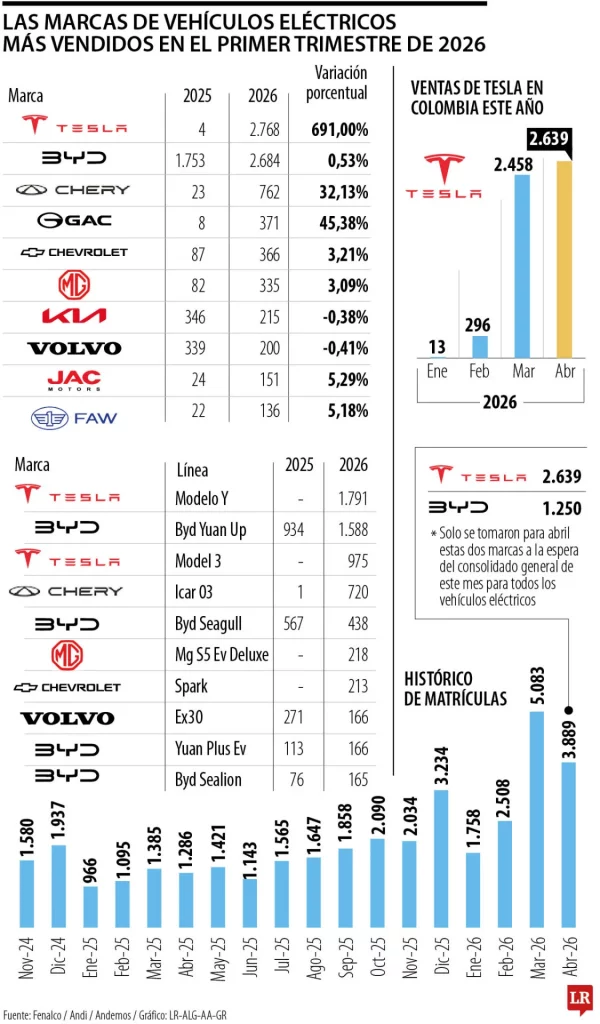
The sector’s growth is being led by battery electric vehicles (BEVs). During April 2026, 5,192 electric units were registered, a 304% increase compared to the same month last year.
That volume equals 19.4% of all new vehicles registered in April — meaning two out of every ten new cars sold in the country were electric. This makes April, for now, the month with the highest number of registrations of this technology in Colombia’s history.
So far in 2026, 14,541 electric units have been registered, representing cumulative growth of 207% compared to the same period in 2025.
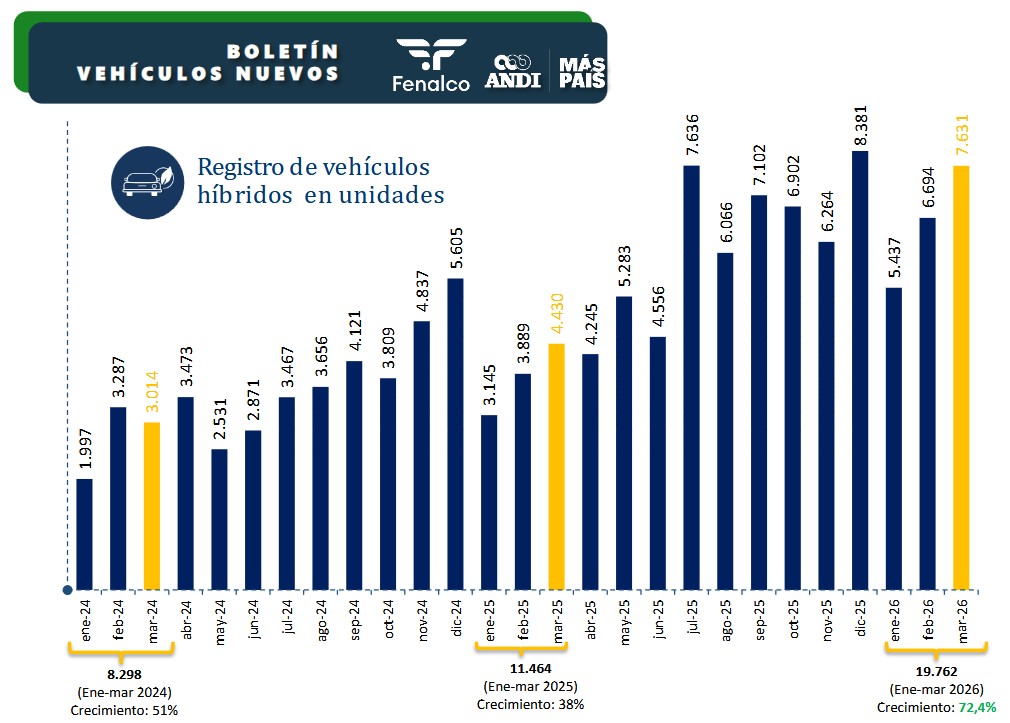
Hybrid vehicles are also maintaining dynamic growth: in April, 7,476 hybrid units were registered, a 76% increase over April 2025, accumulating 27,238 units for the year and a 73.4% rise in 2026.
Together, electrified vehicles represented nearly half of total sales in April, showing a structural shift in Colombian consumer preferences driven by tax incentives, lower operating costs, and an increasingly wide and competitive offering of clean‑tech models.
The “Tesla Effect” Revolutionizes the Rankings
One of the most notable phenomena in the report is the consolidation of Tesla as a leading player in the Colombian automotive market. For the first time, the American brand positioned itself in third place among the best‑selling brands in the country during April 2026, with 2,640 registered units and a 9.9% market share — surpassing traditional players and proving that technology can outweigh mechanical tradition.
So far this year, Tesla has accumulated 5,406 units and sits in fifth place in the national ranking, with a steadily growing market share.
The Tesla Model Y was the best‑selling vehicle in Colombia during April, with 2,264 units sold — 8.5% of all monthly sales in the country. It is followed by the Tesla Model 3 with 371 units for the month.
In the exclusive electric segment, Tesla dominated April with a 50.8% share, followed by BYD (23.5%), Chery (4.2%), Chevrolet (3.3%), and GAC (3.0%). BYD already occupies eighth place in monthly sales, maintaining ninth place in the year‑to‑date ranking with a 4.2% share.
Completing the overall brand podium in April were Kia (3,296 units, 12.3% market share), Renault (2,819 units, 10.5%), and Tesla (2,640 units), followed by Mazda (7.6%) and Chevrolet (7.5%). Together, the top five brands concentrated 47.7% of all vehicles registered in the fourth month of the year.
Among the Chinese brands that have made a strong entry in the country, Chery climbed to 13th position with 398.9% growth, Changan‑Deepal increased 201.6%, and Dongfeng registered a 273.2% increase — highlighting the dynamism of Asian manufacturers in the new electrification era.
SUVs remain the dominant segment of the market, with 17,171 units in April and 73.2% growth. Commercial passenger vehicles grew 70.8%, while cargo vehicles increased 40.5%, driven largely by corporate fleet renewal and the rebound in logistics activity.
Colombia
Charging Infrastructure: Private Investment Grows
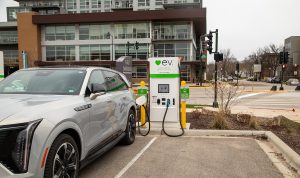
The boom in electromobility in Colombia has highlighted the need to accelerate the deployment of a robust charging station network. Currently, the country has a ratio of more than 160 electric vehicles for each available charging point — a gap that the public and private sectors are working to close with concrete projects.
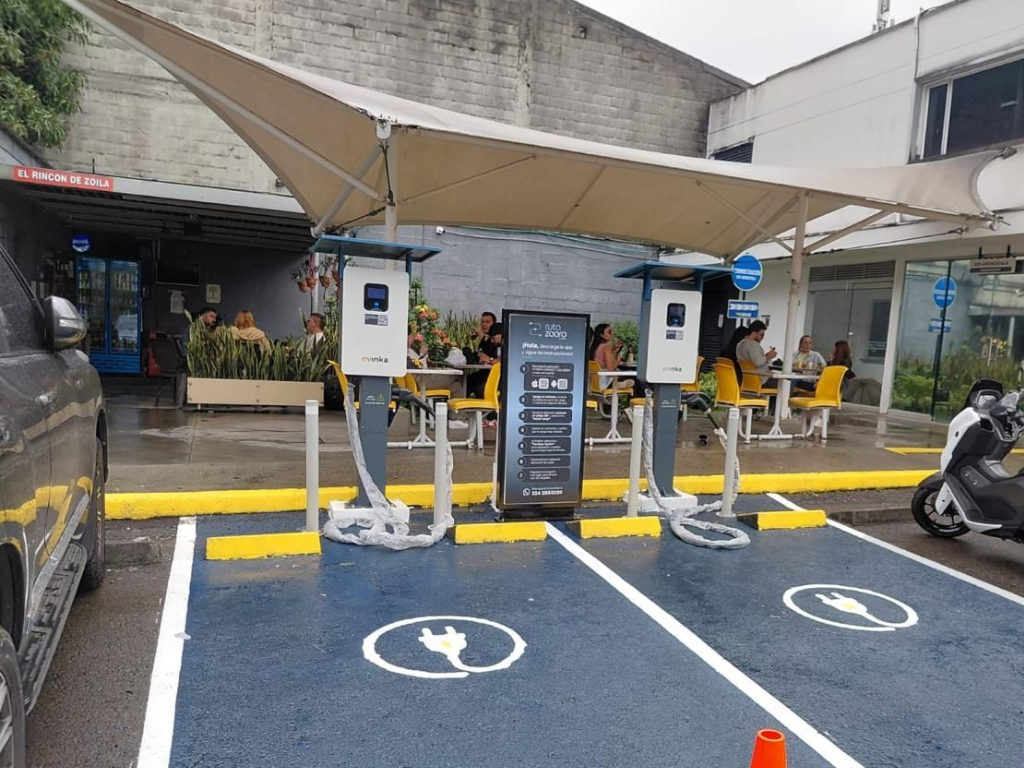
In that regard, one of the most ambitious investments is that of Evinka Tech, which in April of this year announced an investment of US$4 million to install 150 new charging stations in Colombia before the end of 2026, distributed among Bogotá, Medellín, Barranquilla, and Bucaramanga — of which 40 will be located in Medellín.
Through its Ruta Zeero strategy, the company has already inaugurated charging points on the Bogotá‑Medellín corridor, with stations at key locations such as Guaduas, Doradal, and Cocorná, and plans to continue expanding coverage to other road corridors in the country.
Each charging station represents an investment of nearly 300 million Colombian pesos, and the company finances the entire installation, energy, and operation under a partnership model with gas stations, shopping malls, and residential centers.
Bogotá concentrates the largest charging network in the country, with Enel X stations distributed in sectors such as Usaquén, Suba, Chapinero, Teusaquillo, and Puente Aranda, among others, equipped with fast‑charging technology that can recharge up to 80% of battery capacity in 25 minutes.
The financial sector is also responding to the energy transition: loans for electric vehicles already represent between 30% and 40% of the total at some banking institutions, reflecting confidence in the solidity and growth potential of this market.
Fleet Renewal: The FOPAT Program Launches
In terms of sustainable mobility for public transport, the Colombian government, through the Ministry of Transport and the Fund for the Promotion of Technological Advancement (FOPAT) , delivered the first electric taxis in recent weeks — already circulating on the streets of Bogotá — marking a milestone in the modernization of the transport sector.
In its first stage, the program plans to renew 320 zero‑emission vehicles, representing an estimated reduction of up to 34% in pollution generated by the taxi sector.
Drivers who access these vehicles will completely eliminate fossil fuel expenses and drastically reduce maintenance costs.
The government has enabled a line of credit of 14.8 billion Colombian pesos in partnership with Bancóldex and the National Guarantee Fund, with preferential conditions to eliminate entry barriers. In the first round, more than 220 applications were received, of which 29% were from women — including victims of the armed conflict — highlighting the program’s inclusive approach.
The Ministry of Transport has announced its intention to extend the program to all capital cities in the country, consolidating a fleet renewal plan that seeks to position Colombia as a regional benchmark in clean and efficient mobility.

Outlook for the Remainder of 2026
With the first four months already exceeding all expectations, the Colombian automotive sector expects to close 2026 with historic figures: if the current pace is maintained, estimates suggest an annual total of between 280,000 and 300,000 units sold — which would represent the best year for the industry in more than a decade.
The combination of existing tax incentives, more competitive prices from a greater supply of brands (especially Chinese), lower operating costs of electric vehicles, and growing environmental awareness among consumers is completely redefining the mobility map in Colombia.
Regulation is also advancing in parallel: the Energy and Gas Regulation Commission (CREG) is working on a roadmap expected to be issued in June 2027 to standardize charging infrastructure and ensure a safe, efficient, and uniform electrical connection throughout the national territory.
April 2026 will be recorded as the month when electric mobility stopped being a promise for the future and became a massive, tangible, and transformative reality on the streets of Colombia.
Electromobility Takes Over Medellín
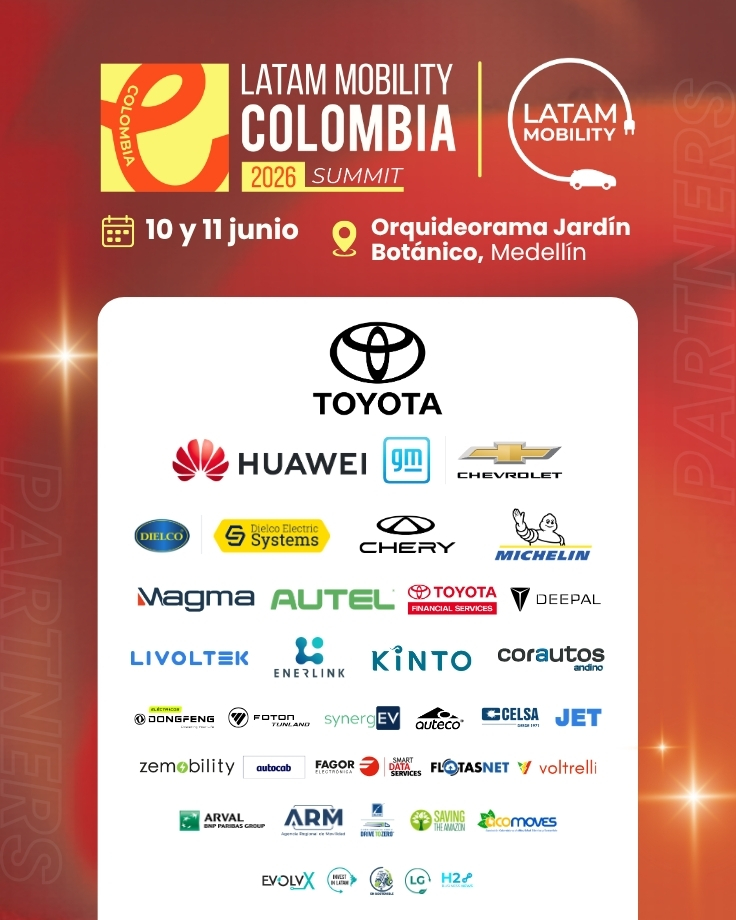
As the crowning touch to this period of unprecedented growth in the sustainable mobility sector, Colombia is preparing to host one of the most important events in the region: Latam Mobility Colombia 2026 — the leading meeting on decarbonization and electric mobility in Latin America — which will take place on June 10 and 11 at the emblematic Orquideorama of the Medellín Botanical Garden.
This year, the event will have more than 1,000 attendees and will feature Costa Rica as the guest country of honor, strengthening regional cooperation around clean technologies and the energy transition.
The summit will bring together the main players in the ecosystem: from manufacturers and assemblers to charging infrastructure operators, corporate fleets, government entities, and investment funds.
Latam Mobility Colombia 2026 will be the perfect stage for business leaders, investors, authorities, and citizens to learn first‑hand about the trends, challenges, and opportunities that define the new era of clean mobility in Colombia.
The meeting is in Medellín, at the heart of the Botanical Garden. A must‑attend event for those who believe that sustainable mobility is not the future, but the present of Colombia.
✅ Get your tickets here