


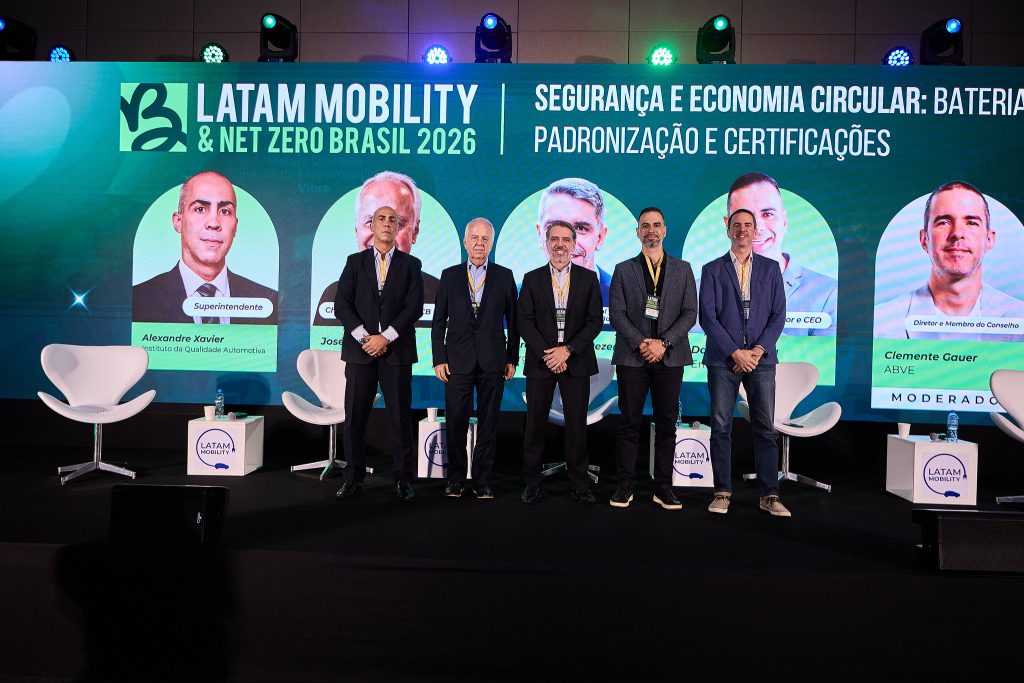
Within the framework of Latam Mobility & Net Zero Brazil 2026, a panel titled “Safety and Circular Economy: Batteries, Standardization, and Certifications” was held — a space for technical and strategic dialogue that brought together specialists to analyze battery safety, battery management, technical standards, and circular economy models that promote reuse, recycling, and reliable certification throughout the sustainable mobility chain.
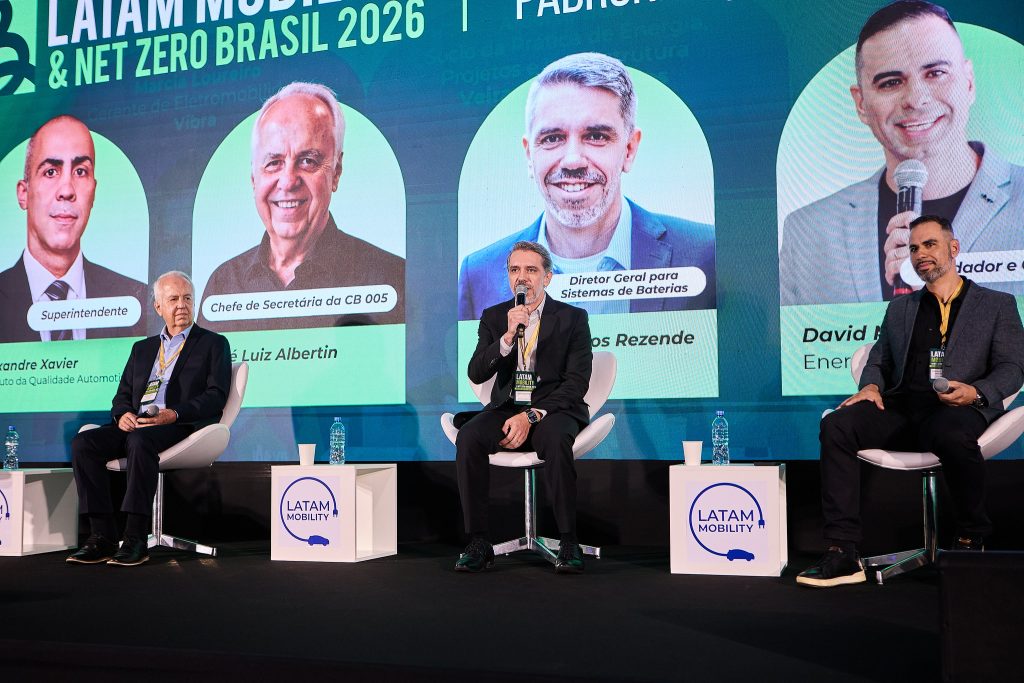
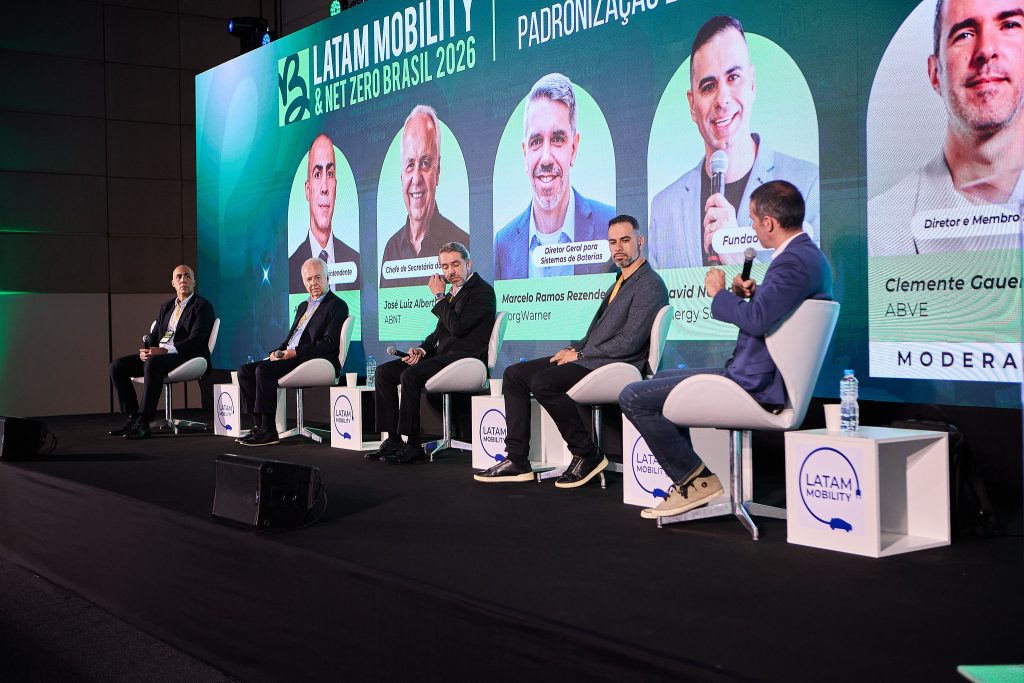
The debate was moderated by Clemente Gauer, Director and Board Member of ABVE, and featured Alexandre Xavier, Superintendent of the Automotive Quality Institute (IQA); David Noronha, Founder and CEO of Energy Source; José Luiz Albertin, Head of the Secretariat of ABNT‘s CB 005; and Marcelo Ramos Rezende, General Director for Battery Systems at BorgWarner.
During the panel, topics ranged from lithium battery recovery and 100% Brazilian recycling technology, to the importance of technical standards for safety, in- and out-of-warranty battery repair, system certification, and the challenges of micromobility and professional training.
Also of interest | Enerlink presents its EVX platform in Brazil to unify electric car charging and optimize charger usage
Innovation in Battery Recycling and Repair
David Noronha opened the panel by presenting the trajectory of Energy Source, a company he founded nearly ten years ago that has become a reference in lithium batteries in Latin America. Noronha highlighted several milestones: in 2017, they were the first company in the region to offer a second‑use battery product; in 2020, they patented their own recycling technology; and in 2021, they became the first company in Latin America to recycle batteries as an alternative to landfills and pyrometallurgy.
“Today we recover between 97% and 99% of all battery material, sending nothing to landfill. It’s our own Brazilian technology,” Noronha stated.
In 2022, they began repairing batteries at the request of automakers, becoming the first company in the world to perform repairs outside of Renault, even on batteries under warranty. They currently manage reverse logistics and repairs for several brands, including Volvo, BMW, Renault, and Audi.
Noronha clarified a common myth: lithium batteries contain no heavy metals or rare earths. He explained that the only potential pollutant is the electrolyte if not properly treated, but in their process everything is reusable.
He highlighted that they have extracted cobalt from black mass and turned it into fertilizer for agriculture or cattle feed, transforming waste into a source of secondary mining. “The lithium battery is not a problem — it is the solution for the energy transition,” he asserted.
BorgWarner: Over 50 Years in Brazil
Marcelo Ramos Rezende explained that BorgWarner is a multinational with over 130 years of history and 50 years of operation in Brazil. The company produces battery systems at its Piracicaba plant for commercial vehicles, especially the electric buses operating in São Paulo.
He also explained that the company receives pre‑assembled batteries from Germany, completes the assembly, integrates the BMS (battery management system), and performs all testing.
Rezende emphasized that batteries are designed with the entire life cycle in mind: safety, quality, durability, performance, as well as repairability, second life, and recycling. Their batteries are certified under the IEC 62619 (European) standard, which includes thermal shock, short‑circuit, impact, penetration, and vibration tests. “Our batteries are lasting much longer than originally projected,” he noted.
He also announced that they are developing the battery passport (mandatory in Europe as of 2026), which through a QR code allows you to know everything from the origin minerals, carbon footprint, state of health (SOH), and the entire battery history.
Rezende highlighted that in Brazil they are already conducting recycling tests with Energy Source to close the circular economy loop.
ABNT CB 005: technical standards for electrification
José Luiz Albertin presented the work of ABNT‘s Brazilian Automobile Committee (CB 005), created over 50 years ago, and noted that concern with electrification began in 2013 with the publication of the first two Brazilian standards: one on vocabulary for electric vehicles and another on energy consumption for homologation.
Currently, working groups address topics such as battery assembly and disassembly, storage, transport, second life, and repair.
Albertin reported that at the end of 2025 they published a recommended practice for pedal‑assist electric bicycles (e‑bike type), which will serve as a basis for micromobility regulation (hoverboards, skateboards, etc.).
He also mentioned that the European battery passport relies on more than 170 standards (IEC, ISO), and that ABNT is working to adopt equivalent standards in Brazil. “Technical standards systematize knowledge and enable their use in regulation, contracts, and as a safe baseline for entrepreneurs and researchers,” he concluded.
IQA: training, certification, and focus on micromobility
Alexandre Xavier explained that the Automotive Quality Institute (IQA) was founded 31 years ago by the Federal Government and the automotive sector to support quality control throughout the entire chain (industry, commerce, and services). It currently acts as a certification body and laboratory for regulated batteries, based at the Sorocaba Technology Park.
Xavier highlighted IQA‘s participation in INMETRO‘s working group on electric mobility, whose main focus is the regulation of batteries for micromobility due to the high volume of sales and associated risks, especially through electronic channels.
He mentioned the case of New York, where implementing UL certifications for e‑bike batteries reduced fire‑related deaths from 240 to zero in one year.
On professional training, Xavier noted that according to the World Economic Forum, 63% of employers (59% in Brazil) consider workforce upskilling the biggest challenge.
In the automotive sector, availability and sector attractiveness add to the challenge. He explained that dealerships and independent workshops have expressed fear of handling electric vehicles due to a lack of clear rules, and even tow truck associations have requested guidance. “Before specific technical education, we need to raise awareness and eliminate ghosts,” he stated.
Safety, Public Health, and the Importance of Regulation
Moderator Clemente Gauer conducted a live poll of the audience. He asked whether lithium batteries contain rare earths (the audience was split) and whether they contain heavy metals (most thought they did).
David Noronha answered unequivocally: “Lithium batteries have no heavy metals. Lithium batteries have no rare earths.” He clarified that nickel‑metal hydride batteries (used by Toyota in older hybrids) do contain rare earths, but lithium batteries do not.
On pollution, Noronha was emphatic: the only risk is the electrolyte if not handled correctly, but all material is 100% reusable. He recalled the serious cases of lead‑acid battery contamination in Bauru and Santo Amaro (Bahia), which cognitively affected hundreds of children, and stressed that lithium batteries do not generate that type of environmental liability if properly managed.
In their closing messages, Marcelo Rezende insisted on the importance of certifications to ensure that batteries in circulation are safe and reliable, and committed to working alongside regulatory bodies. José Luiz Albertin invited interested parties to participate in ABNT‘s study commissions, where knowledge is built among peers.
Finally, Alexandre Xavier concluded that batteries must be treated as a critical system, with the same level of attention as other risk products, and that quality infrastructure (regulation, standards, certification, market surveillance) is the path to generating trust, safety, and repeatability at scale.
A year of consolidation for mobility
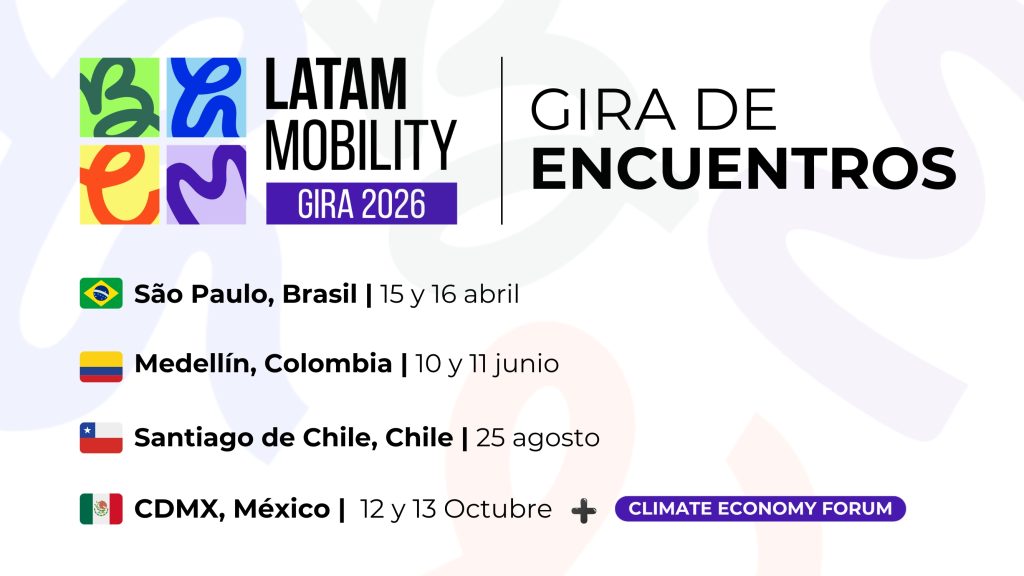
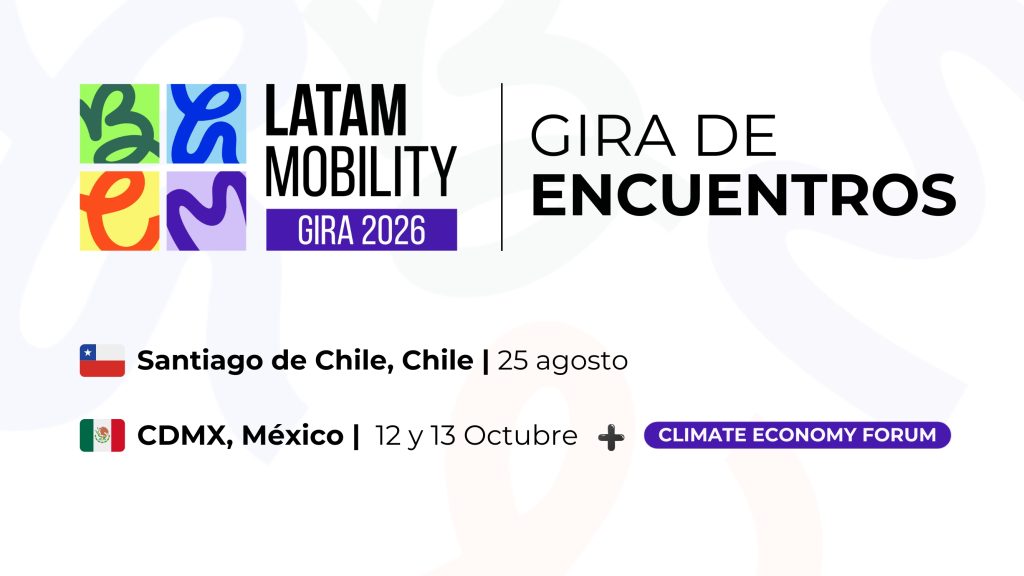
The Latam Mobility 2026 Tour will continue in Medellín, Colombia, on June 10–11, and will later arrive in Santiago, Chile, on August 25, bringing together experts and strategic players to further strengthen the sustainable mobility ecosystem in the region.
The tour will conclude in Mexico City on October 12–13, alongside the Climate Economy Forum, in an event that will bring together leading figures from the sector to continue driving the transition toward more efficient, sustainable, and low‑emission transportation systems in Latin America.
The transition is already underway. The Latam Mobility 2026 Tour will be the meeting point to accelerate decisions, connect key players, and collaboratively build sustainable mobility for Latin America.