

During a webinar organized by Latam Mobility titled “Latam Mobility Colombia 2026: The Key Match of Sustainable Mobility,” leaders from Chile’s automotive and freight transport sectors outlined the progress, barriers, and opportunities shaping the shift toward electric and low-emission mobility in the country.
The meeting, moderated by Kathy Ardila of Invest in Latam, featured Gustavo Hunter, Head of Sustainable Mobility at ANAC AG (National Automotive Association of Chile), and Pedro Peña, Electromobility Manager at Sotraser. They shared their perspectives on the present and future of electromobility in Chile and its regional impact.
You may also be interested in | Chile advances toward 4,400 electric buses: La Araucanía launches massive tender to renew its fleet
Chile: A Leader in Electric Buses With Unfinished Business
Pedro Peña began by presenting Sotraser as one of Chile’s freight transport leaders. The company currently operates 750 tractor-trailers nationwide and has been driving fleet electrification since 2022. A key milestone was developing the largest electric fleet in South America – 50 units operating for Walmart in Santiago, connecting Valparaíso and surrounding regions. Sotraser aims to have 20% of its fleet fully electric by 2027.
Gustavo Hunter explained that ANAC AG brings together Chile’s main vehicle, truck, and bus importers and brands, plus charging point operators like Cope, Voltex, NLX, and Huawei. The association publishes a monthly electromobility sales report and works on a comprehensive sustainable mobility strategy covering road safety, circular economy (the REP Law), and preparation for autonomous and connected mobility.
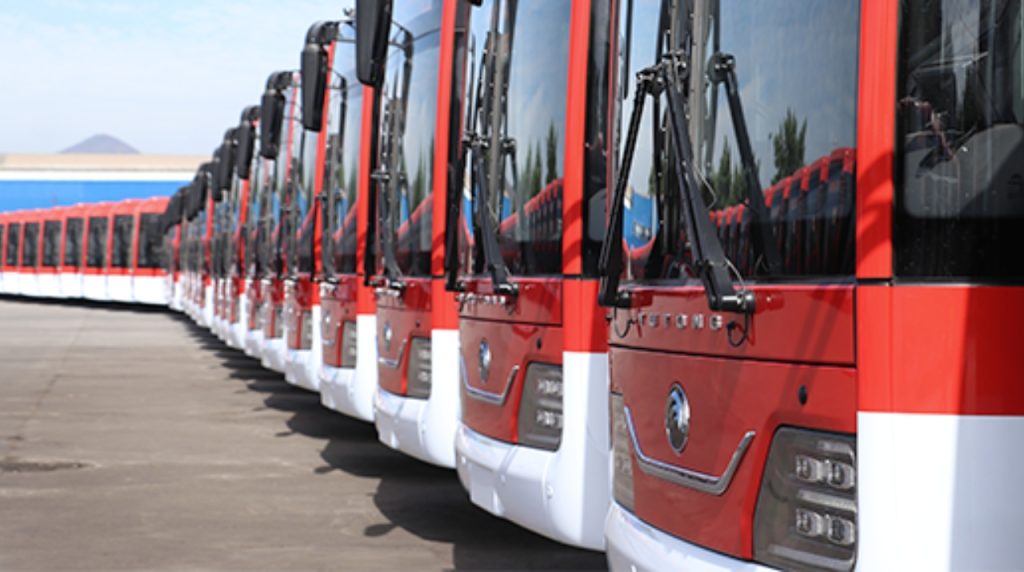
Hunter highlighted a major achievement: Chile ranks second in the world in number of electric buses, behind only China. However, he warned that other transport sectors, especially freight, have been overlooked by public policies. Peña agreed and zeroed in on a critical regulatory barrier: Decree 151 of 1980, which governs vehicle gross weights.
Electric truck batteries add 2 to 3 extra tons, cutting into cargo payload. “Technology is advancing fast, but regulations have fallen behind,” Peña noted, though he appreciated the government’s willingness to amend the law.

Tariffs, Registration Fees, and a New National Strategy
Gustavo Hunter emphasized that electromobility has strategic importance for Chile given its energy mix: nearly 60% of electricity comes from renewables, and the country produces copper and lithium – key battery minerals. In addition, the transport sector accounts for 22% to 25% of CO₂ emissions and consumes 99% of imported fossil fuels. “Electromobility is an opportunity to become more energy independent,” he said.
Among the pending regulatory challenges, Hunter mentioned the need to extend the EV registration fee exemption (currently about to expire) and, above all, redesign the electricity tariff. The current structure penalizes users who draw high power – even occasionally – making high-power charging infrastructure unviable on highways. “If we move toward electricity regulation that accounts for these new uses, we will advance electromobility,” he argued.
Both panelists welcomed the fact that the Chilean government is working on a new National Electromobility Strategy to be launched soon, with active input from ANAC AG. “The new authorities are in favor of making changes,” Peña added.
Successful Models: Charging as a Service, Last Mile, and Second Life for Batteries
Pedro Peña shared the business models that Sotraser has successfully implemented. The most relevant is Charging as a Service: users pay only for the kilowatt consumed, without absorbing the high CAPEX for infrastructure – turning investment into an operating expense (OPEX). “The more the truck works, the easier it is to cover the technology’s extra costs,” he explained.
Sotraser is also building a virtuous electromobility circle with a startup: refurbishing batteries from used vehicles into stationary storage systems paired with photovoltaic panels. “A vehicle reaching the end of its useful life doesn’t mean the battery no longer works – it just no longer has the same range. We can use it to store energy.”
Gustavo Hunter added that the last-mile segment has worked very well as a business model in Chile. Operators build their own electro-terminals, charge vehicles during off-peak hours, and make urban deliveries. Public transport is also a success story: cities like Copiapó already have 100% electric fleets, and in Santiago, 60% of buses are expected to be electric this year.
Hunter highlighted the impact on the taxi sector: “A taxi driver used to pay $200 a day on fuel; today with electromobility they pay between $40 and $50 – about a fifth.” He also noted that mining companies are testing electric trucks which, on downhill routes from the mine to the port, recover up to 80% of the battery through regenerative braking.
Chile
Regional Alliances: Standardization and Regulatory Harmonization
Responding to Kathy Ardila’s question about strengthening alliances across countries, Pedro Peña was emphatic: the top priority is defining a single charging connector standard that allows trouble-free travel from one country to another. In Chile, after an initial phase with multiple standards (Chademo, GBT), CCS (the European standard) was adopted – which has simplified purchasing different truck brands and reselling used vehicles. “As a region, we must agree on one connector type.”
Gustavo Hunter agreed and added that weight and dimension regulations for long-haul trucks also need harmonization, along with sharing experiences on tax incentives – like those Colombia has implemented (zero tariff, VAT exemption for EVs). “Governments are looking at these experiences to boost sales.”
Hunter noted that Latin America is already generating integration in software development for fleet and charging management – an area where experienced Chilean companies are replicating their solutions in other countries. “Hardware isn’t made here, but software is, and that support is key for users.”
The Next Big Meeting in Medellín
The webinar ended with a call to keep building sustainable mobility in person. Kathy Ardila thanked the panelists and reminded that dialogue and alliances are the engine of energy transformation in the region.
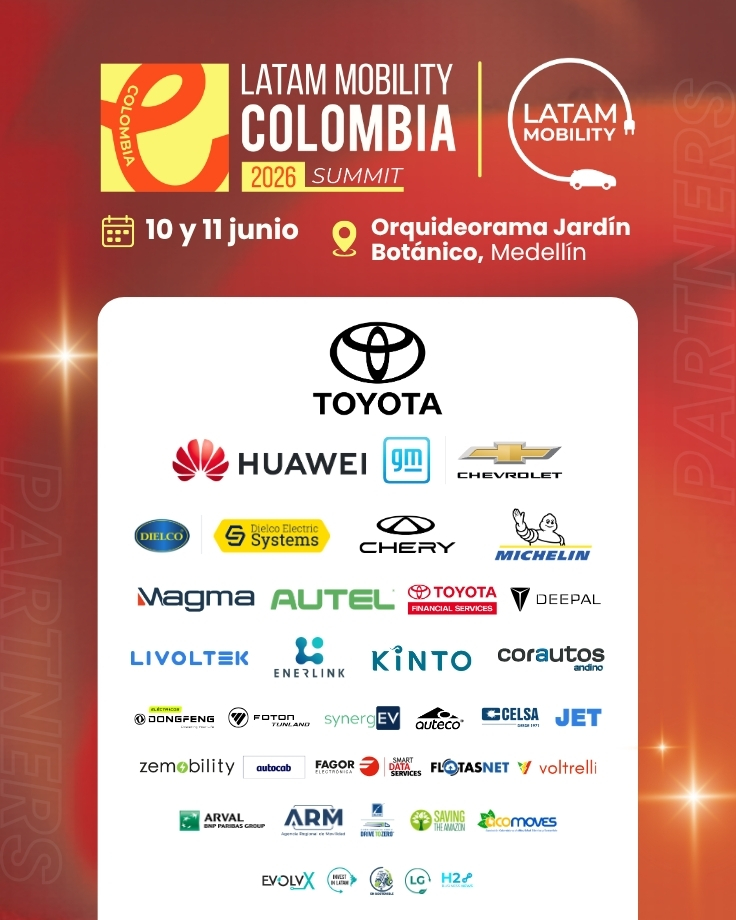
The ideal setting is Latam Mobility Colombia 2026, taking place on June 10 and 11 at the Orquideorama of Medellín’s Botanical Garden – a venue that will bring together leaders, companies, governments, and academics to continue defining strategies that accelerate the transition toward zero- and low-emission mobility across Latin America.
The invitation is open to all ecosystem players who want to be part of the change. Get your tickets here.