


The shift to electric mobility in emerging markets is picking up serious steam, but it’s running into a major structural hurdle: a shortage of sufficient and well-distributed charging infrastructure.
To tackle this shortfall, a report from C40 Cities and the International Finance Corporation (IFC) —a member of the World Bank Group—dug into investment needs, regulatory frameworks, and deployment strategies across four of the highest-growth markets for electric vehicles: Brazil, Colombia, Mexico, and India.
The study, developed with The Climate Pledge through the Laneshift program and the Swiss State Secretariat for Economic Affairs (SECO) , concludes that building out charging networks will be a critical factor in sustaining EV growth and drawing in private investment over the next several years.
The report projects that by 2035, these four countries will need to install roughly 359,000 public charging points , requiring cumulative investments north of USD 3.8 billion. That figure really drives home both the scale of the challenge and the massive opportunity that transportation electrification represents in regions where EV adoption has already taken off at a blistering pace.
You might also be interested in | Brazil Surpasses 25,000 EV Charging Points, Showing 21% Growth in Just Three Months
Accelerated Growth of Electric Mobility
The report’s data lays out a stunning transformation in these countries’ automotive markets. EV sales in Brazil, Colombia, Mexico, and India jumped from roughly 40,000 units in 2021 to 1.08 million in 2025 , representing an eye-popping annual growth rate of nearly 130% .
This massive leap reflects a fundamental shift in mobility across these nations, fueled by a wider variety of models, supportive public policies, and steadily dropping technology costs.
By 2025, EV penetration in new car sales was already hitting notable figures: 6.5% in Brazil, 5.9% in Colombia, 6.2% in Mexico, and 3.7% in India. However, the report warns that the lack of charging infrastructure remains one of the main obstacles to even faster adoption in these markets.
This stands in stark contrast to the global picture. According to International Energy Agency (IEA) data cited in the report, the number of public charging points worldwide has topped five million, doubling since 2022. In 2024 alone, roughly 1.3 million new public chargers were added, showing just how fast infrastructure investment is accelerating globally.
USD 3.8 Billion in Investments by 2035
To keep up with surging demand and sustain the pace of EV adoption, the report estimates that roughly USD 3.8 billion will need to be poured into public charging infrastructure across these four countries over the next decade.
The projected investment split reflects the different sizes of each market and their growth paths. India will grab the biggest slice at an estimated USD 1.9 billion , followed by Brazil with USD 980 million , Mexico with USD 760 million , and Colombia with USD 184 million.
On the infrastructure side, the study forecasts that the number of public chargers will climb to roughly 359,000 units by 2035. India would account for about 214,000 of those, followed by Brazil with 86,000 , Mexico with 40,000 , and Colombia with 19,000.
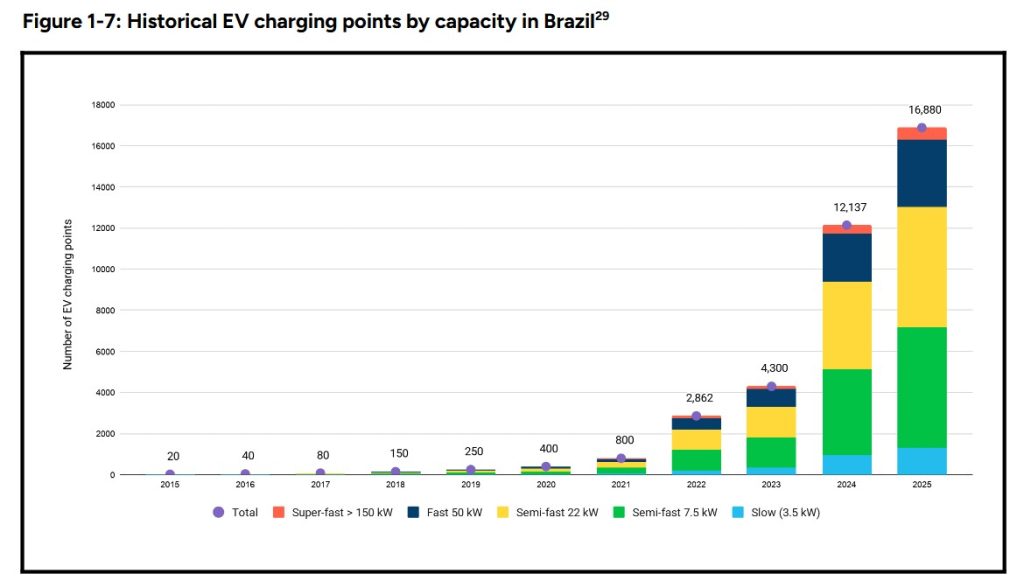
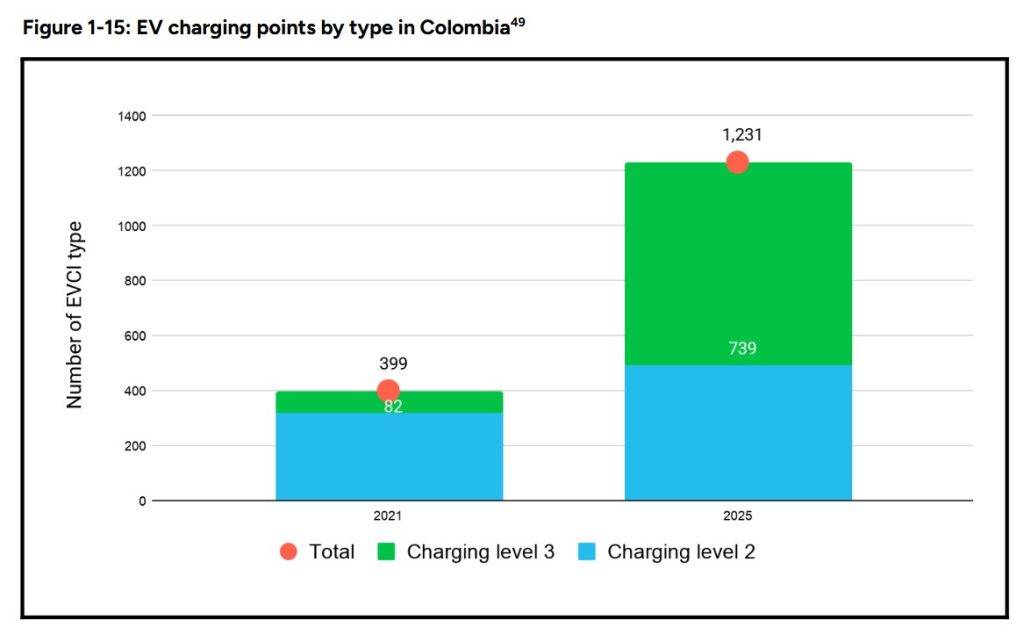
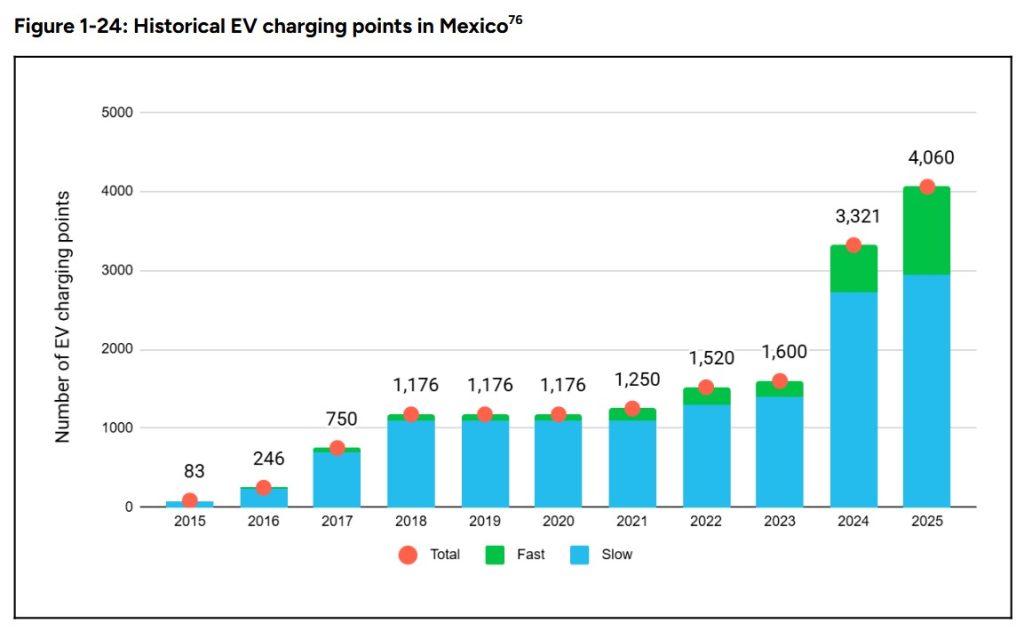
Right now, the landscape is highly uneven. India has roughly 30,000 public charging points, Brazil has 17,000, Mexico has 4,000, and Colombia has about 700. But the report stresses that much of this infrastructure is crammed into big metro areas, which limits access elsewhere and creates a geographic equity gap that has to be dealt with in the coming years.
The Role of Cities in Expansion
The report zeroes in on a key point: while national governments typically hold the reins on electricity markets, tariffs, and technical standards, cities can play a decisive role in speeding up charging infrastructure deployment. This local authority becomes a strategic tool for cutting through administrative and territorial red tape.
Key actions include using public land for charging stations, electrifying municipal fleets and transit systems, and setting up governance structures that smooth out planning, permitting, and coordination between agencies and private companies. These moves not only fast-track deployment but also send a clear market signal about a city’s commitment to sustainable mobility.
The report points to several local initiatives already underway that show what’s possible:
- Rio de Janeiro has pushed pilot projects through its Sandbox.Rio program and made city land more accessible for new installations;
- Bogotá has backed charging infrastructure while rolling out one of the largest electric bus fleets in Latin America, making it a regional benchmark;
- Mexico City has woven charging infrastructure into its urban mobility strategy and the Metrobús electrification push, steering toward cleaner public transit;
- Pune has set up a dedicated EV unit and pushed projects via public-private partnerships, proving that cross-sector teamwork is critical for breaking down investment and know-how barriers.
Recommendations to Accelerate Deployment
The report doesn’t just diagnose the problem—it lays out a concrete set of recommendations for local governments to accelerate charger deployment.
The top suggestions include baking charging infrastructure into urban planning, strategically using municipal property for station locations, developing public-private partnership models that share risks and rewards, and boosting coordination with utilities and national administrations to align incentives and avoid duplication.
The study also emphasizes cutting administrative red tape to shrink permit processing times, fostering network interoperability to guarantee a smooth user experience, and ensuring infrastructure expands in a geographically balanced way—not just clustered in a few cities.
To that end, it looks to more advanced markets like the United Kingdom and the Netherlands , where early public funding and coordinated municipal models have helped jumpstart the sector and create a welcoming environment for private investment.
An Opportunity for Investment and Sustainable Development
The C40 Cities and IFC report lays out a clear roadmap for Brazil, Colombia, Mexico, and India to turn the charging infrastructure challenge into a real economic and sustainability win. The projected USD 3.8 billion in investment by 2035 won’t just pay for the 359,000 chargers needed—it will also create jobs, spark technological innovation, and slash emissions from transportation, one of the biggest contributors to climate change.
The key to success lies in the ability of national and local governments to work in lockstep, attract private capital, and craft policies that enable deployment without creating new roadblocks. Cities have a starring role to play.
Their capacity to innovate, collaborate, and execute real projects will be the deciding factor in whether electric mobility stops being a future promise and becomes an everyday reality for millions of people in these four countries.
Bottom line: the report makes it crystal clear that the energy transition in transportation isn’t just about technology—it’s about political will, smart urban planning, and cross-sector collaboration.
The next few years will be make-or-break for locking in the progress already made and for Brazil, Colombia, Mexico, and India to cement their positions as sustainable mobility leaders in their respective regions.
A Year 2026 of Consolidation for Mobility
The Latam Mobility 2026 Tour will arrive in Santiago, Chile, on August 25, bringing together experts and strategic players to further strengthen the sustainable mobility ecosystem in the region.
The tour will end in Mexico City on October 12 and 13, alongside the Climate Economy Forum, in a meeting that will bring together sector leaders to continue driving the transition toward more efficient, sustainable, low‑emission transportation systems in Latin America.
The transition is already underway. The Latam Mobility 2026 Tour will be the meeting point to accelerate decisions, connect key players, and collaboratively build sustainable mobility in Latin America.