



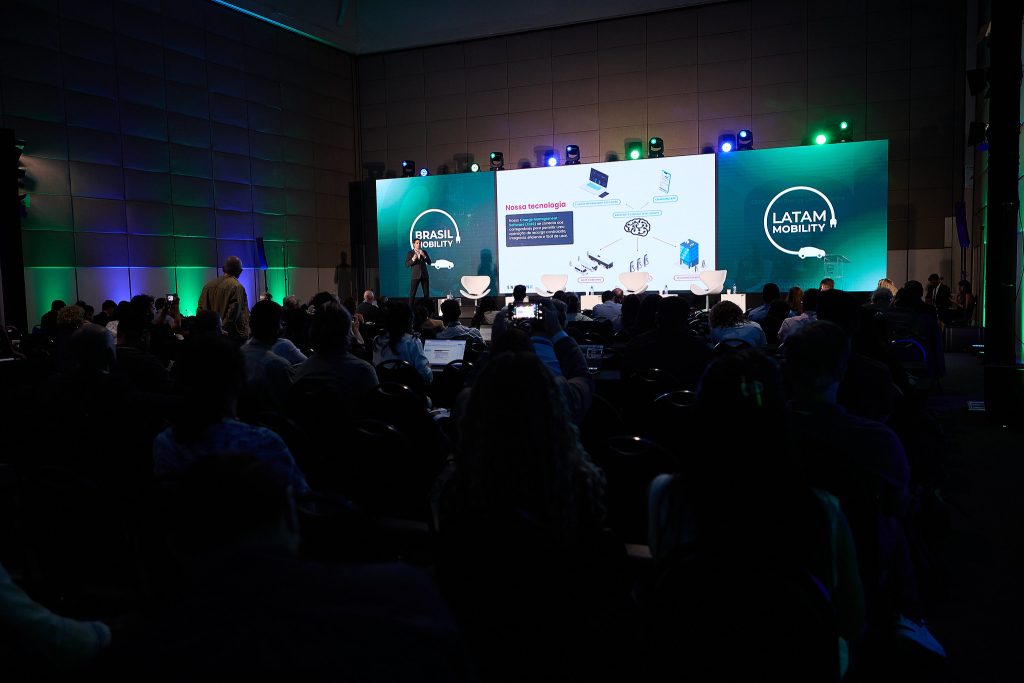
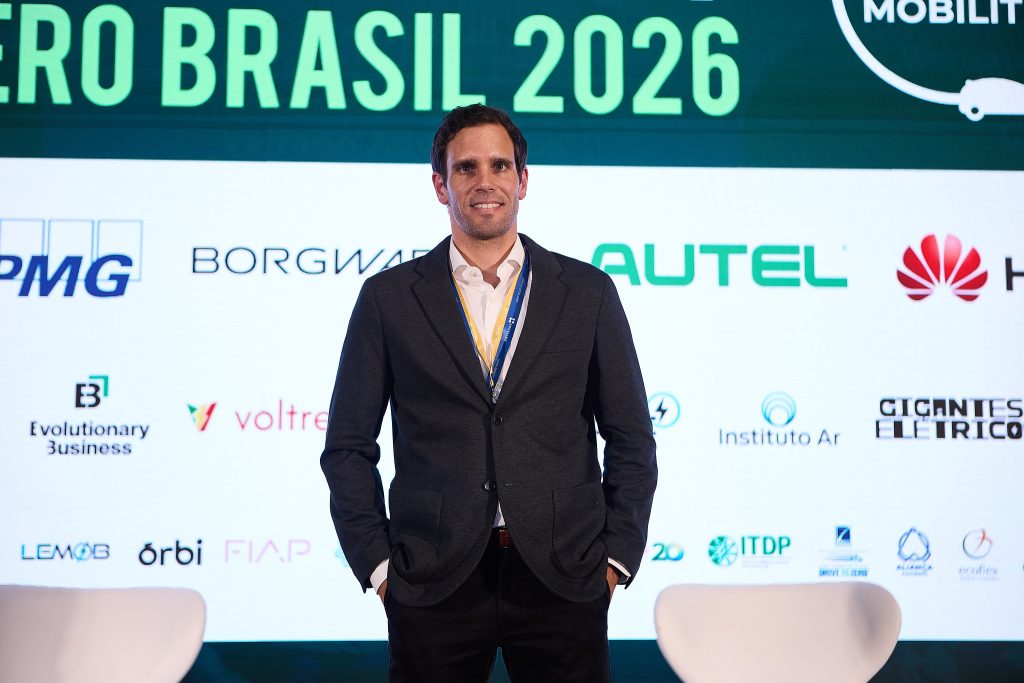
As part of “Latam Mobility & Net Zero Brasil 2026,” Sebastián Waldmann (Chief Commercial Officer of Enerlink) gave a keynote titled “Enerlink: accelerating the adoption of electromobility in Latin America.”
During his presentation, the executive showed why specialized software is the missing piece to make charging infrastructure profitable, reliable, and scalable across the region.
Waldmann began by addressing an inescapable reality: in Latin America, millions of chargers are still needed to meet the growing demand for electric vehicles.
“Those chargers need specialized software to enable a charging operation that works well, flawlessly, maximizes profitability, and provides the best user experience,” explained Enerlink‘s Chief Commercial Officer.
Enerlink‘s goal is clear: to become the operating system for charging infrastructure in Latin America. And the numbers back up that ambition: they already have experience with 3,000 charging points across six countries, making them the company with the most charging points in Spanish-speaking Latin America.
You may also be interested in | IDB, UITP, and São Paulo authorities present financing models and public policies for transport electrification in Brazil
The Regional Charging Operating System
The company offers hardware-agnostic solutions, working with 30 charger brands (both Chinese and European). They currently process 5,000 transactions per day and serve a wide variety of business models.
Among their solutions are Charge Management Software (which manages power, charging status, and transactions) and the Charging App, a white-label application for public charging.
Waldmann emphasized that customers choose Enerlink because its software enables simple, reliable, and profitable operation. The company has offices in Mexico, Colombia, Chile, Ecuador, Peru, and Uruguay, with headquarters in Chile.
Success Stories to Prove the Value of the Software
To illustrate the real impact of their technology, Waldmann presented two standout cases. The first was Voy Santiago, a Chilean company that operates more than 800 electric buses – one of the largest fleets in Latin America. Santiago is the third city in the world with the most electric buses in circulation, after Beijing and Xining, and Voy Santiago is the leading operator in that market.
Thanks to Enerlink‘s software, Voy Santiago has reduced charging costs through power management, decreased on-site operators, increased charger uptime and connectivity, and lowered CapEx. In addition, they can measure energy losses, monitor battery health, and integrate telemetry systems to compare drivers’ driving styles.
The second case was City Energy in Mexico, which started in January 2025 with no DC chargers and today has 100 across six Mexican cities. Their charging hub model (with 10 to 20 chargers of 30 to 60 kW, restrooms, a cafeteria, and 24/7 security) has been a resounding success, achieving utilization rates of up to 70% over a 24-hour period. They use Enerlink‘s software to increase success rates and uptime, apply dynamic pricing, manage B2B contracts, balance loads, and comply with local regulations.
Among other notable clients, Waldmann mentioned Enel (in Chile, Colombia, and Mexico), MercadoLibre (with an electric van project in Chile), Kia and JAC in Ecuador, Shell in Chile, the Transmilenio transport system in Colombia (which operates the largest charging terminal in Latin America with nearly 400 DC charging points), and the Red Metropolitana de Movilidad bus network in Santiago.
Toward an Intelligent Platform Model
Waldmann spent the closing of his keynote reflecting on what lies ahead for the charging ecosystem. He pointed out that the sector is fragmented, with low interoperability, a perceived shortage of chargers but real underutilization of existing ones, rigid pricing models, and a lack of integration with the power grid. “People who own an electric vehicle know they need one app for each charging network,” he noted.
Faced with this scenario, Enerlink is promoting a platform model through EVX, an application that acts as an intelligent market maker. EVX unifies the charging market into a single platform, optimizes charger usage, and unlocks the potential of artificial intelligence.
The proposal integrates large CPOs (Charge Point Operators) that maintain their own brand but allow roaming, as well as small CPOs that prefer to join the EVX network without exposing their brand directly to the consumer.
Furthermore, the platform opens up the possibility of incorporating chargers from fleet depots that sit idle during the day (like the project done with MercadoLibre), and even integrating parking payment solutions, financial apps, and superapps.
Waldmann also mentioned the need to connect the platform with the power grid to offer better rates during low-demand periods.
Brazil: The Next Big Challenge
The executive closed his presentation by confirming that Enerlink is entering the Brazilian market, learning, and having conversations with local players.
With a solid track record in Latin America, compelling success stories, and a clear vision for intelligent platforms, Enerlink positions itself as a strategic ally to accelerate the adoption of electromobility in the region.
The company demonstrates that the true enabler of charging is not just the hardware, but the software that makes it operate efficiently, profitably, and scalably.
A 2026 of Consolidation for Mobility
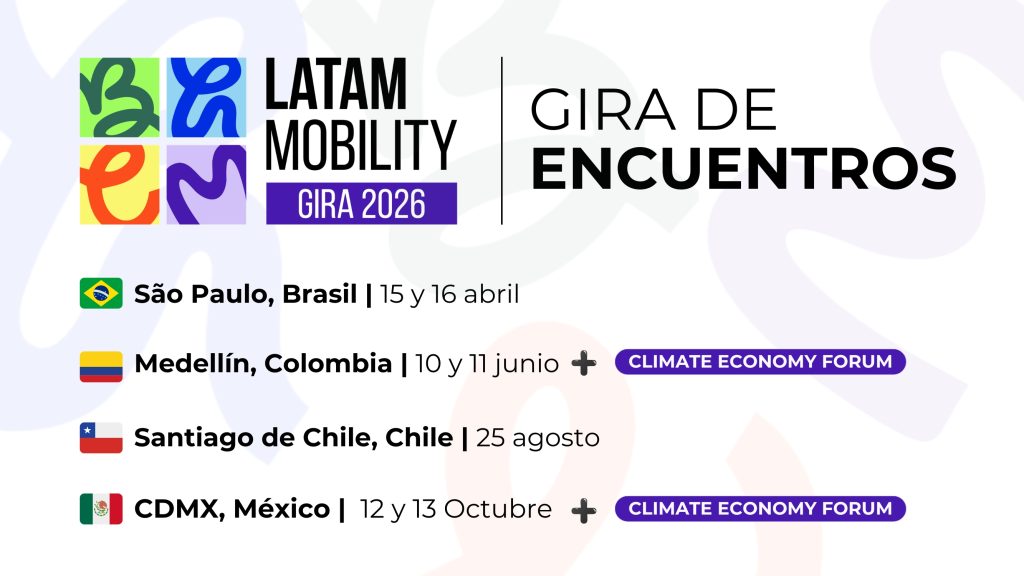
The Latam Mobility 2026 Tour continues its journey through the region, with the next meeting taking place in São Paulo, Brazil, on April 15 and 16. There, leaders from the public and private sectors will gather to analyze the progress and challenges of sustainable mobility, the electrification of transportation, and new opportunities for the energy transition in Latin America.
This event has established itself as a key platform for connecting companies, authorities, startups, and institutions that are driving innovative solutions in clean transportation, charging infrastructure, renewable energy, and new technologies for the mobility of the future.
After Brazil, the tour will continue in Medellín, Colombia, on June 10 and 11, and then arrive in Santiago, Chile, on August 25, bringing together experts and strategic stakeholders to further strengthen the sustainable mobility ecosystem in the region.
The tour will conclude in Mexico City on October 12 and 13, alongside the Climate Economy Forum, at an event that will bring together industry leaders to further drive the transition to more efficient, sustainable, and low-emission transportation systems in Latin America.
The transition is already underway. The Latam Mobility Tour 2026 will be the meeting point to accelerate decisions, connect key stakeholders, and collaboratively build sustainable mobility in Latin America.