



The landscape of vehicle fleets in Colombia is undergoing a profound transformation in 2026. Driven by a notable economic recovery, new government regulations, and a growing interest in sustainability, the sector is moving toward modernization.
In this article, we present a detailed, up‑to‑date analysis of the current state of fleets in the country – from the surge in cargo vehicle sales to the rise of electromobility and the adoption of new management practices.
You might also be interested in | Colombian Government presents new framework for the assembly of electrified vehicles in the country
Cargo Fleets Renewal
The first four months of 2026 have witnessed an extraordinary recovery in Colombia’s cargo transportation sector. According to industry data, 6,069 new cargo vehicles were registered – a growth of 86.3% compared to the same period last year.
This dynamism, which clearly points to a strong trend toward commercial fleet renewal, has been led by the 0 to 10.5 ton truck segment, which saw an increase of 139.1% with 3,326 units sold.
In terms of brands, a shared dominance between traditional and Asian companies is taking shape. Foton remains at the top with a 23.9% market share (1,449 units), followed by Chevrolet with 16.3% (992 vehicles) and JAC with 9.5% (575 units). Together with Kenworth and Sinotruk, these five companies account for 65.9% of total sales.
The geography of renewal also shows a clear epicenter: Cundinamarca, with 2,767 registered units, far exceeds Antioquia and Santander as the main operations hub for vehicle registrations.
The push for Asian brands is no coincidence. Navitrans (Foton’s representative in Colombia) has focused its efforts on showing local transporters the future vision and innovation capacity of the Chinese industry.
Despite the notable growth in fleet renewal, the energy transition in heavy transportation still faces major challenges: diesel remains the dominant propulsion technology, representing 98.2% of cargo vehicle registrations, while sustainable alternatives such as Natural Gas Vehicles (NGV) and electric engines hold a modest share of 1.4% and 0.4% , respectively – although this landscape is beginning to change.
The Push toward Zero‑emission Logistics
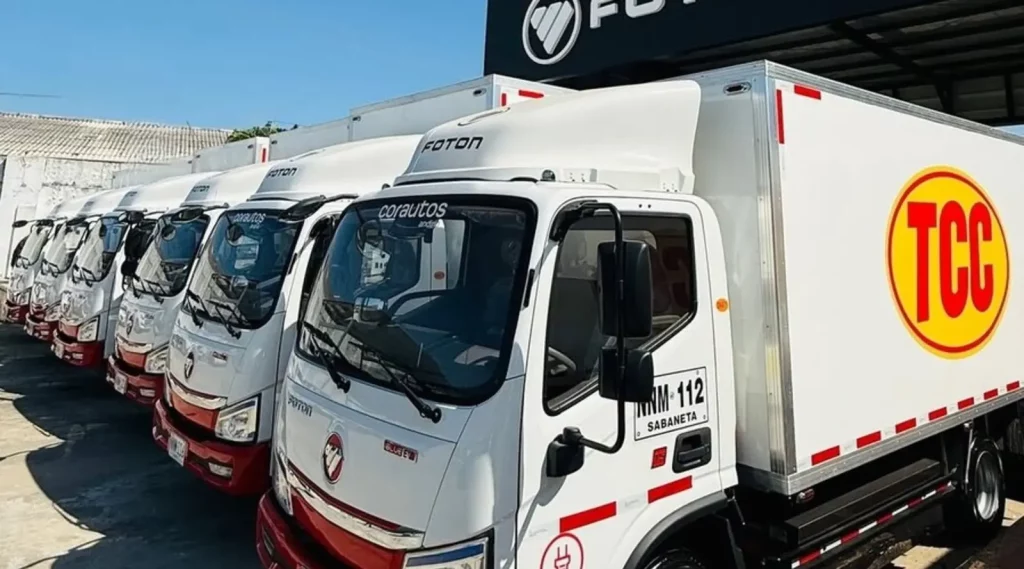
The logistics sector has been one of the most active in the transition toward sustainable fleets in Colombia. TCC stands out as a concrete example: the company operates 20 electric trucks (model FKR 3.4 EV) on urban routes in Bogotá, Medellín, Barranquilla, and Cartagena. Each unit has 154 horsepower and an 81.14 kWh battery, and the company reports a 50% reduction in maintenance costs.
Another multinational that has taken firm steps is FedEx, which in September 2025 announced the integration of a fleet of Ford E‑Transit vans in Bogotá and Medellín, with expansion plans to Cali. These vehicles, with a range of 300 kilometers, have allowed the company to project that its pickup and delivery fleet in Medellín will be 100% electric by the end of 2026.
Not only courier companies are in this race. PepsiCo acquired in March 2025 a fleet of 54 BYD T4K light electric trucks, aiming to reduce its CO₂ emissions by 75% . In parallel, Postobón has been a pioneer in exploring Natural Gas Vehicles (NGV) as a transition technology.
For its part, Ecopetrol has 385 electric vehicles in its operational fleet, distributed across its refineries and daily tasks, while aviation giants like Avianca have electrified part of their ground operations, using 14 JMC Vigus electric pickups for passenger and luggage transport at the Bogotá and Medellín airports.
Another example is Holcim Colombia, which has a fleet of 100% electric mixers in the country, composed of five Foton vehicles with a 350 kWh battery offering up to 16 hours of continuous autonomy and capacity to transport up to 8 m³ of concrete.
Notably, technology startups are incorporating electric fleets as a central part of their business model. One example is Carryt, a logistics company with a presence in Colombia and Mexico that performs last‑mile deliveries using BYD electric vehicles, ranging from small vans to scooters.
Electric Bus Fleets in Bogotá: Local Manufacturing and Scalability
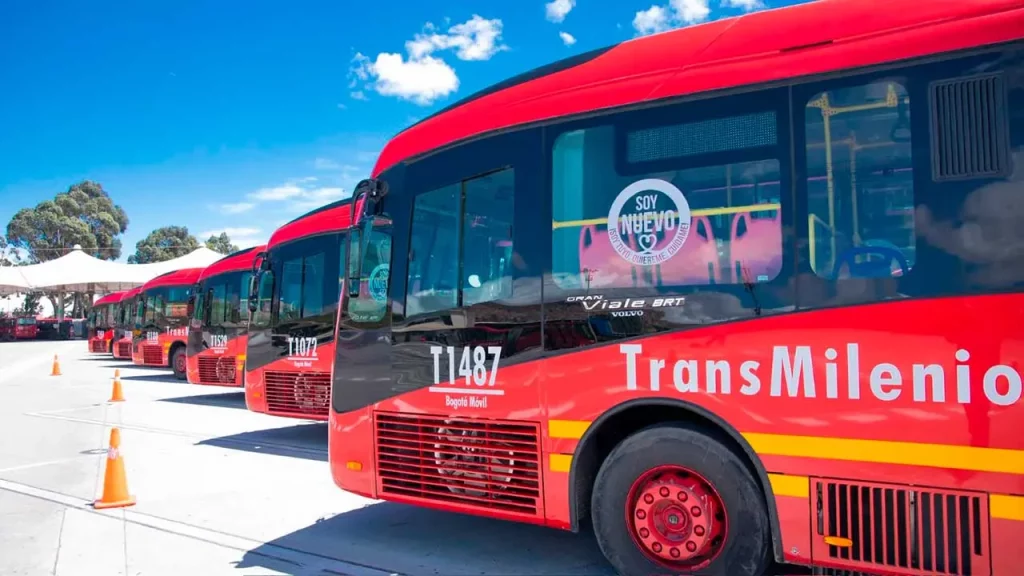
Bogotá is consolidating its position as a reference city for electromobility in Latin America. In March 2026, the capital received the first batch of 68 “made in Colombia” electric buses for the TransMiZonal system. These vehicles, manufactured by Marcopolo Superpolo, are part of a broader plan that includes 711 electric buses between 2026 and 2027.
This project has an impact that goes beyond the environment, generating a significant industrial effect. The manufacturing of this new fleet involves 1,330 direct workers and connects a network of 180 national suppliers, with a projection of more than 5,300 indirect jobs. For Marcopolo Superpolo, this project represents a nearly 30% growth in its production capacity.
With this addition, Bogotá not only renews its zonal fleet but also consolidates a continuous electrification roadmap. By December 2025, the city had already reached a fleet of 1,485 100% electric buses.
BYD, the Chinese giant of electric mobility, supplies 99% of Bogotá’s electric fleet – 1,473 units out of a total of 1,486 – and the company confirmed that in 2026 it will put into operation its largest fleet of electric buses and trucks assembled in Colombia, reinforcing its commitment to the local market and the generation of industrial employment in the country.
What about Beyond the Capital?
Outside the capital, the electrification of public transportation fleets is advancing at different speeds. By 2025, regulations required that 10% of new buses in mass transit systems be zero‑emission – a figure that will increase to 20% by 2027.
In the Aburrá Valley, Medellín combines mature technologies (its Metrocable network and the Ayacucho Tram) with more gradual advances in its bus system. The Ayacucho Tram is a consolidated case: it operates with 12 electric units, has traveled more than 5.1 million kilometers in its first decade, and has transported more than 83 million users.
Regarding buses, the Metroplús system is taking firm steps. After an initial pilot in 2024, the expansion plan is advancing strongly. Recently, it was announced that 64 electric buses for Metroplús are already in maritime transit to Colombia – a milestone that represents the largest addition of this technology in the system to date.
The landscape in Cali is marked by a concrete start in 2026. Although the MIO system had accumulated announcements without deliveries, this year the bus replacement materialized with a first phase that includes 35 100% electric units. This purchase was highlighted by Metro Cali as part of a modernization strategy that involves an investment of nearly 45 billion pesos.
In addition, other cities are taking their first steps, marking a slow but gradual adoption of electric buses outside the major regional capitals.
Among the most notable cases is Cartagena, where its mass transit system, TransCaribe, is preparing to operate its first vehicles of this type in 2026, with the acquisition of six electric buses that are in the final stage of manufacturing in China.
On the Caribbean coast, Barranquilla is also advancing its plans, with announcements made since late 2024 about the future addition of 150 electric and gas buses for its Transmetro system. In the Coffee Region, the city of Pereira signed a contract for the purchase of 58 electric buses that must enter operation during 2027.
Vehicle Renting: An Alternative to Optimize Costs and Accelerate Electrification
Faced with rising logistics costs, more and more companies in Colombia are opting for the vehicle rental model as a strategy to concentrate their resources on their core activities, avoiding direct management of mobility and transportation.
An example of this trend is Renting Colombia, which in May 2026 delivered its 130,000th unit since it began operations in 1997 – a light truck used for urban distribution and last‑mile logistics. The company generates around 38,000 formal jobs.
Renting Colombia is not only growing in volume but also betting decisively on sustainable mobility, tripling its fleet of electric vehicles in alliance with Muverang and Auteco Mobility, initially adding 300 100% electric vehicles in Medellín, Bogotá, and Cali, with a projection of delivering an estimated 1,400 vehicles by the end of the year.
The selected vehicles are the two‑seater Zhidou quadricycles. With an average use of 12,000 kilometers per year, these electric vehicles would represent a reduction of around 570 tons of CO₂ annually and more than 72,000 gallons of gasoline avoided.
Additionally, Renting Colombia has incorporated natural gas vehicles into its portfolio, offering sustainable rental solutions that include electric, hybrid, and gas vehicles. Companies such as Bavaria (the Colombian brewery) have already integrated electric trucks into their distribution fleet, demonstrating that sustainable mobility is a profitable asset for their corporate clients.
Mauricio Serna , general manager of Renting Colombia, commented to Valora Analitik that “the most efficient and competitive companies in the country are those that made the decision not to get distracted managing vehicles.” Real‑time monitoring systems and the use of artificial intelligence are also playing an increasingly relevant role in optimizing fleet performance.
The Silent Rise of NGV in Heavy Transportation
The growth of vehicles powered by Natural Gas Vehicles (NGV) is gaining ground as a key transition technology in Colombia, mainly due to its economic and environmental advantages.
NGV consumption represents a 30% cost reduction compared to diesel, while minimizing environmental impact without sacrificing cargo performance.
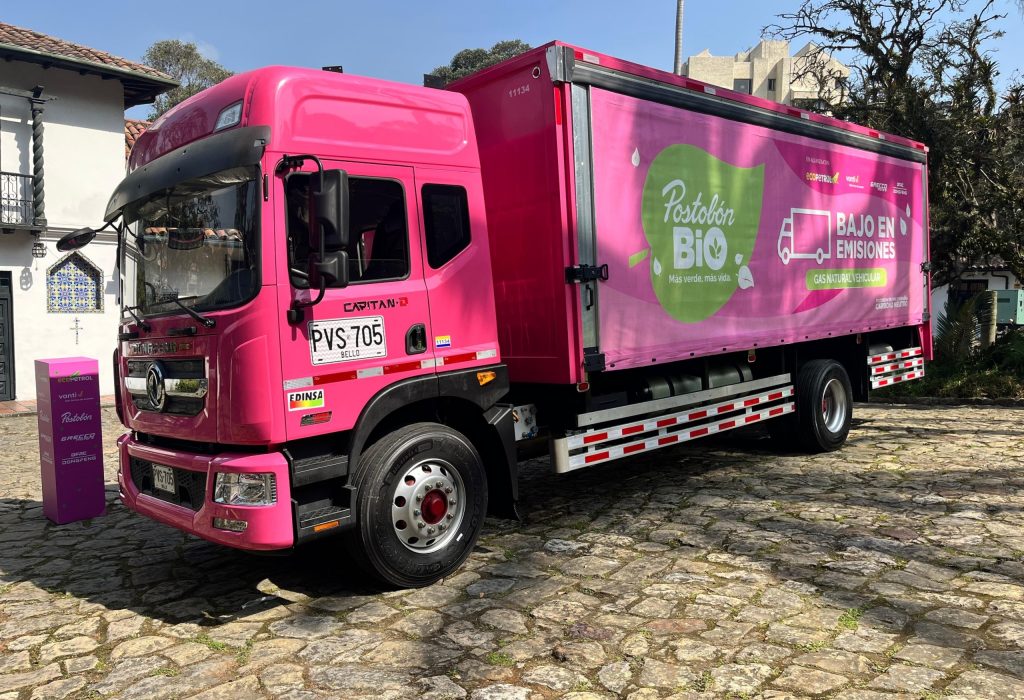
Several Colombian companies are already adopting this technology. Postobón put into circulation the first urban delivery truck powered by natural gas in the country – an initiative that reduces CO₂ equivalent emissions by up to 53% compared to a similar diesel or gasoline vehicle. The vehicle has a range of over 300 km and is configured for the 17‑ton cargo segment.
For its part, logistics company Pasarex acquired a fleet of 10 cargo vans that run on natural gas – DFAC (Dongfeng) Capitán W NGV models with a capacity to transport up to 1,200 kilograms.
This NGV cargo van is designed as a dedicated natural gas vehicle, optimized for maximum efficiency in urban logistics operations. It has a mechanical configuration that delivers 117 horsepower and a maximum torque of 16 kgm , with a cargo capacity of 1,750 kg on a 3.8‑meter long platform.
Manufacturer Dongfeng has accelerated its clean mobility strategy, consolidating its portfolio of NGV cargo vehicles as a competitive alternative to diesel, backed by tangible savings and a lower carbon footprint. The company registered significant growth in Colombia after selling 2,000 units in 2025.
Charging Infrastructure: A Pending Challenge but with Actors on the Move
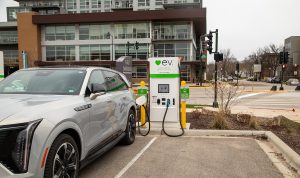
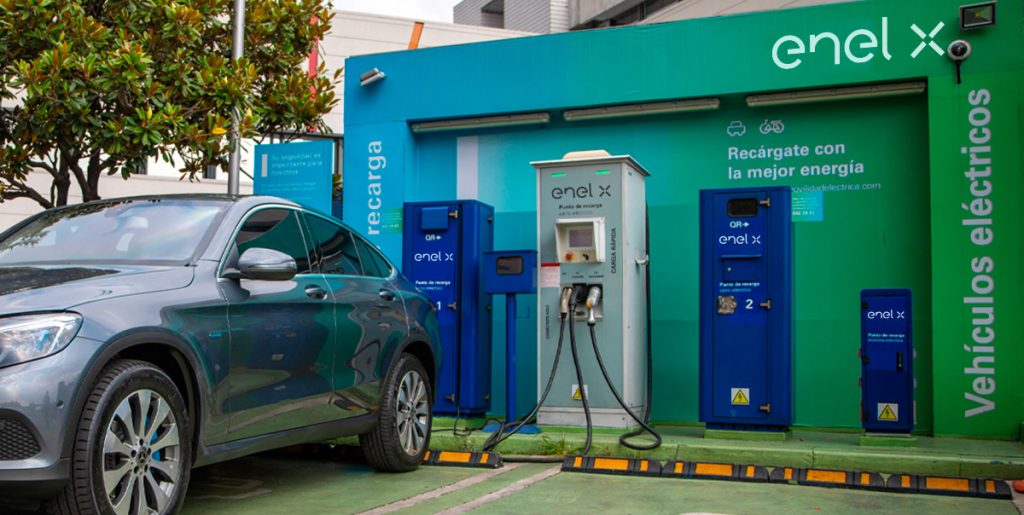
The accelerated growth of electromobility in Colombia poses a fundamental challenge: the expansion of public charging infrastructure. Currently, the country’s charging network has a strong geographical concentration, although multiple players are working on its expansion.
Enel X leads the electric charging station market in Colombia, with a network of six electro‑terminals totaling 412 chargers , located mainly in Bogotá. It has also worked together with TransMilenio to build the first electro‑terminals and transform the city’s electric fleet.
It is followed by Terpel , with 60 charging points distributed across 13 departments (16 of which are in the capital), and plans to increase to 28 fast‑charging points in 2026 – with 10 recently built and 14 new points projected for 2026, both in Bogotá and its surroundings.
In third place appears EPM , which has charging points in Antioquia , the Coffee Region , and the Santander region. Other emerging companies such as Ergenia are also gaining ground: the company started from a single pilot station in 2023 and today operates fast‑charging points in Bogotá, with the goal of reaching 50 stations in 2026.
Regarding total infrastructure, a report from mobilityportal.eu indicates that Colombia currently has 237 electric charging stations and 774 charging points – significant progress, though still insufficient compared to the growing demand for vehicles.
The evolution of the charging network will be decisive in sustaining the pace of electric vehicle adoption. As more public and private players join the expansion of infrastructure, Colombia can close the gap and consolidate its transition toward cleaner and more efficient mobility.
New Regulations for Cargo Transportation
The Colombian government, through the Ministry of Transportation , has taken a fundamental step to modernize cargo fleets via new regulations. The initiative, which began to take shape in September 2025 with a historic decree on cargo vehicle replacement, seeks to renew vehicles between 3.5 and 10.5 tons and formalize thousands of drivers operating in this segment.
The regulation allows the entry of new vehicles into public cargo service through the replacement system : an old vehicle leaves and a new one enters, thus offering an improvement in road safety and a more modern, efficient fleet.
As an alternative for drivers who do not wish to part with their vehicles, the regulation contemplates a contribution of 25% of the commercial value of the truck (excluding VAT) to the Fund for the Promotion of Technological Ascent (FOPAT) .
This mechanism will finance the modernization, technological transition, and fleet renewal programs already applied to heavy cargo and will be extended to smaller vehicles.
Additionally, the new regulation allows the change from private to public service for dump trucks, cranes, and other cargo vehicles – a measure that Minister of Transportation María Fernanda Rojas described as a step to “give the country a more efficient, safer, and more competitive logistics system.”
Challenges and Roadmap for 2026‑2027
Despite the progress, the fleet sector in Colombia faces several challenges in the short and medium term that will require priority attention:
- Regulatory stability : A consistent and predictable regulatory framework is key to attracting investment in electromobility and clean technologies, as warned by Andi .
- Expansion of the charging network : The rapid growth of the electric vehicle fleet demands an accelerated expansion of public charging infrastructure nationwide, to avoid “range anxiety” that holds back potential buyers. The evolution of this network toward more equitable coverage across the territory will be decisive.
- Human talent training : The new generation of electrified vehicles requires technicians specialized in maintaining high‑voltage systems, batteries, and electronic components – an area where the country must invest in training.
- Business awareness : Renting and other mobility‑as‑a‑service models will continue to gain ground over traditional fleet ownership, as companies understand the financial and operational benefits of outsourcing vehicle management.
For all the above, the fleet ecosystem in Colombia is at a turning point. The renewal of the cargo vehicle fleet is advancing at a record pace, driven by economic recovery and the leadership of Asian brands such as Foton , JAC , and Dongfeng . In parallel, regulatory modernization opens the door to a safer, more efficient, and more formalized fleet.
Although diesel remains predominant, projects such as Bogotá’s electric buses, Pasarex and Postobón ’s NGV trucks, and Renting Colombia ’s investments in electrification demonstrate that the transition toward more sustainable fleets is already a reality, albeit still incipient.
The combination of a favorable regulatory framework, a growing technological offering, and greater business awareness suggests that 2026 will be a key year in the consolidation of a more modern, competitive transportation sector aligned with the challenges of the future.
And Medellín as the mobility hub of Latin America
To have a real and objective view of the immediate future of the sector, it is essential to highlight the space where all these topics – fleet renewal, electromobility, charging infrastructure, fuels, renting, and regulation – will come to life in one place.
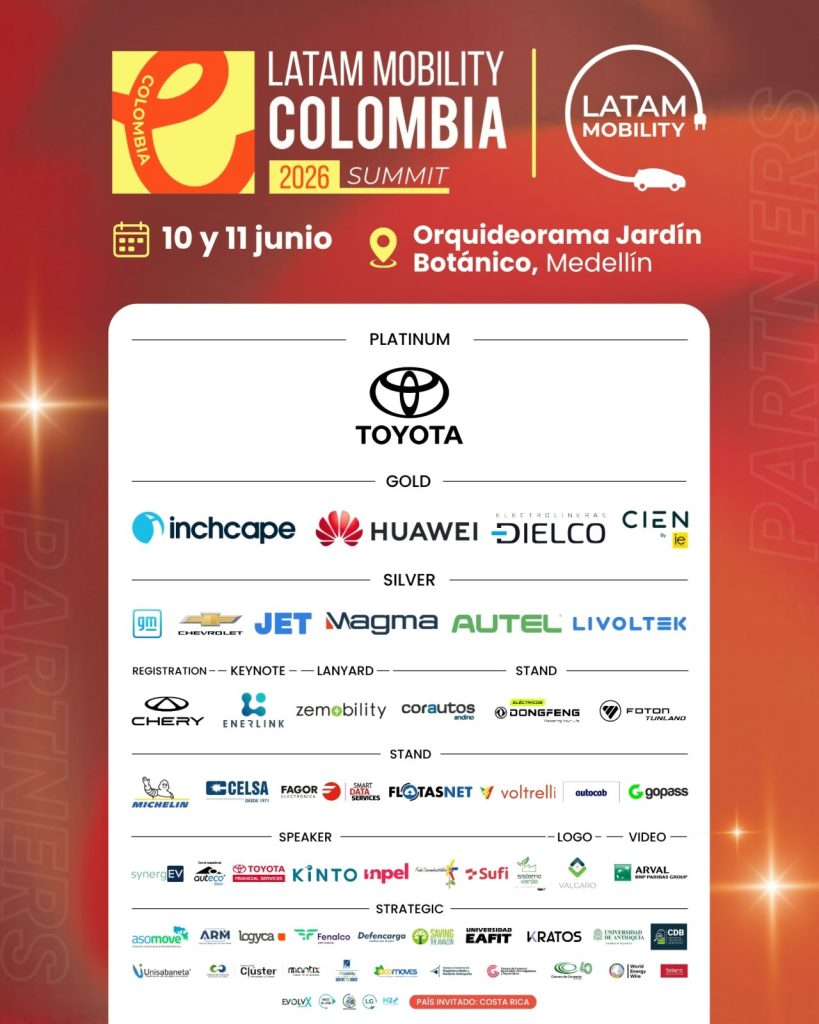
That place is Latam Mobility Colombia 2026 , the most important sustainable mobility meeting in the region, which will take place on June 10 and 11 at the Orquideorama of the Medellín Botanical Garden .
This summit will have the participation of more than 1,000 attendees , including government leaders, fleet managers, vehicle manufacturers, technology providers, investors, and energy experts. The guest country will be Costa Rica , which will enrich the regional dialogue with Central American experiences and success stories.
The format of Latam Mobility Colombia 2026 is designed to foster high‑level networking among decision‑makers in the sector. Over two days of panels, keynote conferences, and business rounds, participants will have the opportunity to exchange experiences, generate strategic alliances, and learn about the latest technological innovations that are setting the course for mobility in Latin America.
Medellín , the capital of innovation, awaits the protagonists of change. There, in the heart of the Botanical Garden, not only will conversations about the future of fleets continue, but alliances and roadmaps will begin to be built to make cleaner, more efficient, and more competitive transportation possible for Colombia and all of Latin America. See you at Latam Mobility Colombia 2026!
Get your tickets here.