

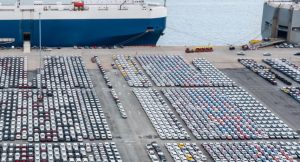

The International Energy Agency (IEA) released the latest edition of its Global EV Outlook 2026 report, which reveals that Latin America saw record growth in the adoption of electrified vehicles during 2025, with a 75% increase in sales led by the dynamism of the Brazilian and Mexican markets.
This performance far exceeds the growth recorded in mature economies like the United States, where electric car sales remained relatively flat, and confirms a major shift in consumer preferences across the region — also fueled by the global energy crisis resulting from the conflict in the Middle East.
You may also be interested in | “Latam Mobility Colombia 2026” will turn Medellín into the meeting point for sustainable mobility leaders in Latin America
A Global Market in Full Swing
The IEA study reveals that 2025 was a record year for the electric vehicle (EV) industry worldwide.
Global sales grew 20%, surpassing the 20 million unit mark — meaning that by the end of last year, one out of every four new cars sold globally was electric.
The momentum wasn’t limited to developed nations. More than 100 countries reported growth in electric vehicle sales during 2025. Notably, in one-third of these countries, EVs already account for at least 10% of new car sales — a threshold many analysts consider the tipping point toward mass adoption.
The ongoing energy crisis, driven by the conflict in the Middle East, has highlighted oil dependence and accelerated this shift. The global electric vehicle fleet avoided the consumption of approximately 1.7 million barrels of oil per day (mb/d) in 2025.
Brazil and Mexico: the engines of regional growth
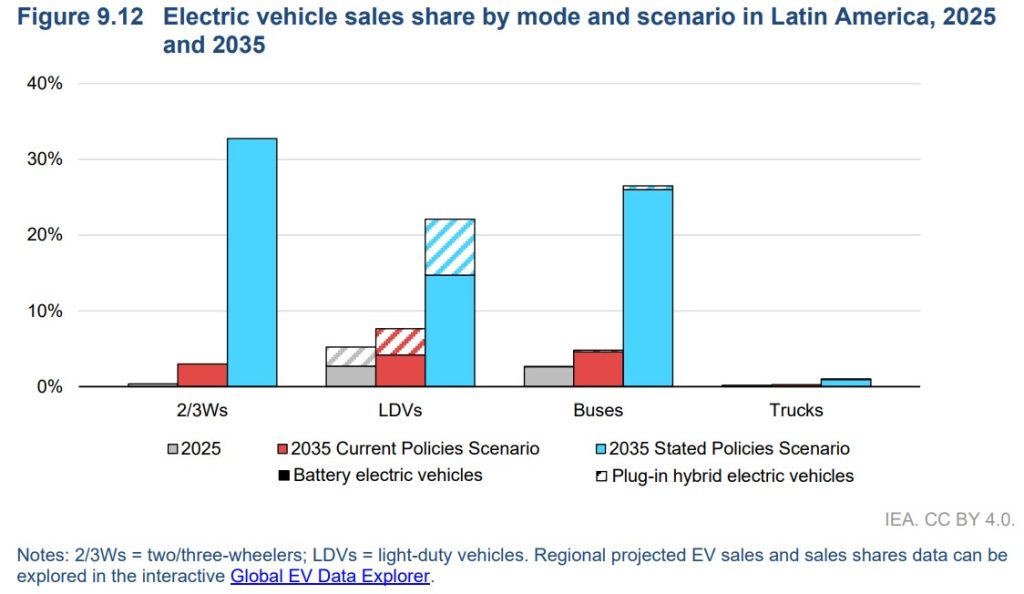
The IEA‘s detailed analysis underscores that the 75% growth in Latin America was not uniform but rather powered by two key economies: Brazil and Mexico.
Mexico had an outstanding performance. According to data from the Electro Mobility Association (EMA) , sales of electrified vehicles (battery electric BEVs, plug-in hybrid PHEVs, and range-extended REEVs) in the country grew 38.5% during 2025, reaching 96,636 units sold — bringing Mexico close to the 100,000 electrified vehicles sold in a single year milestone.
EMA is made up of more than 24 ecosystem companies, including BYD, Tesla, JAC, Volvo, and Zeekr, among others. The market share of these vehicles in Mexico already exceeds 6% of total sales. Additionally, the country’s charging network reached 56,726 ports, a 26% annual increase according to the EMA Electromobility Barometer.
The Brazilian market, meanwhile, also recorded a notable increase. According to the Brazilian Association of Electric Vehicles (ABVE) , Brazil hit a milestone in electric vehicle adoption by selling 20,222 fully electric units — a 6.3% growth in that segment — while the broader electrified market (including hybrids) showed even greater dynamism.
In terms of total electrification, the IEA indicates that Brazil led the Latin American market with 286,691 electrified vehicles sold in 2025 — a figure that exceeds the previous year’s sales by more than 108,000 units.
Projections for 2026: A Year of Consolidation
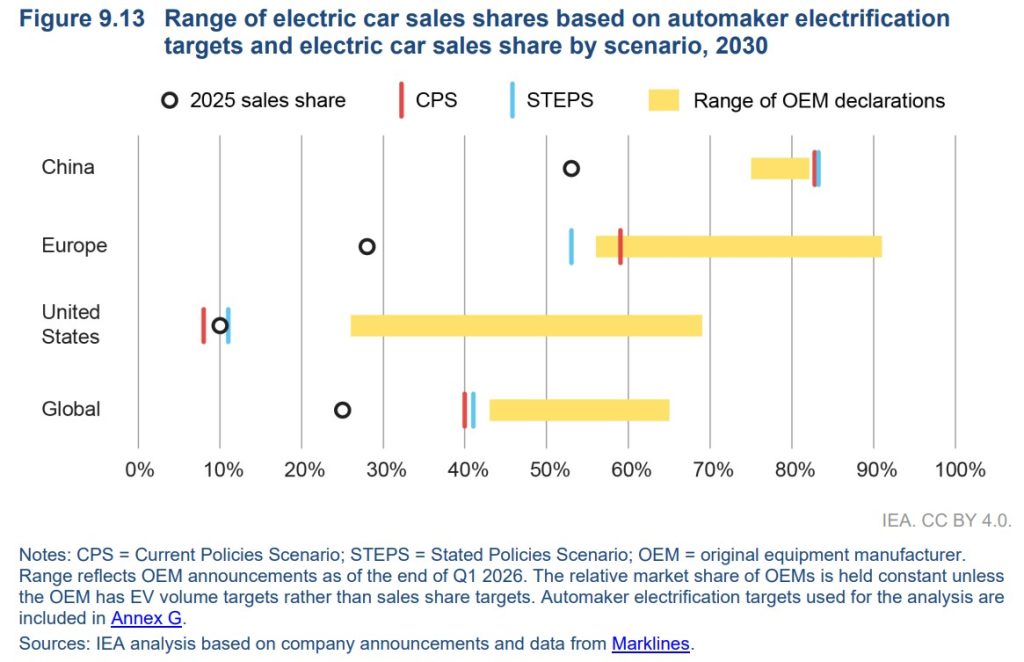
The Global EV Outlook 2026 report not only analyzes last year’s final numbers but also offers an optimistic projection for the current year.
The IEA anticipates that during 2026, around 23 million electric vehicles will be sold worldwide, which would represent nearly 30% of all new car sales on the planet.
At the regional level, Europe is expected to lead growth with an increase of approximately 20% in sales. Latin America, for its part, will continue its upward trend with a projected growth of 45% during 2026.
Preliminary data from the first quarter of 2026 reinforce this positive outlook. Although global sales contracted 8% year-over-year in the January-March period (mainly due to regulatory changes in the United States and a pause in incentives in China), Latin America defied that trend and grew another 75% compared to the same quarter in 2025.
In March 2026, the IEA notes that nearly 90 countries reported increases in their EV sales, and about 30 set all-time monthly records — demonstrating the structural momentum of this market.
Factors Driving the Transition
The remarkable growth of electric mobility in the region comes from a combination of mutually reinforcing factors:
- Energy crisis and cost savings: The rise in oil prices resulting from the Middle East conflict has made electric vehicles economically more attractive. EVs generally have lower operating costs than internal combustion vehicles. For example, based on average oil prices in April 2026, the annual fuel savings from driving an EV in the European Union grew 35% compared to 2025 savings. For corporate fleets, these savings can be several times larger.
- Government incentives: Both Brazil and Mexico have implemented active policies to promote electromobility. Brazil has eliminated import tariffs on key components of electrified vehicles — a measure in effect until September 2027. Mexico, for its part, has eliminated the New Car Tax (ISAN) for hybrid and electric vehicles since 2012, and EMA highlights that the savings from using an EV can reach up to 70% compared to a gasoline car.
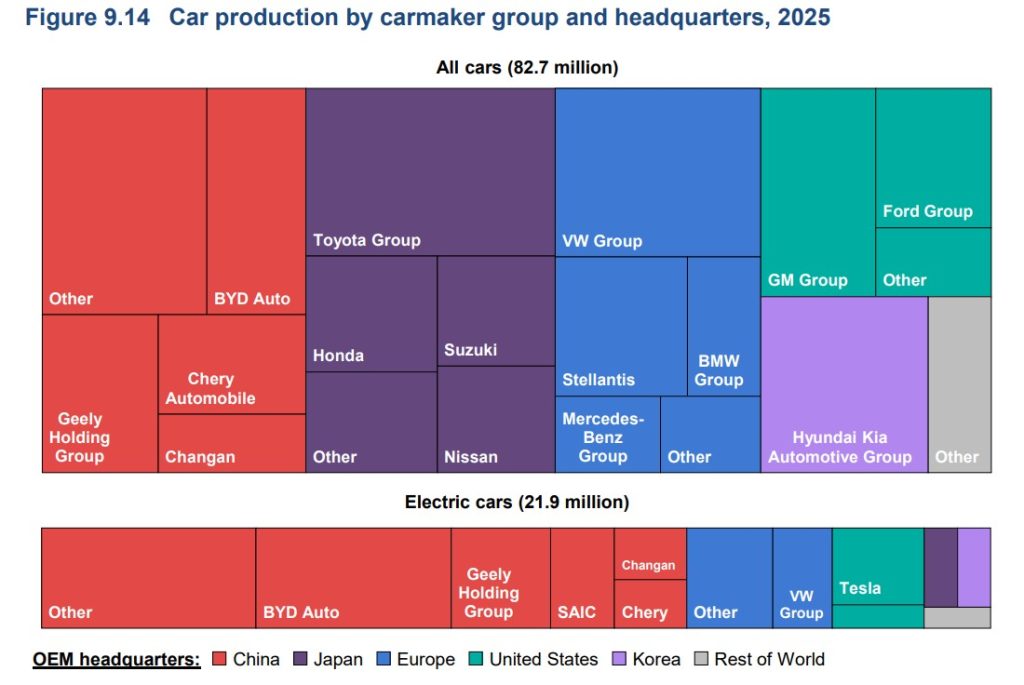
- Greater supply and participation of Chinese manufacturers: The growing presence of Asian automakers has democratized access to technology. Chinese automakers supplied 60% of the electric vehicles sold worldwide in 2025.
Outlook for the Region
Looking ahead, the prospects for sustainable mobility in the region and the world are highly positive.
The IEA projects that by 2035, the global electric vehicle fleet will reach 510 million units — which would be six times current levels and roughly half of new car sales worldwide.
Despite strong sales growth, Latin America still faces significant challenges. The Ipsos Mobility Report 2026 (a study conducted in 31 countries by the leading market research firm) indicates that while 47% of people globally find driving an EV attractive (with an even higher predisposition in Latin America and Asia-Pacific), the transition is not uniform, and a gap persists between the availability of innovation and its effective adoption.
Latin America finds itself at a unique crossroads where the combination of an energy crisis, government incentives, growing environmental awareness, and an increasingly diverse vehicle supply is catalyzing a transition toward cleaner and more efficient mobility.
The Conversation Continues
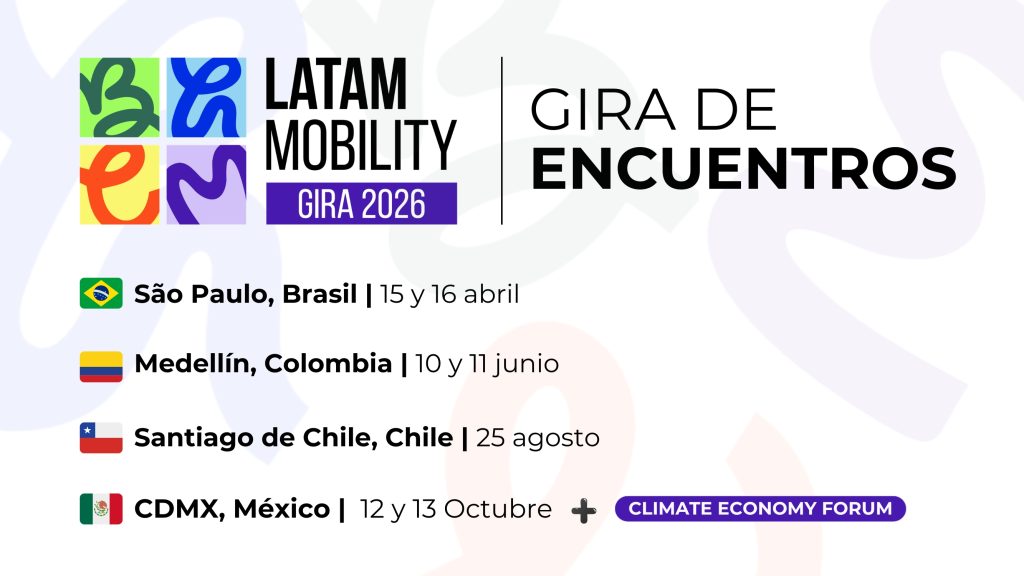
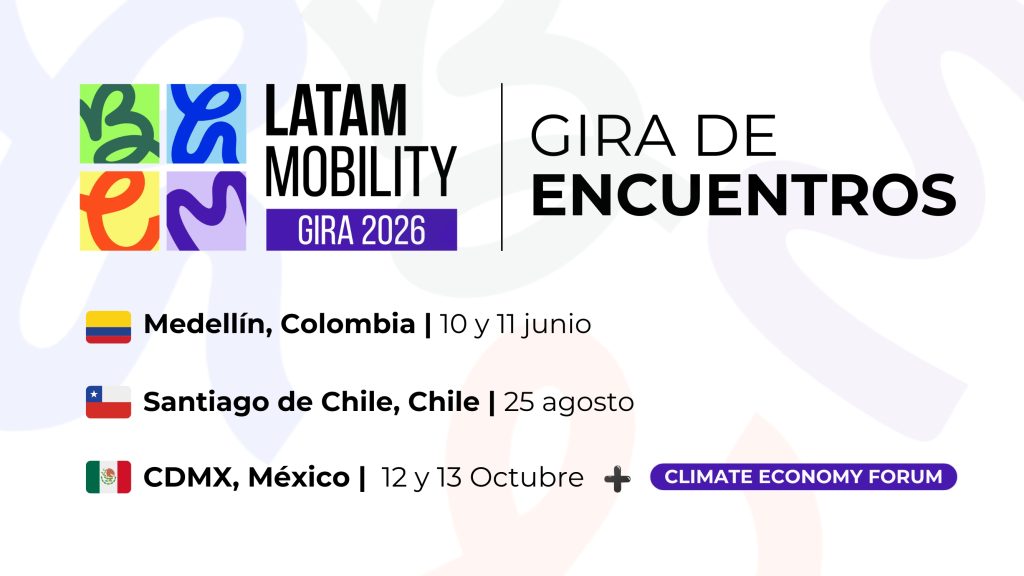
Through its stops in Mexico City, Colombia, and Chile,Latam Mobility will continue to promote a collaborative approach to accelerate the transition to cleaner, more efficient, and more inclusive transportation systems, positioning Latin America as a relevant player in sustainable mobility at the global level.
Be part of the movement that is accelerating Latin America’s energy and urban transformation. If you would like to learn more about how to participate and positioning options, click here.