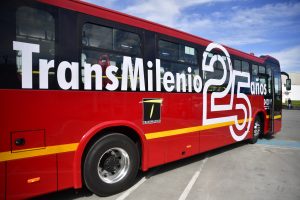




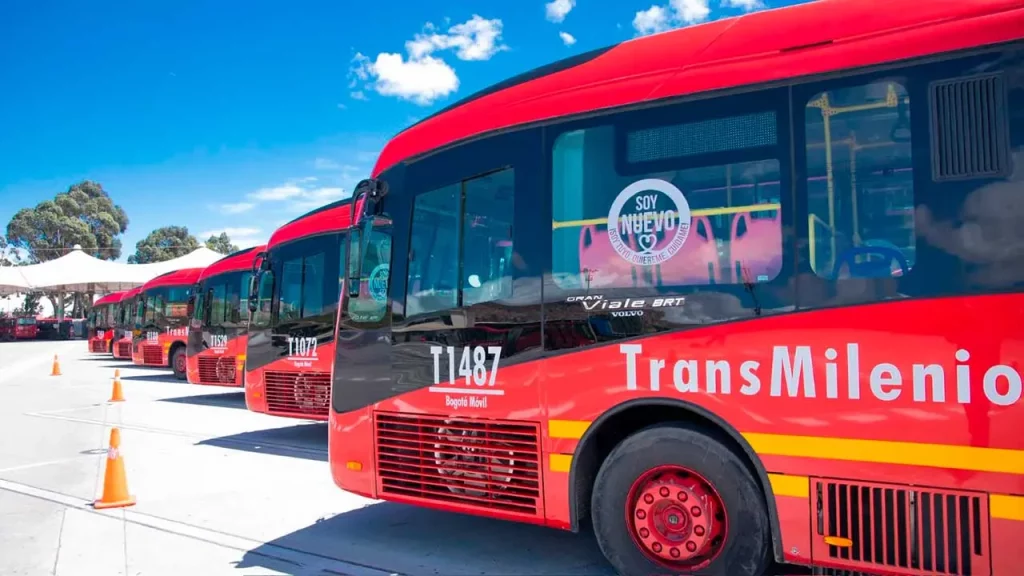
In an unprecedented event for sustainable mobility in Colombia, TransMilenio officially announced the award of the concession contract for the provision of 269 100% electric buses, marking the start of Phase VI of the TransMilenio System, dubbed “The New Era.”
This project, considered the most ambitious in terms of mass electric transportation in Colombia, represents a groundbreaking advancement in the modernization of the capital’s integrated public transit system and in the fight against climate change.
The consortium Promesa de Sociedad Futura E-BRT Móvil Provisión, made up of Buses S.A.S. and Transdev Colombia Holding, won the competitive bidding process, which saw participation from three bidders and reflects the sector’s strong interest in this strategic national initiative.
You may also be interested in | C40 Cities: Brazil, Colombia, Mexico, and India will drive 359,000 electric vehicle chargers by 2035
Fleet to Transform the System’s Capacity
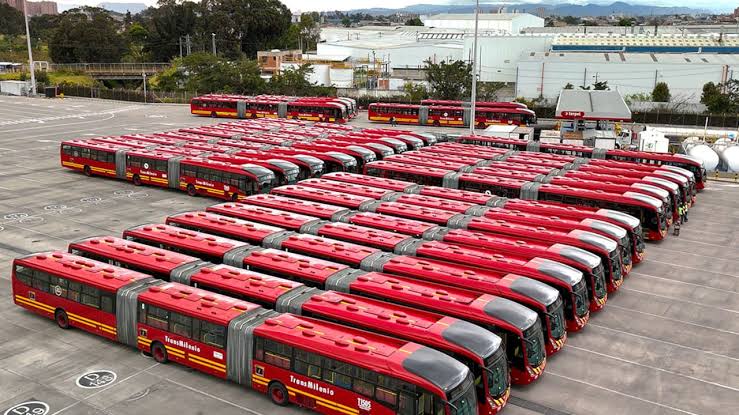
The awarded contract includes the provision of 157 articulated and 112 bi-articulated buses, all 100% electric, which will be added to the existing trunk fleet. With this addition, TransMilenio’s vehicle fleet will grow from 2,203 to 2,472 buses—a 12% increase in service capacity—and will create 50,300 new spaces for system users.
The project goes beyond just acquiring vehicles. The concession includes the design, supply, installation, and maintenance of the electric charging infrastructure, which will be located at the El Vínculo Depot-Portal in Soacha and at the Calle Sexta Depot in Bogotá.
In addition, a photovoltaic generation system will be installed and maintained at the El Vínculo Depot-Portal, ensuring that the energy used to operate these buses comes from renewable sources and reinforcing the commitment to environmental sustainability.
The new electric fleet will bolster operations on key city corridors by integrating the Avenida 68, Ciudad de Cali, and NQS–Soacha trunk lines. The vehicles will directly benefit residents of Usme, San Cristóbal, Teusaquillo, Santa Fe, Los Mártires, and Antonio Nariño, improving connectivity and service quality in these underserved areas.
Key Benefits
The adoption of this 100% electric fleet will have a positive impact across multiple dimensions:
- Environmental Sustainability: The operation of these 269 electric buses will prevent the emission of over 353,760 tons of carbon dioxide (CO₂) over 15 years of service. This reduction is equivalent to the CO₂ absorbed by trees planted across an area 57 times larger than Simón Bolívar Park, one of Bogotá’s most iconic green lungs.
- Economic Efficiency: The total cost of ownership for electric buses is 9% lower, and operating costs are 21% lower compared to compressed natural gas (CNG) technology, representing significant long-term savings for the system.
- Travel Time Efficiency: The new fleet will cut travel time by 16 hours per passenger per year, substantially improving the quality of life for daily commuters.
- Gender Equity: As part of the commitment to inclusion, female participation in operations and maintenance work will increase from 10.1% to 16.2%, promoting greater equity and opportunities for women in the transportation sector.
The Phase VI fleet provision project has solid financial and institutional backing. It is supported by a Co-financing Agreement signed between the National Government, the Capital District, and TransMilenio, which guarantees its viability and was declared of strategic importance through CONPES 4168 of 2025.
The agreement amounts to 1.5 trillion pesos, with contributions of 62.4% from the Nation and 37.6% from the District. This marks the first time the National Government has co-financed an electric fleet for a mass transit system in Colombia, consolidating a milestone in the country’s sustainable transportation policy and setting a powerful precedent for future initiatives in other cities.
The entry into operation of these 269 electric buses will mark the beginning of a new chapter in the system’s history, positioning Bogotá as a benchmark for mass electric transportation in Latin America and demonstrating that it is possible to reconcile urban development with environmental protection.
A Year 2026 of Consolidation for Mobility
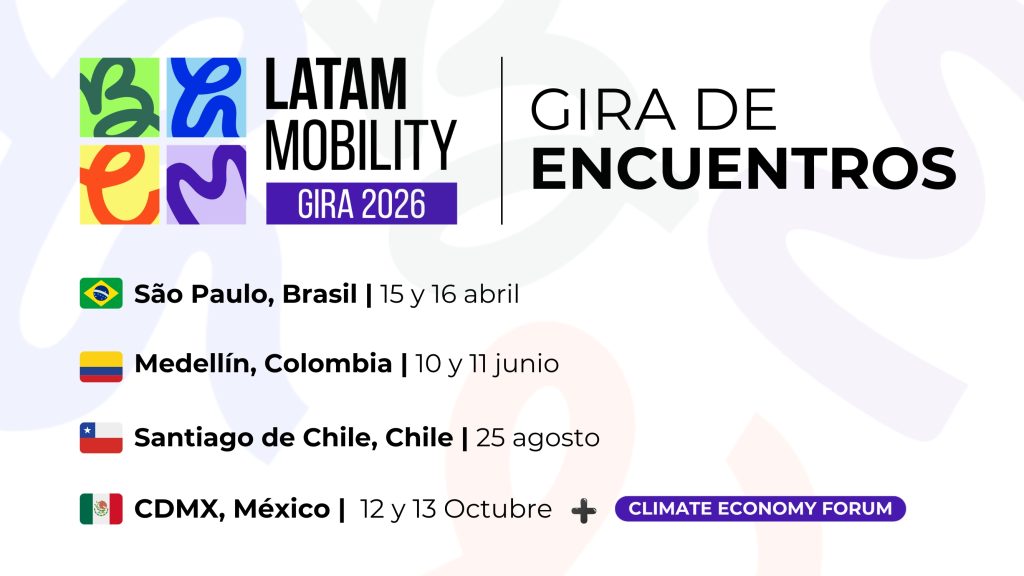
The Latam Mobility 2026 Tour will arrive in Santiago, Chile, on August 25, bringing together experts and strategic players to further strengthen the sustainable mobility ecosystem in the region.
The tour will end in Mexico City on October 12 and 13, alongside the Climate Economy Forum, in a meeting that will bring together sector leaders to continue driving the transition toward more efficient, sustainable, low‑emission transportation systems in Latin America.
The transition is already underway. The Latam Mobility 2026 Tour will be the meeting point to accelerate decisions, connect key players, and collaboratively build sustainable mobility in Latin America.