


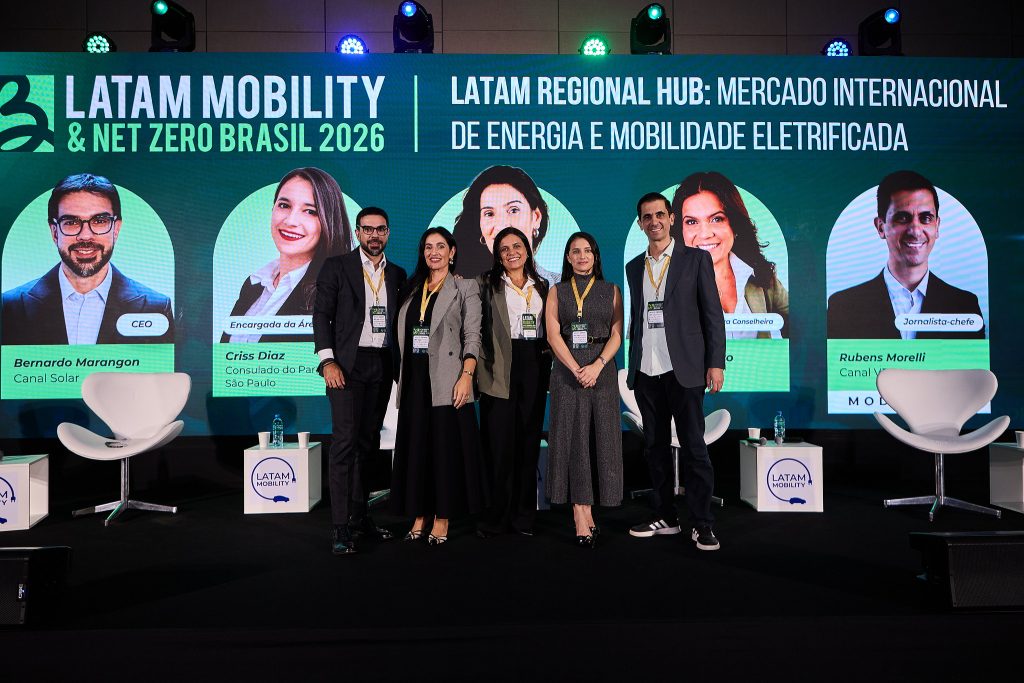
The closing of Latam Mobility & Net Zero Brasil 2026 featured the panel “LATAM Regional Hub: International energy market and electrified mobility.” This session brought together leaders from the energy, diplomatic, technology, and association sectors to discuss how Brazil and the region can become a Latin American hub for sustainable energy and mobility, connecting investments, innovation, and international markets.
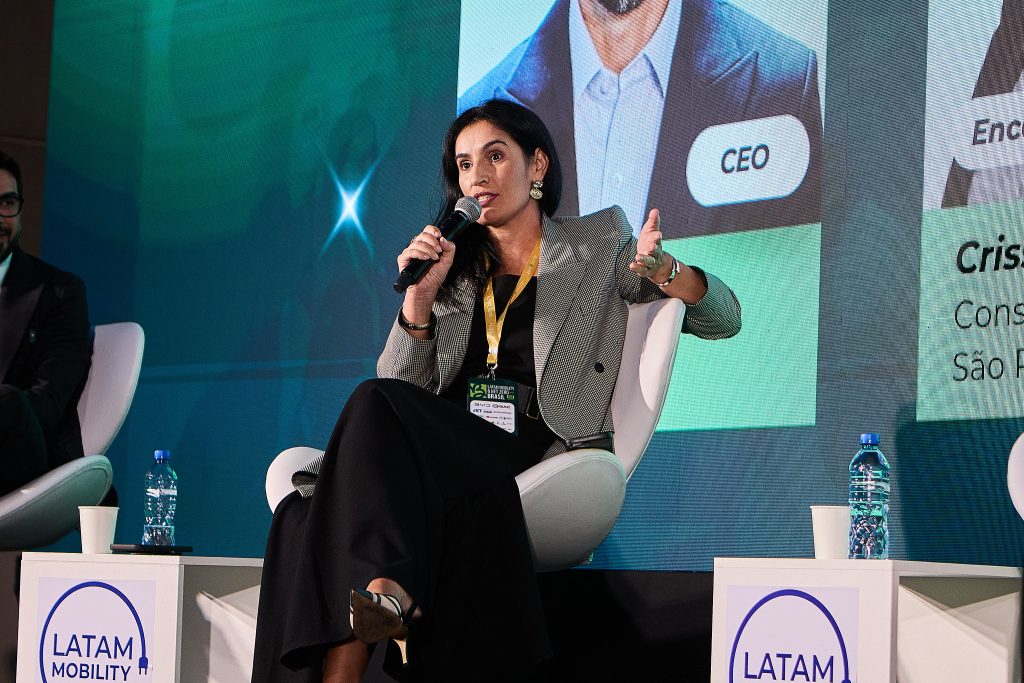
The panel was moderated by Rubens Morelli, chief journalist at Canal VE, and included Bernardo Marangón, CEO of Canal Solar; Criss Díaz, head of the Commercial Area at the Consulate of Paraguay in São Paulo; Francis Aquino, Operations Director at Órbi; and Márcia Loureiro, Board Director at ABVE (Brazilian Association of Electric Vehicles).
Throughout the debate, the experts agreed that the region has unique natural advantages, but it needs to articulate state policies, harmonize regulations, and make a firm commitment to innovation and financing.
You may also be interested in | ABVE reveals at “Latam Mobility Brasil 2026” that the country surpassed 16.8% market share for electrified vehicles and projects over 300,000 units in 2026
Transforming Natural Advantage
Rubens Morelli opened the panel by asking the central question: how do you turn Latin America’s natural advantage into a real competitive advantage? The answer, according to the panelists, lies in execution, coordination between countries, and leveraging available development resources.
Francis Aquino, director of Órbi, an institution that recently shifted from being a hub to a science and technology institute, highlighted that 699 billion reais have been allocated to technology and innovation through 2029 via funds like FINEP, FAPEMIG, and other development agencies.
“If you have a project and you’re not looking at those sources, you’re already behind,” she warned. Aquino revealed that her institution helped structure 13 projects, of which 10 were approved by scientific review boards, involving companies like MRV, Inter, and Morgel. “There is money on the table. The question is how we go after it to make Brazil more competitive,” she stated.
Additionally, she put a fact on the table: Brazil has a shortage of 530,000 professionals in the technology field. Therefore, Órbi is also working to train leaders in AI and emerging technologies. “It’s not about tools, but about understanding which fronts will make me more competitive,” she explained.
Canal Solar: Opportunities Before Looking Abroad
Bernardo Marangón, CEO of Canal Solar, brought a pragmatic view from the private sector. He pointed out that the world’s biggest energy demand today comes from artificial intelligence, and that Latin America is being left out of that race due to a lack of grid capacity and adapted regulations.
“Data centers in the United States consume volumes of energy that our grid cannot even absorb,” he warned.
However, Marangón highlighted that Brazil is more advanced in solar energy than the rest of the region (except for Chile in batteries), and that electric mobility is growing even faster than the battery market.
For foreign investors, the big challenge is understanding each country’s rules, because the electricity sector is highly regulated and varies even within a single nation. “As a Brazilian entrepreneur, I prefer to keep exploring the enormous opportunities that Brazil still has before venturing into other countries where I don’t know the regulations,” he stated.
Nevertheless, he acknowledged that many business friends are looking at Paraguay due to tax issues.
ABVE: Partnerships and Financing
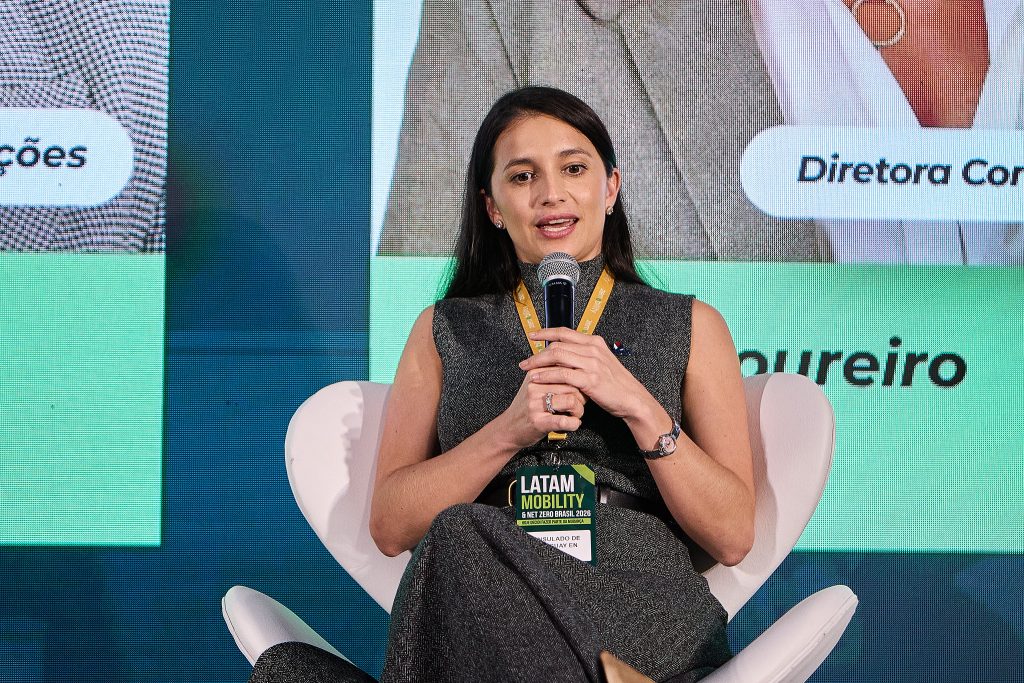
Márcia Loureiro from ABVE focused on binational partnerships as the most viable path. She cited Itaipu as an emblematic example—a success story with international financing that combines hydro-dependency and cooperation.
“We’re talking about structuring projects, infrastructure, long-term investment. There has to be some kind of subsidy,” she explained.
Loureiro recalled that Latin America has an energy matrix with an average of 60% renewable sources (and Brazil reaches 83% ), which is a strategic advantage. But to take advantage of it, political and regulatory coordination within Mercosur is needed.
“Energy must be set as a national security priority, just like oil and gas,” she argued. She also introduced a topic absent until that moment: environmental assets and carbon credits, which are also part of the electromobility value chain.
Her closing words were important: “Just as in the 1970s we had the ProÁlcool program, today the message is: electric car, one day you will have one. It’s very close. Try it, get informed.”
Paraguay: Agenda for Regulatory Harmonization
Criss Díaz, representative of the Consulate of Paraguay in São Paulo and an official at Paraguay’s Ministry of Industry and Commerce, shared her country’s reality: virtually all electricity generation is 100% renewable thanks to the Itaipu hydroelectric dam.
However, she acknowledged that Paraguay still has much to do in terms of electric mobility, especially in installing charging points and developing laws for solar energy, charcoal, and biofuels.
Díaz emphasized the importance of regional regulatory harmonization. “If we are going to encourage the use of electric cars, we need the regulations of Paraguay and Brazil to complement each other. Where can chargers be installed? Can they be set up in Paraguay under a maquila regime?” she asked.
Her message was clear: Paraguay is committed to no longer being the “ugly duckling” of the region and to continue building trust to attract investments, just as it did 20 years ago with its maquila laws.
The Role of Innovation and Technology Education
Francis Aquino delved into the need to connect academia with market demand. She worked on the Rota 2030 program (now Mover ) and stated that the power of Brazilian intellectual capital is enormous when aligned with real problems. “It’s not just about artificial intelligence, but about putting intellectual capital at the service of the next frontier of knowledge,” she said.
Furthermore, she announced that CEMIG has already signed a contract with Órbi to transform Lagoinha, a vulnerable region of Belo Horizonte, into a multi-sector energy transition hub. “You are all invited to be part of that movement,” she concluded.
Finally, Rubens Morelli closed by thanking the panelists and Latam Mobility for their work in bringing together opinion makers, decision makers, and executives. Márcia Loureiro added a piece of advice for the audience: “TCO (total cost of ownership) is already favorable. Experiment, get informed, and if it makes sense to you, go ahead,” she urged.
Bernardo Marangón expressed his wish that in 10 years Latin America will be exporting renewable energy to the world, because the global energy transition demands it. Criss Díaz reaffirmed Paraguay’s commitment to continue developing friendly regulations and maintaining investor confidence.
And Francis Aquino closed with a dream: “That in 2029 we can tell the world how many billions of reais Brazil captured because it thought creatively about its territory.”
The panel left several certainties: Latin America has the resources, the intellectual capital, and the development funding sources; what is missing is long-term planning, regulatory harmonization between countries, and a determined commitment to innovation.
A Year of Consolidation for Mobility
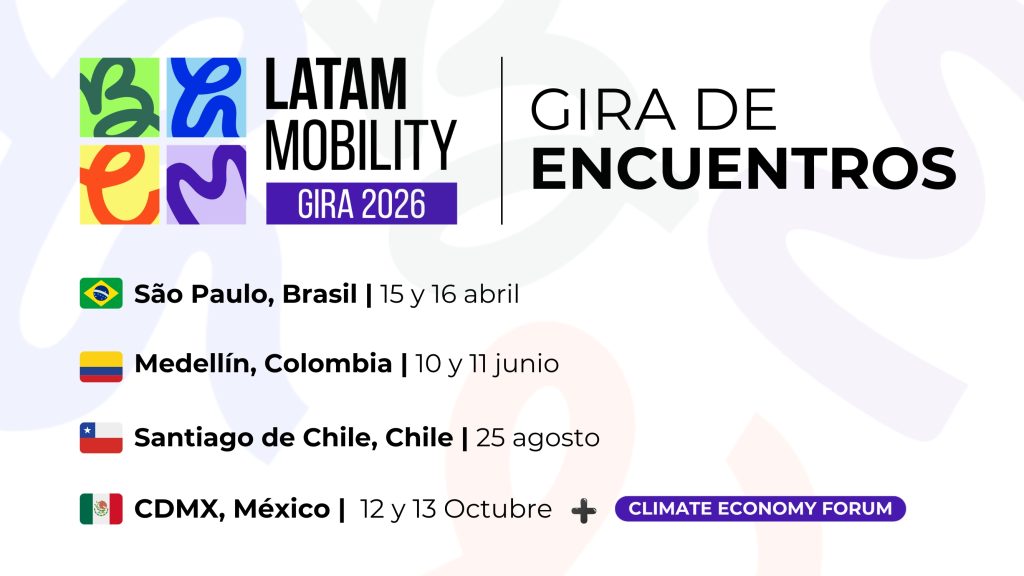
The Latam Mobility 2026 Tour will continue in Medellín, Colombia, on June 10–11, and will later arrive in Santiago, Chile, on August 25, bringing together experts and strategic players to further strengthen the sustainable mobility ecosystem in the region.
The tour will conclude in Mexico City on October 12–13, alongside the Climate Economy Forum, in an event that will bring together leading figures from the sector to continue driving the transition toward more efficient, sustainable, and low‑emission transportation systems in Latin America.
The transition is already underway. The Latam Mobility 2026 Tour will be the meeting point to accelerate decisions, connect key players, and collaboratively build sustainable mobility for Latin America.