


Chinese manufacturer Yutong Bus has unveiled its electric vehicle portfolio for passenger transportation in Mexico, with a clear focus on zero-emission solutions.
Under the motto “Think Eco, Move Green,” the company showcased for the first time in the country a complete lineup that includes the 100% electric C11E bus, the electric trolleybus, the electric bi-articulated bus (the first of its kind in the world to operate in a Bus Rapid Transit -BRT- system), and the hybrid H9 and H10 models as transition technologies.
This launch reinforces Yutong‘s commitment to electrifying Mexican public transportation — especially in Mexico City, where the company has already delivered hundreds of electric units to the Passenger Transport Network (RTP) and Metrobús.
You may also be interested in: Biomethane Accelerates Its Pace: Scania Forecasts a Boom in Gas Buses Starting in 2027
Yutong C11E: 530 km of Range
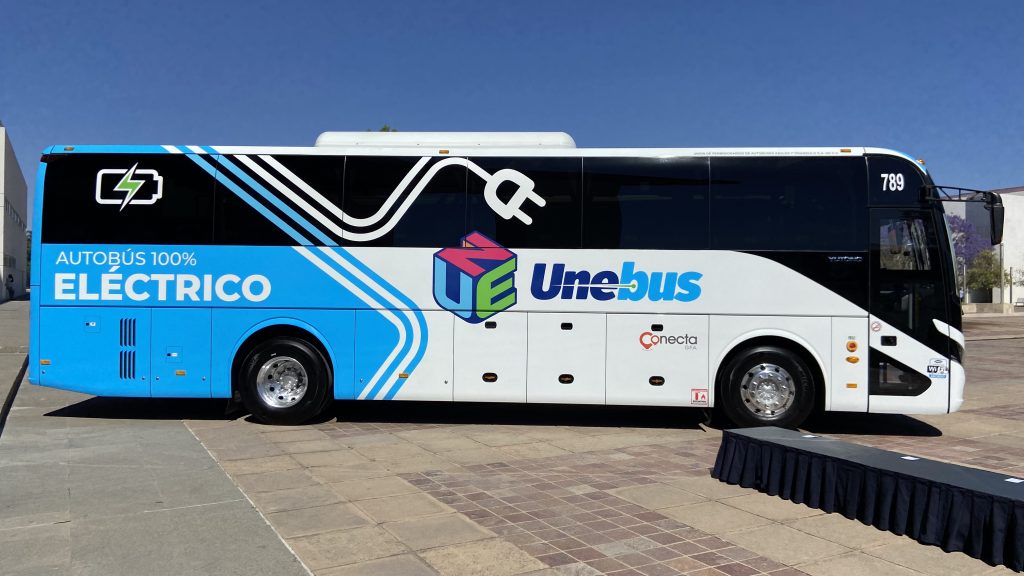
The flagship model of the electric lineup is the Yutong C11E, a 100% electric bus designed for intercity routes, long-distance tourism, and high-end passenger services.
According to company data, this vehicle offers a range of up to 530 kilometers under the C-WTVC cycle — a figure that positions it as a real and viable alternative for long-distance zero-emission transportation.
The C11E incorporates EV Long-life Tech battery technology, developed by Yutong to extend cell lifespan up to 15 years or 1.5 million kilometers, with degradation below 30%. This feature drastically reduces maintenance costs and total cost of ownership (TCO) for fleet operators — one of the main barriers to electric vehicle adoption.
In addition to the C11E, Yutong deployed other high-impact electric models in Mexico, including electric trolleybuses (300 units delivered between 2019 and 2022 for Mexico City) and high-floor BRT-type electric buses, used on Metrobús Line 3.
The first 10 electric 18-meter units were delivered in 2021, and 50 more were added in 2023 — making this line the first in the world to operate with 18-meter electric buses in a BRT system.
Global Milestones
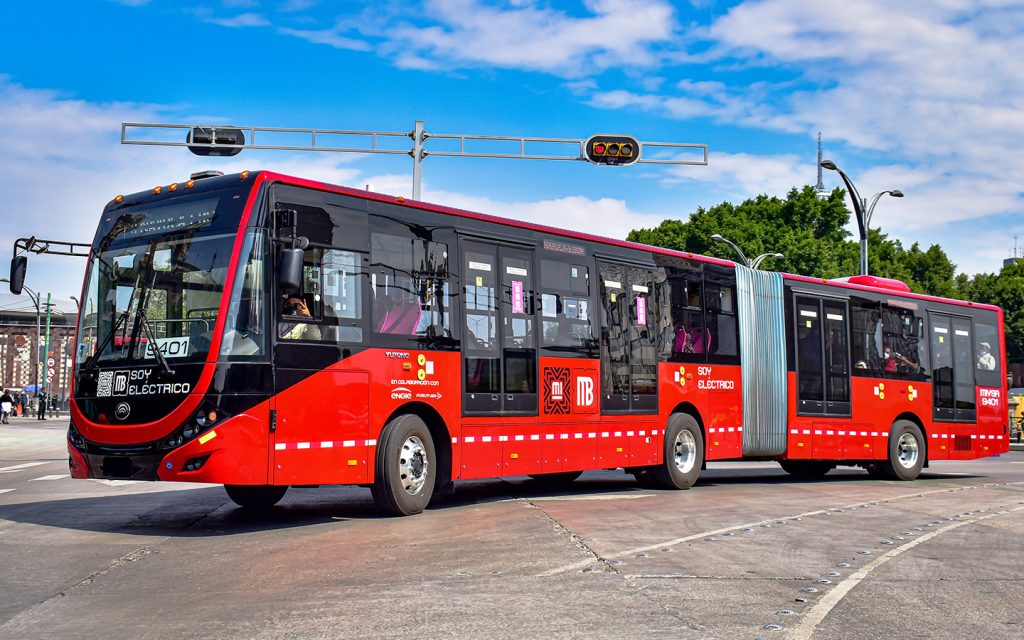
One of Yutong‘s most notable achievements in Mexico was the launch of the world’s first electric bi-articulated bus, tested on Metrobús Line 1 along Avenida de los Insurgentes.
Each unit measures 27 meters in length, has capacity for 270 passengers, and incorporates Metro-style sliding doors for faster and safer boarding — a development that positions Yutong as a global pioneer in the electrification of mass transit systems.
The complete electrification of Metrobús Line 3 with Yutong units has generated a significant environmental impact.
According to the Mexico City government, replacing 60 diesel units with electric ones represents an annual reduction of 7,500 tons of CO2 — equivalent to planting 45,000 trees.
In this regard, the former Head of Government Claudia Sheinbaum stated: “This is a unique project in the world. Several cities have electric public transportation, but none have BRT units.”
Bridge to Total Electrification
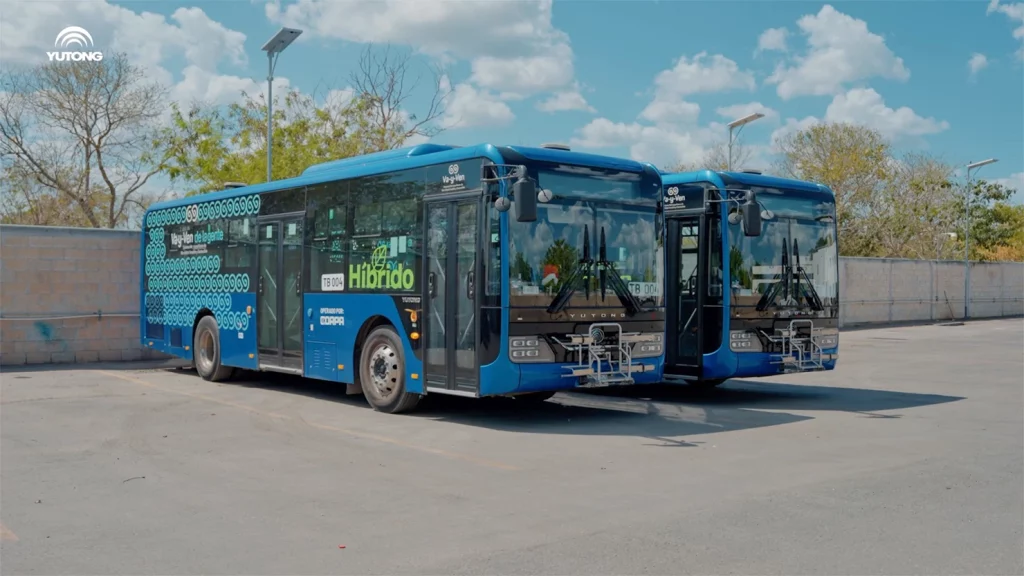
As part of its transition strategy, Yutong also presented the H9 and H10 hybrid buses, designed for markets that still lack sufficient charging infrastructure for mass electrification.
These vehicles combine an efficient combustion engine with an electric propulsion system, achieving a fuel consumption reduction of over 30% compared to conventional diesel buses.
The company offers them as an intermediate solution that allows operators to reduce emissions and operating costs while moving toward 100% electric fleets.
Additionally, Yutong presented the V6 van in both electric and combustion versions, aimed at short-distance transportation, tourism, and corporate mobility — expanding its low-emission vehicle offering for different market segments.
Technological Advances
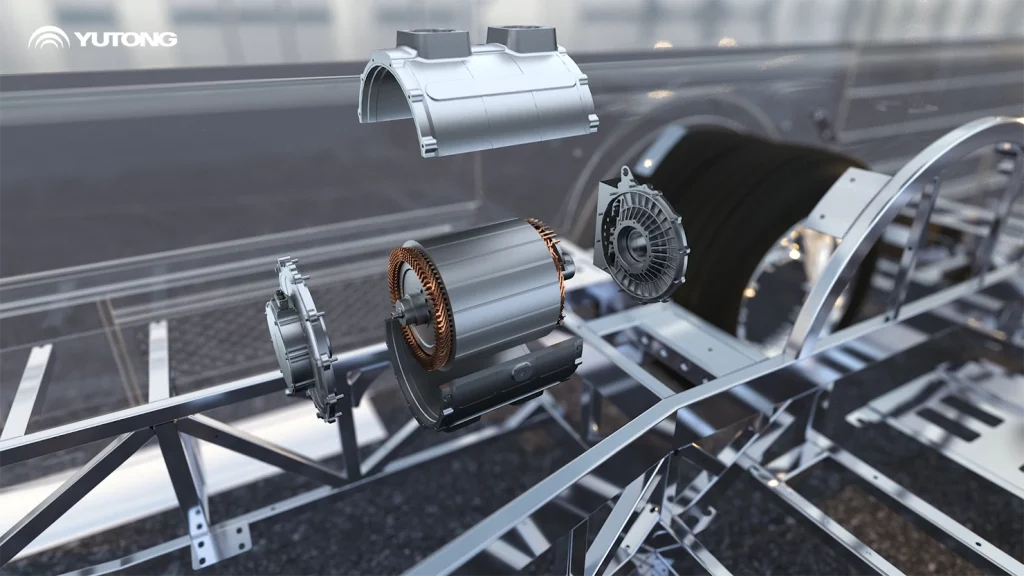
The heart of Yutong‘s electric proposition is its long-life EV Long-life Tech battery system. This technology allows electric bus batteries to operate for 15 years or 1.5 million kilometers while maintaining a residual capacity above 70% (degradation below 30%).
This performance far exceeds industry standards, where most commercial vehicle batteries guarantee between 8 and 10 years or 500,000–800,000 km. For fleet operators in Mexico, this translates into lower battery replacement costs and greater long-term profitability of the electrification investment.
Looking ahead to the coming months, Yutong confirmed its plans to introduce the T13E in Mexico, a premium electric coach designed for long-distance routes and high-level tourism services.
This model, already operating in other international markets, will offer range exceeding 500 kilometers and will feature the same long-life battery technology.
With the T13E, Yutong aims to complete its electric range to cover all passenger transportation segments: urban, suburban, intercity, BRT, and luxury tourism.
A 2026 of Consolidation for Mobility
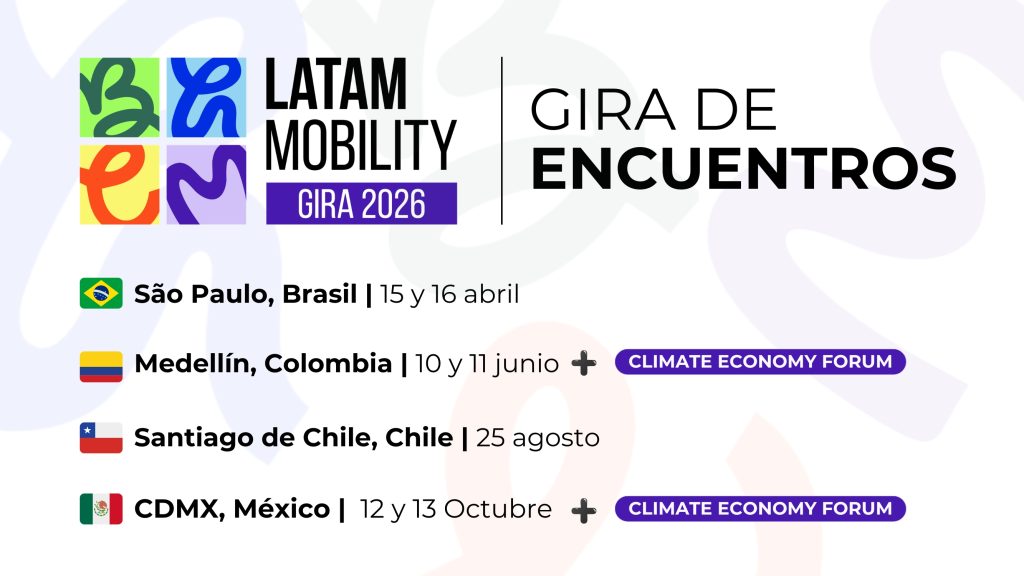
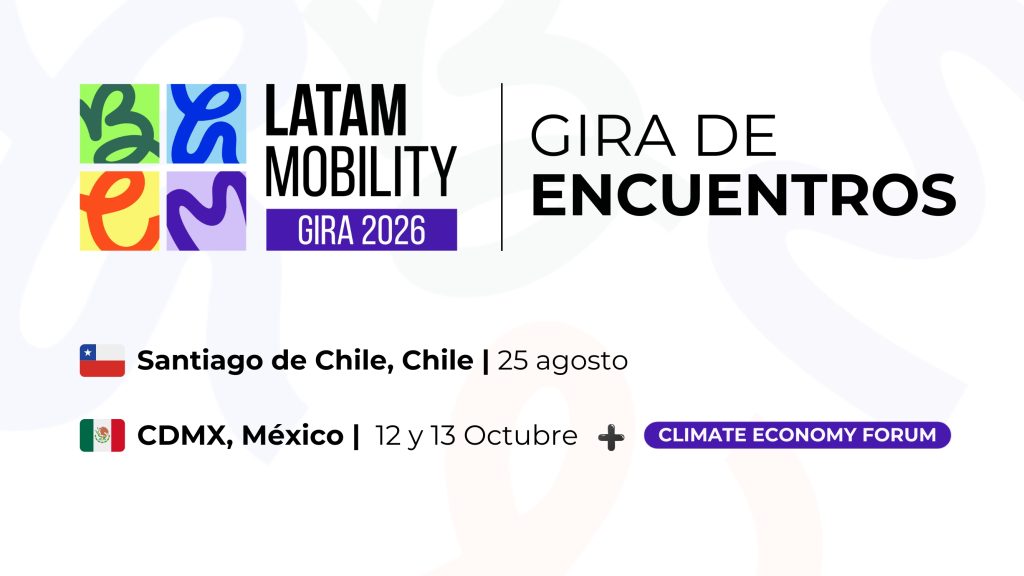
The Latam Mobility 2026 Tour continues its journey through the region. After Brazil, the tour will continue in Medellín, Colombia, on June 10 and 11, and then arrive in Santiago, Chile, on August 25, bringing together experts and strategic stakeholders to further strengthen the sustainable mobility ecosystem in the region.
The tour will conclude in Mexico City on October 12 and 13, alongside the Climate Economy Forum, at an event that will bring together industry leaders to further drive the transition to more efficient, sustainable, and low-emission transportation systems in Latin America.
The transition is already underway. The Latam Mobility Tour 2026 will be the meeting point to accelerate decisions, connect key stakeholders, and collaboratively build sustainable mobility in Latin America.