


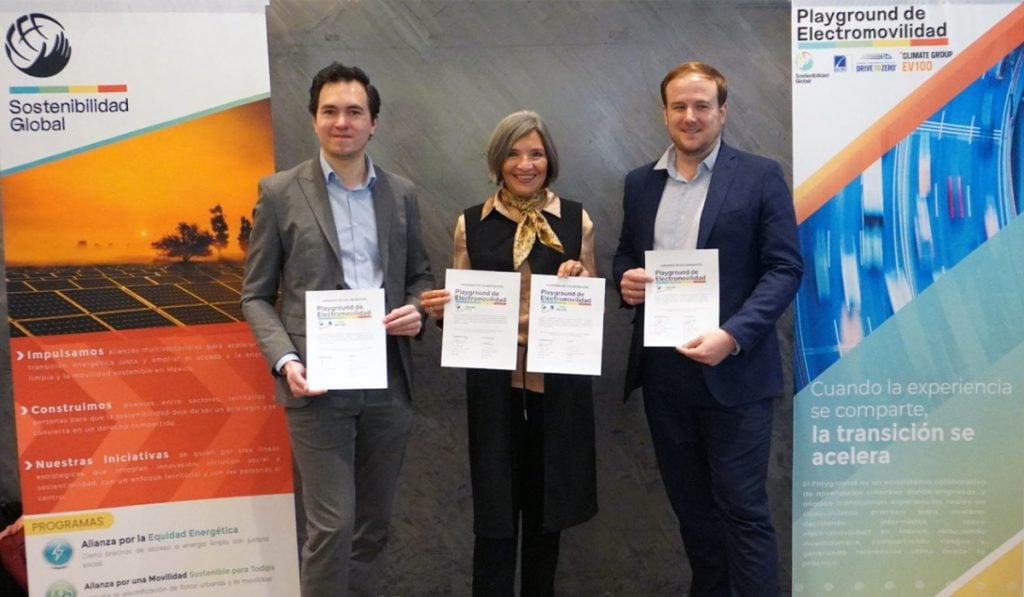
In a strategic move to decarbonize one of the most polluting segments of the transportation sector, Sostenibilidad Global, CalSTART, and The Climate Group announced the launch of the “Playground de Electromovilidad” (Electromobility Playground).
This new platform is designed to coordinate business decisions, reduce uncertainty, and accelerate the transition toward zero-emission medium- and heavy-duty vehicles in Mexico.
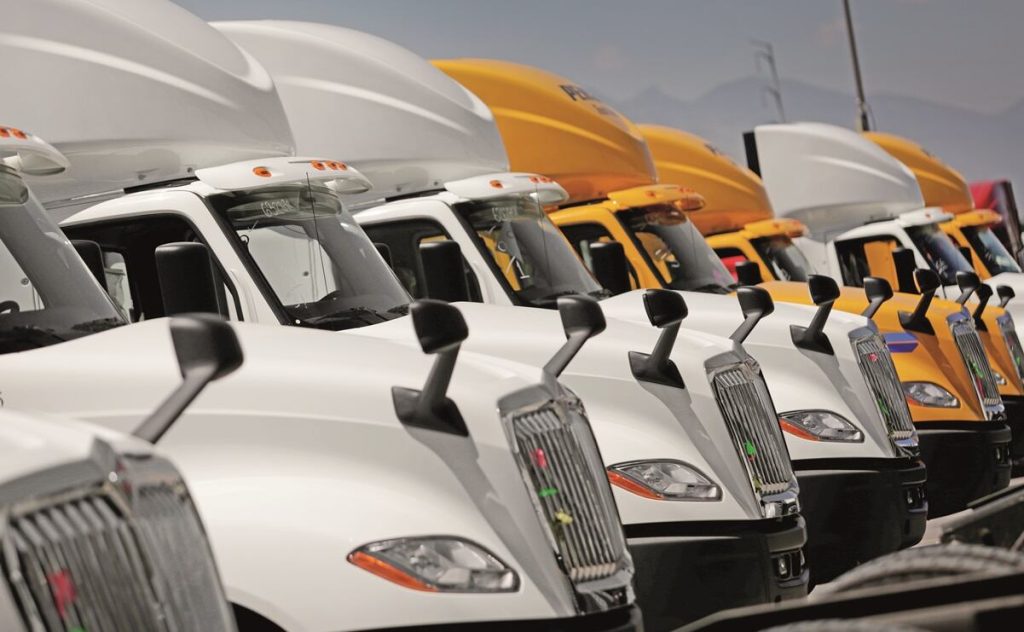
The initiative addresses a critical challenge: while trucks and buses represent approximately one-quarter of the vehicle fleet in Mexico, they are responsible for generating more than 50% of the country’s transport-related emissions.
Therefore, electrifying this segment is essential to meeting national and global climate commitments.
You might also be interested in | Mexico: Driving innovation with the new “Totally Tlaxcalteca” electric car
Collective Strategy to Mitigate Individual Risk
The “Playground de Electromovilidad” is conceived as a practical learning infrastructure, not merely as a forum or an isolated pilot project.
Its central objective is to transform real-world business experiences into shared knowledge, generating reliable local references that reduce risk in strategic decision-making for pioneering companies.
“Electromobility is not slowed by a lack of conviction, but by excessive individual risk,” said Dr. Isabel Studer, President of Sostenibilidad Global. “The Playground exists to support leading companies in coordinating this transition and turning isolated decisions into a collective strategy.”
While zero-emission vehicles can require upfront investments up to 200% higher than their conventional diesel counterparts, they offer significantly lower total cost of ownership over the long term due to savings on fuel and maintenance.
The platform seeks to help companies navigate this initial cost barrier by fostering collaboration and shared learning.
Mexico’s Ambitious Commitments
The launch of the Playground aligns with Mexico‘s recent escalation in climate ambition within the transport sector.
In November 2025, during the COP30 climate conference in Belém, Brazil, the Mexican government formally joined the Global Memorandum of Understanding on Zero-Emission Medium- and Heavy-Duty Vehicles (Global MoU).
Led by CalSTART‘s Drive to Zero initiative and co-led by the government of Colombia, the Global MoU sets the target for 100% zero-emission new truck and bus sales by 2040, with an interim goal of at least 30% by 2030.
With Mexico and Brazil as the latest signatories, the coalition now comprises 42 nations, representing nearly one-quarter of the global truck market and 40% of world GDP.
“Today we celebrate a significant milestone in our commitment to sustainability and the decarbonization of the transportation sector by signing the Global Memorandum of Understanding with CalSTART,” stated Dr. José Luis Samaniego Leyva, Undersecretary for Sustainable Development and Circular Economy at SEMARNAT at the time.
“This collaboration not only reaffirms our political will but also opens the door to new opportunities for investment, production, and innovation in zero-emission vehicles,” he added.
A Growing Market
The “Playground de Electromovilidad” initiative is launching into a market that is already showing signs of dynamism.
Currently, 25 brands operate in Mexico offering more than 60 electric commercial vehicle models, ranging from last-mile delivery vans to heavy-duty trucks and buses, with some models achieving a driving range of up to 440 kilometers.
This local progress mirrors a powerful global trend. Ricardo García Coyne, Deputy Director for Emerging Markets at CalSTART, highlighted the accelerated pace of international adoption.
“Although there are many challenges limiting this sector, internationally, electrification is advancing faster than any projection pointed to. We have seen 800% growth in electric truck sales over the last three years,” he noted.
García Coyne cited striking examples of this rapid shift: in the Netherlands, the share of electric light trucks and vans surged from 8% to 76% in just six months; Ethiopia achieved full electrification of its light truck market within two years; and for the first time in history, more than half of all trucks sold in China in December 2025 were electric.
Bringing Corporate Commitments to Life
The “Playground de Electromovilidad” will build upon the foundation laid by international corporate initiatives already active in Mexico.
EV100, led by The Climate Group, brings together companies committed to transitioning their fleets to zero-emission vehicles by 2030. Killian Dorier, Senior International Transport Manager for EV100 at The Climate Group, outlined a three-pronged strategy for Mexico.
“In Mexico, we will focus on three axes: we will work with the Playground de Electromovilidad; in the same way, we seek to integrate new EV100 members in Mexico to have a group of companies committed to the transition; and also influence public policy on the supply side,” Dorier stated.
He added that a campaign called ‘Drive Electric‘ is being activated, uniting technical, legal, and policy experts to drive change.
Mexico is already home to several ‘champions of electromobility’, companies that have begun electrifying fleets and investing in infrastructure. These include EV100 members such as AstraZeneca, Bayer, Novartis, Trane Technologies, and Unilever, as well as Global MoU endorsers like DHL, Heineken, Maersk, Scania, and Siemens.
A Path Forward
Industry leaders have praised the regional signal sent by Mexico and Brazil. Christian Levin, President and CEO of Scania, noted that mature technical solutions are already available to accelerate decarbonization.
“Brazil and Mexico demonstrate true leadership by aligning their ambitions with global zero-emission transport goals. Their commitment paves the way for coordinated public–private action to deliver tangible results,” he stated.
John Boesel, CEO of CalSTART, added that by clearly signaling their openness to business, these countries are well-positioned to attract global fleet operators, infrastructure providers, and clean technology innovators.
The “Playground de Electromovilidad” represents a crucial step in moving from commitment to coordinated action. By reducing risk for both leading companies and those ready to follow, the platform aims to build a self-sustaining ecosystem for zero-emission transport in Mexico.
This effort not only promises significant economic and operational benefits for businesses but also aligns with public policies focused on improving air quality and public health in Mexico‘s urban centers.
Stephanie Kodish, Global Senior Director of Drive to Zero at CalSTART, emphasized the broader impact: “Latin America is a key hub for clean technology and zero-emission commercial vehicles. And most importantly, local communities will benefit from the economic, operational, environmental, and climate advantages that clean trucks and buses offer.”
Monterrey, Where Mobility Takes Shape
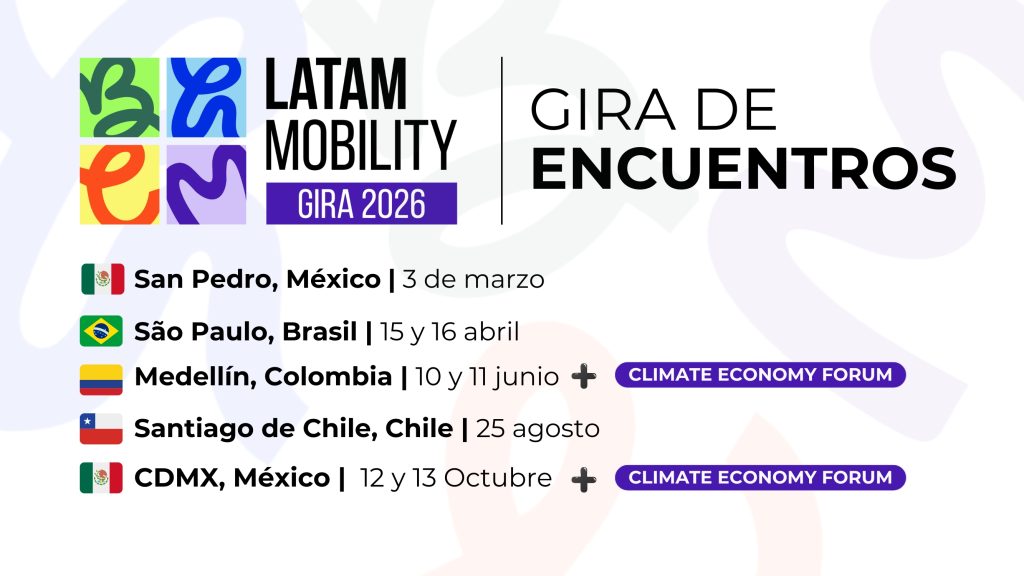
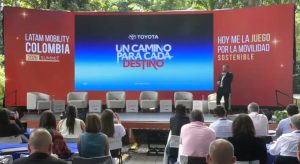
San Pedro Garza García, in Monterrey, is preparing to become the gathering point for mobility in Latin America with the hosting of “Latam Mobility North America 2026,” an international summit that will bring together sector leaders, specialists, and decision-makers next March 3rd at the San Pedro Auditorium.
This meeting will bring together more than 50 national and international experts to discuss the main challenges and opportunities in urban transport, smart cities, and sustainability. The agenda will address key topics such as electric vehicle charging infrastructure, decarbonization of last-mile logistics, project financing, and public policies for more efficient and safe mobility.
With an estimated attendance of 500 participants, “Latam Mobility North America 2026” will be a space for dialogue, learning, and collaboration, designed to generate alliances and turn ideas into concrete projects that drive the future of urban transport and establish the region as a leader in the transition towards cleaner, more sustainable mobility.
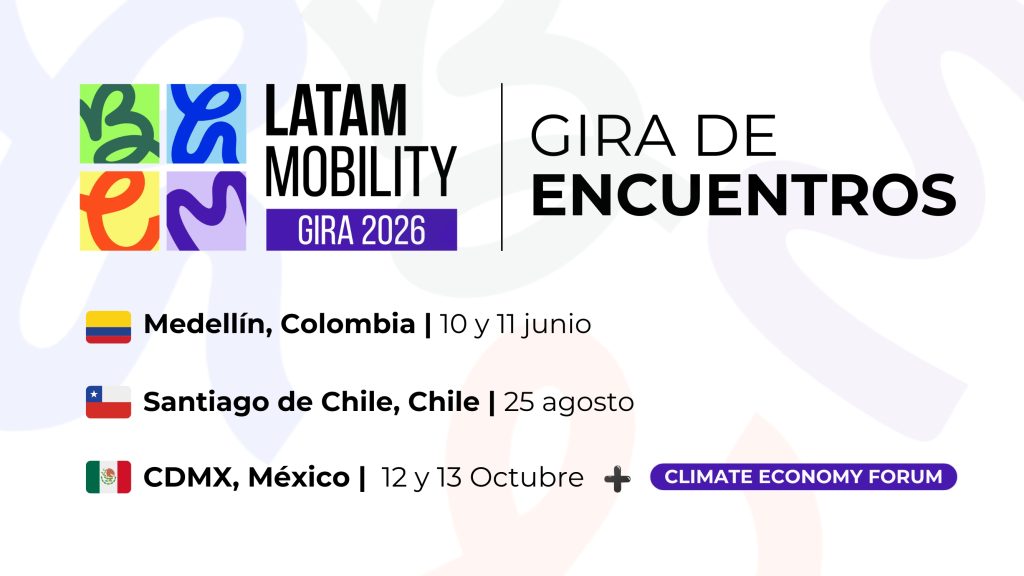
The Latam Mobility 2026 Tour will travel through some of the region’s most dynamic cities, Monterrey and Mexico City, Brazil, Colombia, and Chile, establishing itself as a unique space to connect the ideas, projects, and leaders who are transforming mobility and the climate economy in Latin America.
The transition is already underway. The 2026 Latam Mobility Tour will be the gathering point to accelerate decisions, connect key players, and collaboratively build sustainable mobility for Latin America.