


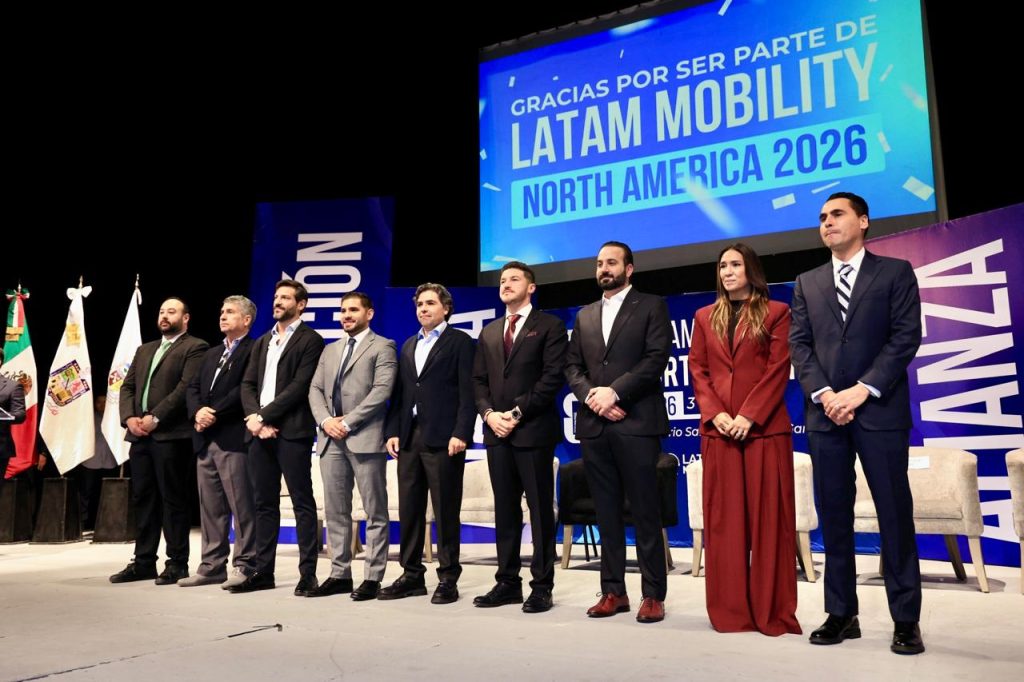
In a packed Auditorio San Pedro, the Municipality of San Pedro Garza García became the epicenter of the debate on the future of urban mobility in North America.
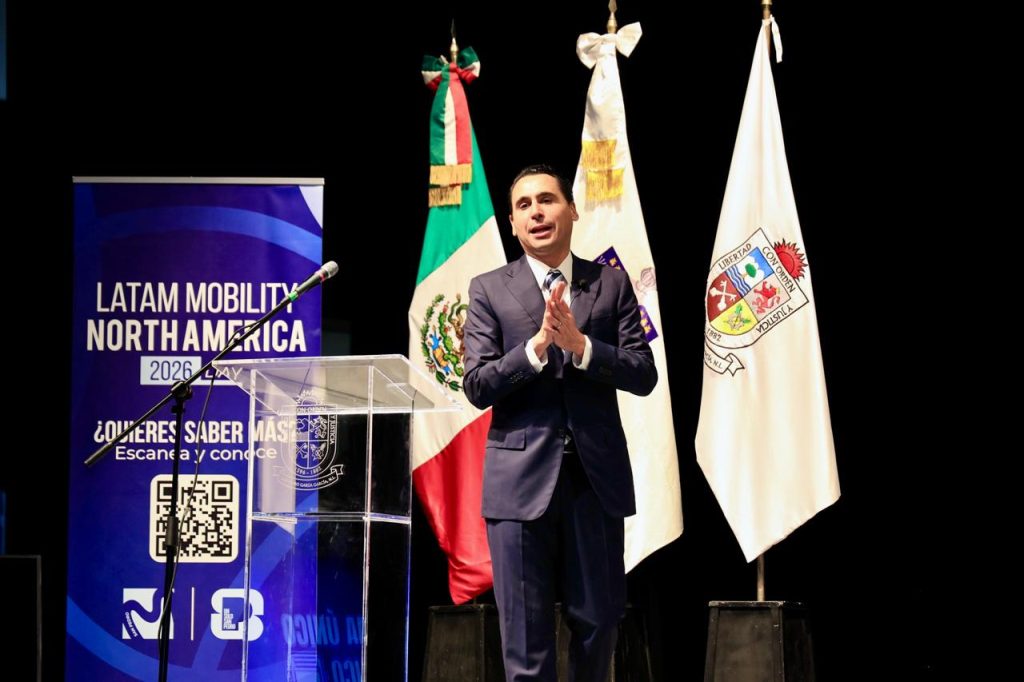
It was during the «Latam Mobility North America 2026» event that the city’s General Secretary, Luis Susarrey, delivered a presentation that not only showcased the progress of the local transportation system but also issued a profound call to action for all levels of government and the private sector: to leave behind the culture of blame and assume the ethical and moral responsibility of guaranteeing dignified mobility.
Susarrey opened his remarks by thanking Latam Mobility for choosing San Pedro as the venue, as well as regional and local authorities. He turned to a daily, yet deeply revealing image: the long lines of users at public transport stops, a scene repeated across much of Latin America that has, unfortunately, become normalized.
You might also be interested in | São Paulo Approves Law Guaranteeing Residents the Right to Install Electric Vehicle Chargers in Condominium
Camila and the Debt of Quality of Life
With the goal of humanizing the statistics, Susarrey shared the story of Camila, a 32-year-old citizen, a single mother of two young children, and a resident of the municipality. To get to her job, she spends two hours commuting each way, taking multiple buses, which forces her to wake up at 4:30 in the morning and results in her returning home after her children are already asleep.
“Can we call that quality of life?” the official questioned the attendees, underscoring that Camila’s reality is that of millions of Mexicans trapped in a system that steals their most valuable asset: time to spend with their loved ones.
Faced with this panorama, Susarrey was emphatic in pointing out the main obstacle to progress: the culture of blame. “It’s very easy for a municipality to say ‘It’s not my problem.’ It’s the State’s problem, the Federation’s, the industry’s, the car drivers’. We start with a dynamic of blame that we must replace with a dynamic of responsibility,” he stated.
In this sense, he recalled that while the Constitution and mobility laws do not obligate municipalities to have a public transportation system, there is a far more powerful obligation: “We have a moral and ethical commitment, and a demand for empathy from the people, and that is much more important.”
Circuito San Pedro: From Complaint to Action
It was precisely this conviction that led the team from the Secretary of Urban Development and the Mobility Department of San Pedro to stop looking for excuses in the law and start looking for solutions on the street.
The result is the «Circuito San Pedro» (San Pedro Circuit), the first municipal public transportation system in the history of the Monterrey metropolitan area. Susarrey detailed that this system did not emerge from nowhere but was nourished by past experiences, such as the now-defunct Circuito Valle and the first Metrovans, identifying areas of opportunity to build a robust, high-quality service.
Today, with pride, the General Secretary announced that the municipality operates a system of 19 urban transport routes that benefits 150,000 users per week. Growth has been steady: district routes were expanded to cover new areas; strategic routes were launched, such as the Ruta Naranjo, the Ruta Bosque, and circuits connecting with the Antonio de León Institute and the heart of Monterrey.
But the commitment to mobility goes beyond general public transport. Aware that mobility is a key that unlocks access to other human rights, such as education, the municipality implemented the UNIBUS program, a university transportation service that helps students get from various zones to the university institutions in Monterrey.
Furthermore, a pilot school transport program is currently underway, operating in three private schools and three public schools, a fundamental step to decongest roadways and offer safety for minors.
Breaking the Paradigm
One of the most significant achievements highlighted by Luis Susarrey is the breaking of a deeply rooted paradigm: the belief that the inhabitants of San Pedro are unwilling to leave their private cars behind.
“Of course we will get out of our cars when we have a comfortable, dignified, efficient, and safe public transportation service,” he asserted, congratulating his team for their courage and vision in demonstrating that it is possible.
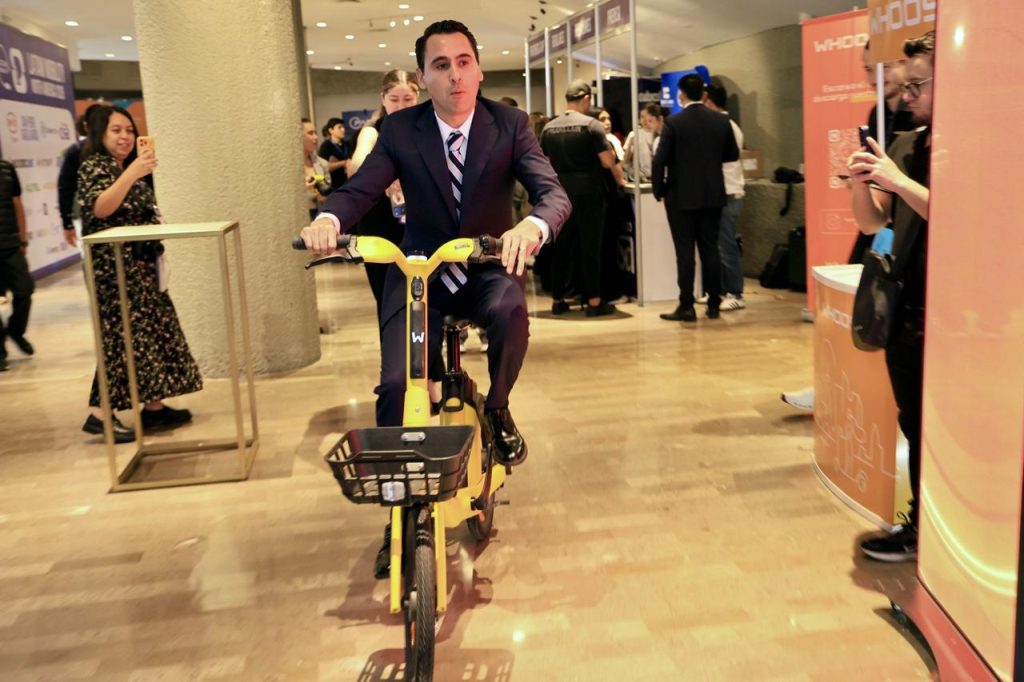
This new philosophy is materialized not only in the routes but also in the user experience. Susarrey presented the first of seven mega-stations that will be inaugurated this year, a space equipped with air conditioning, Wi-Fi, lighting, and safety features, designed to make the wait dignified and comfortable.
The future goal is to have 17 stations of this type, comparable to those in the best cities in the world, with one of the first strategically located in the Valle Oriente area, right where the problem of long lines begins.
Three Lessons for Mexico
To close his speech, the General Secretary shared three fundamental lessons learned from San Pedro’s experience.
The first is that the goal of a mobility system is not to move buses, but to give back time and dignity to people and their families. The second is that technology and globalization are indispensable tools, but the ultimate goal must be the management of the common good and the improvement of quality of life.
And the third, the most relevant for the future of the country, is that public problems are not solved with blame, but with shared responsibilities among the municipality, state, federation, and private sector.
“The problems Mexico has in terms of mobility, security, health, or the economy will be solved if we stop worrying and start taking action,” Susarrey concluded.
“We must move from complaint to action and set an example from the local level. Here, in San Pedro, we demonstrated that it is possible. We hope that what we are doing is replicated in all the municipalities of Mexico and that we achieve the change the country deserves. Because here, even though it’s not a legal obligation, it is our responsibility.”
The presentation of San Pedro Garza García as a laboratory for mobility innovation sets a precedent for the region, thanks to its management model based on empathy and responsibility.
Investment, Technology, and Policy
Rather than ambitious announcements, 2026 will be a year for measuring results. Electric and low-emission mobility will no longer be evaluated by the number of pilot projects but will be judged by its ability to operate at scale, reduce real emissions, and improve the quality of urban life.
For Latin America, the challenge will be to capitalize on its experience in electric public transportation, close infrastructure gaps, and build stable policies that allow the transition to be not only green but also inclusive and economically viable.
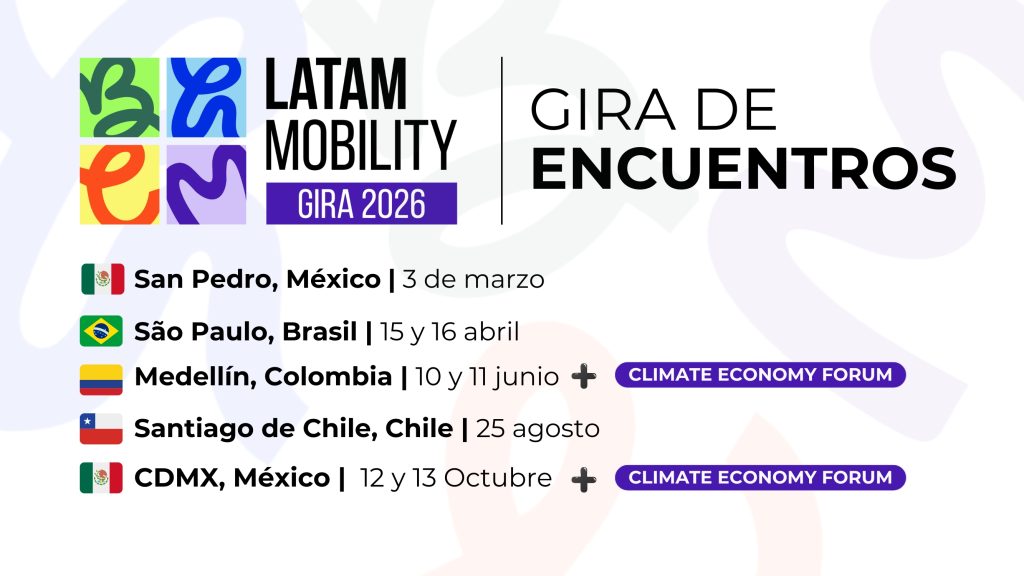
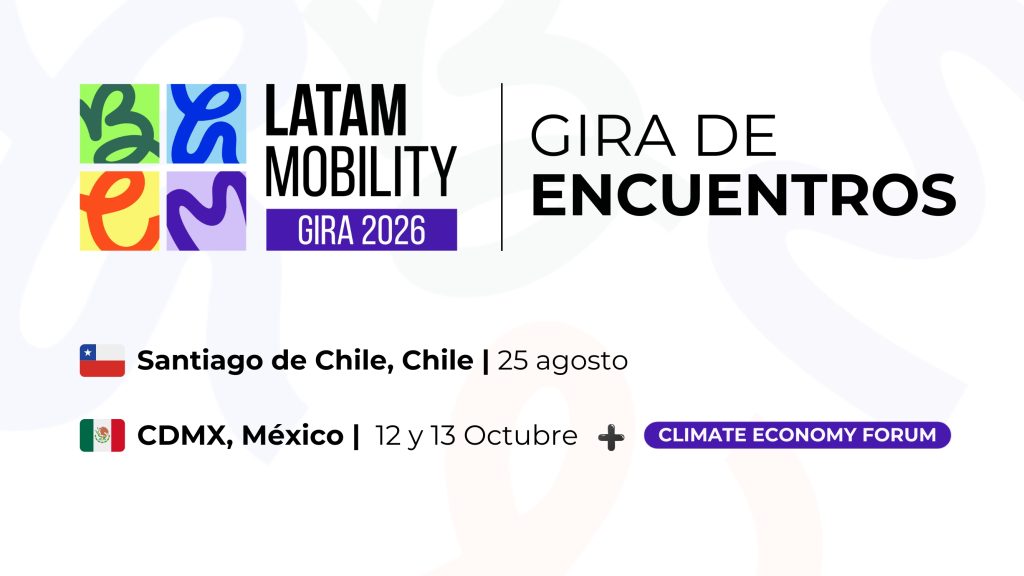
With the 2026 Tour, Latam Mobility reaffirms its commitment to building a regional agenda that connects vision, public policy, innovation, and the market.
Through its stops in Mexico City, Brazil, Colombia, and Chile, the platform will continue to promote a collaborative approach to accelerate the transition to cleaner, more efficient, and more inclusive transportation systems, positioning Latin America as a relevant player in sustainable mobility at the global level.
Be part of the movement that is accelerating Latin America’s energy and urban transformation. If you would like to learn more about how to participate and positioning options, click here.