


In a virtual meeting organized by Latam Mobility, leaders from the automotive and electrical infrastructure sectors reached a critical assessment: Colombia has all the necessary technologies to accelerate electromobility but faces major barriers in financing, energy generation, and user confidence.
The webinar, titled “Latam Mobility Colombia 2026: The Key Match of Sustainable Mobility,” moderated by Andrés García of Latam Mobility, featured Martín García from Toyota Colombia and Deibit Lozano, founder and CEO of IE Grupo (Internacional Eléctrico).
Both experts used a soccer analogy to describe the current state of the ecosystem and outlined the plays needed for the country to win the match against zero- and low-emission mobility.
You may also like | Car Sales in Colombia Skyrocket in April, Surpassing 100,000 Units
A World-Class Lineup: Toyota’s Multipathway and CIEN by IE’s Technological Bet
Martín García opened the conversation by presenting Toyota’s global strategy, which goes beyond vehicle manufacturing to position itself as an integrated mobility company. With over a decade of presence in Colombia, Automotores Toyota Colombia has adopted the Multipathway concept, offering six base technologies adapted to each country’s infrastructure, regulation, and resource conditions.
For Colombia, the company has built a “dream team” on the field: a solid defense of efficient internal combustion vehicles with Euro 5 and Euro 6 standards; a midfield led by the Corolla, Corolla Cross hybrids, and the renewed Yaris Hatchback; and a forward line headed by the Toyota bZ4X—the brand’s first fully electric vehicle in Colombia—combining a range of over 480 kilometers (WLTP cycle) with 338 horsepower and Toyota’s legendary off-road DNA.
García highlighted that 54% of Toyota’s portfolio in Colombia is already electrified and announced more surprises coming in the second half of the year, including regional developments like a flexible ethanol hybrid vehicle (from Brazil) and methane-based technologies for the agricultural sector.
Additionally, Toyota has strengthened its shared mobility services with Kinto Share (rental by the hour, day, or week) and the upcoming launch of Kinto WAN, a rental service for companies that lets corporate fleets access electrified vehicles with no upfront investment.
For his part, Deibit Lozano presented the vision of IE Grupo, a Colombian company with 30 years of experience in electrical infrastructure, generation, transmission, and energy distribution. Through its business unit CIEN, the company has established itself as an EV charging operator (CPO) and mobility service provider (MSP) with a strong focus on proprietary technology.
Lozano explained that CIEN by IE already manages nearly 40% of toll transactions in Colombia, giving it deep knowledge of the country’s road corridors and mobility patterns.
“Our lineup is set: player number 10 is the user, and around him orbit the CPO and the MSP. We want to revolutionize the user experience because today distrust is even greater than the lack of infrastructure.”

The Bottlenecks Holding Up the Match
One of the most revealing moments was the joint analysis of structural barriers holding back mass EV adoption in Colombia.
Martín García laid out a striking fact: to reach the goal of 600,000 electric vehicles by 2030, the country will need about 3.6 gigawatts of additional capacity—more than the output of the Hidroituango hydroelectric plant. “We not only need charging infrastructure, but also energy generation. Efforts must be joint: government, private sector, marketers, and users,” he warned.
Faced with this, Toyota reinforces its hybrid strategy as an immediate solution that cuts emissions without relying on a weak charging network. The company has already installed chargers at its own dealers to ensure bZ4X buyers have at least one backup point.
Deibit Lozano got even more specific: of the 450 charging points mapped in Colombia, between 25% and 30% do not work or work intermittently due to lack of maintenance, technical expertise, or connectivity problems. “That creates a broken network, and a broken network destroys trust. Users don’t know if the charger will be operational when they arrive.”
Lozano added that another critical bottleneck is the delivery of wallboxes by automakers: “They give a charger to the user, but they also give them a problem.” In residential buildings, there is no clear legislation on how to connect these devices, and building transformers aren’t sized for dozens of EVs. Europe has already been through this, and we have the chance not to repeat the same mistakes.
The CIEN by IE founder stressed that the real bottleneck is not technological but financial and regulatory. “We have the technology. The hardware is available. What is missing is trust and viable financial models to deploy infrastructure at scale. We already have a business plan for 600 connectors in the next 18 months, but we need the State to enable, not obstruct. Clear rules, real incentives, and agile permitting are required.”
Solutions in Motion: Partnerships, CAPEX, and a Network That Connects Regions
Martín García noted that Toyota includes both an emergency charger and a wallbox in the price of the bZ4X and has formed alliances to cover part of the home electrical installation. He invited skeptical users to try hybrid technology through Kinto Share—experiencing lower fuel consumption in traffic and learning about extended range exceeding 700 kilometers. “If you’re still afraid of electric, start with a hybrid. It’s the gateway to electrification.”
Deibit Lozano announced that CIEN by IE is developing a network of 100 charging stations over the next 18 months, focused on Colombia’s main road corridors to break the intercity mobility barrier. The company has identified strategic points in the toll concessions it operates and is rolling out ultra-fast charging to enable travel between cities without range anxiety.
But the most disruptive innovation is the free CAPEX model (no upfront investment): “If you have an underutilized parking space, we analyze the market, assess viability, and put in all the investment. You give us the space, and we install, operate, and maintain the charging infrastructure. That way you generate passive income while helping to build the network the country needs.” This model is already available for businesses, residential units, parking lots, and companies.
Additionally, CIEN by IE is building its own solar farms to guarantee energy availability for its charging stations, anticipating El Niño and rising electricity demand. “We cannot rely solely on the grid. We need 100% sustainable and decentralized energy.”

The Role of the State, Academia, and Tax Benefits: A Call Not to Wait on the Sidelines
Both Martín García and Deibit Lozano agreed that no single player can win this match alone. García called for maintaining tariff benefits, differentiated VAT, and withholding exemptions that currently encourage electrified vehicles and infrastructure components to enter Colombia. “Let’s not lose sight that these benefits are temporary. We must focus our collective efforts on preserving them while the ecosystem matures.”
Lozano was more emphatic: “The biggest mistake would be to wait for the State to deploy what the market is already clamoring for.” In his view, the private sector has the investment capacity and technical knowledge to accelerate the transition, but it needs clear rules—especially for charging in condominiums, grid connections, and fast-charger homologation.
“Europe has already been through this. We have the advantage of learning from their successes and mistakes. We cannot fall behind.”
Andrés García closed the segment by noting that Colombia has many “matches ahead”: energy storage, substation upgrades, electric freight fleets, and integration between renewable generation and electromobility. “It’s not just one half, but a long league. We all have to step onto the field.”
The Next Big Meeting in Medellín
The webinar ended with optimism and an open invitation to keep building solutions in person. Andrés García thanked the panelists and audience, reminding everyone that the conversation continues.
“What we’ve discussed today is only the first half. The second half will be played at Latam Mobility Colombia 2026, the most important sustainable mobility event in the region.”
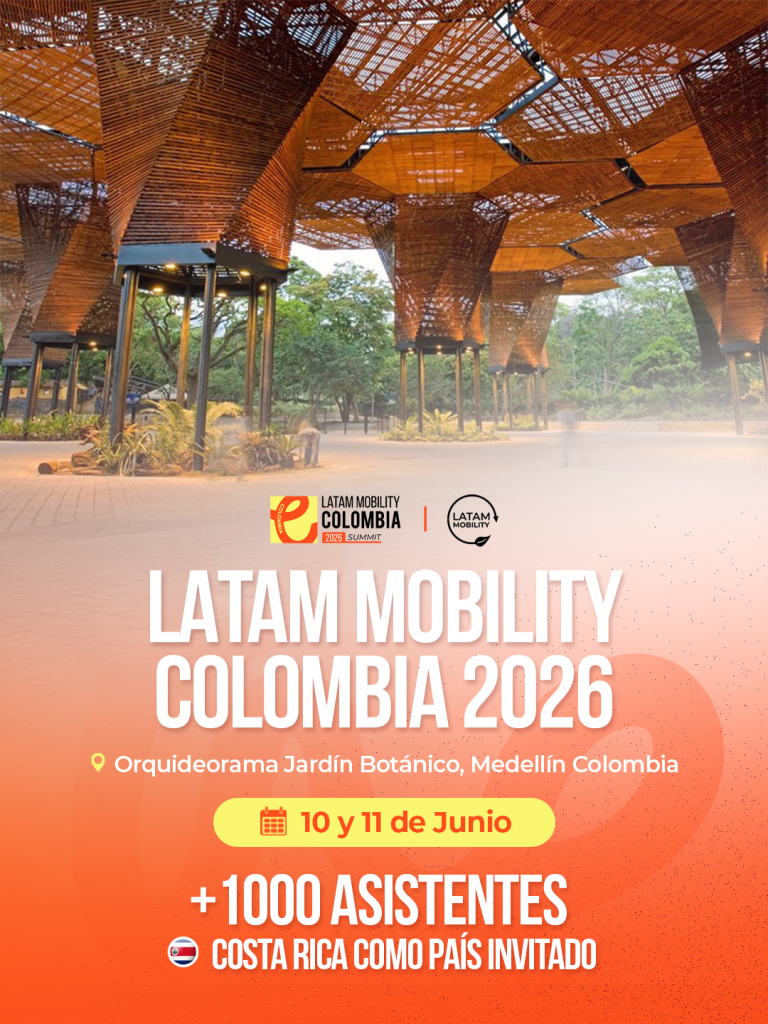
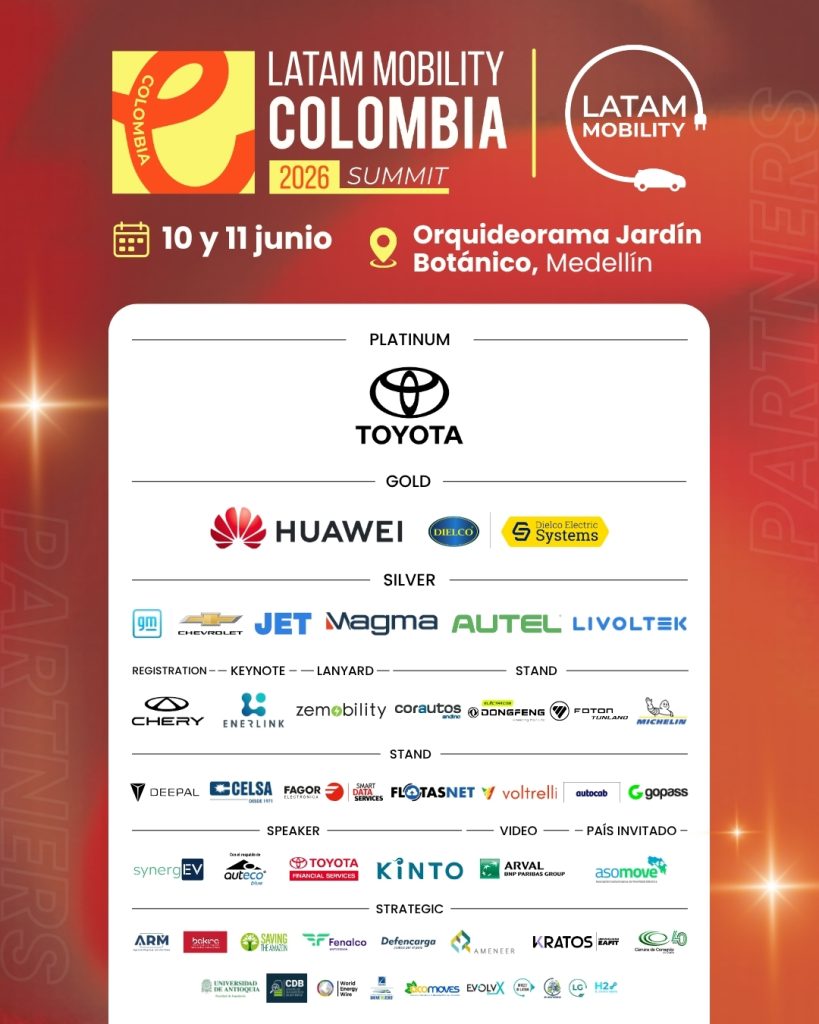
The date is June 10 and 11 at the Orquideorama of Medellín’s Botanical Garden—a natural, iconic venue hosting two intensive days of panels, workshops, networking, and the latest innovations in electric mobility, hydrogen, biofuels, and charging infrastructure.
There, Martín García and Deibit Lozano will meet again with other industry leaders, government representatives, academics, investors, and entrepreneurs.
The invitation is open to all ecosystem players: companies, fleets, condominium managers, dealers, grid operators, power generators, and citizens who want to be part of the change.
Latam Mobility aims to turn Medellín into the epicenter of sustainable mobility in the region—proving that Colombia is ready to win the mobility match of the future.