


Amid economic uncertainty, abrupt shifts in federal policies, and a persistent freight recession, fleet managers in North America are redefining their sustainability strategies.
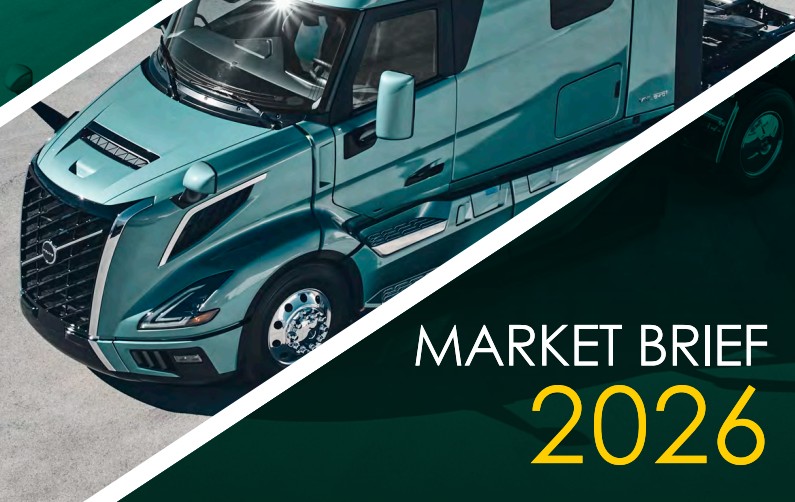
According to the seventh edition of the “State of Sustainable Fleets 2026 Market Brief,“ the industry has moved beyond the idea of betting on a single technological solution, such as full electrification, to adopt a “technology-neutral” approach.
This new paradigm is based on diversifying investments across clean diesel, natural gas, propane, and battery electric vehicles with the goal of mitigating operational and financial risks.
The report, presented during the Advanced Clean Transportation (ACT) Expo in Las Vegas, was prepared by TRC Companies (a member of WSP) and received lead sponsorship from Penske Transportation Solutions and Volvo Trucks North America, with support from Exelon Companies and S&P Global Mobility.
You may also be interested in | Visa Launches an Intelligent Corporate Fleet Management Platform With Artificial Intelligence in Mexico
A Landscape of Unprecedented Disruption
The State of Sustainable Fleets 2026 Market Brief arrives at a time that analysts call the most complex operating environment in the history of modern freight transportation.
The industry faces a convergence of pressures including a freight recession that is now extending into its third consecutive year, as well as cost increases tied to tariffs that could add up to $35,000 per new truck.
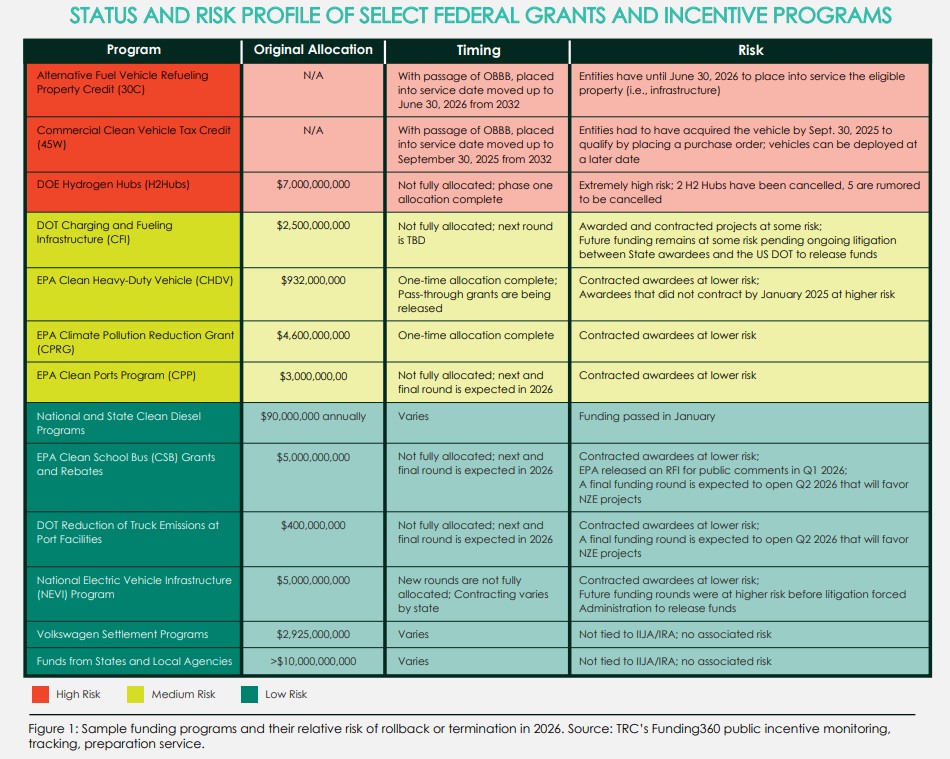
The regulatory landscape has also undergone a radical transformation: the report details the reversal of federal greenhouse gas standards for vehicles, the elimination of tax credits for zero-emission vehicles (ZEVs), which had amounted to up to $40,000 per eligible medium- and heavy-duty unit, and the cancellation of federal funds for clean transportation.
These changes have dismantled the previous federal strategy, giving way to a decentralized system driven by state policies and market factors.
Diversification as a Financial Strategy
Despite this landscape, the report does not describe an industry in retreat, but rather one in the midst of structural adaptation. The report’s central conclusion is clear: “Fleets that manage total cost of ownership (TCO) through a portfolio of propulsion technologies, rather than focusing on a single solution or waiting out the uncertainty, are demonstrating notably greater resilience.”
In an economy where external shocks can quickly alter the profitability of any technology, including conventional diesel, diversifying propulsion systems has become both a financial strategy and a risk-management imperative.
Nate Springer, vice president of market development for TRC‘s Clean Transportation Solutions group, explained this new perspective: “In a very short time, we’ve gone from asking ‘what’s the best AI-driven powertrain?’ to asking ‘how do I use each one where it works best to manage costs and uncertainty?'”
“The adoption of multiple advanced and clean technologies for medium- and heavy-duty fleets has emerged as the defining strategy, rather than the retreat that many had predicted,” he added.
Renewable Fuels and Selective Electrification
The report documents sustained growth in the use of alternative fuels. According to S&P Global Mobility data cited in the report, more than half of surveyed fleets (56%) use renewable diesel or biodiesel.
For example, in California, these two renewable fuels together displaced 74% of petroleum diesel used in transportation during 2024.
Natural gas also shows positive results. The 15-liter Cummins X15N engine completed its first commercial year with performance similar to diesel and clear cost advantages: 71% of fleets operating with this engine reported savings compared to diesel, and 59% reported savings compared to other natural gas vehicles.
Additionally, renewable natural gas (RNG) replaced 97% of natural gas used in California in the first three quarters of 2025, offering a 301% reduction in greenhouse gases compared to diesel on a lifecycle basis.
On the electrification front, registrations of medium- and heavy-duty battery electric vehicles increased 21% in 2025. The report’s findings indicate that electric trucks are delivering lower operating costs than the vehicles they replace, and adoption is concentrated in applications with predictable routes and returns to base.
Financing, AI Adoption, and Hydrogen
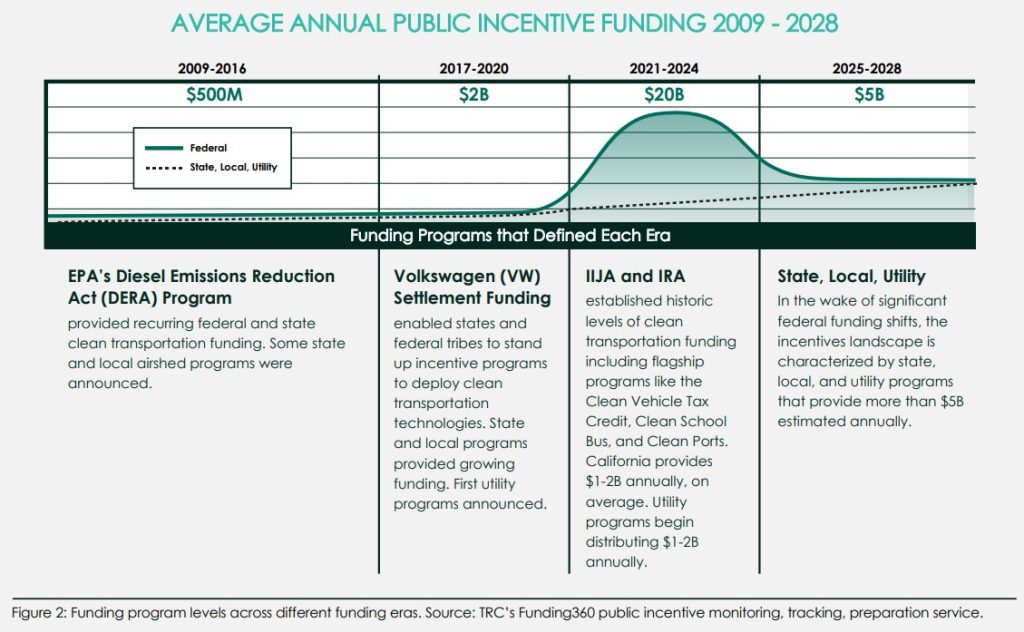
Despite federal cuts, the report estimates that more than $5 billion annually from state, local, and utility programs will remain available through 2028 to support clean fleet investment. This decentralized financing ecosystem has become a key pillar for the sector’s energy transition.
In parallel, the report highlights the rapid integration of artificial intelligence (AI) into fleet operations. Approximately half of surveyed fleets report using AI for route optimization, dispatching, predictive maintenance, and diagnostics, with users reporting cost savings, increased vehicle uptime, and better fleet utilization.
It is projected that by 2027, 35% of fleets will be AI-enabled, nearly double the estimated 20% in 2025.
In contrast to other technologies, the report notes that hydrogen remains an outlier. Costs for fleets reached $18.86 per kilogram after incentives, representing an 89% to 135% premium compared to diesel. The cancellation of federal funds for clean hydrogen hubs and the exit of two Class 8 fuel cell vehicle startups have left the segment in its most difficult position to date.
Market Maturation Continues
The State of Sustainable Fleets 2026 Market Brief concludes that, far from retreating, the sustainable fleet technologies market continues to mature. The winning strategy for facing uncertainty is no longer about searching for a miracle solution, but rather building a balanced portfolio of technologies that allows companies to successfully navigate a sea of regulatory, economic, and energy changes.
“Fleets that adopt a diversified technology strategy are better positioned to absorb tariff disruptions, federal funding cuts, and prolonged freight market weakness,” the report states.
For fleet leaders, the new norm is resilience through diversification: a balanced portfolio combining clean diesel, natural gas, propane, and electric options, managed through the lens of total cost of ownership.
Far from representing a setback for the sustainability agenda, this ‘technology-neutral’ approach is solidifying as the smartest and most pragmatic roadmap to weather the storm, ensuring that the energy transition is not only viable but also financially sustainable.
A Year of Consolidation for Mobility
The Latam Mobility 2026 Tour will continue in Medellín, Colombia, on June 10–11, and will later arrive in Santiago, Chile, on August 25, bringing together experts and strategic players to further strengthen the sustainable mobility ecosystem in the region.
The tour will conclude in Mexico City on October 12–13, alongside the Climate Economy Forum, in an event that will bring together leading figures from the sector to continue driving the transition toward more efficient, sustainable, and low‑emission transportation systems in Latin America.
The transition is already underway. The Latam Mobility 2026 Tour will be the meeting point to accelerate decisions, connect key players, and collaboratively build sustainable mobility for Latin America.
colaborativa, la movilidad sostenible de América Latina.