


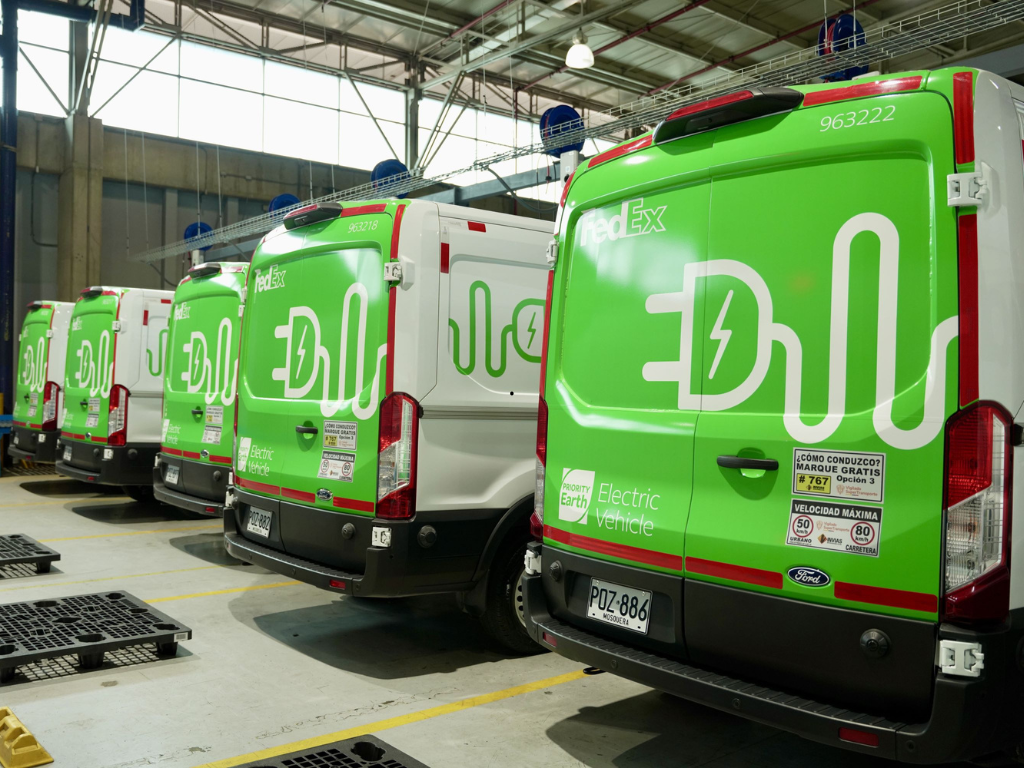
In a groundbreaking milestone for sustainable mobility in the region, Colombia’s Ministry of Transport, in partnership with the international organization CALSTART and more than 20 private-sector companies, officially presented Ruta-E: Clean Energy in Motion—the country’s first electric freight logistics corridor and one of the most extensive in Latin America.
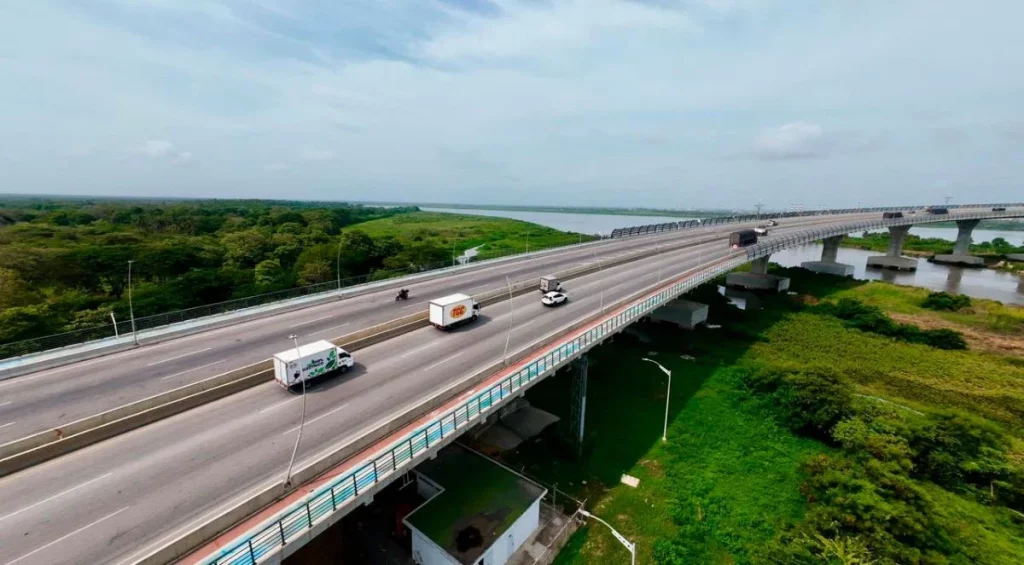
Stretching approximately 1,200 kilometers, this initiative will connect the capital, Bogotá, with the port city of Cartagena, crossing seven departments and consolidating a strategic axis that moves about 22% of the cargo transported on national corridors.
The project, recently presented in Barranquilla, aims to accelerate the decarbonization of heavy transport, reduce more than 185,000 tons of CO₂ per year by 2032, and position Colombia as a regional leader in freight electromobility.
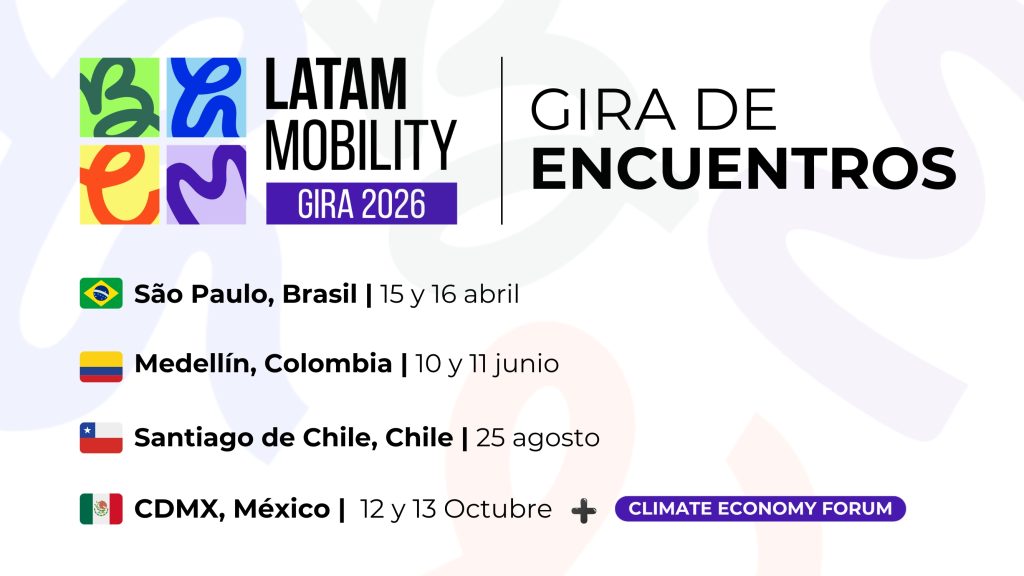
You may also be interested in | The “Latam Mobility 2026” Tour Wraps Up Its Stop in Medellín and Heads Toward Santiago de Chile and Mexico City
A Strategic Corridor That Crosses Colombia’s Productive Heartland
Ruta-E is not an arbitrary choice: it was selected following a technical evaluation that considered seven strategic logistics corridors in the country, prioritizing the one of greatest relevance for the movement of goods.
The route connects the main production centers, industrial zones, logistics platforms, and the ports of the Colombian Caribbean, crossing Bogotá D.C. and the departments of Cundinamarca, Boyacá, Santander, Magdalena, Atlántico, and Bolívar.
The route includes the nodes of Santa Marta, Barranquilla, and Cartagena, integrating territories that are fundamental to national economic activity.
As Minister of Transport María Fernanda Rojas Mantilla explained, “Barranquilla, like Cartagena, are two fundamental sites as destinations for this first electric freight corridor in Colombia.”
The choice of this axis responds to the fact that 22% of the cargo on strategic corridors moves through it, in a country where 77% of freight is moved by road.
Charging Infrastructure to Guarantee Operations
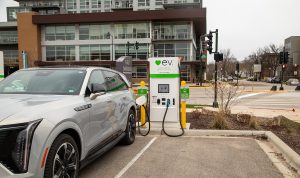
One of the pillars of Ruta-E is the deployment of a recharging infrastructure network for heavy vehicles. The project aims to guarantee the availability of charging points for electric trucks at least every 100 kilometers along the route.
To this end, the Ministry of Transport is working jointly with network operators, road concessions, and logistics ecosystem players to identify and validate strategic points for the installation of stations.
In a first phase, the initiative will concentrate efforts on two key nodes: the Bogotá-Cundinamarca corridor, considered one of the country’s main freight generation and distribution centers, and the Caribbean Node, made up of Santa Marta, Barranquilla, and Cartagena, where a significant portion of national port and logistics activity is concentrated.
According to Minister Rojas, “It is essential to start making this leap so that infrastructure, logistics, the presence of companies, credit, and many other incentives gradually materialize in Colombia.”
Ruta-E includes a schedule of progressive growth that reflects the project’s ambition, and among the stated goals are achieving 50 electric freight vehicles circulating on the corridor during 2026 and consolidating a fleet close to 1,000 vehicles between 2030 and 2035.
According to the official CALSTART press release, the goal is to mobilize more than 1,000 electric trucks along this route by 2032. The initiative is also articulated with other transportation and logistics plans, such as the railway reactivation of the La Dorada-Chiriguaná-Santa Marta corridor and the transportation opportunities associated with the Magdalena River.
The Private Sector Joins in Force
The success of Ruta-E rests on an unprecedented public-private partnership in the country. Leading companies such as TCC, DHL, BYD, Auteco Blue, Andrade Oil, Entrapetrol, and Voltrelli, along with business organizations such as LOGYCA and ACOMOVES, have already joined the initiative with the aim of advancing the electrification of freight operations, reducing investment risk in recharging infrastructure, and expanding the availability of electric trucks in the country.
Joao Meneghetti, Director of Sustainability for DHL Supply Chain in Latin America, stated: “At DHL Supply Chain, we have begun the transition of our diesel fleets toward lower-emission transportation technologies, including electric vehicles. Initiatives like Ruta-E will allow us to advance in the electrification of our fleets. “
For her part, María Paula Hoyos García, Marketing Manager of Auteco Blue (Dongfeng distributor in Colombia), highlighted: “At Auteco Blue, we are pioneers in electric mobility in Colombia. For more than five years, we have built a portfolio focused on commercial vehicles. Today, commercial electric mobility operates mainly in the last mile; Ruta-E opens the door to more operations and allows us to generate a much greater environmental impact for the country. “
Finally, the preparatory economic analyses for Ruta-E reveal a key fact for mass adoption: electric trucks can already be a more profitable alternative than their combustion equivalents, in addition to protecting companies from diesel price volatility.
This finding, combined with emissions reductions—it is estimated that the corridor will reduce more than 185,000 tons of CO₂ per year by 2032, equivalent to the emissions of 40,000 passenger vehicles—makes the initiative a solid business case from both an environmental and economic perspective.
The initiative will also draw on the experience of leading organizations in the sector, such as the International Council on Clean Transportation (ICCT) and LOGYCA.
A Year 2026 of Consolidation for Mobility
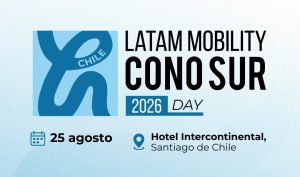
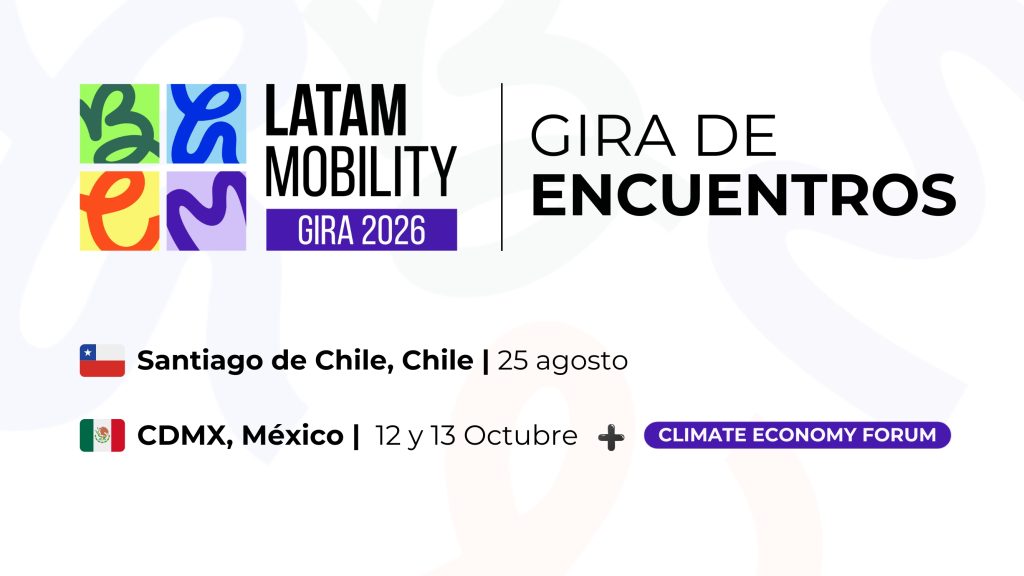
The Latam Mobility 2026 Tour will arrive in Santiago, Chile, on August 25, bringing together experts and strategic players to further strengthen the sustainable mobility ecosystem in the region.
The tour will end in Mexico City on October 12 and 13, alongside the Climate Economy Forum, in a meeting that will bring together sector leaders to continue driving the transition toward more efficient, sustainable, low‑emission transportation systems in Latin America.
The transition is already underway. The Latam Mobility 2026 Tour will be the meeting point to accelerate decisions, connect key players, and collaboratively build sustainable mobility in Latin America.