



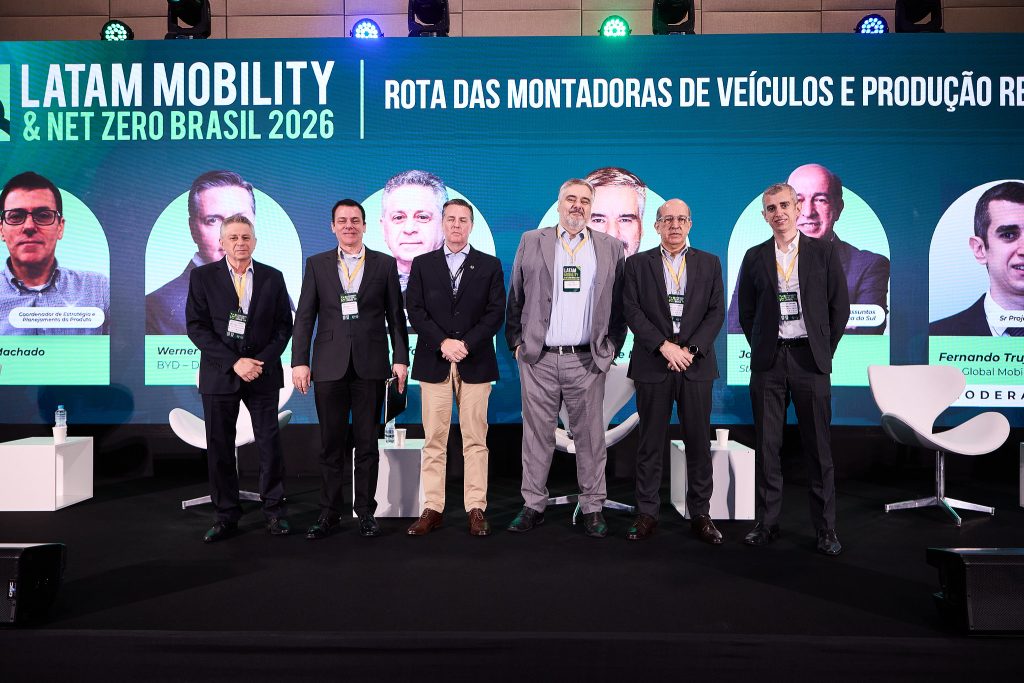
The “Latam Mobility & Net Zero Brasil 2026” summit held in São Paulo featured the panel titled “Vehicle Manufacturers’ Route and Regional Production,” moderated by Fernando Trujillo, Senior Project Consultant at S&P Global Mobility.
The session brought together leaders from the automotive industry to explore how automakers are redesigning their portfolios toward low- and zero-emission vehicles, integrating regional value chains, and seizing the opportunities of neo-industrialization in Brazil and Latin America.
The moderator opened the debate by noting that sustainable mobility is not limited to the vehicle itself but encompasses a complete ecosystem that includes factories, suppliers, services, data, and operation. Facing this challenge, each company present shared its vision and concrete advances.
You may also be interested in | Sustainability and renewable energies: Latam Mobility calls for a dialogue space to define the course of mobility in Chile
BYD: Democratization and Technology Transfer
Werner Schaal, Commercial Director of BYD – Denza Brazil, highlighted the company’s commitment to electric mobility and clean energy. The company has nearly one million employees worldwide, 120,000 of them engineers, and registers 45 patents per day.
In Brazil, the company has four factories (buses in Campinas, photovoltaic panels, batteries in Manaus, and the recent automobile plant in Camaçari, Bahia), dedicated exclusively to electric and electrified vehicles.
Werner Schaal noted that the BYD Dolphin Mini has been the best-selling electric vehicle in Brazil over the past two months, demonstrating Brazilian consumers’ openness to new technologies.
“More than 50,000 vehicles have already been produced in Bahia, with plans for a second and third shift, and up to 20,000 direct and indirect jobs are expected. Furthermore, we announced an investment of 300 million reais in a development center in Rio de Janeiro, focused on autonomous driving and real technology transfer for Brazilian engineers,” he stated.
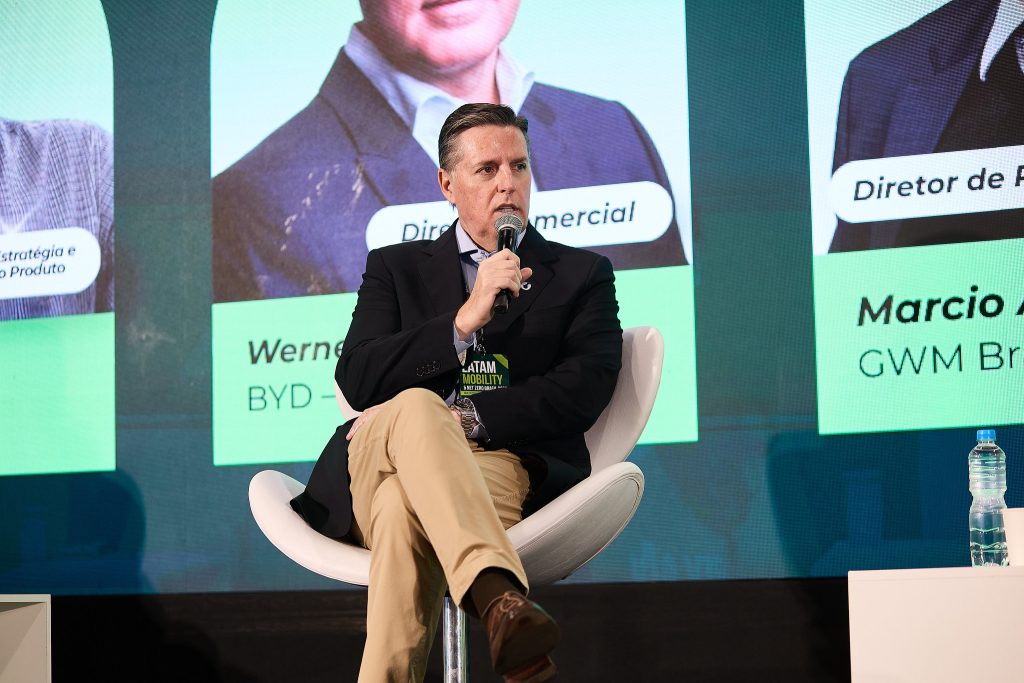
GAC: A Realistic Reading of the Market
Alex Machado, Coordinator of Strategy and Product Planning at GAC, explained that the company arrived in Brazil with a mostly electric portfolio and one hybrid, but recently launched an internal combustion vehicle (GS3) .
The reason, according to Alex Machado, is a pragmatic reading of the Brazilian reality: until 2030, a significant portion of the market will not be able or willing to access an electrified vehicle, due to price, technological resistance, or uncertainty about resale value.
“Our priority is to install the factory as soon as possible and achieve national manufacturing. In the meantime, we offer a combustion vehicle that meets the most stringent emissions standards (stage starting in 2027) and, by replacing older vehicles, helps reduce urban pollution and generates cash flow to continue investing in electrification,” he detailed.
Alex Machado recalled that the average age of the Brazilian fleet is approximately 11 years, much higher than in developed countries, so any replacement with a cleaner vehicle has an immediate positive impact on city health.
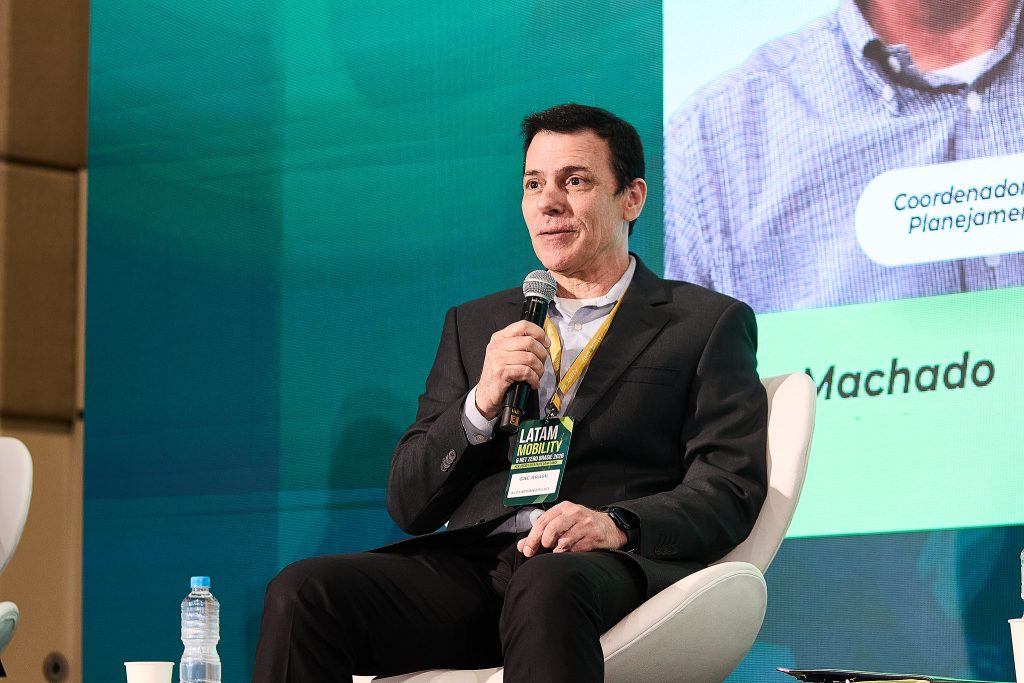
Stellantis: Balance and Commitment
João Irineu, Vice President of Regulatory Affairs for South America at Stellantis, began by highlighting the magnitude of the company’s operation in Brazil. With more than 900,000 vehicles produced locally and sales exceeding one million units in the region, the company has a portfolio ranging from segment A to premium, with more than 100 models and versions.
João Irineu emphasized that the average localization rate of its vehicles exceeds 80% , mobilizing a chain that goes from mining to recycling.
“We need to find an environmental, economic and social balance. That is why we distribute different technologies: biofuels such as ethanol, Flex systems, hybridization at different levels, and 100 percent electric vehicles,” he explained.
The executive recalled that Brazil has state regulatory frameworks, such as Inovar-Auto, Rota 2030 and the recent Mover program, which have achieved a 35% reduction in CO2 emissions between 2017 and 2027. “This is an example for the world of how to decarbonize without generating economic and social disruptions,” he stated.
GWM: Sustainable Growth and Domestic Production
Márcio Alfonso, Director of Production and Innovation at GWM Brazil, detailed the company’s trajectory, which has more than 40 years of experience in China with proprietary technology in batteries, propulsion systems, and artificial intelligence.
GWM began manufacturing in Brazil in August 2025, and has already produced more than 7,300 vehicles at its Iracemápolis plant, with a current capacity of 120 units per day.
“We produce four versions of the Haval H6, three of them plug-in hybrids and one conventional hybrid, in addition to the H9 diesel and the Power pickup. We do not seek to be leaders in volume, but rather sustainable growth,” said Márcio Alfonso. The company already has more than 60 direct local suppliers and more than 100 indirect ones, covering more than 1,010 items produced in the country.
Regarding the challenges of scale, Márcio Alfonso compared the evolution of Brazil and China: while the purchasing power of Brazilian workers has stagnated at around 3 dollars per hour, the Chinese grew from less than 3 to 8 or 9 dollars per hour, driving an internal market of 34.5 million vehicles annually.
“To grow, we need to discuss the tax burden. Cars have become more expensive and the volume of popular cars is falling. If we incentivize production with clean technologies and reduce taxes in a stable manner, the industry reacts quickly,” he proposed.
PARAR Institute and the Role of Academia
Milad Kalume Neto, professor and market consultant at the PARAR Institute, offered a critical view of the local supply chain. While Brazil is the main production and sales hub in South America (three times more than Argentina and six times more than Chile), he warned that the auto parts industry has lagged behind following the market closure in past decades.
“Many companies trained to produce 4 million vehicles, but the market stagnated at 2.4 million. Idle capacity hinders investment in new technologies,” he explained.
Milad Kalume praised initiatives such as GWM’s open call to local suppliers and highlighted that there are domestic battery developments at Unicamp and hydrogen developments at USP that are little known.
“We need to unite the public, private and academic sectors so that the national industry, created in 1957, is not lost. The sales mentality, consumer profile and technical training must change to keep up with the car of the future, which is a smartphone on wheels,” he stated.
Common Challenges
Throughout the panel, participants agreed on several critical points. The first is the need to achieve production scales that allow reducing costs and encouraging investment. João Irineu recalled that while Brazil produces around 2.4 million vehicles per year, China produces 22 million and the United States 18 million. “Without mechanisms to increase local production with local suppliers, it is difficult to keep up with the technological pace,” he warned.
The second point is regulatory predictability. Executives called for long-term state policies, not short-term measures, so that companies can plan investments.
The third point is the training of engineers and technicians. João Irineu noted that the automotive industry has lost glamour among young people, and that professionals capable of developing embedded electronics, cybersecurity and electric propulsion systems are needed.
“Today’s car has 40 electronic control units, and in five years it will have only three. That means enormous simplification, but also a complete reconversion of the supply chain. We have to make this transition quickly but responsibly, without generating disruptions,” explained the Stellantis executive.
Towards a Regional Hub for Sustainable Solutions
In their conclusions, the panelists agreed that Brazil is already a regional hub, but must strengthen its internal market and its integration with South American neighbors before thinking about massive exports.
Werner Schaal made it clear that the company is not only betting on electrification, but also on democratizing this technology in the Brazilian market. “At BYD we not only industrialize the car, but we bring cutting-edge technology to develop local solutions,” reaffirming the commitment to sustainable neo-industrialization in Brazil.
For his part, Alex Machado, representative of GAC, presented a pragmatic and realistic vision of the energy transition in Brazil. “Replacing a vehicle with a cleaner, more accessible product is a real contribution to reducing urban pollution. Decarbonization in Brazil must be possible, not utopian,” emphasized the executive.
Milad Kalume summarized: “First, strengthen the internal market, despite macroeconomic problems. Second, strengthen the relationship with our neighbors. Third, then think about exporting the production surplus. Today we are the main hub in South America; we must use it to our advantage.”
Fernando Trujillo, moderator, closed by thanking the panelists and highlighting that, despite the challenges of scale, taxation and talent training, the automakers present are investing in factories, technology transfer and local development, laying the foundations for Brazil to lead sustainable neo-industrialization in the region.
The Agenda to Decarbonize Transport
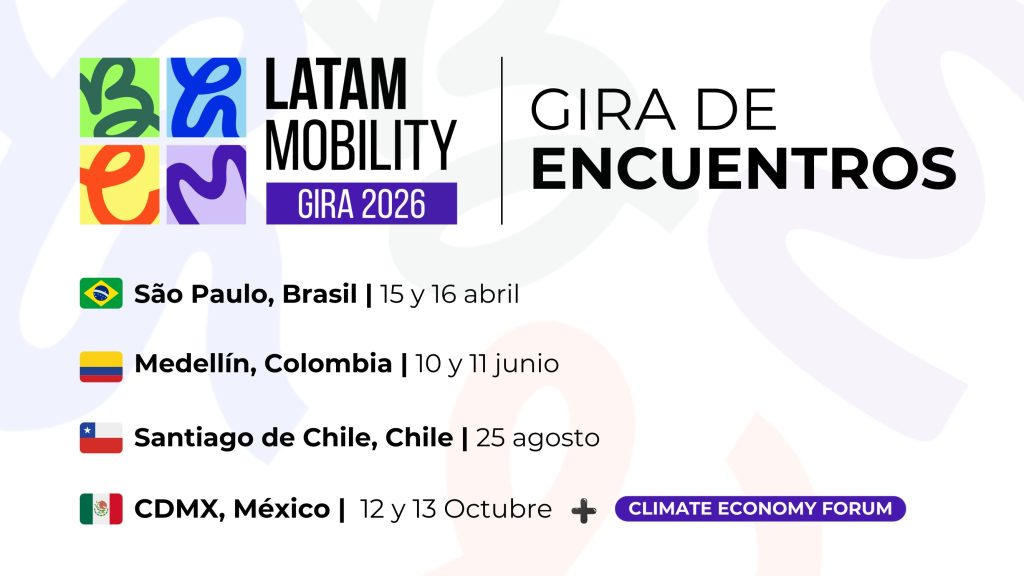
Latam Mobility promotes dialogue among the main players in the sector throughout its 2026 tour, which will visit the region’s key markets to delve deeper into these and other crucial issues for the transformation of mobility.
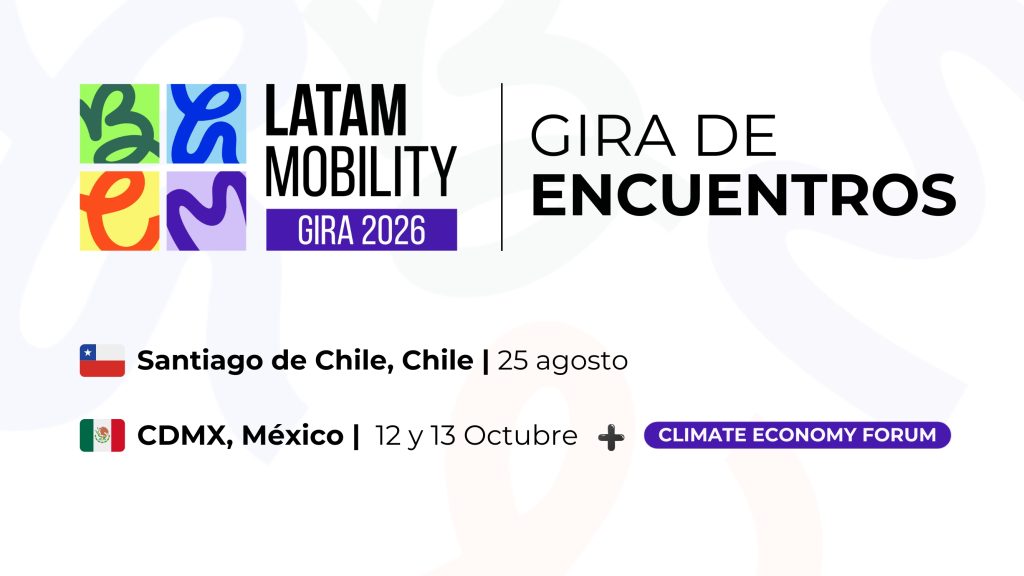
The Latam Mobility 2026 Tour will travel through some of the region’s most dynamic cities, Mexico City, Brazil, Colombia, and Chile, establishing itself as a unique space to connect the ideas, projects, and leaders who are transforming mobility and the climate economy in Latin America.
The transition is already underway. The 2026 Latam Mobility Tour will be the gathering point to accelerate decisions, connect key players, and collaboratively build sustainable mobility for Latin America.