



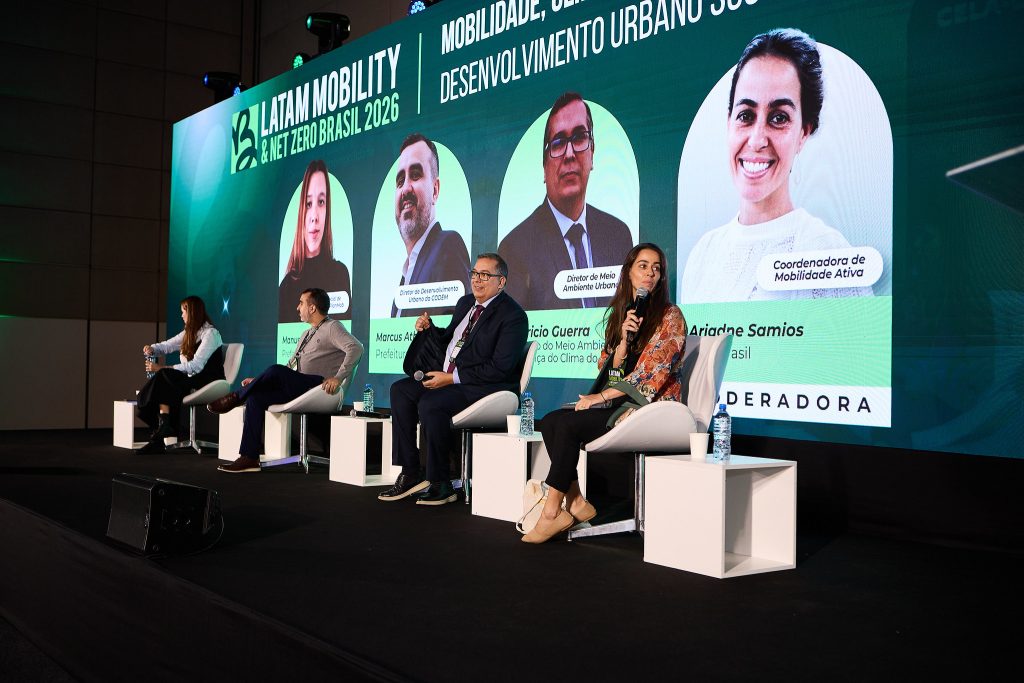
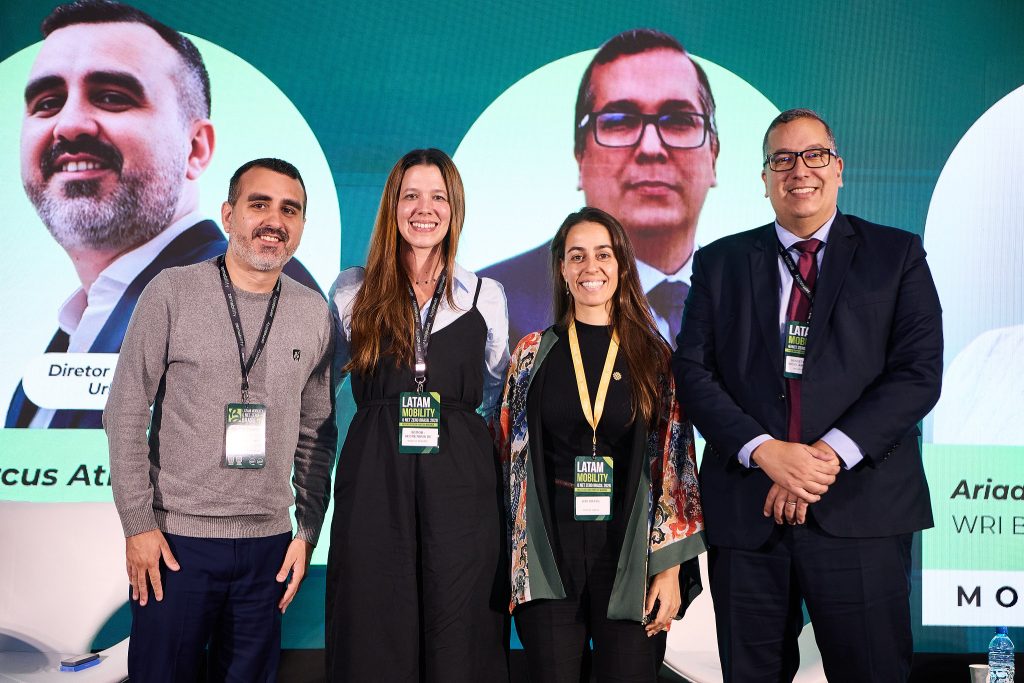
As part of “Latam Mobility & Net Zero Brasil 2026” held in São Paulo, the panel “Mobility, climate, and city: Integrating solutions for sustainable urban development” brought together representatives from Salvador, Belém, and the Federal Government of Brazil.
The conversation, moderated by Ariadne Samios of WRI Brasil, highlighted the urgent need to create cross-sector policies that combine active mobility, green infrastructure, and climate adaptation to build more resilient, fair, and livable cities.
The discussion took place under the Mutirão Brasil program, an initiative led by C40 together with Gecon and supported by Bloomberg Philanthropies, which aims to give Brazilian municipalities a leading role in implementing climate change projects.
Panelists agreed that active mobility and nature-based solutions (NBS) cannot follow separate paths — they must be integrated from design to execution.
You may also be interested in | Power Pooling, DC Storage, and 720 kW Chargers: Huawei’s Portfolio for Electric Bus Fleets
Salvador Bets on Bike Lanes and NBS
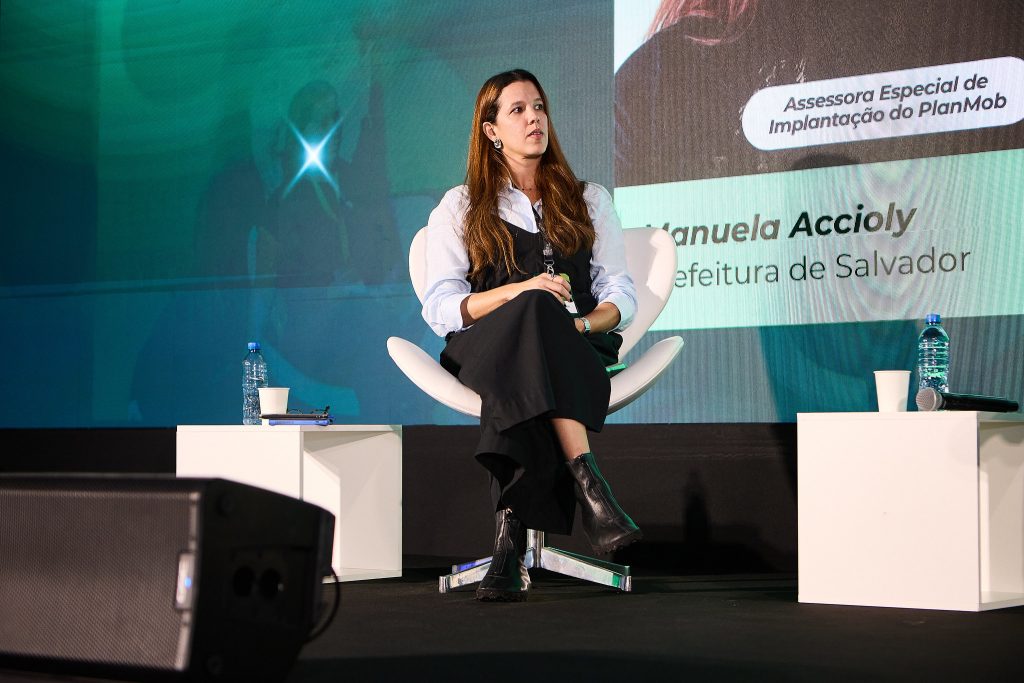
Manuela Accioly, architect and urban planner who coordinates the active mobility agenda at the Salvador Mobility Secretariat (Semob) , shared her city’s progress.
She explained that Salvador already has a solid bike lane plan delivered in 2024, including diagnosis, goals, and clear premises. However, the main challenge has been governance and intersectoral integration within the municipality itself.
“We published a decree creating an intersectoral committee with participation from strategic secretariats, such as Sustainability. Our mission is to move forward in a coordinated manner to implement the plan,” said Accioly. Thanks to support from the Mutirão program, Salvador is developing a model project on a complex connection: Avenida Mario Leal Ferreira, which links to a transport station and a strategic region like Iguape.
For one year, the team will work on a project that incorporates nature-based solutions, green infrastructure, drainage, filtration, and tree planting along the bike path network. The hope is that this pilot experience can be replicated across the existing network.
“We want to show the population — and the administration itself — not only that this is possible, but how necessary it is to coordinate planning,” she stated.
Belém Transforms its Historic Center
Marcus Athayde, architect and urban planner, Director of Urban Development of Belém, presented the Belo Centro plan, an ambitious requalification of the historic center of the Amazonian city. Athayde described a chaotic scenario: narrow streets, informal occupation, roads invaded by vehicles, and constant flooding due to the tide level — worsened by climate change.
“The historic center of Belém is on a floodplain. Our challenge is to transform this space, where pedestrians literally share the road with cars,” he explained. The strategy includes creating large pedestrian walkways, applying tactical urbanism, and organizing informal workers.
Athayde also highlighted that COP30 left a tangible legacy: the renewal of 30% to 40% of the public transport fleet, including electric buses.
“Active mobility is a fundamental pillar for rescuing and rehabilitating the historic center,” he stated. He also mentioned that the historic center is the neighborhood with the fewest trees, so they are working with the Environment Secretariat on a tree planting plan to ensure thermal comfort for pedestrians.
Athayde acknowledged that changing the paradigm of a city where “everyone drives a car” is an ongoing task — even within city hall itself — but he is confident that with support from WRI Brasil and C40, they will be able to run street closure tests on upcoming holidays.
Federal Government Mobilizes Record Financing
Mauricio Guerra presented the vision of Brazil’s Ministry of Environment and Climate Change, emphasizing that the climate agenda is a national priority. He reminded the audience that Brazil has committed to reaching net zero emissions by 2050, with ambitious deforestation reduction targets (53% less emissions compared to 2022, and 99% reduction in indigenous lands).
He also highlighted the creation of 17 sectoral adaptation plans and 7 mitigation plans, including one specifically for cities.
Guerra underscored that Brazil’s new Nationally Determined Contribution (NDC) incorporates the CHEMP commitment, which requires that planning, actions, and climate financing be shared with states, municipalities, and civil society. “It makes no sense to prepare the climate agenda without municipalities,” he stated.
Under the Green and Resilient Cities program, the ministry is promoting three major integrated axes: sustainable urban mobility, nature-based solutions, and green areas and urban tree planting. The goal is to achieve an additional 180,000 hectares of green coverage in Brazilian cities by 2035 — equivalent to at least 30% green coverage.
On financing, Guerra announced that the Climate Fund went from 300 million reais in 2022 to 27 billion reais in 2026. These resources are available for sustainable energy, active mobility, electric mobility, tree planting, and nature-based solutions. Additionally, nearly 20 million reais in non-repayable funds will be allocated this year for the Arboriza Cidade program.
The ministry also launched the Adapta Cidade initiative, which provides for the preparation of 581 local climate adaptation plans. And to make access to resources easier, they created a project bank open until April 19, 2026, where cities, states, and consortia can submit initiatives in the six axes of the Green and Resilient Cities program. In the first call, demand exceeded 10 billion reais.
Governance, Transversality, and Paradigm Shift
Ariadne Samios, moderator and Active Mobility Coordinator at WRI Brasil, closed the panel by asking: what needs to change in municipalities so that adaptation and resilience projects are born already integrated?
Manuela Accioly responded that the main challenge is raising awareness among municipal managers. “An adapted city is also a city that mitigates. We need to understand that mobility is not just transportation — especially when we talk about active mobility. The secretariats must speak the same language,” she stated.
She gave a concrete example: “In Salvador, if a bike path isn’t tree-lined, people won’t bike because of the heat. We need the sustainability and mobility secretariats to talk to each other and match resources.”
Accioly insisted that urban design sends a message to citizens. “A city with good, wide, tree-lined sidewalks is saying that people should walk. A connected and safe bike path network says they should bike. Today, 80% of the roads are occupied by cars. We must combat this perverse hierarchy.”
For his part, Marcus Athayde warned about the risk of repeating mistakes in small cities. He gave the example of Soure on Marajó Island, which installed its first traffic light with great fanfare — when traffic was minimal. “We are repeating the same mistakes. We are not looking at small cities,” he lamented. He reiterated the need to facilitate access to financing and to work on raising awareness from the mayor down to the staff (frontline workers).
Mauricio Guerra closed by emphasizing the need to invest in policy transversality and in using future data, not just past data. “Properly preparing municipalities to minimize loss of life and damage is fundamental. It requires commitment from managers, technical training, creativity, and boldness in the use of resources,” he concluded.
The City as an Integrated System
The panel left a clear conclusion: sustainable mobility is not an isolated issue but the result of an integrated vision where climate, nature, and urban design converge.
The experiences of Salvador and Belém, backed by the technical support of WRI Brasil and the financing and coordination of the Ministry of Environment, show that it is possible to move toward greener, more resilient, and more humane cities.
Ariadne Samios summed up the spirit of the meeting: “The city shows who is prioritized. Our policies and actions must give prominence to the people who walk, bike, and use public transport. That is true integration for sustainable urban development.”
The Agenda to Decarbonize Transport
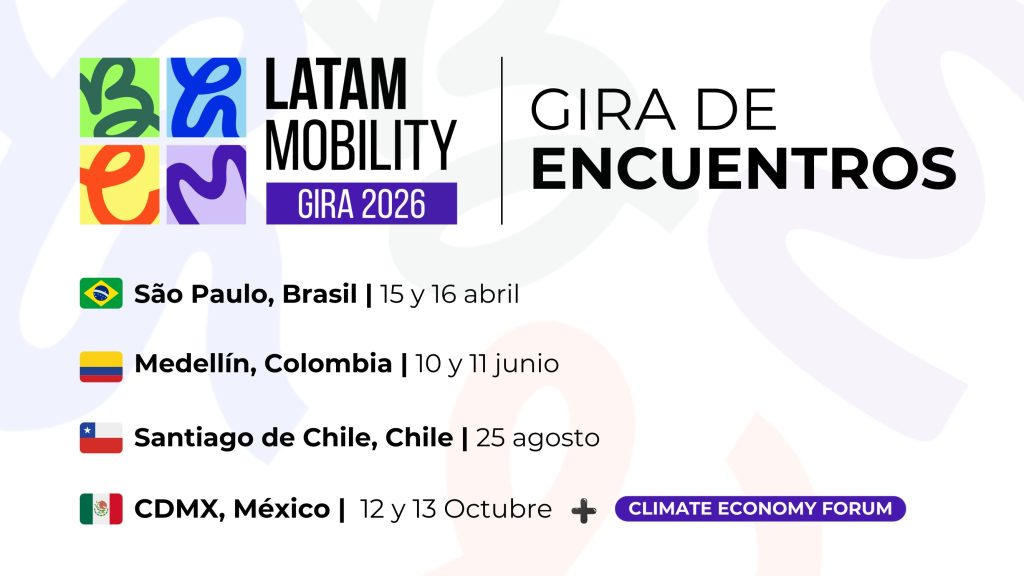
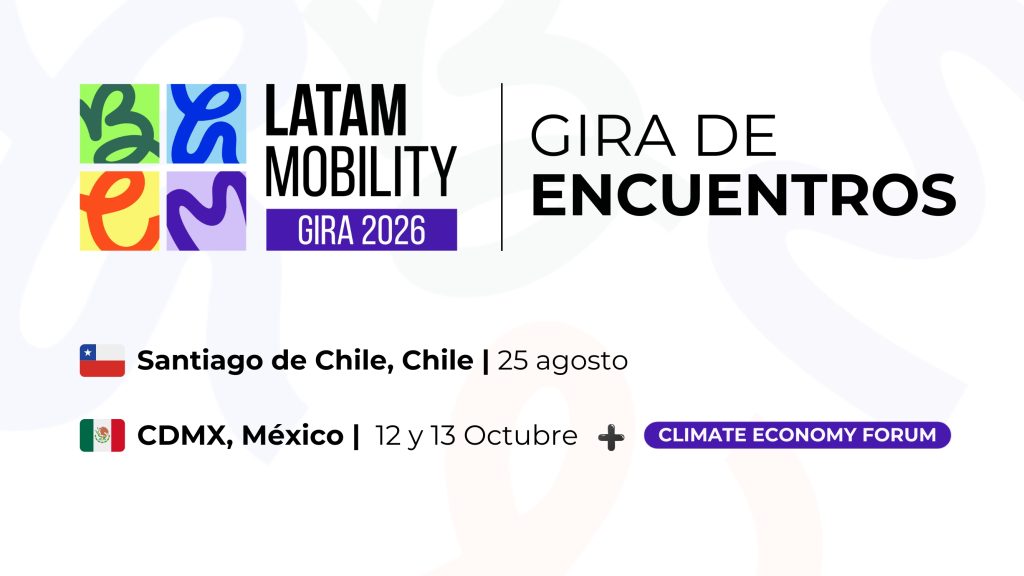
Latam Mobility promotes dialogue among the main players in the sector throughout its 2026 tour, which will visit the region’s key markets to delve deeper into these and other crucial issues for the transformation of mobility.
The Latam Mobility 2026 Tour will travel through some of the region’s most dynamic cities, Mexico City, Brazil, Colombia, and Chile, establishing itself as a unique space to connect the ideas, projects, and leaders who are transforming mobility and the climate economy in Latin America.
The transition is already underway. The 2026 Latam Mobility Tour will be the gathering point to accelerate decisions, connect key players, and collaboratively build sustainable mobility for Latin America.