



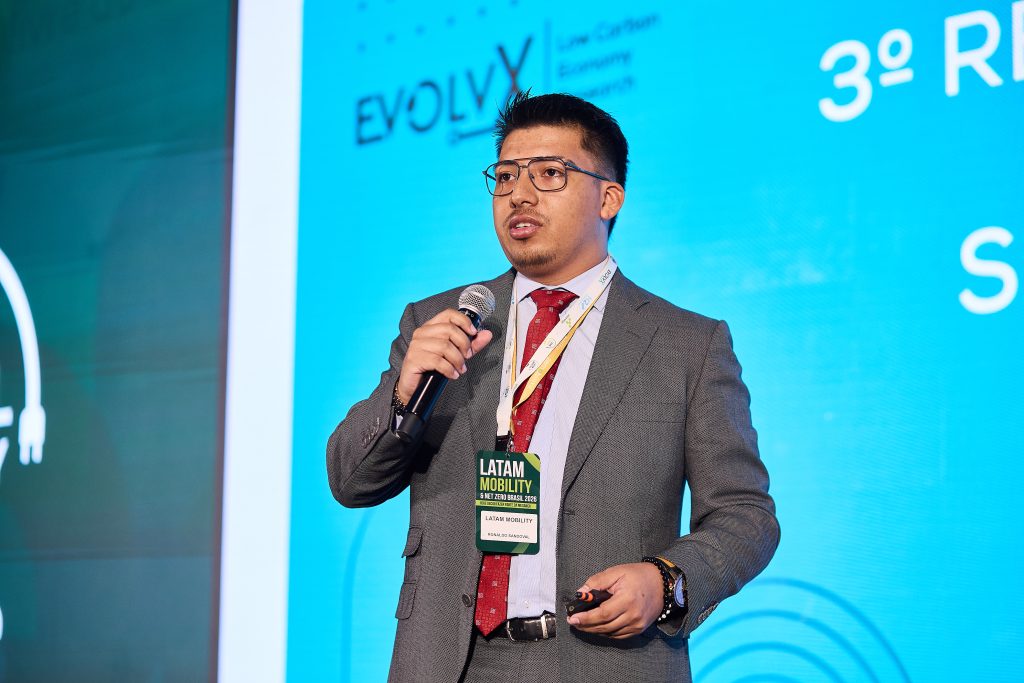
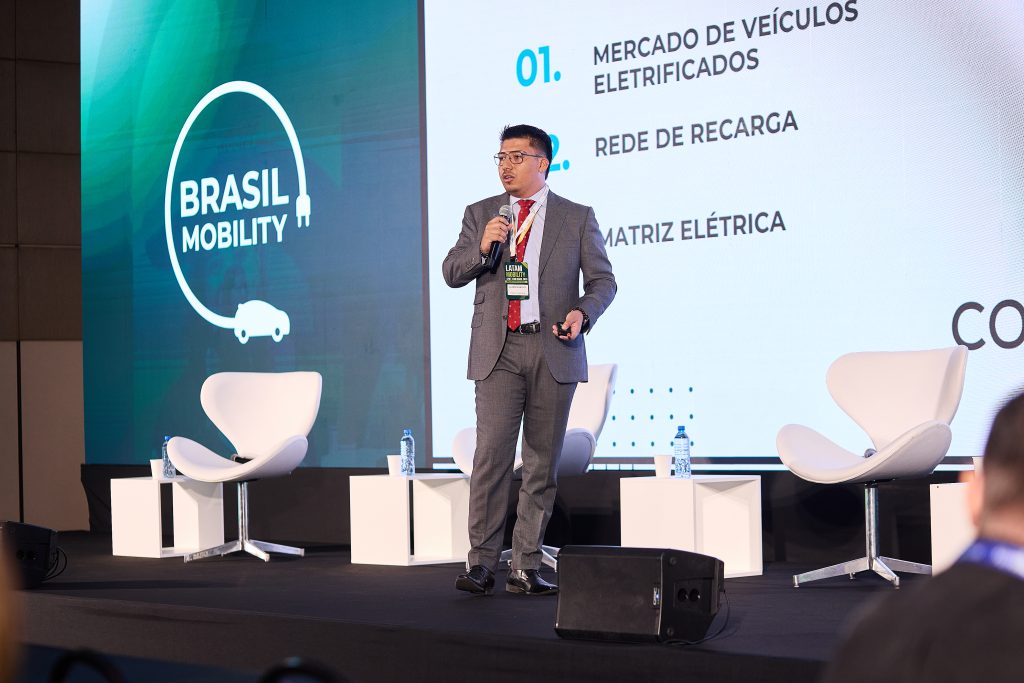
As part of “Latam Mobility & Net Zero Brasil 2026” held in São Paulo, Ronaldo Sandoval (Director of Market Intelligence at EvolvX ) presented the highly anticipated “Brazil and Latin America Market Report” – an analysis of the current state and trends of sustainable mobility in the region.
During his presentation, Sandoval broke down key data on electrified vehicle sales, charging infrastructure, and Brazil’s electric grid, highlighting both the progress and the challenges facing the market.
The EvolvX executive (the strategy and market intelligence arm of the Latam Mobility community) explained that this report is part of an international initiative that aims to connect data and market snapshots from each country. The goal is to integrate Brazil, Mexico, Chile, Colombia, and other nations into a community that understands the professional development and investment opportunities from both the private and public sectors.
You may also be interested in | Power pooling, DC storage, and 720 kW chargers: Huawei’s portfolio for electric bus fleets
Accelerated Growth of the EV Market in Brazil
Ronaldo Sandoval began by showing the evolution of sales and market share of light electrified vehicles in Brazil. From 2022 to December 2025, market growth was very rapid. Electrified vehicles (which include plug-ins, hybrids, and battery electric vehicles – BEVs ) already represent nearly 8.8% of total light vehicle sales in the country.
Looking at the distribution by technology type during 2025, plug-in hybrid electric vehicles (PHEVs) had the highest sales volume within the Brazilian electrified market. Sandoval also presented a comparison with Latin America as a whole (excluding certain markets), where electrified vehicles reached nearly 10.9% of light vehicle sales.
Brazil is certainly the largest market in the region, followed by Mexico and Colombia, which together concentrate almost 80% of light vehicle sales with these technologies in absolute terms. However, in relative terms, countries like Ecuador, Chile, Uruguay, and the Dominican Republic also show very interesting growth compared to the size of their automotive markets.
Sandoval noted that while most countries increased their sales across the three technology types, the Dominican Republic saw a reduction in sales of 100% electric vehicles, while Panama and Costa Rica showed decreases in plug-ins, and the Dominican Republic also saw a drop in hybrids.
Infrastructure: Concentration and Expansion Opportunities
The Director of Market Intelligence at EvolvX moved on to another fundamental pillar of sustainable mobility: charging infrastructure. Most states in Brazil’s Southeast region concentrate more than 80% of light electrified vehicle sales in the country, while the rest of the country accounts for the remaining 20%.
Something similar happens with the share of charging stations by geography and by charging type. Fast charging still has a low percentage compared to slow or alternating current charging. Sandoval revealed a telling fact: 10 federative units account for more than 80% of national sales and also concentrate nearly 80% of the country’s charging infrastructure.
“That points to two things,” Sandoval explained. “First, a large amount of infrastructure concentrated in a few regions of the country. Second, the potential that the other federative units in Brazil have.”
Regarding the chargers-per-vehicle ratio, in the markets that concentrate 80% of sales, there is a ratio of 21.4 vehicles per charging station, while in the other 16 federative units the ratio is 18.6 vehicles per charger.
Sandoval recalled that the international recommendation or standard is to have between 5 and 10 chargers per vehicle, although he clarified that different countries have different targets.
Brazilian Electric Grid: Low Carbon Intensity and Need for Diversification
A central point of the presentation was the analysis of the evolution of Brazil’s electric grid. Sandoval highlighted that between 2023 and 2024, generation from photovoltaic solar, wind, and natural gas technologies increased. “We know that the transition doesn’t depend on a single technology – it needs diversification,” he stated.
The specialist underscored the need for greater flexibility to avoid future bottlenecks in the response capacity of the National Interconnected System, especially with the increasing integration of new technologies into the electricity generation mix.
It’s no secret that Brazil’s electric grid is one of the cleanest in the world, but it’s also necessary to recognize that the country and the market need the integration of technologies that can complement traditional renewable clean sources, such as photovoltaic solar, natural gas, and other clean fuel technologies.
Additionally, Sandoval presented a comparison between Brazil’s low electric carbon intensity and its economy. Carbon intensity is a very important indicator for measuring how much CO2 or greenhouse gases an economy generates to produce one economic unit (in this case, US dollars).
Just as the greenhouse gas generation of Brazil’s electric grid is low, so is the carbon intensity of its economy. This creates an opportunity to capture that benefit from a financial perspective – generating income with new clean technologies while simultaneously reducing environmental impact.
Invitation to Learn about EvolvX’s Market Reports
To wrap up, Ronaldo Sandoval invited attendees to contact EvolvX and the Latam Mobility organization to learn more details about the report presented and reports from other countries in the region.
“The idea is that you can find here, be able to talk with all these types of profiles – with investments from the private sector and from the public sector,” he noted.
EvolvX‘s Brazil and Latin America Market Report leaves clear conclusions: Brazil leads the electrified vehicle market in the region, but faces the challenge of decentralizing its charging infrastructure and further diversifying its electric grid.
The combination of a low-carbon-intensity economy and a clean grid positions the country as a territory with enormous potential to attract investments and professionally develop the sustainable mobility sector in Latin America.