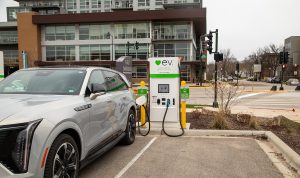




For the first time in Chile, a nationwide study has taken a hard look at the state of electromobility in commercial fleets.
The analysis was led by the Center for Sustainable Mobility (CMS) and the consulting firm Feedback Research, uncovering crucial insights about the present and future of corporate transportation in a time of high fuel price volatility.
The findings, laid out in the report “X‑ray of Electromobility in Corporate Fleets,” show that while current adoption is still small, there is strong business interest and solid support for public policies that encourage the supply of zero‑emission vehicles.
You may also be interested in | Expansion of Electric Vehicle Offering in Colombia: Xpeng Lands through Inchcape and BYD Projects Over 11,000 Sales
Aiming for Transport Decarbonization
The study – called an unprecedented milestone of its kind – was conducted between December 1, 2025, and January 16, 2026, with a representative sample of 520 companies from across Chile.
The sample included 248 companies in the Metropolitan Region and 272 in other regions, covering small, medium, and large businesses from various sectors.
The survey was aimed exclusively at people with decision‑making power and direct knowledge of fleets – such as owners, general managers, logistics managers, operations managers, and finance managers.
Margarita Amaya, Director of Corporate Management at Conecta Logística, highlighted the report’s value, saying that electromobility is a tangible reality in national logistics.
Still, she warned that “as a country, we are lagging behind our electromobility potential” – comments that reflect a shared diagnosis: the tools and conditions exist to move faster.
Low Adoption vs. Strong Future Interest
Despite the clear benefits of electrification, the current picture of corporate fleets shows extremely low penetration of electric vehicles.
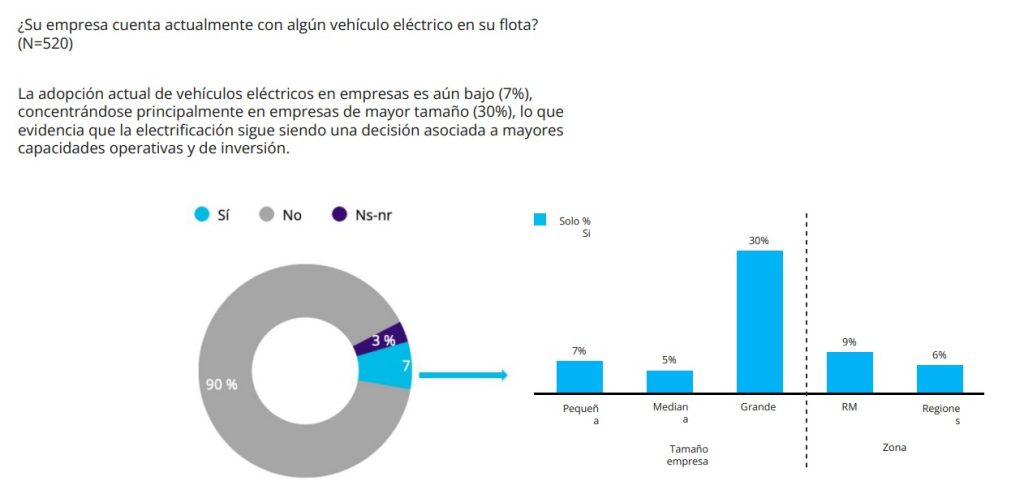
According to the report, 97% of the surveyed corporate fleet still runs on gasoline or diesel, and only 2% corresponds to 100% electric units.
For hybrid or plug‑in vehicles, the total penetration rate is only 3%, with 7% of companies saying they have at least one electrified unit.
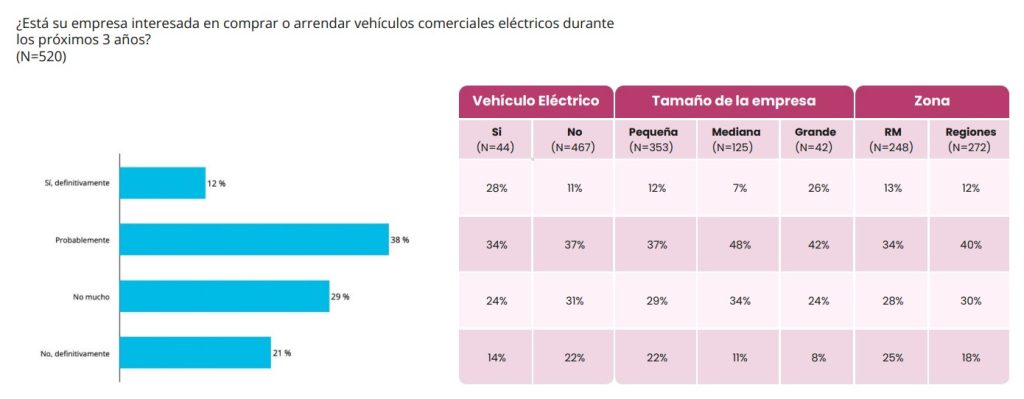
However, the study yields a hopeful finding: 40% of companies show a high predisposition toward electromobility.
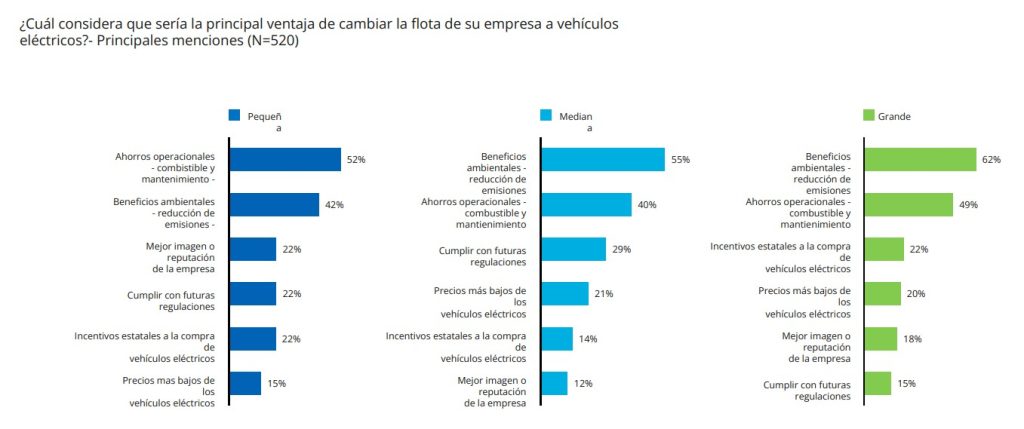
When it comes to concrete purchase intent, 50% of companies said they are interested in buying or leasing electric vehicles in the medium term – mainly attracted by fuel and maintenance savings (52%) and environmental benefits (43%).
The technical conditions to speed up this transition already exist nationwide. The study highlights that 53% of fleets travel less than 100 kilometers per day – a distance well within the range of today’s electric vehicles.
What’s more, 70% of operations are concentrated in urban and short‑distance interurban environments, making them ideal candidates for electrification.
Rising Fuel Prices and Public Support Accelerate the Transition
The macroeconomic context is a key catalyst. The report found that 86% of companies said they are concerned about the high price of gasoline and diesel – a concern that grew even more after the fuel price hike announced in March 2026.
The original survey was done before that increase, so experts think current sentiment is likely even more critical. This worry hits hard in sectors like agriculture, transportation, logistics, and tourism.
Juan Pablo Gallardo, Director of Feedback Research, commented: “This baseline study of companies – unprecedented in the country – shows a concrete opportunity to boost electromobility in Chile.”
Gallardo stressed that “with favorable operating conditions, the challenge is to close the gaps in infrastructure and financing, where the State must lead with regulatory certainty, enabling conditions, and access to clear and timely information.”
In line with this, a resounding 65% of companies support government regulations that would require manufacturers to offer more electric vehicle models in the Chilean market – a clear sign of unsatisfied demand that highlights the need to expand available supply.
Interest from individual consumers is also high. Data shows that Chile is the third most interested country in the world in buying an electric vehicle, with 57% support – behind only Indonesia and Mexico.
Barriers: Financing, Infrastructure, and Limited Supply
Despite the high interest and favorable operating conditions, companies pointed to major obstacles blocking mass adoption of electromobility.
Gaps in charging infrastructure and limited financing remain the biggest barriers to fleet replacement.
Among companies with low technological readiness, 84% identified lack of charging infrastructure as the main impediment.
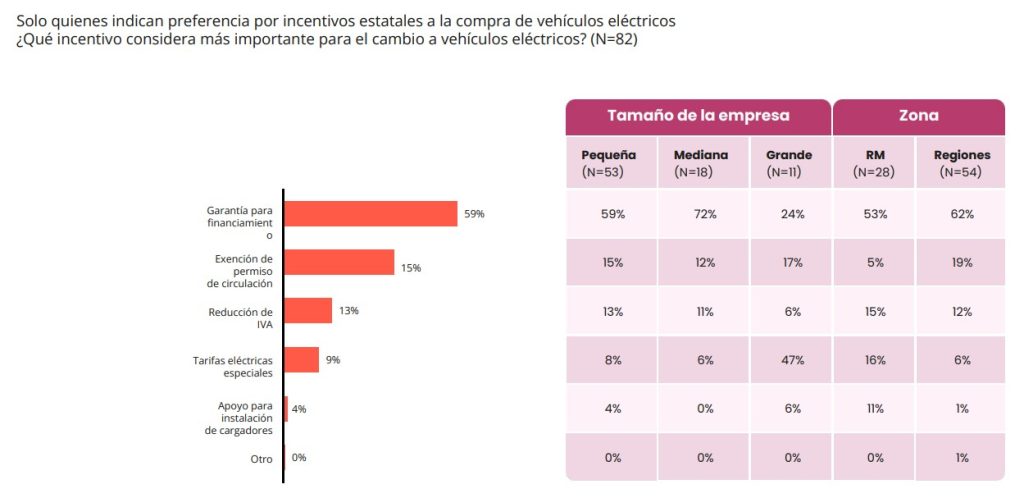
The needed solutions vary by company size. While 59% of SMEs ask for state financing guarantees to be able to invest, large companies prioritize enabling conditions like special electricity rates (47%) to make fleet operation viable.
Ignacio Rivas, Program Director at the Center for Sustainable Mobility, noted that energy efficiency standards have proven to be effective public policy in the past. He said, “It’s a pity that the standards for medium‑duty vehicles have been delayed – those are exactly the vehicles this survey focused on, and 65% of respondents value energy efficiency regulations.”
Rivas therefore stressed the importance of a combined strategy that includes vehicle performance standards, better electricity rate designs, and incentives for charging infrastructure.
A Path toward Corporate Transition
The “X‑ray of Electromobility in Corporate Fleets“ positions Chile as a country with enormous strategic potential in the energy transition.
High exposure to oil price swings, combined with growing technological maturity of electric vehicles and steady development of charging infrastructure, is creating a favorable environment for mass electrification of industry and logistics.
Juan Pablo Gallardo of Feedback Research summed up the takeaway: “The challenge is to close infrastructure and financing gaps, where the State must lead with regulatory certainty.”
With business interest in Chile exceeding 50% and favorable technical conditions for short‑distance operations, the country is at the ideal tipping point to speed up adoption of these clean technologies.
The private sector is ready. The roadmap is drawn. Conditions are favorable. All that’s left is to solidify the regulatory and financial framework so that corporate electromobility stops being the exception and becomes the standard for Chilean transportation.
The Conversation Continues
Through its stops in Mexico City, Brazil, Colombia, and Chile, Latam Mobility will continue to promote a collaborative approach to accelerate the transition to cleaner, more efficient, and more inclusive transportation systems, positioning Latin America as a relevant player in sustainable mobility at the global level.
Be part of the movement that is accelerating Latin America’s energy and urban transformation. If you would like to learn more about how to participate and positioning options, click here.